
"Admissions officers are making a subjective call. Do not let one result define you." Student H, who finished the season holding offers from Rice, UC Berkeley and Carnegie Mellon, is unusually level-headed about how it went.
Profile
- Shanghai High School International Division
- SAT 1550 · TOEFL 116
- AP: Macroeconomics, Microeconomics, Biology, Chemistry and Calculus BC at 5; English Language and Composition at 4
- USABO semi-finalist; Brain Bee national round
- Offers: Rice (environmental science), UC Berkeley (environmental science), Carnegie Mellon (biology)
Ordering the work
Her priority order was explicit and she kept to it: school results first, then standardised tests, then competitions, then activities. She sat TOEFL and the SAT in Grade 10 and was done with both.
"Get the tests finished early," she says. "Running activities and cramming for an exam at the same time is more pressure than it sounds." In her reading, competitions cannot be manufactured late because they rest on real ability, while activities mostly add polish.
A month for USABO
Her competition record started in Grade 9 with Brain Bee, at her mother's suggestion. USABO in Grade 11 came from watching classmates enter. Because of a scheduling problem she had under a month to prepare, and nearly withdrew.
She entered anyway, over the Spring Festival, with the paper sitting at four in the morning. She shifted her sleep to match the exam time and worked through each day. It was, in her words, a rough month, but she reached the semi-final.
Her summary for anyone following: start early enough, ask about the reasoning rather than memorising the conclusion, and mine past papers by working backwards from your own mistakes.
On AP preparation
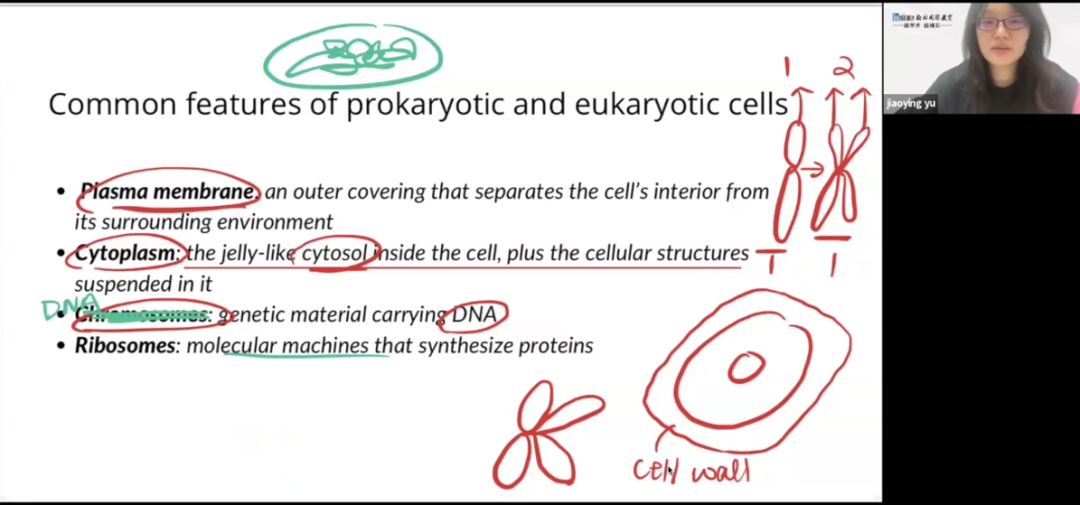
For the science subjects her method was direct: practise, because the question types are stable. Biology needed volume and time with the textbook. Chemistry was her hardest subject, and she dealt with it by asking her teachers whenever she did not follow something and working through past papers.
Microeconomics was the exception she flags. "Do not memorise it. Understand the logic and where it shows up in the real world."
Essays
She describes herself as someone without an obvious story, and found the first personal statement painful. What made it manageable was realising the material was reusable: supplement prompts change wording but keep asking the same underlying question, so a strong first draft makes everything after it faster.
Her advice is to note things down as they happen, so essay season does not start from nothing.
Advice for environmental science applicants
- Enter biology or chemistry competitions such as USABO. Environmental science has few competitions of its own, so these are the credible evidence of ability.
- Avoid the obvious. Litter-picking projects read as generic. Environmental science has many sub-fields, so find the specific one you care about and tell that story in detail.
In her own case the distinguishing details were not academic at all. Long-term birdwatching and basketball gave her a profile that looked different from other environmental science applicants.