
Tests · SAT
The digital SAT, prepared for the way it is now scored.
The SAT is the College Board's admissions test — set and marked by ETS, recognised by every US university, and a key reference for admission and scholarships worldwide. It measures the reading, writing and mathematical reasoning that university study demands. The test has moved fully digital and adaptive, and shortened from three hours to two — Hanlin's coaching is built around that new format.

Results
The 2026 scoreboard.
Selected results from the Chinese SAT page, updated June 2026.
1560 and 1550
Two Hanlin students posted 1560 and 1550 in the 2026 sittings — inside the top percentile worldwide.
Maths at 790–800
Well-prepared mainland students routinely reach 790–800 on the maths section — the syllabus sits below China's senior-one level.
Where they went
The SAT cohort feeds the admissions boards — Cornell 25, UPenn 16, MIT 14 across 2020–24. See the honours →
Digital SAT interface samples and past-paper sets — collect the full sets through the resource centre.
Registration
Six steps to a seat.
How registration runs on the College Board site — Hanlin advisors walk students through every step.
 Step 1
Open the College Board site
Registration runs entirely through the official portal.
 Step 2
Create or sign in
One College Board account carries the SAT, AP and score reports.
 Step 3
Register for the SAT
Choose the sitting; international dates release for the whole year at once.
 Step 4
Decide on the essay
Optional — but effectively required for Ivy League targets.
 Step 5
Pick the test centre
Asia-Pacific seats go quickly — Hanlin tracks releases and books early.
 Step 6
Upload a photo and pay
The registration completes with photo upload and payment.
The paper
What the digital SAT tests.
Allow at least three months before a first sitting; three to six is the comfortable preparation window.
Reading & Writing
Grammar and reading now sit in one adaptive section, giving flexible time control across the two.
- Format
- Adaptive — later difficulty follows earlier answers; short passages replace the old long texts
- Mix
- Grammar to reading roughly 6:4, and grammar no longer scored separately
- Marked by
- ETS; scores valid two years for most universities
Mathematics
Difficulty tops out around China's senior-one syllabus, with a little content beyond the gaokao.
- Digital format
- Lighter reading load; the on-screen calculator is available throughout; more time per question
- Aim
- The College Board wants purer mathematical reasoning tested — careful preparation reaches 790–800
Essay (optional)
Optional in principle — but if the target is the Ivy League, treat it as required.
- Scoring
- Reading, Analysis and Writing, each out of 8
- Standard
- A 4 shows almost no language error; a 3 no major error; a 2 shows many
- Task
- A structured, evidence-rich analysis of a set passage — vocabulary depth and sentence control decide it
Adaptive testing
Why the first module decides everything.
The mechanic behind the digital SAT — and the strategy shift it forces.
Difficulty adjusts to you
A weaker performer drops into an easier second module — the test feels friendlier, but a lower-scoring band caps the final result.
Slow starters pay
Under-perform in module one and the system files you as a low scorer; recovering accuracy later cannot lift the ceiling.
Marathon to sprint
The paper era rewarded stamina; the digital era rewards being sharp from question one — every module opens at full pace.
What has not changed
- Same skills measured — the high-school knowledge that matters for university and work
- Still scored out of 1600, so progress tracks across school years
- Still sat at schools and test centres under invigilation, not at home
- Khan Academy practice stays free
Scoring
How the 1600 is built.
The full scoring model from the Chinese SAT page.
800 + 800
Reading (52 questions, 400) plus writing & language (44 questions, 400) make the first 800, floor 200; two maths sections of 58 questions make the second.
Seven sub-scores
Each 1–15: Heart of Algebra, Problem Solving & Data Analysis, Passport to Advanced Math, Expression of Ideas, Standard English Conventions, Words in Context, Command of Evidence — plus 10–40 cross-test scores in history/social studies and science.
No penalty, simple conversion
Wrong answers no longer deduct. Count correct answers and read the table: 53 maths questions right converts to 740; reading 42 (34) plus writing 36 (33), summed and ×10, gives 670 — total 1410.
Courses
Three SAT courses.
Recommended on the Chinese SAT page — from close reading to the final sprint.
Humanities close-reading
Builds the vocabulary depth, theme-tracking, character analysis and long-sentence parsing that fiction and history passages demand — the section students find hardest.
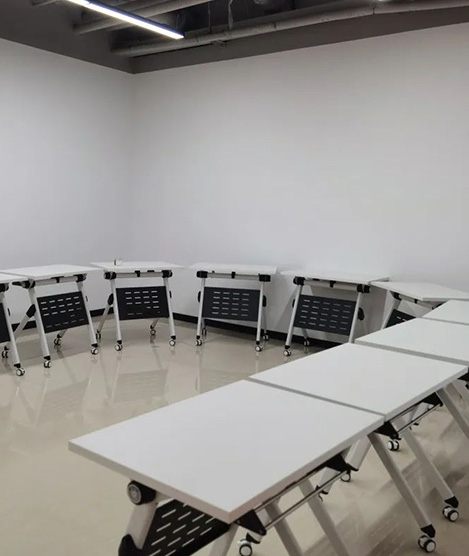
Sprint class
A compressed pre-exam block: timed adaptive drills and the module-one habits that set the score band.
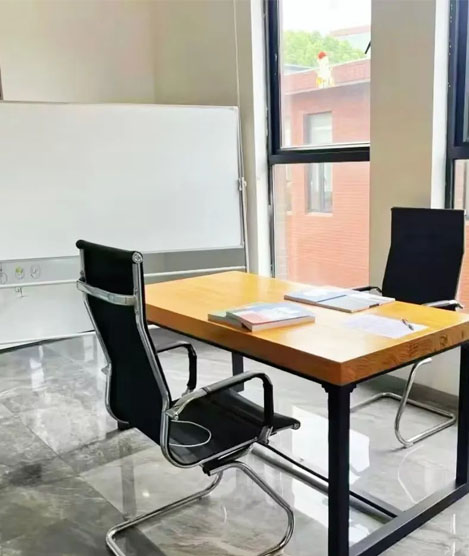
Sprint class (school cohort)
The sprint course run for a partner school cohort — the same syllabus, delivered on campus.
Talk to an advisor
Everything Hanlin does for the SAT, in one conversation.
A diagnostic first, then a plan built around the sitting the student is actually going to take.
Competition entry and planning
Which competitions suit this student, in what order, and by when - then we handle the registration, including the ones that can only be entered through a school or a centre.
Competition coaching
Taught by full-time subject tutors, on a course tier chosen by placement paper rather than by year group.
International curriculum tutoring
IB, AP, A-Level, IGCSE and the US high school curriculum, taught alongside school and timed around the exam calendar.
Competition past papers, free
A large library of past papers, mark schemes and syllabus breakdowns across every competition on this site. No charge and no enrolment.
Scan to add an advisor

Say which competition or course you are asking about. Replies in Chinese or English.
Or call +86 21 6352 6630FAQ
The digital SAT, briefly answered.
The four questions on the Chinese SAT page, plus what families ask next.
Will paper and digital SATs run side by side?
No. Once a region moves to digital, every SAT there is digital — with a transition period between regions.
How is the digital SAT more secure?
A paper leak once cancelled whole test centres. Digitally, every candidate sees a different question set, so copying is impossible and mass cancellations are avoided.
Why did international regions go digital first?
To give them more sittings — digital delivery adds two international dates a year, matching the US calendar.
Why did the SAT change at all?
A November 2021 pilot found 80% of students felt less pressure with shorter passages; test staff preferred it too; and the pandemic pushed the move online. The College Board adjusted to keep the test useful and flexible.
How long should preparation take?
At least three months before a first sitting; three to six months is the comfortable window, with a diagnostic to set the plan.
SAT enquiries
Prepare for the test as it is now.
Tell us the target score and application timeline, and an advisor will map the course and the sitting calendar.