
Curricula · Overview
Every major international curriculum, taught under one roof.
International curricula give students a globally recognised standard of study and assessment, so they can move between countries and school systems and progress to universities worldwide. Hanlin tutors across all the major systems — A-Level, IB, AP, IGCSE and the US high-school route — with the Australian and Canadian state curricula alongside.
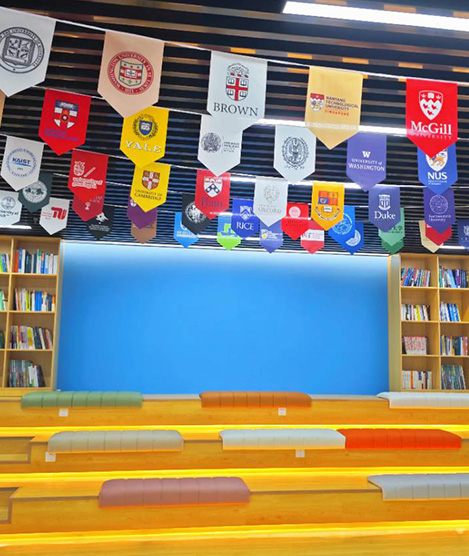
Why international curricula
What these systems train, beyond the grades.
Four advantages that give international curricula their standing in global education.

A global outlook
Multicultural classrooms and internationally benchmarked content build genuine cross-cultural fluency.
Critical, independent study
Coursework rewards reasoning and self-directed learning, not recall alone.

Flexible subject choice
From IB's balanced six-group model to A-Level's free three-subject focus, there is a fit for every profile.

University-ready
Recognised by admissions offices worldwide, with several systems convertible into university credit.
In the classroom
See the teaching itself.
Lesson stills from Hanlin's tutor videos on the Chinese curriculum centre — humanities, mathematics and economics classes as they actually run.
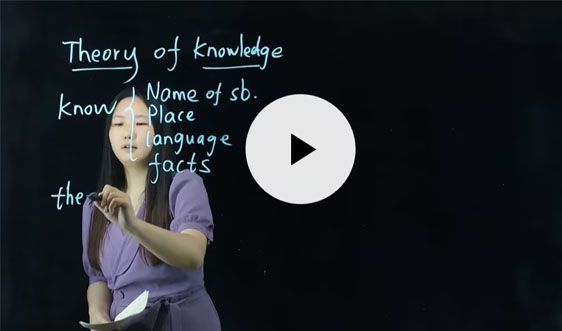
Humanities — Peng
Theory of Knowledge on the lightboard: the IB core taught as live writing, not slides.
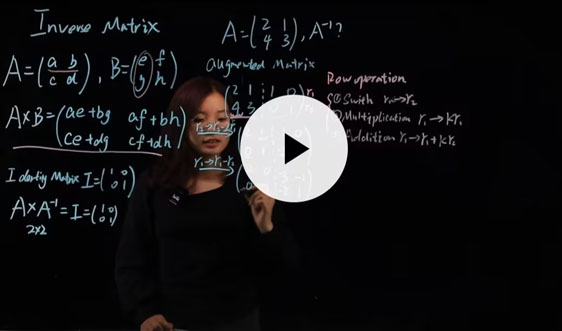
Mathematics — Zhang
Contest-style problem work from the AMC ladder, worked in full on camera.
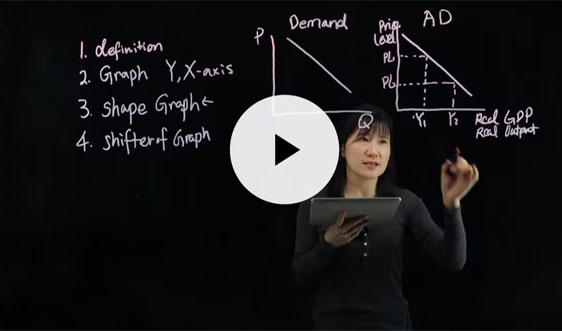
Economics — Liu
AP economics taught through cases — the same method behind the NEC and IEO teams.
The systems
Six mainstream curricula.
Each card opens the dedicated page where one exists — A-Level is live now, with the rest of the series in production.
A-Level
The UK's advanced qualification and the world's most widely adopted school system — more than five million candidates sit A-Levels each year.
IB
The IBO's programme from kindergarten to pre-university for ages 3–19 — by rigour and recognition, the king of international curricula.
AP & US High School
The standard for US-bound students aged 14–19: beyond lifting GPA, nearly 40 AP courses convert directly into university credit.

IGCSE
The world's most-sat qualification for ages 14–16 and China's usual bridge into A-Level or IB — IGCSE grades carry real weight in UK and US applications.
VCE · WACE · QCE
For Australia-bound students: Victoria's VCE, Western Australia's WACE and Queensland's QCE are the popular Australian school routes.

BC · CTC
For Canada-bound students aged 14–19: British Columbia's BC programme and Ontario's CTC are the most popular Canadian school curricula.
One table, four systems
IB, AP, A-Level and IGCSE, side by side.
The full comparison from Hanlin's Chinese curriculum centre — eighteen dimensions from audience to planning.
| IB | AP | A-Level | IGCSE | |
|---|---|---|---|---|
| In brief | The IB diploma pathway: PYP (primary), MYP (middle) and the DP pre-university diploma required for overseas application | University-level courses bridging to the US bachelor's degree; scores can replace university credit after entry | The UK's advanced school qualification — effectively the UK university entrance examination | The UK's international secondary qualification |
| Best for | Accepted by the global top 500 — recognition above every other system | The strongest fit for US bachelor's applications | The strongest fit for UK bachelor's applications | The bridge into A-Level, IBDP and other English-medium study |
| Audience | DP admits junior-high graduates and senior-high students aiming at world-leading universities | Senior-high students or gap-year students targeting US universities | Junior-high graduates and senior-high students, UK-first applicants | Junior-high graduates and senior-high students |
| Length | 2 years | 1 year | 2 years | 1 year |
| Subject choice | One subject from each of six groups — three at Higher Level, three at Standard Level — spanning sciences, social sciences, maths, arts, language and literature | No restrictions; limited only by ability | Free choice by interest, at least three subjects | Set by the school, usually five to eight subjects |
| Difficulty | HL content matches US first-year university level; the overall training rivals upper-year undergraduate work | Equivalent to US first-year university courses | AS and A2 stages; total difficulty slightly below IB | Below A-Level |
| Subjects | Over 100 courses across six groups; about 40 in common use | 38 subjects in seven fields; Chinese students commonly sit about 15, from maths and sciences to economics and computing | 80+ popular subjects across sciences, social sciences, business and the arts | Covers nearly the full A-Level subject range |
| Run by | The International Baccalaureate Organization | The College Board | Five UK boards — CIE and Edexcel most used in China | — |
| Test centres | Each IB school | 30+ centres nationwide covering first- and second-tier cities and almost every province | Centres across the main first- and second-tier cities | — |
| Sittings | One examination each May for Chinese students | One sitting each early May | Two or three sittings a year by board, most in May and October | — |
| Format | Examinations plus coursework — presentations and research | Written examinations | Written examinations, some practical work | Examination optional |
| Scoring | Six subjects at 7 points each plus up to 3 core points — 45 in total | Out of 5; a 4.0 can convert to credit, 4.5+ is competitive | Grades A*–D | — |
| Annual cost | RMB 150k–300k a year | Free to self-study; AP schools around RMB 100k a year | RMB 100k–200k a year | RMB 100k–200k a year |
| Self-study | No — an IB school is required | Yes | Yes | Yes |
| Competitive bar | UK G5 and US top-30 admits average 38+ of 45 | 4.0+; more subjects, closer to the target major, the better — Ivy admits from US high schools average five APs | Three A* grades open Cambridge and Oxford applications | — |
| Credit transfer | Convertible | Convertible | Partially, university by university | — |
| Character | Systematic and balanced — suits all-round students | Flexible free choice — suits students with a strong subject lean | The most flexible format, fully self-studiable — suits academically exceptional students | — |
| Planning | Start after junior high or in year one of senior high; two years to complete | Prepare in year one and sit in year two for application use; later sittings convert to credit only | Start in year one or two of senior high; two years | For students about to enter A-Level |
| Schools in China | ~105 IB schools by 2016, densest in Jiangsu–Zhejiang–Shanghai; 90%+ offer the DP | 189 AP schools by 2016, over 60% public-school international divisions | 296 A-Level schools under CIE and Edexcel by 2016, reaching second- and third-tier cities | Most A-Level schools also run IGCSE |
School systems
How the school ladders line up.
The grade-by-grade correspondence between the Chinese, US, UK and IB routes.
| System | Middle school | Senior school | University | ||||||
|---|---|---|---|---|---|---|---|---|---|
| China | Year 9 (junior 3) | Senior 1 | Senior 2 | Senior 3 | Year 1 | Year 2 | Year 3 | Year 4 | |
| United States (AP) | Grade 9 | Grade 10 | Grade 11 | Grade 12 | Year 1 | Year 2 | Year 3 | Year 4 | |
| United Kingdom | Year 9 | GCSE G1 | GCSE G2 | AS | A2 | Year 1 | Year 2 | Year 3 | |
| IB | MYP (5 years) | IBDP (2 years) | University (3–4 years) | ||||||
Hanlin tutoring
Five tutoring programmes, one academic path.
For students of every age band and interest, Hanlin plans the route and delivers all of it — one-to-one and small-group, online and in person.
A-Level programme
Exam coaching, profile planning and admissions-test tutoring in one route, aimed at the world's top-100 universities. A-Level page →
AP programme
Five years of AP registration service — familiar, fast and fully handled, so students never wrestle the process themselves.
IB programme
Academic-first IB teaching from a top-tier faculty, with personalised subject tutoring across the diploma.
IGCSE programme
All-subject IGCSE support — concept teaching, one-to-one Q&A and pre-exam sprints, plus long-range curriculum advice.
US high-school programme
Fully individual tutoring with a bespoke study plan and a tutor team tracking every student's progress.
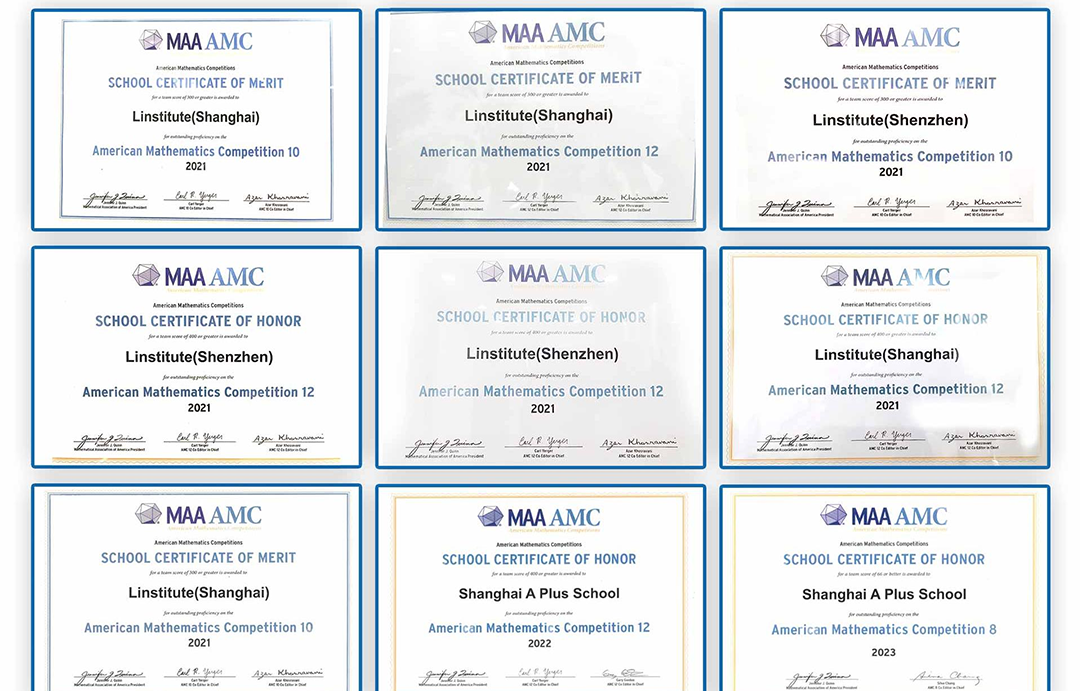
Results to match
The curriculum cohort's outcomes sit on the honours boards — from 235 AIME qualifications to 120 G5 offers. See the honours →
Faculty
Curriculum tutors, competition-tested.
The six tutors presented on the Chinese curriculum centre — each also coaches the competitions that sit beside their subject.
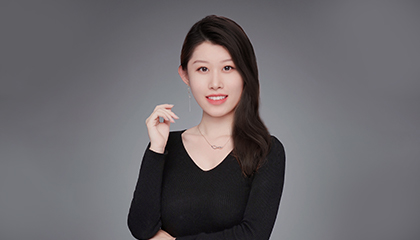
Dr He
Cambridge master's in technology policy; computer science and maths at Nebraska–Lincoln after US high school.
Fluent across Java, Python, C, C++, R and more; sent five AMC 10 students into AIME in 2021. Teaches AP Calculus and Statistics, AMC, A-Level Maths, AP CS A, IGCSE Computing and USACO.

Micheal
Southeast University maths-physics programme, then aerospace engineering at George Washington under a NASA Sigma programme lead.
Five years across international courses and contests: students count 6 BPhO Super Golds, 27 Golds and 6 BAAO Golds. Coaches AP and IB physics, including IA, EE and TOK writing.
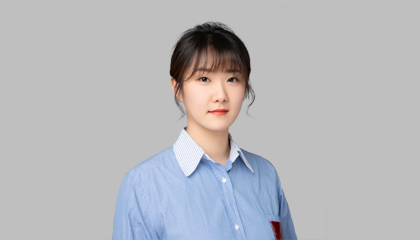
Mandy
Business-analytics master's at Schulich with York finance and HIT software-engineering degrees; years of study and work in North America.
Former university teaching informs both grading-system insight and postgraduate planning. Teaches AP Micro and Macroeconomics.

Kelu Lun Bai
Hult San Francisco social-entrepreneurship master's; business management at the Autonomous University of Barcelona with a Texas A&M exchange.
Coached national #1 finishes in both IEO and NEC plus a global single-event first. Triple-certified (College Board, Cambridge, IBO); judge at the Diamond Challenge global final and NEC China final.

Dr Zhang
PhD in pure mathematics at Rochester and a Fudan post-doc; a national first prize in the China senior-high maths league on the way there.
Seven years of research and university teaching from undergraduate to graduate level. Coaches the AMC–AIME–USAMO ladder and every mathematics curriculum.

Zhao
Colorado College history and religion, a Columbia master's and doctoral candidacy at Virginia, with five-plus years teaching UVA undergraduate history.
Teaches history and politics across AP, A-Level and IB, AP English Language and Literature, AP Human Geography and IB Literature — plus John Locke, HIR, IHBB and TCR coaching.
Guides
Latest curriculum reading.
Eight guides from the Chinese curriculum desk — the news section will carry the full library.
Talk to an advisor
Ask which curriculum route actually fits.
The right answer depends on the school, the target country and the student. Scan and say all three.
Scan to add an advisor
Say which competition or course you are asking about. Replies in Chinese or English.
Or call +86 21 6352 6630FAQ
Choosing a curriculum, briefly answered.
The questions families ask most when systems are still on the table.
Which curriculum should my child take?
Start from the target country and the student's profile: A-Level for UK-first applicants and self-directed specialists, IB for balanced all-rounders aiming worldwide, AP alongside a US high-school transcript for US-bound students, and IGCSE as the bridge year into A-Level or IB. The comparison table above sets the four systems side by side.
How different are the difficulty levels?
IB Higher Level and AP both sit at US first-year university standard, with IB's six-subject breadth making it the heaviest overall load; A-Level runs slightly below IB in total difficulty but deeper per subject; IGCSE sits below A-Level as a preparation stage.
Can these qualifications earn university credit?
IB and AP scores convert into credit at many universities — a 4.0 AP score is the usual bar — and A-Level results transfer partially depending on the university. IGCSE is a school-stage qualification and does not carry credit.
Can a student self-study these systems?
AP, A-Level and IGCSE can all be self-studied and sat at external centres — Hanlin has run AP registration for five years. IB is the exception: the diploma requires enrolment at an IB school.
How does Hanlin support each system?
Five programmes cover A-Level, AP, IB, IGCSE and US high school — subject tutoring, registration service, coursework support and exam sprints — taught one-to-one or in small groups, online and at the Shanghai, Shenzhen and Chengdu centres.
When should planning start?
The systems reward an early decision: IB and A-Level are two-year programmes started after junior high, AP results must land by year two of senior high to count in applications, and IGCSE is the year-one bridge. A placement diagnostic settles the route.
Curriculum enquiries
Map the right system for your child.
Tell us the target country, current school year and subject strengths, and an advisor will propose the curriculum and a study plan.