
Competitions · Business and economics · YIS
YIS, the Global Stock Pitch Competition.
Two tracks, three rounds and a route that ends in New York. No finance background is assumed - and the award bands are wide enough that most entrants come away with something, which is worth understanding before you read a certificate.

Read the award bands
What an award here actually means.
YIS publishes its percentile bands openly, which is to its credit. Read them before deciding what a result is worth - and before assuming advancement is a filter.
The preliminary awards reach the top 60%
First place is the top 5%, second the top 15%, third the top 30% - and the Credit Award goes to everyone in the top 60%.
And advancing only needs an award
The condition for reaching the Asia Round is completing everything and receiving an award. So roughly six entrants in ten go through. Treat the preliminary as a starting point, not a selection.
The Asia Round is similar
Best Traders goes to the top 40%, Best Speaker to the top 40%, and Commendation to the top 40%. Best Delegate, at the top 5%, is the one that is genuinely narrow.
Which does not make it a bad competition
It makes it a competition where the top bands are the meaningful ones. A Best Delegate award is a real result; a Credit Award describes finishing.
At a glance
What the competition is.
YIS is the core programme of the Youth Investors Society. It asks students to analyse a stock from every angle - the social and economic environment, industry competition, the company’s strengths and weaknesses, its financials and the risks - and defend that view to finance professionals.
- Who can enter
- Secondary students. No finance knowledge or investing experience is assumed
- Team
- Individually or in a pair. Two is the maximum
- Roster
- Must stay the same across all three rounds
- Language
- English throughout
- Preparation supplied
- Free recorded finance courses from the organiser
- Round one
- Online. Two tracks - Stock Exchange, or Stock Pitch. Choose one
- Stock Exchange track
- A live three-hour morning session, offered on two dates
- Stock Pitch track
- Submit a presentation video, a written report and slides
- Round two
- The Asia Round, in January, in person. Stock trading, a stock pitch and a case study, at intermediate level
- Round three
- The Global Youth Investment Summit, May to June, in person in New York. A case study competition and a stock pitch, at advanced level
- Reaching round three
- An Overall Award, a Stock Pitch Winner or a Best Speaker at the Asia Round
The two tracks
Trade, or make the case.
The preliminary splits into two quite different exercises, and the choice is yours. Both lead to the same Asia Round.
Stock Exchange - a live morning
A three-hour online session on a fixed date, trading in a simulated market. Fast, self-contained, and decided on the day. Two dates are offered.
Stock Pitch - a submission
A presentation video, a written report and a slide deck, built in your own time and submitted by the deadline. No live pressure, but the work is far heavier.
Both can be entered alone or in a pair
Two is the maximum. A pair splits the research but has to agree on a single view, which is its own kind of work.
Choose by temperament
A student who thinks fast under pressure belongs in Stock Exchange. One who reads annual reports properly belongs in Stock Pitch. Both reach the Asia Round.
The route
Three rounds across about eight months.
Each round is harder than the last and adds a component. The team must stay the same throughout.
Round one, online
The Stock Exchange track runs live on either date, 9am to noon. The Stock Pitch track submits video, report and slides in mid-December. Beginner level.
The Asia Round, in person
Stock trading, a stock pitch and a case study together, at intermediate level. The first round that requires travel.
The Global Youth Investment Summit, New York
A case study competition and a stock pitch at advanced level, in person in New York against teams from elsewhere.
The awards in full
Every band, published.
These are the organiser’s own percentiles. They are the most useful thing on this page for anyone deciding what a YIS result is worth.
| Round | Award | Band |
|---|---|---|
| Round one both tracks | First Place | Top 5% |
| Round one | Second Place | Top 15% |
| Round one | Third Place | Top 30% |
| Round one | Credit Award | Top 60% |
| Asia Round | Best Delegate | Top 5% of teams |
| Asia Round | Outstanding Delegate | Top 10% |
| Asia Round | Honorable Mention | Top 25% |
| Asia Round | Commendation | Top 40% |
| Asia Round | Best Traders | Top 40% in the trading event |
| Asia Round | Best Speaker | Top 40% in the case study |
| Asia Round | Stock Pitch Winner | The highest-scoring team in each room |
Electronic certificates are issued at round one - a Certificate of Achievement for every award winner and a Certificate of Participation for everyone who completes the round.
The CYIA designation
What it is, and what it is not.
The certification is the part of YIS families ask about most, so it is worth being precise about how it is awarded.
It goes to Asia Round participants
The organiser states that the CYIA designation is conferred on everyone who competes in the Asia Round. It is not awarded on placing within that round.
The "under 10%" figure is about reaching the round
The same material says fewer than 10% of all YIS students hold it. Read together, that describes how many students reach the Asia Round - not how selectively the designation is given to those who do.
The CFA Institute route
The organiser states that CYIA holders can join a CFA Institute foundation programme - around 80 hours of online study and assessment leading to a CFA Institute certificate.
Check that entry requirement directly
Before treating the CFA Institute programme as something YIS unlocks, ask CFA Institute what its own entry requirements are. It is a straightforward question and the answer changes what the designation is worth.
Preparation
How Hanlin prepares a YIS entry.
Round one is wide open. The work that matters is aimed at the Asia Round and beyond, where the bands actually narrow.
Learning to read a company
Social and economic environment, industry competition, company strengths and weaknesses, financials, risk. That is a real analytical framework and it is teachable in a term.
Building a pitch that survives questions
A stock pitch is an argument with a number attached. The teams that do well have already asked themselves why they might be wrong.
Rehearsing the case study
The Asia Round adds a case study and the summit makes it the main event. Best Speaker is decided there, and it is one of the three routes to New York.
And aiming at the narrow bands
Best Delegate at 5%, and the Stock Pitch Winner in each room. Those are the results worth preparing for; the rest arrive on their own.
Why Hanlin
Preparation for YIS at Hanlin is taught by full-time subject tutors, on a course tier chosen by placement paper rather than by year group.
Programme formats
Five ways this is taught.
Group size is the whole difference between these. It decides how much of the tutor's attention a student gets and how far the course can bend to them, so it is worth choosing rather than accepting.
| Format | Group size | What it suits |
|---|---|---|
| One-to-one | One student | Content, pace and emphasis set by what this student actually needs rather than by a syllabus. The only format that can be rebuilt mid-course. |
| Small group | Three to eight | Opens at three. Frequent discussion, and the tutor can slow down or move on according to what the group has absorbed. Most students chasing a higher award are taught in this one. |
| Class | Eight to twelve | Taught by the subject lead or a medal coach. Less back-and-forth, so it suits a student who will say when something is unclear. |
| Large class | Ten to twenty | For students in the middle of the placement range, and a way to try a competition before committing. Students often move to a small group or to one-to-one afterwards. |
| Past-paper class | No cap | Past papers worked through in sequence in the weeks before the sitting. Free to students already enrolled. |
Course length for YIS is set after a placement paper. The gap between where a student is and what the paper asks for is what the course has to close, and that gap is not the same for two students in the same year group.
How it runs
Six steps, four people on your side.
The same process for every student, so that nothing depends on one tutor remembering to do it.
 Step 1
Pre-course assessment
A placement paper before anything is booked, so the course tier is chosen on evidence rather than on a year group.
 Step 2
Tutor matching
A subject tutor is matched to the result, and their full background is provided before you agree to it.
 Step 3
Plan and group
A study group opens with four people on one student: the tutor, a planner, a supervisor and an academic manager.
 Step 4
Scheduled teaching
The teaching office sets the timetable around the competition date and school term, and teaching begins.
 Step 5
After-class reports
What was covered, and how the student handled it, reported after every lesson.
 Step 6
Homework follow-up
The teaching assistant and the form teacher both check that homework is done, which is where most preparation quietly fails.
Free resource pack
Case and submission pack
The same material our own YIS students work from. Scan the code, say what you need, and an advisor sends it.

Tell an advisor which competition and year group, and the material comes back the same day. Free, and you do not have to enrol in anything. If we do not already hold what you need, we will go and find it.
- PDFPast cases and question sets
- PDFA worked example of a full submission
- PDFEvent categories and the judging criteria, broken down
- PDFEntry checklist and the dates for the current cycle
Teaching team
Who would teach it.
Three of the twenty-two tutors on the published Hanlin roster - the ones whose subject this is.

Bai
Master's in social entrepreneurship from Hult International Business School in San Francisco and a business administration degree from the Universitat Autonoma de Barcelona, with an exchange at Texas A&M's Mays Business School. Accredited by the College Board, Cambridge International and the IBO, a certified intermediate economist, and a judge at the 2020 Diamond Challenge global final and the 2021 NEC China final.

Zhang
Master's in engineering management from NYU and a double degree in finance and supply-chain management from Syracuse. Nearly nine years overseas and in finance, including at a well-known venture firm - experience that feeds scenario-based teaching. College Board-accredited.

Jiang
Master's in business analytics from the Schulich School of Business, a finance and business economics degree from York University and a software engineering degree from the Harbin Institute of Technology. Years in North America, university teaching before returning, and long experience across the whole economics curriculum.
Where it is taught
Hanlin learning centres.
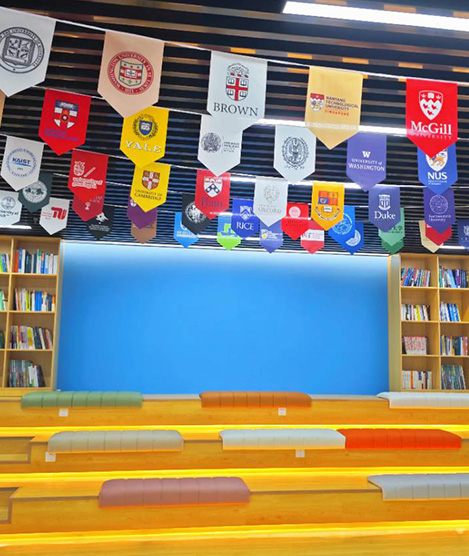
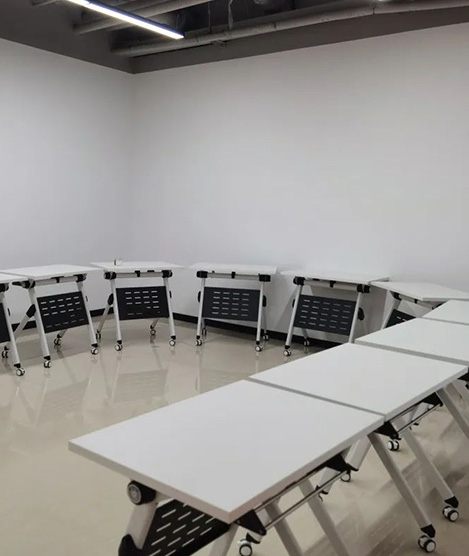
Teaching runs from Hanlin's own centres in Shanghai, Shenzhen, Chengdu and Hangzhou, and online for students elsewhere.





Talk to an advisor
Everything Hanlin does for YIS, in one conversation.
Entry, planning, coaching and the past papers. An advisor will tell you which of these a student actually needs, including when the answer is none of them.
Competition entry and planning
Which competitions suit this student, in what order, and by when - then we handle the registration, including the ones that can only be entered through a school or a centre.
Competition coaching
Taught by full-time subject tutors, on a course tier chosen by placement paper rather than by year group.
International curriculum tutoring
IB, AP, A-Level, IGCSE and the US high school curriculum, taught alongside school and timed around the exam calendar.
Competition past papers, free
A large library of past papers, mark schemes and syllabus breakdowns across every competition on this site. No charge and no enrolment.
Scan to add an advisor
Say which competition or course you are asking about. Replies in Chinese or English.
Or call +86 21 6352 6630FAQ
YIS, briefly answered.
What students and families ask before entering.
Do I need finance knowledge to enter?
No. The organiser states that no finance knowledge or investing experience is assumed and provides free recorded courses.
Can I enter alone?
Yes. Entry is individual or in a pair, and two is the maximum. The roster must stay the same across all three rounds.
What are the two preliminary tracks?
Stock Exchange, a live three-hour online trading session offered on two dates; and Stock Pitch, where you submit a presentation video, a written report and slides. Choose one - both lead to the Asia Round.
How do I reach the Asia Round?
Complete everything in your track and receive an award. Since awards run down to the top 60%, most entrants who finish do advance.
How do I reach the summit in New York?
An Overall Award, a Stock Pitch Winner or a Best Speaker at the Asia Round.
What are the award bands?
Round one: first place top 5%, second top 15%, third top 30%, Credit Award top 60%. Asia Round: Best Delegate top 5%, Outstanding Delegate top 10%, Honorable Mention top 25%, Commendation top 40%, with Best Traders and Best Speaker at the top 40% of their events and a Stock Pitch Winner in each room.
What is the CYIA designation?
A youth investment analyst certification, conferred on everyone who competes in the Asia Round. The organiser also notes fewer than 10% of its students hold it, which describes how many reach that round rather than how selectively it is awarded.
Does it lead to a CFA qualification?
The organiser states that CYIA holders can take a CFA Institute foundation programme of about 80 hours of online study and assessment. Ask CFA Institute directly what its own entry requirements are before counting this as exclusive.
What language is it in?
English, at every round.
When does it run?
Round one online in late October and mid-December, the Asia Round in person in January, and the Global Youth Investment Summit in New York in May or June.
Related
Other finance and investment competitions.
What students enter alongside YIS.
YIS enquiries
Round one is open. The Asia Round is where it starts.
Most entrants who finish round one advance, so the useful planning question is what gets a student into the top bands at the Asia Round. Tell us which track suits them and an advisor will build the preparation around it.