
Competitions · Humanities and writing · YEEC
YEEC, the Young Economist of the Year.
A thousand words, judged anonymously by the Royal Economic Society and the Financial Times, and the winner is published in the FT. You can also enter it as a video or a podcast - but only if you are at school in the UK.
Read this first
You have to be at school in the UK.
This is a national competition rather than an international one, and the restriction is absolute.
Years 10 to 13 in England and Wales
Or the equivalent years in Scotland and Northern Ireland. There is no international entry route.
Which rules out most students here
A student at an international school in China cannot enter, however strong the economics. It is worth knowing before writing anything.
And two groups are excluded on top of that
Directors, employees and immediate family of the Royal Economic Society and of the Financial Times and its associated companies.
What to do instead
The Marshall Society competition at Cambridge and the LSE essay competition are both open worldwide, and the IEA competition takes A-level and IB students anywhere.
At a glance
What the competition is.
The Young Economist of the Year has run since 2007, organised by the Royal Economic Society with the Financial Times. The Society was founded in 1890 as the British Economic Association and took its present name after receiving a Royal Charter in 1902. It has more than four thousand members worldwide.
- Who can enter
- Students in years 10 to 13 in England and Wales, or the equivalent years in Scotland and Northern Ireland
- Membership
- Not required. Entrants need not be members of the Society
- Studying economics
- Not required either. The competition exists partly to broaden economics’ appeal to students who have not studied it
- Cost
- Free
- Entries
- One per student per year
- Written entry
- Up to 1,000 words, in blog form
- Media entry
- A video, a podcast or a slide presentation, as an alternative to writing
- File format
- Microsoft Word or PDF, submitted through the Society’s website. Paper entries are not accepted
- Sources
- Detailed in-text citation is not required, but a list of sources that shaped the argument must be included. In a written entry it does not count toward the word limit
- Judging
- Anonymous
- Judged on
- Originality, quality of writing, economic content, and the quality of the economic argument
What makes it unusual
You do not have to write it.
Of the four economics essay competitions on this site, YEEC is the only one that will take something other than an essay.
A thousand words, as a blog
The written route asks for blog-form writing rather than an academic essay, which is a different register - closer to what an FT column does than to a school essay.
Or a video, a podcast, or slides
The media route is a genuine alternative rather than a supplement. A student who thinks better out loud has somewhere to go.
No economics background needed
The Society states that entrants need not have studied economics. The competition is explicitly aimed at changing how students see the subject.
And the judging is anonymous
Entries are judged without the judges knowing who wrote them, which removes the advantage of a well-known school.
The awards
One large prize, and five smaller ones.
A panel drawn from the Royal Economic Society and the Financial Times reads the entries and agrees the shortlist.
£1,000 for the best essay
Plus the opportunity to have the work published in the Financial Times - which is a genuinely rare outcome for school-age writing.
£200 for the best essay on each topic
Limited to five recipients.
A shortlist is published
The panel reads and marks the entries, agrees a shortlist and publishes it. Winners’ names and schools, and the full winning essay, appear on the Society’s website and social media.
One number to confirm
The published material describes a panel selecting six final winners in one place and a shortlist of five in another. Ask the Society which applies.
Preparation
How Hanlin prepares a YEEC entry.
For an eligible student, a thousand words in blog form is a different exercise from an academic essay and needs preparing as one.
Writing like a column, not an essay
The blog form rewards a clear line, a strong opening and a voice. Reading FT economics columns is better preparation than reading textbooks.
Finding a genuinely new angle
Originality is the first of the four judging criteria. The brief asks for a difficult emerging problem or a creative take on a frontier question, not a summary of a familiar debate.
Getting real economics into a thousand words
Economic content and the quality of the argument are two of the four criteria. A well-written thousand words with no economics in it will not place.
And considering the media route
A podcast or video is judged on the same criteria. For a student who argues well aloud, it is a genuinely open door that most entrants ignore.
Why Hanlin
Preparation for YEEC at Hanlin is taught by full-time subject tutors, on a course tier chosen by placement paper rather than by year group.
Programme formats
Five ways this is taught.
Group size is the whole difference between these. It decides how much of the tutor's attention a student gets and how far the course can bend to them, so it is worth choosing rather than accepting.
| Format | Group size | What it suits |
|---|---|---|
| One-to-one | One student | Content, pace and emphasis set by what this student actually needs rather than by a syllabus. The only format that can be rebuilt mid-course. |
| Small group | Three to eight | Opens at three. Frequent discussion, and the tutor can slow down or move on according to what the group has absorbed. Most students chasing a higher award are taught in this one. |
| Class | Eight to twelve | Taught by the subject lead or a medal coach. Less back-and-forth, so it suits a student who will say when something is unclear. |
| Large class | Ten to twenty | For students in the middle of the placement range, and a way to try a competition before committing. Students often move to a small group or to one-to-one afterwards. |
| Past-paper class | No cap | Past papers worked through in sequence in the weeks before the sitting. Free to students already enrolled. |
Course length for YEEC is set after a placement paper. The gap between where a student is and what the paper asks for is what the course has to close, and that gap is not the same for two students in the same year group.
How it runs
Six steps, four people on your side.
The same process for every student, so that nothing depends on one tutor remembering to do it.
 Step 1
Pre-course assessment
A placement paper before anything is booked, so the course tier is chosen on evidence rather than on a year group.
 Step 2
Tutor matching
A subject tutor is matched to the result, and their full background is provided before you agree to it.
 Step 3
Plan and group
A study group opens with four people on one student: the tutor, a planner, a supervisor and an academic manager.
 Step 4
Scheduled teaching
The teaching office sets the timetable around the competition date and school term, and teaching begins.
 Step 5
After-class reports
What was covered, and how the student handled it, reported after every lesson.
 Step 6
Homework follow-up
The teaching assistant and the form teacher both check that homework is done, which is where most preparation quietly fails.
Free resource pack
Past questions and writing pack
The same material our own YEEC students work from. Scan the code, say what you need, and an advisor sends it.

Tell an advisor which competition and year group, and the material comes back the same day. Free, and you do not have to enrol in anything. If we do not already hold what you need, we will go and find it.
- PDFEvery past question the competition has set
- PDFShortlisted and published essays, to calibrate the standard
- PDFStructure, referencing and word-count guide
- PDFEntry checklist and the dates for the current cycle
Teaching team
Who would teach it.
Three of the twenty-two tutors on the published Hanlin roster - the ones whose subject this is.

Zhang
Master's in engineering management from NYU and a double degree in finance and supply-chain management from Syracuse. Nearly nine years overseas and in finance, including at a well-known venture firm - experience that feeds scenario-based teaching. College Board-accredited.

Bai
Master's in social entrepreneurship from Hult International Business School in San Francisco and a business administration degree from the Universitat Autonoma de Barcelona, with an exchange at Texas A&M's Mays Business School. Accredited by the College Board, Cambridge International and the IBO, a certified intermediate economist, and a judge at the 2020 Diamond Challenge global final and the 2021 NEC China final.

Jiang
Master's in business analytics from the Schulich School of Business, a finance and business economics degree from York University and a software engineering degree from the Harbin Institute of Technology. Years in North America, university teaching before returning, and long experience across the whole economics curriculum.
Where it is taught
Hanlin learning centres.
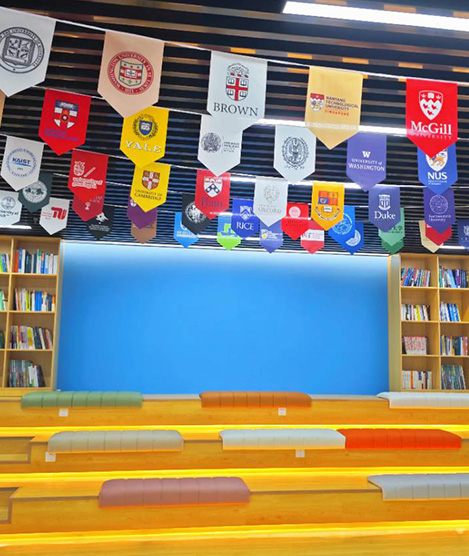
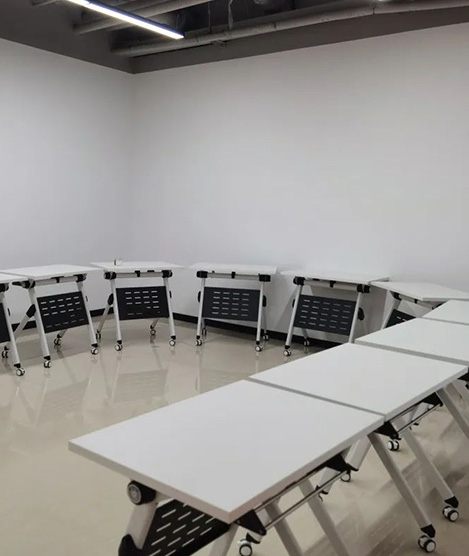
Teaching runs from Hanlin's own centres in Shanghai, Shenzhen, Chengdu and Hangzhou, and online for students elsewhere.





Talk to an advisor
Everything Hanlin does for YEEC, in one conversation.
Entry, planning, coaching and the past papers. An advisor will tell you which of these a student actually needs, including when the answer is none of them.
Competition entry and planning
Which competitions suit this student, in what order, and by when - then we handle the registration, including the ones that can only be entered through a school or a centre.
Competition coaching
Taught by full-time subject tutors, on a course tier chosen by placement paper rather than by year group.
International curriculum tutoring
IB, AP, A-Level, IGCSE and the US high school curriculum, taught alongside school and timed around the exam calendar.
Competition past papers, free
A large library of past papers, mark schemes and syllabus breakdowns across every competition on this site. No charge and no enrolment.
Scan to add an advisor
Say which competition or course you are asking about. Replies in Chinese or English.
Or call +86 21 6352 6630FAQ
YEEC, briefly answered.
What students and families ask before entering.
Can a student outside the UK enter?
No. Entry is limited to students in years 10 to 13 in England and Wales, and the equivalent years in Scotland and Northern Ireland.
Who runs it?
The Royal Economic Society together with the Financial Times. It has run since 2007. The Society was founded in 1890 as the British Economic Association and renamed after its 1902 Royal Charter.
Do I need to have studied economics?
No. The Society states that entrants need not have studied economics, and that part of the competition’s purpose is broadening the subject’s appeal.
Does it cost anything?
No. Entry is free, and each student may enter once a year with one submission.
How long can the entry be?
Up to 1,000 words, written in blog form. Alternatively you may submit a video, a podcast or a slide presentation.
How do I submit?
Through the Royal Economic Society website, in Microsoft Word or PDF. Paper entries are not accepted.
Do I need to cite sources?
Detailed in-text citation is not required, but you must include a list of sources that influenced your argument. In a written entry that list does not count toward the word limit.
How is it judged?
Anonymously, on originality, quality of writing, economic content and the quality of the economic argument, by a panel drawn from the Society and the Financial Times.
What can you win?
£1,000 for the best essay, with the opportunity to be published in the Financial Times, and £200 for the best essay on each topic, limited to five recipients.
Is the winning work made public?
Yes. Winners’ names and schools, and the full winning essay, are published on the Society’s website and social media.
Related
Economics essay competitions open worldwide.
What students outside the UK enter instead.
Economics essay enquiries
A UK competition, with three international alternatives.
YEEC is limited to schools in the UK, but the Marshall Society, LSE and IEA competitions are all open worldwide and ask for similar work. Tell us where the student studies and an advisor will point at the ones actually available.