
Competitions · Mathematics · Yau Girls’ Mathematics Competition
The Yau High School Girls’ Mathematics Competition.
Founded by the mathematician Shing-Tung Yau and run at Tsinghua University for girls in grades 9 to 12 worldwide. Its prize is named for Emmy Noether, and its top awards carry something almost no other competition offers: a route into Tsinghua that does not go through the gaokao.

At a glance
What the competition is, and who enters it.
The competition exists to bring more women into mathematics and the basic sciences, and is explicit that gender should not limit where a scientist can go. It is held annually and draws entrants from around the world.
- Founded by
- Shing-Tung Yau, the mathematician, with the competition run at Tsinghua University
- Who can enter
- Female secondary students in grades 9 to 12, anywhere in the world
- The award
- Named the Noether Prize, after Emmy Noether
- Format
- A written paper and an interview - the interview is unusual for a mathematics competition and is part of the assessment, not a formality
- Entering
- Individually or as a team
- Qualifying
- Entrants reach the competition through the selection round for their own country or region
- Registration
- Online, in September and October
- When
- The competition is held in October or November
- Content
- Algebra, geometry and probability, with calculus, linear algebra and group theory named among the areas examined
- What top awards carry
- Eligibility for selection into the Yau Mathematical Sciences Leaders Programme, and with it a route to Tsinghua outside the gaokao
The Noether Prize
Why the award carries that name.
The naming is not decorative. Emmy Noether is the strongest possible answer to the question the competition exists to address.
She built modern abstract algebra
Emmy Noether, 1882 to 1935, laid the foundations of the theory of rings, fields and algebras over fields, and drove abstract algebra into becoming an independent branch of mathematics. She is called the mother of abstract algebra.
And a theorem physics still runs on
Noether’s theorem established the connection between symmetry and conservation laws. It remains one of the load-bearing results in theoretical physics, a century after she proved it.
Recognised by her contemporaries
Alexandrov, Einstein, Dieudonné, Weyl and Wiener all regarded her as among the greatest mathematicians of her generation - a judgement made at a time when very little else was made easy for her.
Which is the argument
A prize named for Noether makes a claim rather than a gesture: that the shortage of women in mathematics has never been a shortage of ability. The competition is built around that claim.
What it leads to
The Tsinghua route, stated carefully.
This is the highest-stakes consequence attached to any competition on this site, and it is worth reading precisely rather than as a headline.
Selection into the Leaders Programme
A strong result makes a student eligible to be considered for the Yau Mathematical Sciences Leaders Programme. Winning the competition is the qualification to be assessed, not the admission itself.
Then a preparatory assessment
Students who pass that programme’s preparatory assessment and are formally recognised are admitted through the recommended-admission route rather than sitting the gaokao.
Treated as an olympiad national squad member
Award winners are described as receiving treatment equivalent to members of the national training squads for the mathematics and physics olympiads - which is the clearest indication of how the result is weighted.
Two gates, not one
The competition, then the programme’s own assessment. Plan for both. A family treating the first as sufficient will be surprised by the second.
Difficulty
What "moderate" means here.
The published description calls the paper moderate in difficulty. That word is doing specific work and is worth unpacking before planning preparation around it.
Moderate, relative to what
The comparison given is explicit: harder than the TACA assessment, easier than the first round of Tsinghua’s leaders programme. Both reference points sit well above an ordinary school syllabus.
The content list is university material
Calculus, linear algebra and group theory are named among the areas examined. For students in grades 9 to 12 that is content a school course will not have covered, whatever adjective is attached to it.
What is actually rewarded
The questions are described as testing mathematical thinking, reasoning and originality, and applying mathematics to real problems - rather than recall. Coverage alone will not carry a candidate.
And then you have to talk about it
The interview means a student must explain their mathematics aloud to mathematicians. That is a separate skill from writing it, and it is rarely practised before it is tested.
The year
How the cycle runs.
Registration and the competition sit close together in the autumn, so the preparation window is the months before rather than after.
Registration
Online: create an account, complete the entry details, pay. An advisor can complete this on a family’s behalf.
Regional selection
Entrants qualify through the selection round for their own country or region.
Written paper
The examined stage, covering algebra, geometry, probability and beyond.
Interview
Candidates are assessed in person as well as on paper.
Leaders Programme selection
Award winners become eligible for selection into the Yau Mathematical Sciences Leaders Programme and its own preparatory assessment.
Preparation
How Hanlin prepares students for this competition.
The gap between a strong school student and a competitive entrant here is specific and large, and it is not closed by working more school problems.
University content, taught properly
Calculus, linear algebra and group theory need teaching rather than exposure. These are covered as subjects in their own right, on a timeline that starts well before the autumn.
Explaining mathematics aloud
The interview is assessed. Students practise talking through a solution, defending a choice of method and saying honestly what they have not resolved - which is closer to a viva than to an exam.
Originality is on the mark scheme
The questions are set to reward reasoning and innovation. Practice therefore uses unfamiliar problems rather than more of the same, since a rehearsed method is exactly what these papers avoid rewarding.
Planning for the second gate
The Leaders Programme assessment follows the competition. Students in reach of an award prepare for both, because the interval between them is short.
Why Hanlin
Preparation for Yau Girls’ Mathematics Competition at Hanlin is taught by full-time subject tutors, on a course tier chosen by placement paper rather than by year group.
Programme formats
Five ways this is taught.
Group size is the whole difference between these. It decides how much of the tutor's attention a student gets and how far the course can bend to them, so it is worth choosing rather than accepting.
| Format | Group size | What it suits |
|---|---|---|
| One-to-one | One student | Content, pace and emphasis set by what this student actually needs rather than by a syllabus. The only format that can be rebuilt mid-course. |
| Small group | Three to eight | Opens at three. Frequent discussion, and the tutor can slow down or move on according to what the group has absorbed. Most students chasing a higher award are taught in this one. |
| Class | Eight to twelve | Taught by the subject lead or a medal coach. Less back-and-forth, so it suits a student who will say when something is unclear. |
| Large class | Ten to twenty | For students in the middle of the placement range, and a way to try a competition before committing. Students often move to a small group or to one-to-one afterwards. |
| Past-paper class | No cap | Past papers worked through in sequence in the weeks before the sitting. Free to students already enrolled. |
Course length for Yau Girls’ Mathematics Competition is set after a placement paper. The gap between where a student is and what the paper asks for is what the course has to close, and that gap is not the same for two students in the same year group.
How it runs
Six steps, four people on your side.
The same process for every student, so that nothing depends on one tutor remembering to do it.
 Step 1
Pre-course assessment
A placement paper before anything is booked, so the course tier is chosen on evidence rather than on a year group.
 Step 2
Tutor matching
A subject tutor is matched to the result, and their full background is provided before you agree to it.
 Step 3
Plan and group
A study group opens with four people on one student: the tutor, a planner, a supervisor and an academic manager.
 Step 4
Scheduled teaching
The teaching office sets the timetable around the competition date and school term, and teaching begins.
 Step 5
After-class reports
What was covered, and how the student handled it, reported after every lesson.
 Step 6
Homework follow-up
The teaching assistant and the form teacher both check that homework is done, which is where most preparation quietly fails.
Free resource pack
Past papers and preparation pack
The same material our own Yau Girls’ Mathematics Competition students work from. Scan the code, say what you need, and an advisor sends it.

Tell an advisor which competition and year group, and the material comes back the same day. Free, and you do not have to enrol in anything. If we do not already hold what you need, we will go and find it.
- PDFPast papers, every year the organiser has released
- PDFWorked solutions, where the organiser publishes them
- PDFThe syllabus on one page - every topic, and how heavily it is examined
- PDFEntry checklist and the dates for the current cycle
Teaching team
Who would teach it.
Three of the twenty-two tutors on the published Hanlin roster - the ones whose subject this is.

Dr Zhang
PhD in theoretical mathematics from the University of Rochester and a postdoctoral fellow at the Shanghai Center for Mathematical Sciences at Fudan. An AMC-accredited coach, ASDAN-accredited for DMM and ITCCC, and an accredited UKMT BMO2 and PUMaC coach. His students have gone on to read mathematics and physics at Harvard, MIT, Princeton, Caltech and Cambridge.

Dr Zhuang
PhD in mathematics from the University of Denver, working in mathematical logic, after a first degree in applied mathematics at Southeast University. A repeat conference speaker on his research, with three years lecturing and assisting on undergraduate mathematics at Denver.

He
A Cambridge master's after a computer science degree with a mathematics minor at the University of Nebraska-Lincoln, and a US high school GPA of 4.13. Six years overseas and teaches entirely in English, across AMC, Math League, AP Computer Science and AP Calculus.
Where it is taught
Hanlin learning centres.
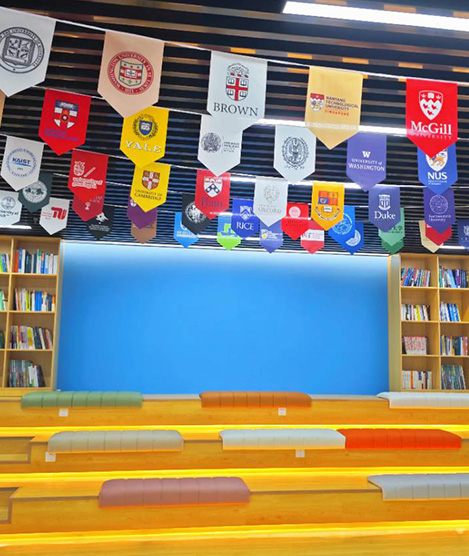
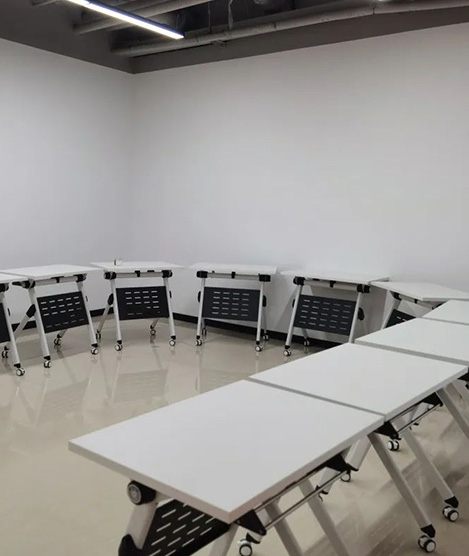
Teaching runs from Hanlin's own centres in Shanghai, Shenzhen, Chengdu and Hangzhou, and online for students elsewhere.





Talk to an advisor
Everything Hanlin does for Yau Girls’ Mathematics Competition, in one conversation.
Entry, planning, coaching and the past papers. An advisor will tell you which of these a student actually needs, including when the answer is none of them.
Competition entry and planning
Which competitions suit this student, in what order, and by when - then we handle the registration, including the ones that can only be entered through a school or a centre.
Competition coaching
Taught by full-time subject tutors, on a course tier chosen by placement paper rather than by year group.
International curriculum tutoring
IB, AP, A-Level, IGCSE and the US high school curriculum, taught alongside school and timed around the exam calendar.
Competition past papers, free
A large library of past papers, mark schemes and syllabus breakdowns across every competition on this site. No charge and no enrolment.
Scan to add an advisor
Say which competition or course you are asking about. Replies in Chinese or English.
Or call +86 21 6352 6630FAQ
The Yau Girls’ competition, briefly answered.
What students and families ask before entering.
Who can enter?
Female secondary students in grades 9 to 12, anywhere in the world. A student in the first year of senior school is well within the range.
How do I register?
Online in September or October: create an account, complete the entry information and pay. An advisor can complete the registration on your behalf if you would rather not do it directly.
What is the format?
A written paper and an interview. The interview is part of the assessment, which is unusual among mathematics competitions and means a candidate must be able to explain their reasoning aloud.
How difficult is it?
The organisers describe it as moderate, but they mean relative to Tsinghua’s leaders programme examinations - harder than the TACA assessment and easier than the programme’s first round. The named content includes calculus, linear algebra and group theory.
Can I enter alone, or do I need a team?
Either. Entrants may register individually or compete as a team.
Is it true that winners can enter Tsinghua without the gaokao?
Award winners become eligible for selection into the Yau Mathematical Sciences Leaders Programme. Students who then pass that programme’s preparatory assessment and are formally recognised are admitted through the recommended-admission route. There are two gates, not one.
Why is the prize called the Noether Prize?
After Emmy Noether, who founded much of modern abstract algebra and whose theorem linking symmetry to conservation laws underpins theoretical physics. The naming is the competition’s argument in miniature.
What is examined?
Algebra, geometry and probability, with calculus, linear algebra and group theory named among the areas covered. The questions are set to test reasoning and originality rather than recall.
Related
Other routes for the same students.
Competitions for girls, and other olympiad-level mathematics.
Yau competition enquiries
There are two gates, and university content behind both.
The competition qualifies a student to be assessed by the Leaders Programme, not to enter it. Tell us the student’s year group and what mathematics she has covered, and an advisor will map the autumn cycle honestly.