
Competitions · Computer science · USAAIO
USAAIO, the North American AI Olympiad.
A written theory round in February, then three hours of live machine-learning modelling at MIT. It is the official North American selection route for the international AI olympiads - and it is closed unless you are in the right place.

Read this first
Where you are at school, or what passport you hold.
USAAIO is open on two conditions, and a student needs to satisfy one of them before anything else on this page matters.
At school in the United States or Canada
Students currently studying at a school in either country are eligible regardless of nationality.
Or holding US or Canadian citizenship
Students overseas who hold citizenship of either country may enter from where they are.
Neither of those means no entry
A student at a school in China without US or Canadian citizenship cannot enter, however strong their machine learning.
And there is a Chinese route
NOAI, the Chinese branch of the international AI olympiad, selects the Chinese team for the same international competition. It has its own page here.
At a glance
What the olympiad is.
USAAIO is run by a US non-profit education organisation with support from MIT, Google and Jane Street. It is the official North American selection channel for IOAI, the International Olympiad in Artificial Intelligence, and for IAIO.
- Who can enter
- K-12 students at school in the United States or Canada, or overseas students holding US or Canadian citizenship
- Age limit
- 20 or under, and not a university student
- Prerequisites
- Python, linear algebra, probability, and the basics of machine learning including supervised and unsupervised concepts
- Format
- Individual throughout. There is no team component at any stage
- Round one
- A three-hour online written paper in February, sat at the student’s own school with in-person invigilation and screen recording
- Round two
- Three hours in person at MIT, closed book, with screen monitoring and face recording
- Then
- A summer training camp at MIT in June
- Registration
- Opens in June and closes at the end of the following January
- Support
- Google provides free Pro+ GPU compute; Jane Street sponsors the competition
- Where it leads
- Eight students represent the region at IOAI and four at IAIO
The two rounds
Theory, then a laptop and a real dataset.
The two rounds test almost entirely different things, which is unusual and worth planning around.
| Round | What it asks | Awards |
|---|---|---|
| Round one - written, online | AI fundamentals: supervised and unsupervised learning, how neural networks work, loss functions, overfitting and regularisation. Implementing classic algorithms in Python - decision trees, K-means clustering - auto-graded on correctness and output. Mathematical derivation: probability models such as Bayes’ theorem and the steps of gradient descent, with full working shown | Distinguished Honor Roll, High Honor Roll, Honor Roll |
| Round two - modelling, at MIT | Real-scenario modelling in three hours. Natural language tasks such as sentiment analysis and text generation, designing and training a model. Computer vision tasks such as image classification and object detection, optimising a model architecture | A camp place, Gold, Silver, Bronze, Honorable Mention |
Round one can be prepared for from a course. Round two cannot - it is judged on accuracy, recall and F1, on running time and GPU memory use, on generalisation measured by cross-validation, and on how well you explain what you did.
How round two is judged
Four criteria, and only one of them is accuracy.
The published marking gives a clear picture of what a strong entry looks like, and it is not simply the highest score on a leaderboard.
Model performance
Accuracy, recall and F1 score on the task. The obvious criterion, and the one competitors over-weight.
Efficiency
Running time and GPU memory usage, on the compute Google provides. A model that wins on accuracy but cannot run in the budget does not win.
Generalisation and originality
Cross-validation performance on unseen data, with credit for improving on standard models - adjusting an attention mechanism, or fusing multiple data modalities.
And how you present it
Judged on the logic of the account - background, approach, results, limitations - on the depth of technical understanding beneath it, and on how the competitor handles the judges’ technical questions.
Where it sits
USAAIO against USACO and Kaggle.
The organisers make both comparisons themselves, and they are useful for deciding which contest suits a particular student.
Against USACO - almost no overlap
USACO tests algorithms; USAAIO tests artificial intelligence. USACO asks more of raw mathematical and logical talent. USAAIO asks more of learning ability - sustained self-study and comprehension.
Against Kaggle - a narrower field
Kaggle is open to everyone, including professional research teams, and prize money goes to the highest accuracy. Winning there is very hard. USAAIO is a high-school competition with problems that have broadly standard answers.
And a wider award structure
Because USAAIO awards medals and honours across bands rather than paying only the winner, far more competitors come away with something to show.
Which suits a self-taught student
The organisers’ own framing: this rewards a student who can learn a field independently more than one with exceptional contest instincts.
Preparation
How Hanlin prepares students for USAAIO.
Two rounds that test different things need two separate preparations, and only one of them looks like studying.
Securing the prerequisites first
Python, linear algebra, probability and the concepts of supervised and unsupervised learning are assumed rather than taught. Without them nothing else is possible.
Practising derivation on paper
Round one asks for the steps of Bayes’ theorem and gradient descent with full working. Students who can use these but not derive them lose marks here.
Building models end to end
Round two runs from data preprocessing through model architecture to optimisation in three hours. That is a rehearsed workflow, not something assembled on the day.
And rehearsing the defence
A quarter of the round-two criteria concerns explaining the work and answering technical questions. Practising that against real questioning is the only preparation for it.
Why Hanlin
Preparation for USAAIO at Hanlin is taught by full-time subject tutors, on a course tier chosen by placement paper rather than by year group.
Programme formats
Five ways this is taught.
Group size is the whole difference between these. It decides how much of the tutor's attention a student gets and how far the course can bend to them, so it is worth choosing rather than accepting.
| Format | Group size | What it suits |
|---|---|---|
| One-to-one | One student | Content, pace and emphasis set by what this student actually needs rather than by a syllabus. The only format that can be rebuilt mid-course. |
| Small group | Three to eight | Opens at three. Frequent discussion, and the tutor can slow down or move on according to what the group has absorbed. Most students chasing a higher award are taught in this one. |
| Class | Eight to twelve | Taught by the subject lead or a medal coach. Less back-and-forth, so it suits a student who will say when something is unclear. |
| Large class | Ten to twenty | For students in the middle of the placement range, and a way to try a competition before committing. Students often move to a small group or to one-to-one afterwards. |
| Past-paper class | No cap | Past papers worked through in sequence in the weeks before the sitting. Free to students already enrolled. |
Course length for USAAIO is set after a placement paper. The gap between where a student is and what the paper asks for is what the course has to close, and that gap is not the same for two students in the same year group.
How it runs
Six steps, four people on your side.
The same process for every student, so that nothing depends on one tutor remembering to do it.
 Step 1
Pre-course assessment
A placement paper before anything is booked, so the course tier is chosen on evidence rather than on a year group.
 Step 2
Tutor matching
A subject tutor is matched to the result, and their full background is provided before you agree to it.
 Step 3
Plan and group
A study group opens with four people on one student: the tutor, a planner, a supervisor and an academic manager.
 Step 4
Scheduled teaching
The teaching office sets the timetable around the competition date and school term, and teaching begins.
 Step 5
After-class reports
What was covered, and how the student handled it, reported after every lesson.
 Step 6
Homework follow-up
The teaching assistant and the form teacher both check that homework is done, which is where most preparation quietly fails.
Free resource pack
Past papers and preparation pack
The same material our own USAAIO students work from. Scan the code, say what you need, and an advisor sends it.

Tell an advisor which competition and year group, and the material comes back the same day. Free, and you do not have to enrol in anything. If we do not already hold what you need, we will go and find it.
- PDFPast papers, every year the organiser has released
- PDFWorked solutions, where the organiser publishes them
- PDFThe syllabus on one page - every topic, and how heavily it is examined
- PDFEntry checklist and the dates for the current cycle
Teaching team
Who would teach it.
Three of the twenty-two tutors on the published Hanlin roster - the ones whose subject this is.
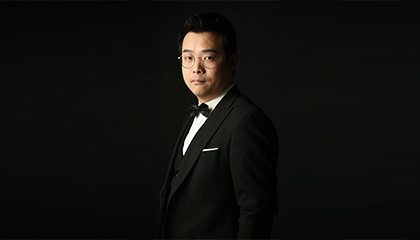
Luo
Bachelor's and master's in computer science from the University of California and ten years in the United States. Works close to the hardware, and teaches for independent problem solving rather than pattern recall.

Tan
Master's in data science from the University of Sydney after a statistics degree at Simon Fraser University, graduating in the top 5% with repeated chancellor's honours; A-Levels at a Cambridge international school, and formerly a data analyst at Tencent. An AMC-accredited coach, a College Board-accredited AP teacher, and holder of a Math League excellent-teacher award.
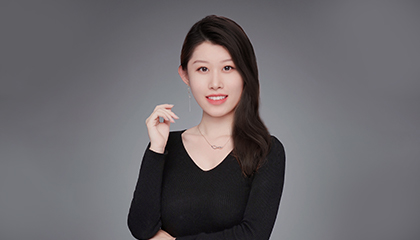
He
A Cambridge master's after a computer science degree with a mathematics minor at the University of Nebraska-Lincoln, and a US high school GPA of 4.13. Six years overseas and teaches entirely in English, across AMC, Math League, AP Computer Science and AP Calculus.
Where it is taught
Hanlin learning centres.
Teaching runs from Hanlin's own centres in Shanghai, Shenzhen, Chengdu and Hangzhou, and online for students elsewhere.






Talk to an advisor
Everything Hanlin does for USAAIO, in one conversation.
Entry, planning, coaching and the past papers. An advisor will tell you which of these a student actually needs, including when the answer is none of them.
Competition entry and planning
Which competitions suit this student, in what order, and by when - then we handle the registration, including the ones that can only be entered through a school or a centre.
Competition coaching
Taught by full-time subject tutors, on a course tier chosen by placement paper rather than by year group.
International curriculum tutoring
IB, AP, A-Level, IGCSE and the US high school curriculum, taught alongside school and timed around the exam calendar.
Competition past papers, free
A large library of past papers, mark schemes and syllabus breakdowns across every competition on this site. No charge and no enrolment.
Scan to add an advisor
Say which competition or course you are asking about. Replies in Chinese or English.
Or call +86 21 6352 6630FAQ
USAAIO, briefly answered.
What students and families ask before entering.
Can a student in China enter?
Only if they hold US or Canadian citizenship. Entry requires either study at a school in the United States or Canada, or citizenship of one of those countries.
What should a student in China enter instead?
NOAI, the Chinese branch of the international AI olympiad, which selects the Chinese team for the same international competition. It has its own page here.
Is there an age limit?
Yes - 20 or under, and the competitor must not be a university student.
What do I need to know before entering?
Python, linear algebra, probability, and the basics of machine learning including supervised and unsupervised learning concepts. These are assumed rather than taught.
What is round one like?
A three-hour online written paper in February, sat at your own school with in-person invigilation and screen recording. It covers AI theory, implementing classic algorithms in Python, and mathematical derivation with working shown.
What is round two like?
Three hours in person at MIT, closed book, with screen monitoring and face recording. Competitors build and train models for natural language and computer vision tasks on real data.
How is round two marked?
On model performance - accuracy, recall and F1; on efficiency - running time and GPU memory use; on generalisation measured by cross-validation and on originality; and on how clearly the work is presented and defended under questioning.
Is there any team element?
No. USAAIO is individual throughout, which the organisers describe as deliberate.
How does a competitor reach the international olympiad?
Through round one, round two and the summer camp at MIT. Eight students represent the region at IOAI and four at IAIO.
How does it compare with Kaggle?
Kaggle is open to everyone including professional research teams, and rewards the highest accuracy on open problems. USAAIO is a high-school competition with problems that have broadly standard answers and a graded award structure, so far more competitors finish with a result.
Related
AI and computing contests.
The alternatives, and what runs alongside.
USAAIO enquiries
Settle eligibility before anything else.
USAAIO needs either a school in the United States or Canada or citizenship of one of them, and the prerequisites in Python and mathematics are assumed rather than taught. Tell us where the student is and what they already know, and an advisor will confirm whether this route is open.