
Competitions · Chemistry · UKChO
UKChO, the UK Chemistry Olympiad.
Fifty years old, run by the Royal Society of Chemistry, and named by Cambridge on its own website as a competition worth entering. Its questions are largely built from original papers in leading chemistry journals - and its gold threshold has moved by twelve marks in four years.
At a glance
What the olympiad is, and who runs it.
The Royal Society of Chemistry is a 175-year-old body with more than 54,000 members and offices in London and Cambridge. It has run this olympiad for over fifty years, and brought it to China in 2018.
- Organiser
- The Royal Society of Chemistry (RSC)
- Since
- Over fifty years, making it Britain’s oldest high-school chemistry competition
- Who can enter
- Round 1 is open to students globally. Rounds 2 and 3 are restricted to UK nationals
- Format
- Individual, written, entirely in English. No practical component
- Duration
- 2 hours
- Paper
- Around five analytical long questions, each carrying between three and ten sub-questions
- Total marks
- Varies slightly year to year, roughly 80 to 90
- Marking
- Every paper is returned to the UK and marked by examiners appointed by the RSC
- Scale
- Around 17,000 entrants in a recent year, with more than 250 international and key schools taking part in China
- Equipment
- A basic calculator with no equation editor or programming functions, and a printed dictionary
- When
- Late January, with registration closing about ten days earlier
Worth knowing first
Chinese entrants sit Round 1 and stop there.
UKChO runs in three rounds. Round 1 is the written paper, and it is open to students anywhere - Chinese entrants sit exactly the same paper as British ones, on the same day, marked by the same examiners against the same thresholds.
Round 2 takes the thirty highest-scoring UK nationals to Cambridge for residential training, and Round 3 selects the four who represent Britain at the International Chemistry Olympiad. Both are restricted by nationality, so a Chinese student cannot progress beyond Round 1.
That is less limiting than it sounds. Round 1 is the round that carries the global medals, and a gold there is measured against the British field rather than against a separate international one.
Cut-offs
What each medal has actually required.
Thresholds are set from British students’ scores each year and then applied to everyone. They move considerably, because the difficulty of the paper does.
| Year | Gold | Silver | Bronze | Entrants |
|---|---|---|---|---|
| 2026 | 38 | 23 | 13 | 17,241 |
| 2025 | 29 | 16 | 9 | 16,216 |
| 2024 | 30 | 18 | 10 | 14,915 |
| 2023 | 38 | 24 | 14 | 11,838 |
| 2022 | 26 | 16 | 9 | — |
| 2021 | 36 | 25 | 17 | 7,160 in the UK |
| 2020 | 37 | 22 | 12 | 9,182 in the UK |
The gold line has ranged from 26 to 38 across these years - a twelve-mark swing on a paper worth roughly 80 to 90. Planning a target from a previous year’s threshold is unreliable; planning from the award proportions is not.
How awards work
Why the mechanism favours a well-prepared cohort.
UKChO sets its thresholds on the British field and then applies them as fixed marks. The consequence is visible in the published figures.
British proportions set the lines
In a typical year gold goes to 7 to 8% of British entrants, silver to around a third and bronze to around 58%. Between 60 and 65% of British students take a bronze or better.
Everyone else meets the mark, not the ranking
Chinese entrants are awarded by clearing the same score thresholds rather than by placing within their own cohort. Nothing is capped.
And the result is measurable
In 2021 nearly 14% of Chinese entrants took gold against a British gold rate of around 8%, with about 17% taking silver and over 26% bronze.
But the paper still decides
A generous mechanism does not make a hard paper easy. In 2025 more than a third of all entrants finished without an award.
The paper
Built from real chemistry, not from a syllabus.
This is the single most useful thing to understand about preparing for UKChO, and it explains why past papers matter more here than coverage.
Questions come from journal papers
Most questions are built around original research published in leading chemistry journals. The chemistry is real and current rather than constructed for an exam.
Which means unfamiliar context, familiar tools
A question may open on a compound or reaction a student has never met. What is being tested is whether A-Level chemistry can be applied to it, not whether the context was already known.
Reaching into first-year university
The content spans A-Level through parts of a first university year. Organic chemistry in particular goes well beyond what an international high-school course requires.
Five questions, ten sub-parts each
Around five long analytical questions, each broken into three to ten parts. The structure means a student can make progress on a question they cannot finish.
Syllabus
Four areas, one of which A-Level barely touches.
The published scope is unusually specific for an olympiad, which makes preparation concrete.
Inorganic chemistry
Moles and basic calculations, stoichiometry and equations, atomic structure, bonding and molecular structure, and inorganic reactions. The most familiar territory for most entrants.
Physical chemistry
Chemical kinetics and chemical thermodynamics. Narrow in scope but demanding in depth - these two carry a large share of the calculation on the paper.
Analytical chemistry
Infrared spectroscopy, mass spectrometry, and both proton and carbon NMR. This is where an A-Level course leaves the largest gap, and it appears every year.
Organic chemistry
Fundamentals through to reactions by class, polymerisation, synthesis routes and mechanisms. The organic content is where the paper most exceeds a school syllabus.
Preparation
How Hanlin prepares students for UKChO.
The syllabus is published and the past papers are available. The work is in the two areas school does not reach.
Spectroscopy from the ground up
IR, mass spectrometry and NMR appear on every paper and in almost no A-Level course. These are taught as subjects rather than met for the first time in January.
Organic beyond the course
Mechanisms and synthesis routes go well past international high-school requirements. This is the largest single block of preparation and it needs months.
Reading unfamiliar context quickly
Because questions are built on journal papers, practice uses past papers specifically - the skill is extracting what matters from a context you have never seen.
Targeting proportions, not last year’s mark
With the gold line swinging twelve marks across recent years, a target set from a previous threshold is unreliable. Preparation aims at the award band rather than a number.
Why Hanlin
Hanlin has been entering students for UKChO for years, and publishes what they got. The record is further down this page.
Programme formats
Five ways this is taught.
Group size is the whole difference between these. It decides how much of the tutor's attention a student gets and how far the course can bend to them, so it is worth choosing rather than accepting.
| Format | Group size | What it suits |
|---|---|---|
| One-to-one | One student | Content, pace and emphasis set by what this student actually needs rather than by a syllabus. The only format that can be rebuilt mid-course. |
| Small group | Three to eight | Opens at three. Frequent discussion, and the tutor can slow down or move on according to what the group has absorbed. Most students chasing a higher award are taught in this one. |
| Class | Eight to twelve | Taught by the subject lead or a medal coach. Less back-and-forth, so it suits a student who will say when something is unclear. |
| Large class | Ten to twenty | For students in the middle of the placement range, and a way to try a competition before committing. Students often move to a small group or to one-to-one afterwards. |
| Past-paper class | No cap | Past papers worked through in sequence in the weeks before the sitting. Free to students already enrolled. |
Course tiers
Which course, and on what evidence.
Every tier for UKChO is entered from a placement paper rather than from a year group. These are the actual standards.
| Course | Hours | Who it is for |
|---|---|---|
| Full course | 60 hours | IGCSE chemistry behind you |
| Intensive | 40 hours | AP, AS or IB DP1 chemistry |
| CCO extension | Extension course | For students who have completed the CCO course and are adding UKChO |
| Past-paper class | 16 hours | Past papers worked through. Free to students already enrolled |
Ask for the placement paper before choosing a tier. It takes an hour and it settles the question.
How it runs
Six steps, four people on your side.
The same process for every student, so that nothing depends on one tutor remembering to do it.
 Step 1
Pre-course assessment
A placement paper before anything is booked, so the course tier is chosen on evidence rather than on a year group.
 Step 2
Tutor matching
A subject tutor is matched to the result, and their full background is provided before you agree to it.
 Step 3
Plan and group
A study group opens with four people on one student: the tutor, a planner, a supervisor and an academic manager.
 Step 4
Scheduled teaching
The teaching office sets the timetable around the competition date and school term, and teaching begins.
 Step 5
After-class reports
What was covered, and how the student handled it, reported after every lesson.
 Step 6
Homework follow-up
The teaching assistant and the form teacher both check that homework is done, which is where most preparation quietly fails.
Free resource pack
UKChO past papers and preparation pack
The same material our own UKChO students work from. Scan the code, say what you need, and an advisor sends it.
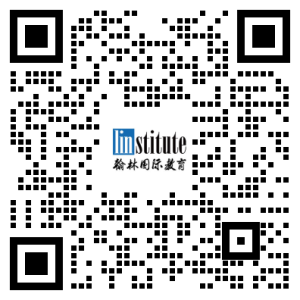
Tell an advisor which competition and year group, and the material comes back the same day. Free, and you do not have to enrol in anything. If we do not already hold what you need, we will go and find it.
- PDFPast UK Chemistry Olympiad papers with published solutions
- PDFThe syllabus mapped against IGCSE, AS and A-Level chemistry
- PDFAward boundaries, year by year
- PDFRegistration checklist and the dates for the current cycle
Teaching team
Who would teach it.
Three of the twenty-two tutors on the published Hanlin roster - the ones whose subject this is.
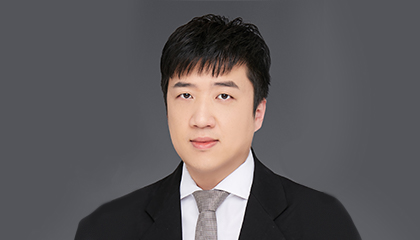
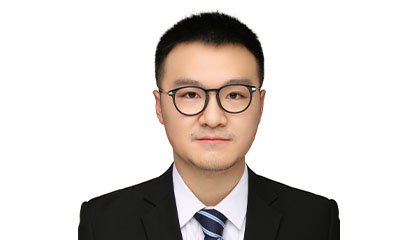
Dr Li
A Fudan postdoctoral researcher with a PhD in organic chemistry from HKUST, a master's in medicinal chemistry and nano-engineering from East China University of Science and Technology jointly with Myongji University, and a first degree in pharmaceutics. College Board-accredited.
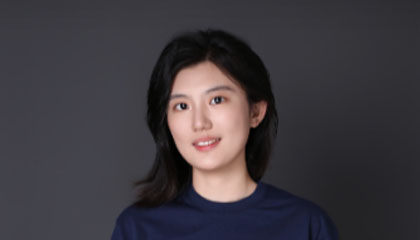
Qiu
PhD in organic chemistry from the Institute of Chemistry, Chinese Academy of Sciences, after materials physics at East China University of Science and Technology. College Board-accredited, with published papers on organic small-molecule catalysis in internationally recognised journals.
Shi
Master's in water science and engineering from TU Dresden - one of Germany's TU9 institutes - after environmental engineering at Ocean University of China. A researcher in environmental chemistry at the Helmholtz Centre for Environmental Research, a DAAD scholarship holder, and College Board-accredited.
Student results
What Hanlin students got.
Taken from Hanlin's published record of student honours and rewritten in English. Figures are as the organisers reported them.
Golds in 2025
One line from Hanlin's published UKChO record. The rest of it is below.
UKChO
- 202565 Gold, 18 Silver and 3 Bronze, plus 2 Gold and one Silver in the UK region
- 202448 Gold, 26 Silver and 13 Bronze
- 202322 Gold
Earlier years
- 202220 Gold
- 202111 Gold
The full record, across every subject and year, is on the student honours page.
Where it is taught
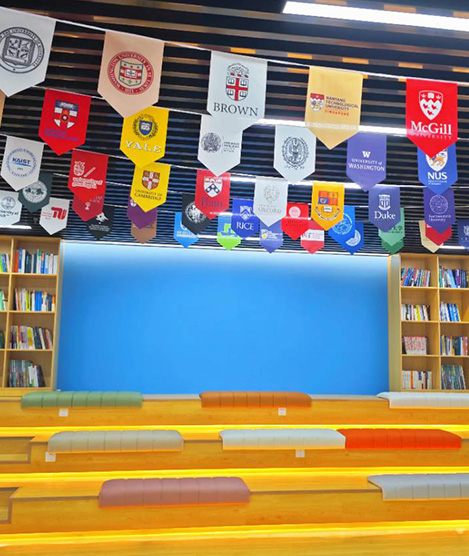
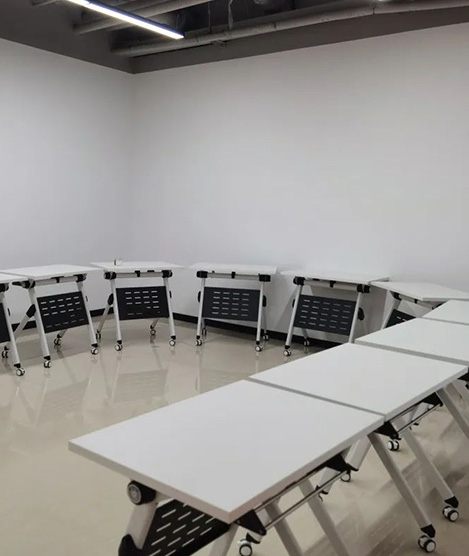
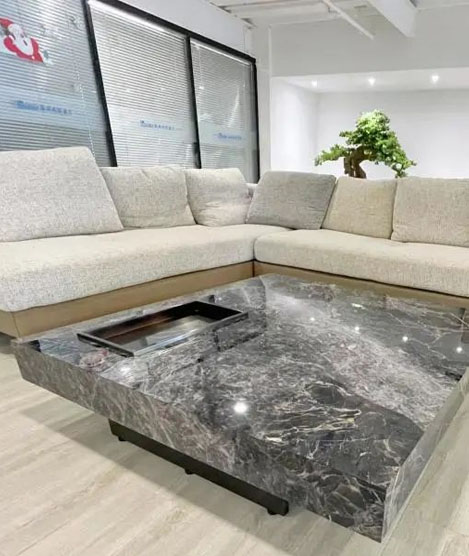
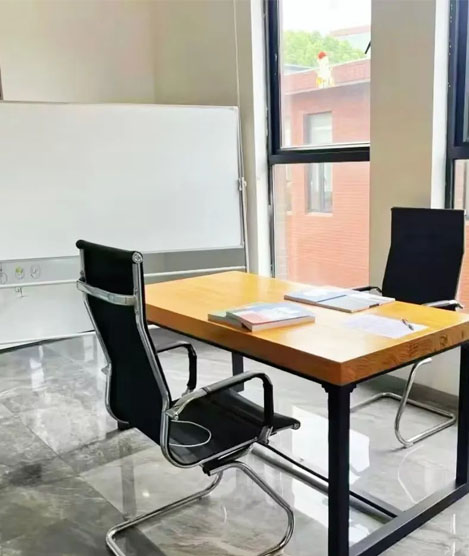
Hanlin learning centres.
Teaching runs from Hanlin's own centres in Shanghai, Shenzhen, Chengdu and Hangzhou, and online for students elsewhere.



Talk to an advisor
Everything Hanlin does for UKChO, in one conversation.
Entry, planning, coaching and the past papers. An advisor will tell you which of these a student actually needs, including when the answer is none of them.
Competition entry and planning
Which competitions suit this student, in what order, and by when - then we handle the registration, including the ones that can only be entered through a school or a centre.
Competition coaching
Taught by full-time subject tutors, on a course tier chosen by placement paper rather than by year group.
International curriculum tutoring
IB, AP, A-Level, IGCSE and the US high school curriculum, taught alongside school and timed around the exam calendar.
Competition past papers, free
A large library of past papers, mark schemes and syllabus breakdowns across every competition on this site. No charge and no enrolment.
Scan to add an advisor
Say which competition or course you are asking about. Replies in Chinese or English.
Or call +86 21 6352 6630FAQ
UKChO, briefly answered.
What students and families ask before entering.
Can a Chinese student compete?
In Round 1, yes - on the same paper as British students, marked by the same examiners against the same thresholds. Rounds 2 and 3 are restricted to UK nationals, so progression stops after Round 1.
Is Round 1 worth entering if I cannot progress?
Round 1 is the round that carries the global gold, silver and bronze medals. The award is measured against the British field, which is what gives it weight.
What is the paper like?
Two hours, entirely in English, with around five analytical long questions each carrying three to ten sub-questions. Total marks vary by year, roughly 80 to 90.
What score do I need for a medal?
It moves every year. Recent gold thresholds have ranged from 26 to 38 marks, so a target set from a previous year is unreliable. Gold goes to roughly 7 to 8% of British entrants.
Where do the questions come from?
Mostly from original research published in leading chemistry journals. The context will often be unfamiliar; the chemistry needed to handle it is A-Level plus extension.
What is on the syllabus?
Inorganic chemistry, physical chemistry covering kinetics and thermodynamics, analytical chemistry covering IR, mass spectrometry and NMR, and organic chemistry through to mechanisms and synthesis routes.
Can I bring a calculator?
A basic one, with no equation editor and no programming functions. A printed dictionary is also permitted.
Does it help with a UK application?
Cambridge names UKChO on its own website and encourages students to enter. It is widely used in applications for chemistry, medicine and related programmes.
Related
Other chemistry contests.
What students commonly enter alongside UKChO.
UKChO enquiries
Spectroscopy and organic mechanisms are where the marks are.
Both go well beyond A-Level, both appear every year, and both need months rather than weeks. Tell us the student’s year group and what chemistry they have covered, and an advisor will map the January entry.