
Competitions · Mathematics · TMC
TMC, the UKMT Team Maths Challenge.
Four students, five rounds, and almost none of them a normal paper. One round splits the team in two and lets them speak only through the invigilator; another has them running answers across the hall. More than 1,600 British schools enter it each year.
At a glance
What the challenge is, and who enters it.
UKMT was founded in 1996 and runs national mathematics activities for more than 700,000 students aged 11 to 18. TMC is its flagship team event, and its UK national final in London is among the most watched things UKMT does.
- Organiser
- The United Kingdom Mathematics Trust (UKMT)
- Scale
- Over 1,600 schools across more than 80 UK regions enter the regional rounds each year
- Who can enter
- Students in grades 7 and 8
- Team size
- Four students, of whom at most two may be in grade 8 - so every team must include at least two younger students
- Rounds
- Five: Team, CrossNumber, Shuttle, Relay and Poster
- Language
- Chinese and English in the China region
- When and where
- Two days in late December, held in Shanghai for the China region
- What it feeds
- Teams winning top awards may be invited to the UKMT national final in the United Kingdom. Eligibility is decided by the UK committee year by year
- What the fee covers
- All competition rounds. Accommodation, travel and meals are not included
The rounds
Five rounds, four of which split the team.
Only the opening round has all four students working together. Everything after it divides them into pairs and then constrains how those pairs may communicate.
Team Round
Ten questions in forty-five minutes at six marks each, worked by all four together. It is the only conventional round on the paper, and the only one where the whole team can simply talk.
CrossNumber Round
Forty-five minutes, scored one mark per correct digit. The team splits into pairs, one taking the across clues and one the down. Neither pair may speak to the other - anything passed between them goes through the invigilator.
Shuttle Round
Four rounds of four questions in eight minutes, again in two pairs with no communication. The first question stands alone; every later answer depends on the one before it.
Relay Round
Thirty questions in forty-five minutes at two marks each. Pairs alternate, running each answer to the invigilator and, once it is confirmed, carrying it back to the other pair. There is a great deal of physical movement in this one.
Two rounds worth reading twice
The rules that decide marks before the mathematics does.
The Shuttle scoring and the Poster rules both carry consequences that catch out teams meeting them for the first time on the day.
Shuttle: three marks, or one
An answer correct at the first attempt scores 3. If the first attempt is wrong and a later one is right, it scores 1. Guessing early to keep the chain moving costs two thirds of the question’s value.
Shuttle: a bonus for finishing early
A team submitting a correct answer before the six-minute mark earns three additional marks. With eight minutes on the clock, that turns the last two minutes into dead time - the round rewards being finished, not being busy.
Poster: prepare on paper only
The topic is issued before the challenge and teams may prepare material in advance, but that work must be on paper and assembled into a poster on the day.
Poster: arriving assembled is disqualification
A team that turns up with a finished poster is disqualified outright. This is the single most expensive rule on the paper and the easiest to break by being organised.
Awards
Awarded per round, and on the total.
Each round is awarded separately as well as contributing to the team total, so a team strong in one format can place without leading overall.
| Award | Per round | On the team total |
|---|---|---|
| Placings | First, second and third in the round | First, second and third overall |
| Gold | Top 15% | Top 10% of teams |
| Silver | Top 30% | Top 30% of teams |
| Bronze | Top 60% | Top 60% of teams |
Because bronze runs to the top 60%, most teams that prepare properly come away with something. Teams taking top awards may be invited to the UK national final.
Preparation
How Hanlin prepares a TMC team.
TMC is the most procedurally unusual team contest on this site. Almost every mark a team loses on its first attempt is lost to the format rather than the mathematics.
Rehearsing the pair split
Four of the five rounds run in pairs. Which two students work together, and who takes across against down, is a decision that should be settled in practice rather than improvised in the hall.
Working without talking
The CrossNumber and Shuttle rounds forbid communication between pairs. Teams practise reaching consistent answers independently, which is genuinely unfamiliar and cannot be reasoned out on the day.
The six-minute Shuttle target
The early-submission bonus means the round is really six minutes long, not eight. Teams practise against the shorter clock so the bonus is the plan rather than a lucky outcome.
Building the poster twice
Preparation includes making the poster components on paper and then assembling them under time pressure - because assembling in advance is a disqualification and assembling for the first time on the day is slow.
Why Hanlin
Preparation for TMC at Hanlin is taught by full-time subject tutors, on a course tier chosen by placement paper rather than by year group.
Programme formats
Five ways this is taught.
Group size is the whole difference between these. It decides how much of the tutor's attention a student gets and how far the course can bend to them, so it is worth choosing rather than accepting.
| Format | Group size | What it suits |
|---|---|---|
| One-to-one | One student | Content, pace and emphasis set by what this student actually needs rather than by a syllabus. The only format that can be rebuilt mid-course. |
| Small group | Three to eight | Opens at three. Frequent discussion, and the tutor can slow down or move on according to what the group has absorbed. Most students chasing a higher award are taught in this one. |
| Class | Eight to twelve | Taught by the subject lead or a medal coach. Less back-and-forth, so it suits a student who will say when something is unclear. |
| Large class | Ten to twenty | For students in the middle of the placement range, and a way to try a competition before committing. Students often move to a small group or to one-to-one afterwards. |
| Past-paper class | No cap | Past papers worked through in sequence in the weeks before the sitting. Free to students already enrolled. |
Course length for TMC is set after a placement paper. The gap between where a student is and what the paper asks for is what the course has to close, and that gap is not the same for two students in the same year group.
How it runs
Six steps, four people on your side.
The same process for every student, so that nothing depends on one tutor remembering to do it.
 Step 1
Pre-course assessment
A placement paper before anything is booked, so the course tier is chosen on evidence rather than on a year group.
 Step 2
Tutor matching
A subject tutor is matched to the result, and their full background is provided before you agree to it.
 Step 3
Plan and group
A study group opens with four people on one student: the tutor, a planner, a supervisor and an academic manager.
 Step 4
Scheduled teaching
The teaching office sets the timetable around the competition date and school term, and teaching begins.
 Step 5
After-class reports
What was covered, and how the student handled it, reported after every lesson.
 Step 6
Homework follow-up
The teaching assistant and the form teacher both check that homework is done, which is where most preparation quietly fails.
Free resource pack
Past papers and preparation pack
The same material our own TMC students work from. Scan the code, say what you need, and an advisor sends it.

Tell an advisor which competition and year group, and the material comes back the same day. Free, and you do not have to enrol in anything. If we do not already hold what you need, we will go and find it.
- PDFPast papers, every year the organiser has released
- PDFWorked solutions, where the organiser publishes them
- PDFThe syllabus on one page - every topic, and how heavily it is examined
- PDFEntry checklist and the dates for the current cycle
Teaching team
Who would teach it.
Three of the twenty-two tutors on the published Hanlin roster - the ones whose subject this is.

Dr Zhang
PhD in theoretical mathematics from the University of Rochester and a postdoctoral fellow at the Shanghai Center for Mathematical Sciences at Fudan. An AMC-accredited coach, ASDAN-accredited for DMM and ITCCC, and an accredited UKMT BMO2 and PUMaC coach. His students have gone on to read mathematics and physics at Harvard, MIT, Princeton, Caltech and Cambridge.

Dr Zhuang
PhD in mathematics from the University of Denver, working in mathematical logic, after a first degree in applied mathematics at Southeast University. A repeat conference speaker on his research, with three years lecturing and assisting on undergraduate mathematics at Denver.

He
A Cambridge master's after a computer science degree with a mathematics minor at the University of Nebraska-Lincoln, and a US high school GPA of 4.13. Six years overseas and teaches entirely in English, across AMC, Math League, AP Computer Science and AP Calculus.
Where it is taught
Hanlin learning centres.
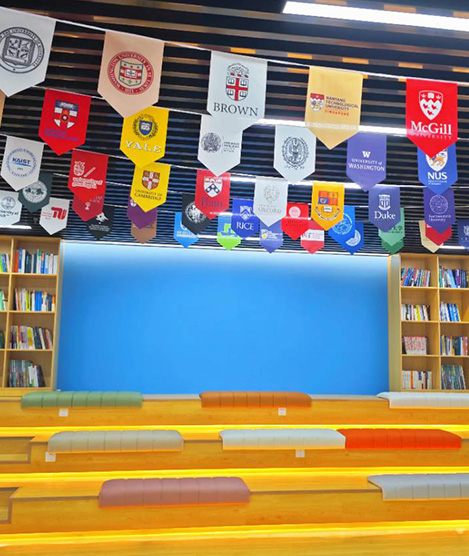
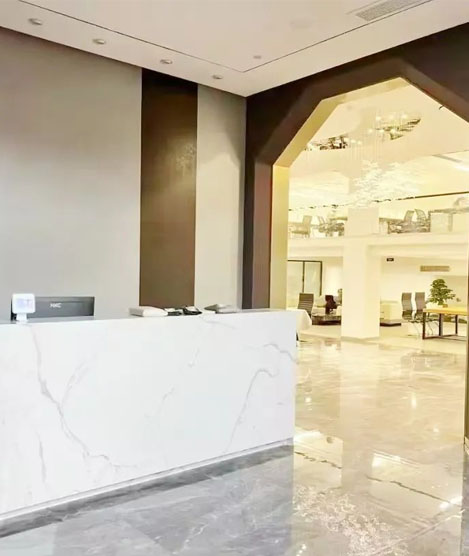
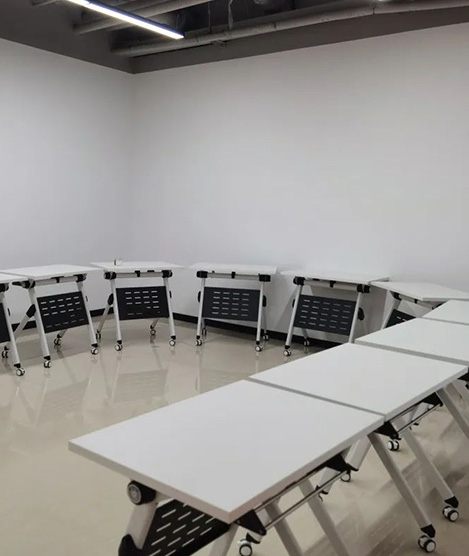
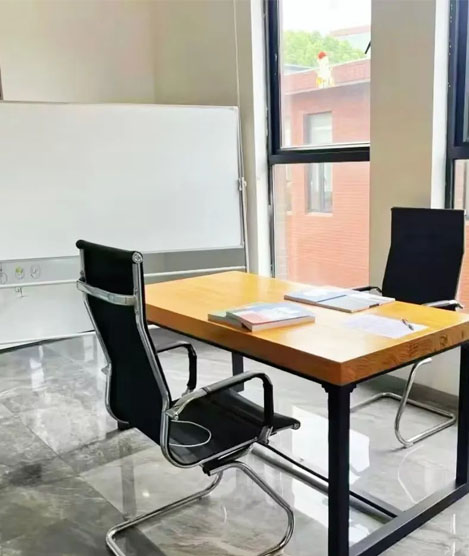
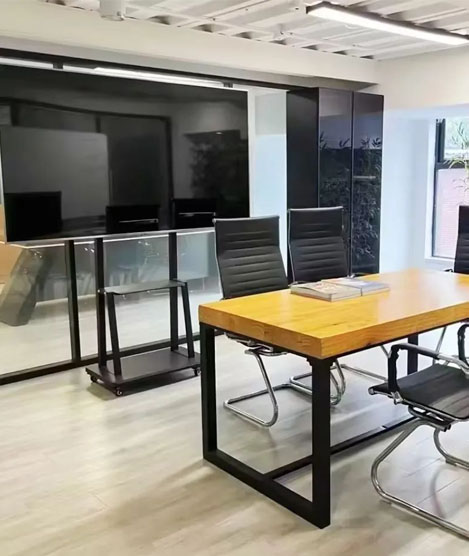
Teaching runs from Hanlin's own centres in Shanghai, Shenzhen, Chengdu and Hangzhou, and online for students elsewhere.


Talk to an advisor
Everything Hanlin does for TMC, in one conversation.
Entry, planning, coaching and the past papers. An advisor will tell you which of these a student actually needs, including when the answer is none of them.
Competition entry and planning
Which competitions suit this student, in what order, and by when - then we handle the registration, including the ones that can only be entered through a school or a centre.
Competition coaching
Taught by full-time subject tutors, on a course tier chosen by placement paper rather than by year group.
International curriculum tutoring
IB, AP, A-Level, IGCSE and the US high school curriculum, taught alongside school and timed around the exam calendar.
Competition past papers, free
A large library of past papers, mark schemes and syllabus breakdowns across every competition on this site. No charge and no enrolment.
Scan to add an advisor
Say which competition or course you are asking about. Replies in Chinese or English.
Or call +86 21 6352 6630FAQ
TMC, briefly answered.
What students, teachers and families ask before entering a team.
Who can enter TMC?
Students in grades 7 and 8, in teams of four. At most two members may be in grade 8, so each team needs at least two younger students.
What are the five rounds?
Team, CrossNumber, Shuttle, Relay and Poster. Only the Team Round has all four students working together; the rest split the team into pairs.
Why can the pairs not talk to each other?
The CrossNumber and Shuttle rounds are designed to test independent reasoning that has to agree. In CrossNumber anything passed between the pairs goes through the invigilator instead.
How is the Shuttle Round scored?
Three marks for an answer correct at the first attempt and one mark if a later attempt gets there. A correct answer submitted before six minutes earns three extra marks.
Can we prepare the poster in advance?
You may prepare the material, but it must be on paper and assembled into a poster on the day. A team arriving with an already-assembled poster is disqualified.
What are the award bands?
Per round, gold at the top 15%, silver at 30% and bronze at 60%. On the team total, gold at 10%, silver at 30% and bronze at 60%, plus placings in each case.
Can we reach the UK final?
Teams taking top awards may be invited to the UKMT national final in the United Kingdom. The UK committee decides eligibility year by year.
What does the entry fee cover?
All competition rounds. Accommodation, travel and meals are not included and are arranged separately.
Related
Other team mathematics.
What teams at this age commonly enter alongside TMC.
TMC enquiries
Four of the five rounds split your team in half.
TMC rewards pairs who can work apart and still agree, and it disqualifies teams who arrive too well prepared for the poster. Tell us who you have in grades 7 and 8, and an advisor will map the December entry.