
Competitions · Humanities and writing · The Concord Review
The Concord Review.
Not a competition - a journal. It is the only quarterly in the world that publishes academic history essays by secondary students, it takes about one in twenty, and what you get if it says yes is a publication.

Read this first
This is a journal submission, not a competition entry.
The Review states this plainly, and it matters. Nothing about the process works the way a competition works.
There is no contest and no ranking
You submit an essay to a journal and it is either accepted for publication or it is not. There is no first place, no shortlist tier, no certificate for taking part.
You can submit at any time
Submissions are open all year. Four issue deadlines fall on the first of November, February, May and August, and a submitted essay is considered for the following four issues rather than just the next one.
About one in twenty is published
The Review reports publishing around 5% of what it receives. That is the number to plan against.
And the outcome is a publication
Published authors can order individual offprints of their essay - TCR Singles. That is a different kind of object from a competition certificate, and it is the reason to do this.
At a glance
What the Review is.
The Concord Review was founded in March 1987 to recognise and publish exceptional history essays by secondary school students, and remains the only journal of its kind. It has published more than a thousand history research papers by students from 46 US states and 38 other countries.
- Who can submit
- Students in grades 9 to 12 who have not yet started university
- When the essay was written
- During secondary school
- Authorship
- Sole author. The essay must genuinely be the student’s own work
- Referee
- Not required. The submission form does ask for the name and email of the student’s school history teacher
- Length
- 4,000 to 6,000 words. Shorter essays are accepted but compete against longer ones
- For scale
- The average essay received is about 5,500 words. The longest published ran to 21,000
- Topic
- Any historical subject. A topic that has been written about before is fine
- Citation style
- Chicago, in the Turabian form, with endnotes
- File format
- One file per submission, in Microsoft Word or RTF only. PDF, Apple Pages and Google Docs are not accepted
- Filename
- First name, last name, underscore, then the first three words of the title - for example Marie Jones_The Founding Fathers.docx
- Deadlines
- 1 November, 1 February, 1 May and 1 August, at 11:59pm US Eastern
- Fee
- A submission fee applies. The amount is not published - ask the Review
The formatting rules
Six requirements, and they are checked.
An academic journal applies house style literally. These are the Review’s, and they are more specific than most school essays ever require.
| Rule | Detail |
|---|---|
| Chicago, Turabian form | All notes and references must appear at the end of the essay, not at the foot of the page |
| Arabic numerals | Endnotes are numbered with Arabic numerals, not Roman |
| Access dates on URLs | Every URL cited must carry the date on which it was accessed |
| One font throughout | A single font for the whole essay. Another font may be used only for non-English characters or diacritics the main font does not contain |
| No hard line breaks | Do not break a complete sentence with a carriage return. Paragraph breaks only |
| Word or RTF, one file | One document per submission. PDF, Apple Pages and Google Docs files are not accepted at all |
The endnote requirement is the one that costs the most time to fix late. If a student has been writing with footnotes - which is what most school history teaching asks for - converting a 5,000-word essay with sixty notes is a long evening. Set the style before writing, not after.
What submission brings
Three things, and only one requires acceptance.
It is worth separating what every submitter receives from what published authors receive.
A year of the journal, for submitting
Authors who submit an essay and pay the fee receive the next four issues in digital form. Print copies are available for the cost of postage.
Offprints, if published
Published authors can order TCR Singles - individually printed copies of their own essay. Many students include one in university applications.
And the Emerson Prize, for the strongest
Around ten authors a year receive the Emerson Prize of $1,000 each, awarded for outstanding work published in the preceding year. A Fitzhugh Prize was added in 2021.
The prizes are chosen from published work
You cannot enter for them. They are selected from what the journal has already published, which makes publication the only route to them.
Why it exists
A response to a specific change.
The Review’s own account of why it was founded is a useful guide to what it wants, and it explains the unusual length requirement.
The long research paper had disappeared
The Review’s position is that larger class sizes, teacher workload and the internet had reduced the traditional fifteen to twenty page research paper to a few pages and a slide deck.
So it asks for the real thing
Four to six thousand words with full apparatus is roughly that fifteen to twenty page paper. The length is the point, not an obstacle.
Aimed at what university will require
The stated purpose is preparing students for the research writing they will have to do at university. That is a fair description of what the exercise actually builds.
Assessed against a defined standard
Submissions go to the Review’s national writing board and are assessed against an independent standard for academic expository writing, which the Review reports is recognised by a number of universities.
Preparation
How Hanlin prepares a TCR submission.
One in twenty is published. Everything below is about being in that group rather than about submitting.
Choosing a question, not a subject
"The French Revolution" is not a paper. A specific argument about a specific question, answerable in six thousand words from sources a student can actually reach, is.
Working from primary material
This is a history journal. An essay built on textbooks and encyclopaedias reads as one, however well written. Finding archives, printed collections and digitised sources is where the months go.
Writing with the apparatus from the start
Endnotes in Turabian form, access dates on URLs, one font. Building it in as you write costs nothing; retrofitting it costs a weekend.
And using the four-issue window
A submitted essay is considered for four consecutive issues, so the immediate deadline matters less than most. That is a good reason to submit the essay when it is genuinely finished.
Why Hanlin
Preparation for The Concord Review at Hanlin is taught by full-time subject tutors, on a course tier chosen by placement paper rather than by year group.
Programme formats
Five ways this is taught.
Group size is the whole difference between these. It decides how much of the tutor's attention a student gets and how far the course can bend to them, so it is worth choosing rather than accepting.
| Format | Group size | What it suits |
|---|---|---|
| One-to-one | One student | Content, pace and emphasis set by what this student actually needs rather than by a syllabus. The only format that can be rebuilt mid-course. |
| Small group | Three to eight | Opens at three. Frequent discussion, and the tutor can slow down or move on according to what the group has absorbed. Most students chasing a higher award are taught in this one. |
| Class | Eight to twelve | Taught by the subject lead or a medal coach. Less back-and-forth, so it suits a student who will say when something is unclear. |
| Large class | Ten to twenty | For students in the middle of the placement range, and a way to try a competition before committing. Students often move to a small group or to one-to-one afterwards. |
| Past-paper class | No cap | Past papers worked through in sequence in the weeks before the sitting. Free to students already enrolled. |
Course length for The Concord Review is set after a placement paper. The gap between where a student is and what the paper asks for is what the course has to close, and that gap is not the same for two students in the same year group.
How it runs
Six steps, four people on your side.
The same process for every student, so that nothing depends on one tutor remembering to do it.
 Step 1
Pre-course assessment
A placement paper before anything is booked, so the course tier is chosen on evidence rather than on a year group.
 Step 2
Tutor matching
A subject tutor is matched to the result, and their full background is provided before you agree to it.
 Step 3
Plan and group
A study group opens with four people on one student: the tutor, a planner, a supervisor and an academic manager.
 Step 4
Scheduled teaching
The teaching office sets the timetable around the competition date and school term, and teaching begins.
 Step 5
After-class reports
What was covered, and how the student handled it, reported after every lesson.
 Step 6
Homework follow-up
The teaching assistant and the form teacher both check that homework is done, which is where most preparation quietly fails.
Free resource pack
Past questions and writing pack
The same material our own The Concord Review students work from. Scan the code, say what you need, and an advisor sends it.

Tell an advisor which competition and year group, and the material comes back the same day. Free, and you do not have to enrol in anything. If we do not already hold what you need, we will go and find it.
- PDFEvery past question the competition has set
- PDFShortlisted and published essays, to calibrate the standard
- PDFStructure, referencing and word-count guide
- PDFEntry checklist and the dates for the current cycle
Teaching team
Who would teach it.
Three of the twenty-two tutors on the published Hanlin roster - the ones whose subject this is.

Lu
Master's in education from the University of Pennsylvania and a double major in psychology and philosophy at Mount Holyoke. Cross-cultural teaching experience across China and the US, with research work in child and adolescent development, cognition, and international students' identity.

Yang
Educated at American Heritage School, then English literature and philosophy at the University of British Columbia and a master's in language education at Toronto. Eleven years in North America, with a close working knowledge of the international curricula and overseas admissions.

He
A Cambridge master's after a computer science degree with a mathematics minor at the University of Nebraska-Lincoln, and a US high school GPA of 4.13. Six years overseas and teaches entirely in English, across AMC, Math League, AP Computer Science and AP Calculus.
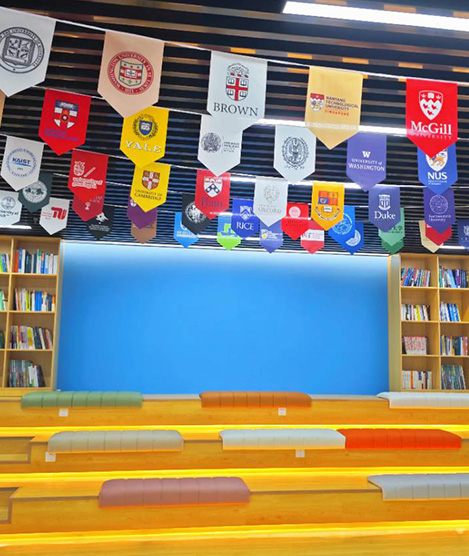
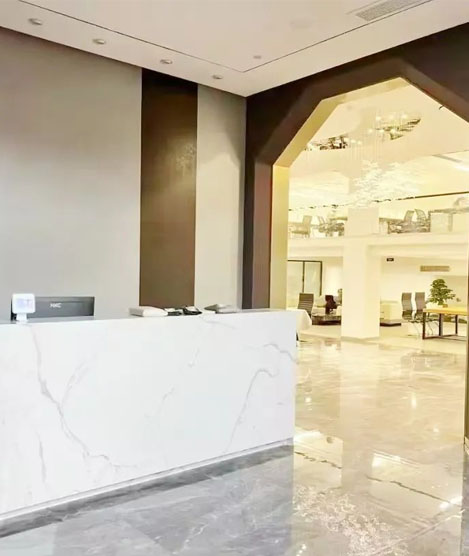
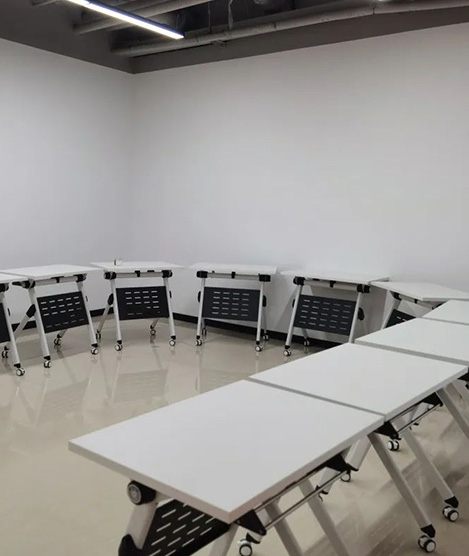
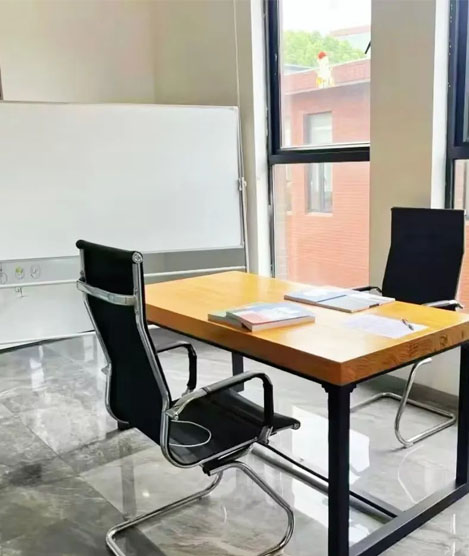
Where it is taught
Hanlin learning centres.
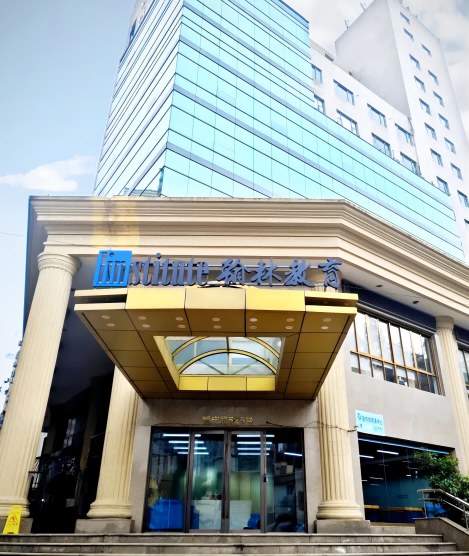
Teaching runs from Hanlin's own centres in Shanghai, Shenzhen, Chengdu and Hangzhou, and online for students elsewhere.


Talk to an advisor
Everything Hanlin does for The Concord Review, in one conversation.
Entry, planning, coaching and the past papers. An advisor will tell you which of these a student actually needs, including when the answer is none of them.
Competition entry and planning
Which competitions suit this student, in what order, and by when - then we handle the registration, including the ones that can only be entered through a school or a centre.
Competition coaching
Taught by full-time subject tutors, on a course tier chosen by placement paper rather than by year group.
International curriculum tutoring
IB, AP, A-Level, IGCSE and the US high school curriculum, taught alongside school and timed around the exam calendar.
Competition past papers, free
A large library of past papers, mark schemes and syllabus breakdowns across every competition on this site. No charge and no enrolment.
Scan to add an advisor
Say which competition or course you are asking about. Replies in Chinese or English.
Or call +86 21 6352 6630FAQ
The Concord Review, briefly answered.
What students and families ask before submitting.
Is this a competition?
No. The Review states plainly that it is a submission and publication programme, not a competition. You submit an essay to a journal and it is either accepted or not.
Who can submit?
Students in grades 9 to 12 who have not yet started university, writing as sole author, with the essay completed during secondary school.
How long should the essay be?
4,000 to 6,000 words. Shorter essays are accepted but compete against longer ones. The average received is around 5,500 words and the longest published ran to 21,000.
What are the deadlines?
1 November for the Spring issue, 1 February for Summer, 1 May for Autumn and 1 August for Winter, all at 11:59pm US Eastern. A submitted essay is considered for the following four issues, not only the next one.
What citation style is required?
Chicago, in the Turabian form, with all notes and references at the end of the essay. Endnotes take Arabic numerals, every URL carries an access date, and the essay uses a single font except where non-English characters require another.
What file format?
One file per submission, in Microsoft Word or RTF. PDF, Apple Pages and Google Docs are not accepted. The filename is your first name, last name, an underscore, then the first three words of the title.
Do I need a referee?
No, but the submission form asks for the name and email address of your school history teacher.
Can I write about a topic that has been covered before?
Yes. Previously written topics are acceptable.
What are the chances of being published?
The Review reports publishing around 5% of the essays it receives.
What do I get for submitting?
Authors who submit and pay the fee receive the next four issues digitally, with print copies available for postage. Published authors can order individual offprints of their essay.
Are there prizes?
Yes, but they are selected from work already published. Around ten authors a year receive the Emerson Prize of $1,000, and a Fitzhugh Prize was added in 2021.
Related
Other history and writing programmes.
What students do alongside a TCR submission.
Concord Review enquiries
Six thousand words, properly sourced, and no deadline pressure.
TCR wants the long research paper that school no longer asks for, and it will consider a submission across four issues - so the work can be finished when it is finished. Tell us what period the student is interested in and an advisor will help find a question worth six thousand words.