
Competitions · Computer science · Swift Student Challenge
The Swift Student Challenge.
Build one interactive scene, no more than three minutes long, entirely offline and under 25 MB. Three hundred and fifty students win each year, and fifty of them are invited to Apple Park.
At a glance
What the challenge is, and who can enter.
The Swift Student Challenge is Apple’s free coding competition for students worldwide. Each entrant submits one interactive scene built as a Swift App Playground, offering an experience of no more than three minutes.
- Organiser
- Apple
- Cost
- Free
- Minimum age
- 13 in the United States, or the equivalent minimum in your jurisdiction - 16 in Europe, for instance
- Also required
- Registration as an Apple Developer, which is free, or membership of the Apple Developer Program
- And one of
- Enrolment at a recognised academic institution or an equivalent formal homeschool; enrolment in a STEM organisation’s education programme; enrolment at an Apple Developer Academy; or graduation from high school within the past six months while awaiting or holding a university place
- Format
- Individual. Group submissions are not accepted
- What you submit
- An App Playground (.swiftpm), compressed as a single ZIP file
- Language
- All content must be in English
- When
- Submissions close around the middle of the year
- Award limit
- A student may win the Swift Student Challenge at most four times
- Winners
- 350 each year, of whom 50 are named Distinguished Winners
The brief
One scene, three minutes, and it must work with no internet.
The constraints are what make this competition interesting. Every one of them shapes what a submission can be.
Three minutes, maximum
The interactive scene must offer an experience of no more than three minutes. Deciding what to leave out is most of the design work.
No network connection
The submission may not depend on the internet. Every asset must be local and included in the ZIP, because entries are judged offline.
Twenty-five megabytes
The ZIP file cannot exceed 25 MB, which rules out large media and forces choices about graphics and audio.
And it must be yours alone
Created solely by you, or a template you alone modified. Group work is not accepted. Third-party open-source code and public-domain images and sounds may be included, with attribution and an explanation of why they are there.
The technical requirements
What it has to build and run in.
Getting these wrong invalidates an otherwise good submission, so they are worth confirming before starting.
Swift Playgrounds 4.4 or later
Requiring iPadOS 16 or macOS 13.5 or later. iOS 17 and iPadOS 17 are also compatible.
Or Xcode 15
On macOS 13.5 or later. Either environment is acceptable, and Swift Playgrounds is the easier starting point for someone new to app development.
Apple Pencil may be incorporated
Explicitly permitted, and one of the few ways to build something that feels unlike other entries.
English throughout
All content in the submission must be in English - not only the code but everything the reviewer sees.
What winners receive
Three hundred and fifty, and then fifty.
The award structure has two tiers, and the second is where the competition stops resembling a certificate.
The 350 winners
A year of Apple Developer Program membership, a free voucher for the App Development with Swift certification exam, and a gift from Apple. Reward packages have varied by year and have previously included jackets and custom pin sets.
The 50 Distinguished Winners
Selected from the 350 and recognised individually, with an invitation to Apple’s campus in the United States.
And time with Apple engineers
The organisers describe one-to-one conversation with Apple engineers as the thing winners value most - which for a young programmer is worth more than the hardware.
A genuinely international field
In one recent year the 350 winners came from 41 countries and regions, with twenty-three from mainland China.
Preparation
How Hanlin prepares students for the Swift Student Challenge.
This is a design competition as much as a programming one, which changes what preparation looks like.
Finding the idea first
A three-minute interactive scene lives or dies on its concept. Most of the preparation is deciding what to make, before any code is written.
Learning Swift Playgrounds
For a student new to app development, Swift Playgrounds covers everything from a first line of code to a finished app. It is the sensible starting point.
Designing within the limits
Offline, under 25 MB, three minutes. Working within those from the start produces a better entry than building freely and cutting later.
And making it personal
Apple encourages entrants to add graphics and audio that show their own style. Entries that solve a problem the student actually cares about read differently from technical demonstrations.
Why Hanlin
Preparation for Swift Student Challenge at Hanlin is taught by full-time subject tutors, on a course tier chosen by placement paper rather than by year group.
Programme formats
Five ways this is taught.
Group size is the whole difference between these. It decides how much of the tutor's attention a student gets and how far the course can bend to them, so it is worth choosing rather than accepting.
| Format | Group size | What it suits |
|---|---|---|
| One-to-one | One student | Content, pace and emphasis set by what this student actually needs rather than by a syllabus. The only format that can be rebuilt mid-course. |
| Small group | Three to eight | Opens at three. Frequent discussion, and the tutor can slow down or move on according to what the group has absorbed. Most students chasing a higher award are taught in this one. |
| Class | Eight to twelve | Taught by the subject lead or a medal coach. Less back-and-forth, so it suits a student who will say when something is unclear. |
| Large class | Ten to twenty | For students in the middle of the placement range, and a way to try a competition before committing. Students often move to a small group or to one-to-one afterwards. |
| Past-paper class | No cap | Past papers worked through in sequence in the weeks before the sitting. Free to students already enrolled. |
Course length for Swift Student Challenge is set after a placement paper. The gap between where a student is and what the paper asks for is what the course has to close, and that gap is not the same for two students in the same year group.
How it runs
Six steps, four people on your side.
The same process for every student, so that nothing depends on one tutor remembering to do it.
 Step 1
Pre-course assessment
A placement paper before anything is booked, so the course tier is chosen on evidence rather than on a year group.
 Step 2
Tutor matching
A subject tutor is matched to the result, and their full background is provided before you agree to it.
 Step 3
Plan and group
A study group opens with four people on one student: the tutor, a planner, a supervisor and an academic manager.
 Step 4
Scheduled teaching
The teaching office sets the timetable around the competition date and school term, and teaching begins.
 Step 5
After-class reports
What was covered, and how the student handled it, reported after every lesson.
 Step 6
Homework follow-up
The teaching assistant and the form teacher both check that homework is done, which is where most preparation quietly fails.
Free resource pack
Past papers and preparation pack
The same material our own Swift Student Challenge students work from. Scan the code, say what you need, and an advisor sends it.

Tell an advisor which competition and year group, and the material comes back the same day. Free, and you do not have to enrol in anything. If we do not already hold what you need, we will go and find it.
- PDFPast papers, every year the organiser has released
- PDFWorked solutions, where the organiser publishes them
- PDFThe syllabus on one page - every topic, and how heavily it is examined
- PDFEntry checklist and the dates for the current cycle
Teaching team
Who would teach it.
Three of the twenty-two tutors on the published Hanlin roster - the ones whose subject this is.
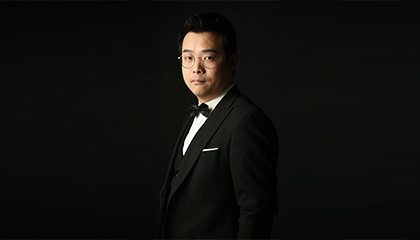
Luo
Bachelor's and master's in computer science from the University of California and ten years in the United States. Works close to the hardware, and teaches for independent problem solving rather than pattern recall.

Tan
Master's in data science from the University of Sydney after a statistics degree at Simon Fraser University, graduating in the top 5% with repeated chancellor's honours; A-Levels at a Cambridge international school, and formerly a data analyst at Tencent. An AMC-accredited coach, a College Board-accredited AP teacher, and holder of a Math League excellent-teacher award.

He
A Cambridge master's after a computer science degree with a mathematics minor at the University of Nebraska-Lincoln, and a US high school GPA of 4.13. Six years overseas and teaches entirely in English, across AMC, Math League, AP Computer Science and AP Calculus.
Where it is taught
Hanlin learning centres.
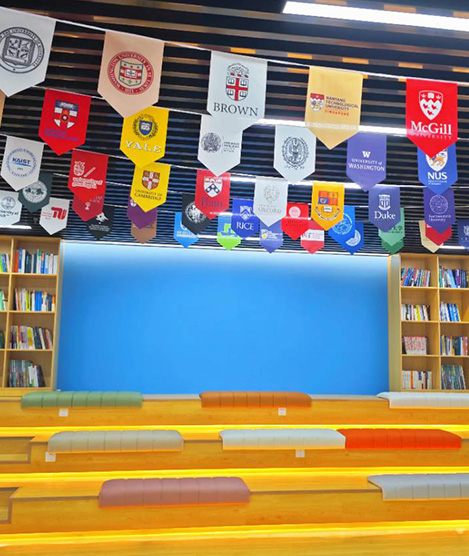
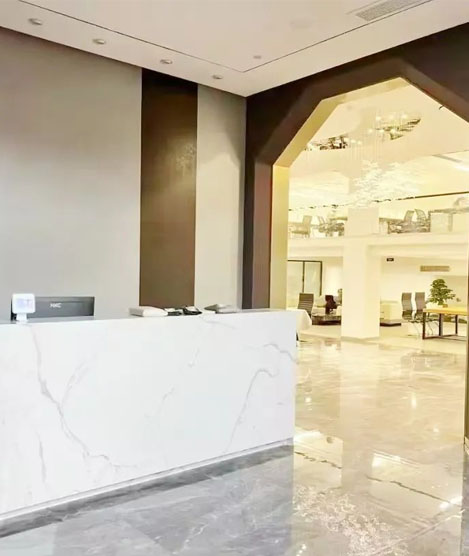
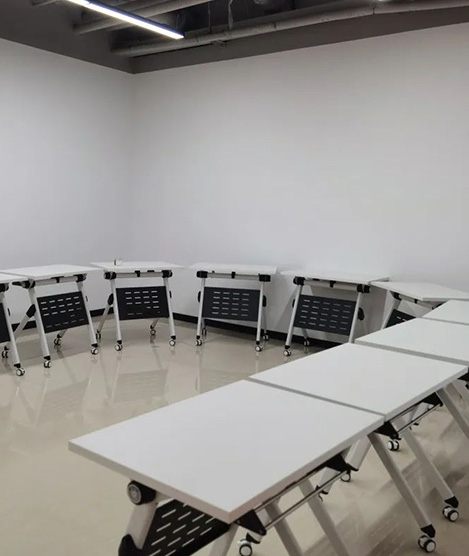
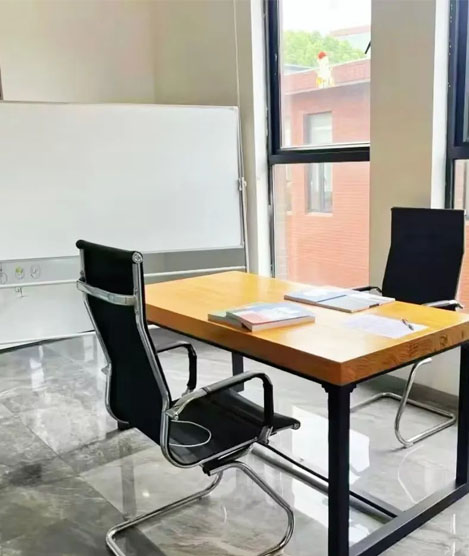
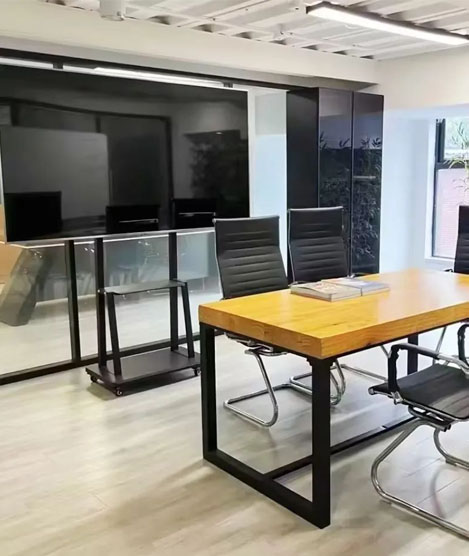
Teaching runs from Hanlin's own centres in Shanghai, Shenzhen, Chengdu and Hangzhou, and online for students elsewhere.


Talk to an advisor
Everything Hanlin does for Swift Student Challenge, in one conversation.
Entry, planning, coaching and the past papers. An advisor will tell you which of these a student actually needs, including when the answer is none of them.
Competition entry and planning
Which competitions suit this student, in what order, and by when - then we handle the registration, including the ones that can only be entered through a school or a centre.
Competition coaching
Taught by full-time subject tutors, on a course tier chosen by placement paper rather than by year group.
International curriculum tutoring
IB, AP, A-Level, IGCSE and the US high school curriculum, taught alongside school and timed around the exam calendar.
Competition past papers, free
A large library of past papers, mark schemes and syllabus breakdowns across every competition on this site. No charge and no enrolment.
Scan to add an advisor
Say which competition or course you are asking about. Replies in Chinese or English.
Or call +86 21 6352 6630FAQ
The Swift Student Challenge, briefly answered.
What students and families ask before entering.
Who can enter?
Students aged 13 or over in the United States, or the equivalent local minimum age - 16 in Europe, for example - who are registered as an Apple Developer or a member of the Apple Developer Program, and who are enrolled at a recognised academic institution, an equivalent formal homeschool, a STEM organisation’s education programme or an Apple Developer Academy. Students who graduated from high school within the past six months and are awaiting or hold a university place may also enter.
What does it cost?
Nothing. The challenge is free, and Apple Developer registration is free.
What do I submit?
One App Playground (.swiftpm) compressed into a ZIP file of no more than 25 MB, containing an interactive scene offering no more than three minutes of experience.
Can my entry use the internet?
No. It must not depend on a network connection, and every asset must be local and included in the ZIP, because submissions are reviewed offline.
Can I work with a friend?
No. The submission must be created solely by you, or be a template you alone modified. Group work is not accepted.
Can I use other people’s code or images?
Yes, if they are third-party open-source code or public-domain images and sounds, and you note their source and explain why they are used.
What software do I need?
Swift Playgrounds 4.4 or later, on iPadOS 16 or macOS 13.5 or later, or Xcode 15 on macOS 13.5 or later. Apple Pencil may be incorporated.
What language must the entry be in?
English, throughout.
What do winners get?
Each of the 350 winners receives a year of Apple Developer Program membership, a free voucher for the App Development with Swift certification exam and a gift from Apple. Fifty Distinguished Winners are chosen from among them and invited to Apple’s campus in the United States.
Can I win more than once?
Yes, up to four times in total.
Related
Other computing contests.
What students enter alongside the Swift Student Challenge.
Swift Student Challenge enquiries
Three minutes, offline, and entirely your own.
The constraints are tight enough that the idea matters more than the code, which makes this one of the few computing competitions a creative student can win. Tell us what the student is interested in and an advisor will help shape a submission.