
Competitions · STEM & innovation
STEM and innovation competitions — from science fairs to robotics.
Thirty-nine STEM and innovation competitions from Hanlin's Chinese hub: the research-fair track of ISEF, Regeneron STS and the Yau Science Award; robotics from FRC and VEX to WRO; the academic team circuits of USAD, USAP and Science Bowl; and invention and design challenges worldwide.

Recommended
Six to know first.
The competitions Hanlin's Chinese hub recommends for middle- and high-school students.
In the classroom
The tutors and lessons behind the results.
Lesson stills and subject leads from Hanlin's Chinese hub.
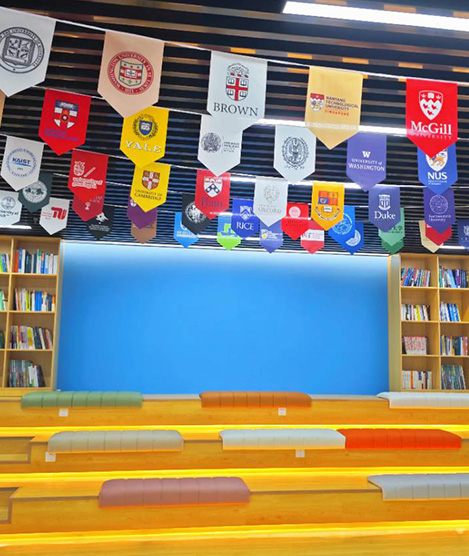
Research forum
Research mentoring at a Hanlin learning centre.
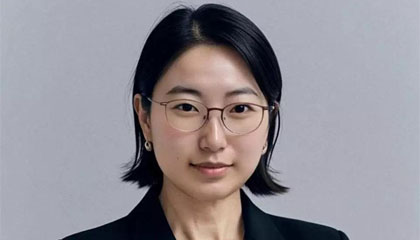
Modelling — Dr An
Johns Hopkins mathematics PhD with a university teaching award; HiMCM and IMMC coaching.

Data science — Tan
Sydney data-science master's; former Tencent analyst.
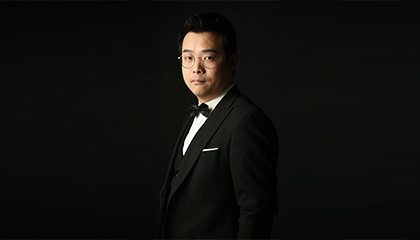
Computing — Luo
UC computer-science master's; ten years in the US.
Board 01
STEM & innovation41
Every stem & innovation competition on Hanlin's Chinese hub — cards open the English detail page where it is live.

iGEM (International Genetically Engineered Machine)
The International Genetically Engineered Machine competition, founded at MIT in 2003.
ISEF
The International Science and Engineering Fair — the largest pre-college science competition in the world.

CASTIC (China Adolescents Science and Technology Innovation Contest)
China's national youth science and technology innovation contest, thirty years old.

Yau Science Award
The Yau Science Award, founded 2008 for Chinese secondary students worldwide.
Regeneron Science Talent Search
The Regeneron Science Talent Search — America's 'junior Nobel'.
Invention Convention Worldwide
Invention Convention Worldwide, from The Henry Ford.
WRO (World Robot Olympiad)
The World Robot Olympiad — non-profit robotics for STEM education.
3M Young Scientist Challenge
The 3M Young Scientist Challenge for grades 5–8.
MIT Battlecode
MIT's real-time strategy AI programming competition.
FRC (FIRST Robotics Competition)
The FIRST Robotics Competition — industrial-grade robotics for ages 14–18.
CTB (China Thinks Big)
China Thinks Big — the innovation research challenge launched by Harvard and Tsinghua scholars.

USAP (Academic Pentathlon)
The United States Academic Pentathlon for middle-school teams.
USAT (Academic Triathlon)
The United States Academic Triathlon — Minnesota's creative competition.
Breakthrough Junior Challenge
The Breakthrough Junior Challenge — creative science communication.

IJSO (International Junior Science Olympiad)
The International Junior Science Olympiad — the only one for under-16s.
GENIUS Olympiad
The GENIUS Olympiad — environment and sustainability for secondary students.
Technovation Girls
Technovation Girls — technology leadership for young women.

JSHS (Junior Science and Humanities Symposium)
The Junior Science and Humanities Symposium, sponsored by the US Army, Navy and Air Force.

ISSDC (International Space Settlement Design Competition)
The International Space Settlement Design Competition, founded by aerospace experts and astronauts.
NOI (National Olympiad in Informatics, China)
China's National Olympiad in Informatics, founded 1984.
Google Science Fair
The Google Science Fair, first held 2011.
National Science Bowl
The National Science Bowl — deep science and maths for future researchers.
IRPrO
The International Research Project Olympiad, successor to the World Science and Invention Fair.
IEYI (International Exhibition for Young Inventors)
The International Exhibition for Young Inventors, founded 2004.
USAD (Academic Decathlon)
The United States Academic Decathlon for high-school teams.
Youthmaker Challenge
The Youthmaker Challenge — original engineering, project and research work.

MILSET SPC
MILSET's science photo contest — the largest youth STEM non-profit platform.

Destination Imagination
Destination Imagination — international creativity for young people.
iENA Nuremberg Invention Fair
The iENA Nuremberg invention fair — one of the world's three great invention exhibitions.
VEX Robotics World Championship
The VEX Robotics World Championship, run by the REC Foundation since 2003.
International Geography Bee
The International Geography Bee.
NAQT Quiz Bowl
NAQT quiz bowl — recognised by leading universities worldwide.
PDR (Positive Discovery Research)
Positive Discovery Research — hands-on research in the real world.

RMSP High School Photography Contest
The Rocky Mountain School of Photography high-school contest.
MATE ROV Challenge
The MATE ROV Challenge — international underwater robotics, since 2001.
International Science Bee
The International Science Bee — 50,000 students from 50+ countries.
Hi World!2025
Hi World! 2025 — SKT's creative research showcase for grades 6–9.
VANDA
The Vanda National Junior Science Olympiad, from SIMCC.
JSOC
Forty-five questions split exactly fifteen apiece across physics, chemistry and biology, on the Canadian grade 7 to 10 c.
NSL
Ten difficulty levels covering grades one to twelve, and the youngest paper comes with pinyin.
IRPrO
A research olympiad conducted entirely online, defence included.
Results
Where this track leads.
Selected results from the honours boards — the full rolls sit on the honours pages.
1 — ISEF top prize, 2024–25
with 2 special awards, a first and a fourth; one of five Sichuan qualifiers.
16 — Yau Award finalist medallists, 2024
and 33 semifinal awards; 17 medallists in 2023.
500+ — students published
SCIE, Scopus, EI and IEEE acceptances across biology, psychology, economics, computing and astrophysics.
FAQ
This track, briefly answered.
What families ask when choosing where to start.
What is the research-fair track?
ISEF, Regeneron STS and the Yau Science Award reward original research projects; Hanlin's research programme mentors students from topic to paper to fair.
Which robotics competition fits which age?
FRC and VEX for high-school teams, WRO across age bands, FTC and MATE ROV for engineering-minded students; the cards open the detail pages with age rules.
Are academic team circuits worth it?
USAD, USAP and Science Bowl build breadth across ten subjects and are strong team credentials — Hanlin runs small-group courses for each.
Where are the results?
On the honours pages: an ISEF top prize, Yau finalist medals every season and 500+ students published.
How does research mentoring work?
A mentor matched by field guides the project — question, method, data, write-up — toward the fair or journal that fits, with the same 4-to-1 support team as every Hanlin course.
Competition enquiries
Map the competition route.
Tell us the subject, grade and current level, and an advisor will sequence the contests from first entry to the invitational tiers.