
Competitions · Mathematics · SMT
SMT, the Stanford Math Tournament.
Run by Stanford students with the backing of the Stanford University Mathematical Organization and the mathematics department, and held each April. It is the most accommodating of the major American university tournaments: alongside the subject papers it offers a General Test written specifically for students with no competition background.

At a glance
What the tournament is, and who can enter.
SMT runs in two forms: an in-person tournament on the Stanford campus and SMT Online. Which one you can enter depends on where your school is.
- Organiser
- Stanford students, supported by the Stanford University Mathematical Organization (SUMO) and the university’s mathematics department
- Who can enter
- High-school students aged 14 and over, competing in teams
- Team size
- Five to six students for the in-person tournament. Teams smaller or larger than that are not accepted. Online teams may be up to eight
- Where a team comes from
- One school or one established mathematics organisation. If a student’s own school is entering, they must enter through it rather than separately
- International entrants
- May enter SMT Online. The in-person tournament is open to students from schools and organisations in the United States
- Supervision
- Every in-person team must be accompanied by at least one authorised adult
- When
- Mid-April. The 2026 tournament is provisionally set for 12 April
- Entry fee
- US$20 per student, published by the organiser
- Calculators
- Not permitted in any part of the tournament
- Structure
- A team portion of three rounds and an individual portion, sat across a single day
The team rounds
Three rounds, three different demands.
Every team sits all three. The Guts Round in particular is structured so that a team can watch itself rising or falling in real time.
Team Round
Fifty minutes and fifteen short questions worked collaboratively. It is the most conventional of the three, and the one where dividing the paper sensibly across five or six people does most of the work.
Power Round
Eighty minutes on proof writing, built around a single theme that is usually quite unlike a traditional competition problem. It is also the only round anywhere in the tournament that awards partial credit.
Guts Round
Eighty minutes and nine sets of three questions. A set is only issued once the previous one is handed in, and there is no going back. Later sets are harder and worth more, and a live scoreboard shows every team’s position.
The individual portion
Two subject papers, or one General Test.
This is the choice that makes SMT unusual, and it is a genuine fork rather than a formality - a student takes one route or the other.
Subject Tests
Fifty minutes and ten short-answer questions each, in algebra, calculus, discrete mathematics or geometry. A student sits two of the four, which is the standard route for anyone with competition experience.
The General Test
One hundred and ten minutes and twenty-five short-answer questions, written specifically for students without much competition background and sat at the same time as the subject papers. Very few tournaments at this level provide one.
What the General Test assumes
Systems of linear equations, quadratics, Pythagoras, similarity and congruence, area and volume, primes and composites. Everything on it is solvable without trigonometry, advanced algebra, combinatorics or complex numbers.
What the subject papers assume
Quadratics, logarithms and exponents, factorising polynomials, Vieta’s formulas, complex numbers including conjugates and roots of unity, sequences and series, and inequalities.
Answering
The rules on how an answer must be written.
SMT is strict about form in a way that costs marks if it is discovered on the day. Outside the Power Round there is no partial credit anywhere.
Exact and simplified, or wrong
Unless a question says otherwise, answers must be exact and simplified. An unsimplified answer is marked incorrect - graders apply a reasonable reading of what counts as simplified, and the coordinators have the final say.
What simplifying means here
Carry out reasonable arithmetic rather than leaving it undone, move square factors outside a radical, rationalise denominators, and do not leave an answer as a repeated sum or product.
No partial credit
Only the Power Round awards anything for incomplete work. On every other round an answer is right or it is nothing, which makes checking more valuable here than on a paper that reads your working.
Tiebreakers for the top three
A tie in the individual top three goes to a fifteen-minute round of three questions, answerable in any order and resubmittable, with only the final answer graded. A further tie goes to a single question, won by the first correct submission.
Scoring
Why raw marks are not what gets ranked.
SMT normalises every round before combining them, so a hard paper does not penalise the students who sat it.
Every round is normalised
Scores in each round are divided by the mean of the top ten scores in that round. That corrects for difficulty differences between papers, so a subject test that happened to be brutal is not worth less than an easier one.
Sixty per cent individual, forty per cent team
A team’s final standing combines the individual contribution at 60% with the team rounds at 40%. Individual performance therefore carries more weight than the collaborative rounds, despite the tournament’s team framing.
Marks by question type
Short-answer questions are worth one mark each and proof questions three. That ratio is what makes the Power Round worth committing real time to rather than treating as a bonus.
Your individual contribution
A student contributes either the combined weighted scores of their two subject tests or the score of their single General Test. Both routes feed the team total on the same basis.
Season
How the year runs.
Applications open in December for an April tournament, and selection for the in-person event happens weeks before the day itself.
Applications open
The application form is published for the following spring’s tournament.
Applications close
At 11:59pm Pacific time. Applications are not accepted afterwards.
In-person teams announced
The teams selected for the on-campus tournament are published.
Selected teams confirm
Chosen teams must register and confirm their places by this deadline or lose them.
Tournament day
An optional social event runs the day before. The tournament itself runs from check-in in the morning through to the awards ceremony in the early evening.
Preparation
How Hanlin prepares an SMT team.
Two things decide an SMT result more than raw ability: which individual route each student takes, and whether the team has ever run a Guts Round before.
Choosing the individual route
Two subject papers or one General Test is a real decision. A student with little competition background will usually score better on the General Test, and their contribution to the team counts the same either way.
Rehearsing the Guts Round
Nine sets, no going back, and a live scoreboard is an environment nothing else resembles. Teams practise deciding fast when to submit a set rather than keep working on it, which is the round’s actual skill.
Writing to SMT’s formatting rules
Unsimplified answers are marked wrong and there is no partial credit outside the Power Round. Students practise finishing an answer properly - rationalising, reducing radicals, evaluating arithmetic - as a habit rather than an afterthought.
Proof writing for the Power Round
The Power Round is themed and unlike ordinary contest problems, and it is the only place partial credit exists. Preparing for it means practising writing a partial argument well, not only finishing one.
Why Hanlin
Preparation for SMT at Hanlin is taught by full-time subject tutors, on a course tier chosen by placement paper rather than by year group.
Programme formats
Five ways this is taught.
Group size is the whole difference between these. It decides how much of the tutor's attention a student gets and how far the course can bend to them, so it is worth choosing rather than accepting.
| Format | Group size | What it suits |
|---|---|---|
| One-to-one | One student | Content, pace and emphasis set by what this student actually needs rather than by a syllabus. The only format that can be rebuilt mid-course. |
| Small group | Three to eight | Opens at three. Frequent discussion, and the tutor can slow down or move on according to what the group has absorbed. Most students chasing a higher award are taught in this one. |
| Class | Eight to twelve | Taught by the subject lead or a medal coach. Less back-and-forth, so it suits a student who will say when something is unclear. |
| Large class | Ten to twenty | For students in the middle of the placement range, and a way to try a competition before committing. Students often move to a small group or to one-to-one afterwards. |
| Past-paper class | No cap | Past papers worked through in sequence in the weeks before the sitting. Free to students already enrolled. |
Course length for SMT is set after a placement paper. The gap between where a student is and what the paper asks for is what the course has to close, and that gap is not the same for two students in the same year group.
How it runs
Six steps, four people on your side.
The same process for every student, so that nothing depends on one tutor remembering to do it.
 Step 1
Pre-course assessment
A placement paper before anything is booked, so the course tier is chosen on evidence rather than on a year group.
 Step 2
Tutor matching
A subject tutor is matched to the result, and their full background is provided before you agree to it.
 Step 3
Plan and group
A study group opens with four people on one student: the tutor, a planner, a supervisor and an academic manager.
 Step 4
Scheduled teaching
The teaching office sets the timetable around the competition date and school term, and teaching begins.
 Step 5
After-class reports
What was covered, and how the student handled it, reported after every lesson.
 Step 6
Homework follow-up
The teaching assistant and the form teacher both check that homework is done, which is where most preparation quietly fails.
Free resource pack
Past papers and preparation pack
The same material our own SMT students work from. Scan the code, say what you need, and an advisor sends it.
Tell an advisor which competition and year group, and the material comes back the same day. Free, and you do not have to enrol in anything. If we do not already hold what you need, we will go and find it.
- PDFPast papers, every year the organiser has released
- PDFWorked solutions, where the organiser publishes them
- PDFThe syllabus on one page - every topic, and how heavily it is examined
- PDFEntry checklist and the dates for the current cycle
Teaching team
Who would teach it.
Three of the twenty-two tutors on the published Hanlin roster - the ones whose subject this is.

Dr Zhang
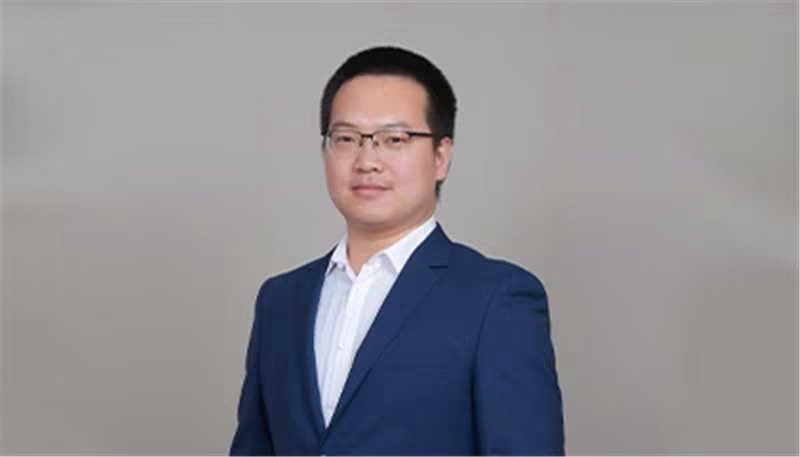
PhD in theoretical mathematics from the University of Rochester and a postdoctoral fellow at the Shanghai Center for Mathematical Sciences at Fudan. An AMC-accredited coach, ASDAN-accredited for DMM and ITCCC, and an accredited UKMT BMO2 and PUMaC coach. His students have gone on to read mathematics and physics at Harvard, MIT, Princeton, Caltech and Cambridge.
Dr Zhuang
PhD in mathematics from the University of Denver, working in mathematical logic, after a first degree in applied mathematics at Southeast University. A repeat conference speaker on his research, with three years lecturing and assisting on undergraduate mathematics at Denver.

He
A Cambridge master's after a computer science degree with a mathematics minor at the University of Nebraska-Lincoln, and a US high school GPA of 4.13. Six years overseas and teaches entirely in English, across AMC, Math League, AP Computer Science and AP Calculus.
Where it is taught
Hanlin learning centres.
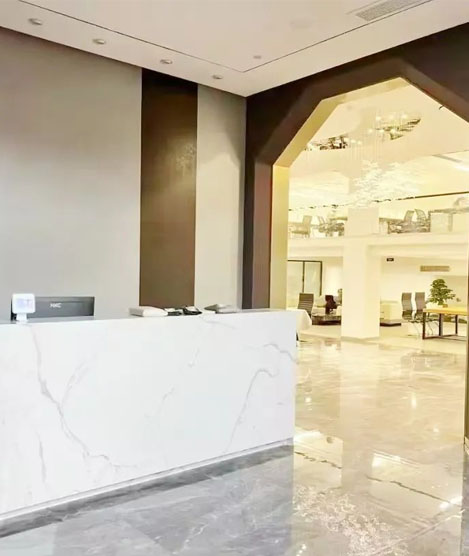
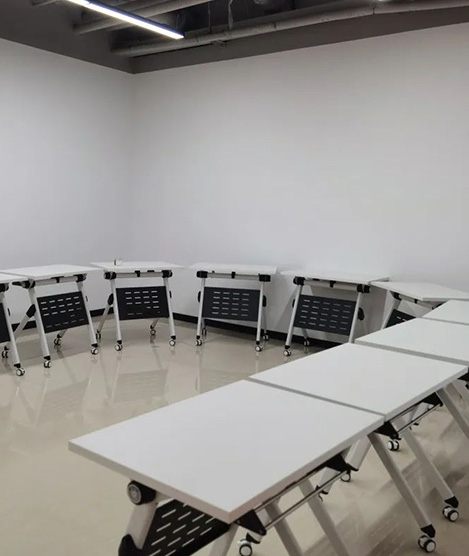
Teaching runs from Hanlin's own centres in Shanghai, Shenzhen, Chengdu and Hangzhou, and online for students elsewhere.



Talk to an advisor
Everything Hanlin does for SMT, in one conversation.
Entry, planning, coaching and the past papers. An advisor will tell you which of these a student actually needs, including when the answer is none of them.
Competition entry and planning
Which competitions suit this student, in what order, and by when - then we handle the registration, including the ones that can only be entered through a school or a centre.
Competition coaching
Taught by full-time subject tutors, on a course tier chosen by placement paper rather than by year group.
International curriculum tutoring
IB, AP, A-Level, IGCSE and the US high school curriculum, taught alongside school and timed around the exam calendar.
Competition past papers, free
A large library of past papers, mark schemes and syllabus breakdowns across every competition on this site. No charge and no enrolment.
Scan to add an advisor
Say which competition or course you are asking about. Replies in Chinese or English.
Or call +86 21 6352 6630FAQ
SMT, briefly answered.
What students and families ask before entering a team.
How many students are in an SMT team?
Five to six for the in-person tournament - teams smaller or larger than that are not accepted. Online teams may be up to eight.
Can international teams enter?
Yes, but only SMT Online. The in-person tournament at Stanford is open to students from schools and organisations in the United States.
Do team members have to be from the same school?
Yes - from one school or one established mathematics organisation. If a student’s own school is entering a team, the student must enter through it rather than joining another.
Does a teacher need to attend?
For the in-person tournament, yes. Every team must have at least one authorised adult accompanying it.
Should a student sit the Subject Tests or the General Test?
Two subject tests is the usual route for a student with competition experience. The General Test is written for students without that background, runs at the same time and contributes to the team score on the same basis.
Are calculators allowed?
No, in any part of the tournament.
Is there partial credit?
Only in the Power Round. Everywhere else an answer is either correct or worth nothing, and an answer left unsimplified is marked incorrect.
How are the awards decided?
In person, prizes go to the top three in each individual test and the top five teams, with recognition to the top ten in each test and the top ten teams. Online, digital certificates go to the top ten in each individual test and the top 10% of teams.
Related
Other university-run tournaments.
What teams commonly enter alongside SMT.
SMT enquiries
The General Test is the reason to look at SMT first.
A student without competition experience can contribute to a team here on equal terms, which is unusual. Tell us who you have and what they have sat, and an advisor will map the March deadline and the individual routes.