
Competitions · Mathematics · SMC
SMC, the North Carolina State Mathematics Contest.
A qualifier in September and a final in October, running since 1979 and sat by more than a quarter of a million students across its history. Both papers pay you a mark for leaving a question blank - which makes a blind guess a losing move, and turns the paper into a judgement exercise as much as a mathematical one.

At a glance
What the contest is, and who runs it.
SMC is run by the North Carolina Council of Teachers of Mathematics, an affiliate of the National Council of Teachers of Mathematics whose membership runs from kindergarten teachers to graduate faculty. It is the largest secondary mathematics contest in the state.
- Organiser
- The North Carolina Council of Teachers of Mathematics (NCCTM), an affiliate of the National Council of Teachers of Mathematics (NCTM)
- History
- First held in 1979, and now past its fortieth edition. More than 250,000 students from over a thousand schools have taken part
- Who can enter
- Students in grades 7 to 12. There is no age restriction, and strong middle-school candidates regularly place well
- Two rounds
- A qualifying contest, then a final for those who advance
- Who sets the paper
- A committee of experienced American mathematicians and contest specialists, drawn from university mathematics faculty and mathematics education
- Syllabus
- Basic algebra, basic geometry, basic number theory and basic combinatorics - no calculus and no advanced technique
- In China
- The SMC China committee was established in 2017 under exclusive authorisation from the American organisers. Since 2018 students have sat both rounds domestically, on the same papers and the same marking rules
- Scale in China
- Around fifty leading schools and more than a thousand candidates to date
- Recognition
- Top performers in the final are published on the American organiser’s official site
The two rounds
Qualifier in September, final in October.
The two papers are pitched at noticeably different levels, and only a small fraction of the field sees the second one.
| Qualifying contest | Final | |
|---|---|---|
| When | Registration closes in mid to late September | Early October |
| Who | Any student in grades 7 to 12 | The top of the qualifying field, or anyone who reached AIME the same year |
| Duration | 60 minutes | 90 minutes |
| Difficulty | Moderate - broadly comparable to AMC 10 | Harder - broadly comparable to AMC 12 |
| Paper | 20 multiple-choice questions | 20 multiple-choice questions, plus 10 written-answer questions |
| Where | School test centres in major cities. Centres have capacity limits and are chosen at registration | Centres designated by the committee within each provincial region |
Roughly the top 8 to 10 per cent of the qualifying field advances. The final’s own stated criterion is the top 10%, or qualification for AIME in the same year.
Marking
A mark for leaving it blank.
Both papers award one mark for an unanswered multiple-choice question and nothing for a wrong one. That single rule changes how the paper should be attempted.
Four, one, nothing
A correct multiple-choice answer scores 4, a blank scores 1, and a wrong answer scores 0. Twenty questions makes 80 marks available on the qualifier, and the same 80 forms part of the final.
A blind guess loses money
For a guess to beat the mark a blank guarantees, you need better than a one-in-four chance of being right. Answering at random on a five-option question is below that, so it costs marks on average.
Eliminating changes the arithmetic
Ruling out even one option brings a guess to roughly break-even, and ruling out two makes it clearly worthwhile. The decision is not guess-or-not but how much you have managed to exclude.
The written questions work differently
On the final’s ten written-answer questions there is no consolation mark: a correct answer scores 5, and a blank or a wrong answer scores nothing. The blank-is-safe habit does not carry across.
The final paper
How the 130 marks are distributed.
The final adds a written section to the multiple-choice paper, and carries tiebreak questions that sit outside the total.
| Section | Questions | Correct | Blank | Wrong | Section total |
|---|---|---|---|---|---|
| Multiple choice | 20 | 4 | 1 | 0 | 80 |
| Written answer | 10 | 5 | 0 | 0 | 50 |
| Tiebreak | Additional | — | — | — | Excluded from the total |
Tiebreak questions are used only to separate candidates who finish on the same score, so they cannot improve a standing that is not already tied.
What it leads to
Scholarships, and who they are actually for.
SMC is often presented through its scholarship connections. Those are real, and they come with a qualifier worth understanding before planning around them.
More than twenty universities
Duke, UNC Chapel Hill, Wake Forest, Davidson College and other institutions offer admission or scholarship consideration to strong SMC performers - full or partial, depending on the university.
Mostly aimed at North Carolina students
The organisers’ own description of the Duke award refers to high-scoring students within the state. An international candidate should treat these pathways as a reason the contest is respected, not as an entitlement they can plan around.
What travels regardless
What does carry internationally is the result itself: a placing in a contest that has run since 1979, is set by university mathematics faculty, and publishes its top performers on the organiser’s own site.
A companion to the AMC season
The qualifier sits near AMC 10 in difficulty and the final near AMC 12, and AIME qualification is itself a route into the final. The two seasons reinforce each other rather than competing for preparation time.
Awards
What each round awards.
The qualifier awards advancement and a national merit recognition; the final awards three medal tiers.
Preparation
How Hanlin prepares students for SMC.
The syllabus is deliberately narrow. What separates candidates is accuracy under a clock and knowing when not to answer.
Rehearsing the blank rule
Deciding per question whether enough has been excluded to beat one mark is not instinctive, and it is worth several marks a paper. It is drilled under timed conditions rather than explained once.
Three minutes a question
Twenty questions in sixty minutes on the qualifier leaves no room to grind. Practice concentrates on recognising quickly which problems are worth committing to.
Four topics, done properly
Algebra, geometry, number theory and counting, at foundation level throughout. Because nothing advanced appears, depth within these four is a better use of time than breadth beyond them.
Switching modes for the final
The final mixes a multiple-choice section where blanks pay with a written section where they do not. Students practise the two halves as separate exercises before sitting them consecutively.
Why Hanlin
Preparation for SMC at Hanlin is taught by full-time subject tutors, on a course tier chosen by placement paper rather than by year group.
Programme formats
Five ways this is taught.
Group size is the whole difference between these. It decides how much of the tutor's attention a student gets and how far the course can bend to them, so it is worth choosing rather than accepting.
| Format | Group size | What it suits |
|---|---|---|
| One-to-one | One student | Content, pace and emphasis set by what this student actually needs rather than by a syllabus. The only format that can be rebuilt mid-course. |
| Small group | Three to eight | Opens at three. Frequent discussion, and the tutor can slow down or move on according to what the group has absorbed. Most students chasing a higher award are taught in this one. |
| Class | Eight to twelve | Taught by the subject lead or a medal coach. Less back-and-forth, so it suits a student who will say when something is unclear. |
| Large class | Ten to twenty | For students in the middle of the placement range, and a way to try a competition before committing. Students often move to a small group or to one-to-one afterwards. |
| Past-paper class | No cap | Past papers worked through in sequence in the weeks before the sitting. Free to students already enrolled. |
Course length for SMC is set after a placement paper. The gap between where a student is and what the paper asks for is what the course has to close, and that gap is not the same for two students in the same year group.
How it runs
Six steps, four people on your side.
The same process for every student, so that nothing depends on one tutor remembering to do it.
 Step 1
Pre-course assessment
A placement paper before anything is booked, so the course tier is chosen on evidence rather than on a year group.
 Step 2
Tutor matching
A subject tutor is matched to the result, and their full background is provided before you agree to it.
 Step 3
Plan and group
A study group opens with four people on one student: the tutor, a planner, a supervisor and an academic manager.
 Step 4
Scheduled teaching
The teaching office sets the timetable around the competition date and school term, and teaching begins.
 Step 5
After-class reports
What was covered, and how the student handled it, reported after every lesson.
 Step 6
Homework follow-up
The teaching assistant and the form teacher both check that homework is done, which is where most preparation quietly fails.
Free resource pack
Past papers and preparation pack
The same material our own SMC students work from. Scan the code, say what you need, and an advisor sends it.

Tell an advisor which competition and year group, and the material comes back the same day. Free, and you do not have to enrol in anything. If we do not already hold what you need, we will go and find it.
- PDFPast papers, every year the organiser has released
- PDFWorked solutions, where the organiser publishes them
- PDFThe syllabus on one page - every topic, and how heavily it is examined
- PDFEntry checklist and the dates for the current cycle
Teaching team
Who would teach it.
Three of the twenty-two tutors on the published Hanlin roster - the ones whose subject this is.

Dr Zhang
PhD in theoretical mathematics from the University of Rochester and a postdoctoral fellow at the Shanghai Center for Mathematical Sciences at Fudan. An AMC-accredited coach, ASDAN-accredited for DMM and ITCCC, and an accredited UKMT BMO2 and PUMaC coach. His students have gone on to read mathematics and physics at Harvard, MIT, Princeton, Caltech and Cambridge.

Dr Zhuang
PhD in mathematics from the University of Denver, working in mathematical logic, after a first degree in applied mathematics at Southeast University. A repeat conference speaker on his research, with three years lecturing and assisting on undergraduate mathematics at Denver.

He
A Cambridge master's after a computer science degree with a mathematics minor at the University of Nebraska-Lincoln, and a US high school GPA of 4.13. Six years overseas and teaches entirely in English, across AMC, Math League, AP Computer Science and AP Calculus.
Where it is taught
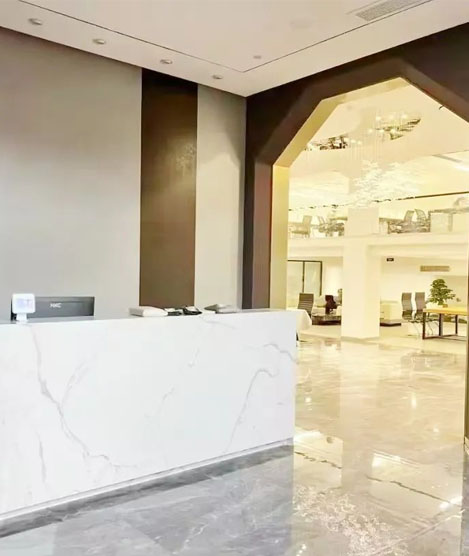
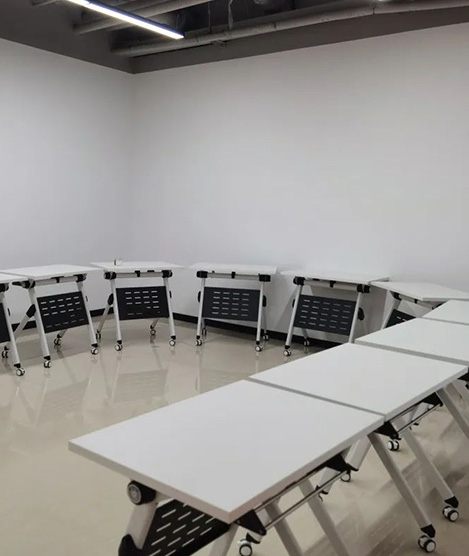
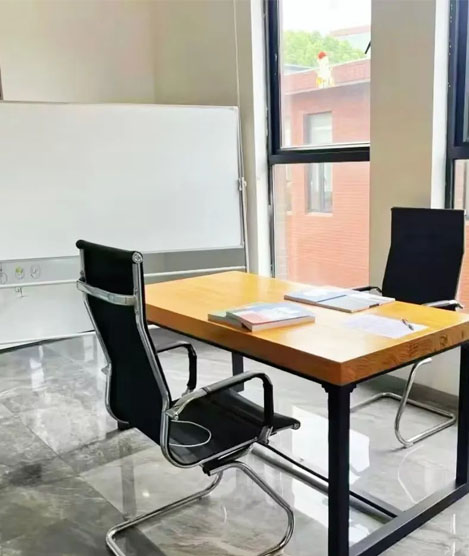
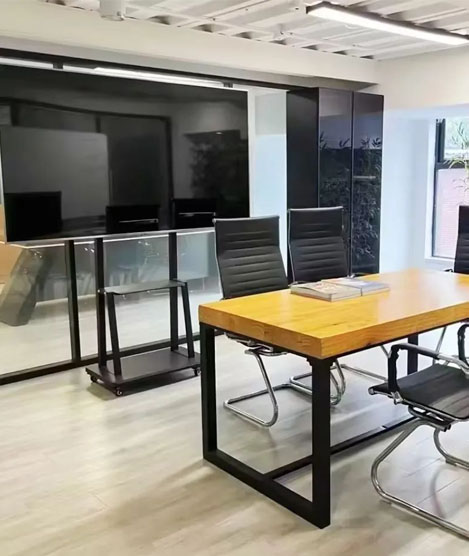
Hanlin learning centres.
Teaching runs from Hanlin's own centres in Shanghai, Shenzhen, Chengdu and Hangzhou, and online for students elsewhere.



Talk to an advisor
Everything Hanlin does for SMC, in one conversation.
Entry, planning, coaching and the past papers. An advisor will tell you which of these a student actually needs, including when the answer is none of them.
Competition entry and planning
Which competitions suit this student, in what order, and by when - then we handle the registration, including the ones that can only be entered through a school or a centre.
Competition coaching
Taught by full-time subject tutors, on a course tier chosen by placement paper rather than by year group.
International curriculum tutoring
IB, AP, A-Level, IGCSE and the US high school curriculum, taught alongside school and timed around the exam calendar.
Competition past papers, free
A large library of past papers, mark schemes and syllabus breakdowns across every competition on this site. No charge and no enrolment.
Scan to add an advisor
Say which competition or course you are asking about. Replies in Chinese or English.
Or call +86 21 6352 6630FAQ
SMC, briefly answered.
What students and families ask before entering.
Can middle-school students enter?
Yes. The contest is open to grades 7 to 12 and there is no age restriction. Strong middle-school candidates have regularly performed well.
How do the two rounds work?
A 60-minute qualifying contest of 20 multiple-choice questions in September, then a 90-minute final in October for students in roughly the top 8 to 10 per cent - or for anyone who qualified for AIME the same year.
Do I lose marks for a wrong answer?
Not directly, but you lose the mark a blank would have earned. On the multiple-choice sections a correct answer scores 4, an unanswered question scores 1 and a wrong answer scores 0.
Should I guess?
Not blindly. You need better than a one-in-four chance for a guess to beat the mark a blank guarantees. Ruling out one option brings it to about break-even; ruling out two makes guessing worthwhile.
What is on the paper?
Basic algebra - numbers and expressions, equations and inequalities, word problems and introductory functions; basic geometry - triangles, circles, polygons and analytic geometry; introductory number theory; and introductory counting.
How hard is it compared with AMC?
The qualifier is broadly comparable to AMC 10 and the final to AMC 12, which makes the two seasons complementary rather than competing.
Does a good result bring a scholarship?
More than twenty universities including Duke, UNC Chapel Hill, Wake Forest and Davidson offer admission or scholarship consideration to strong performers. The organisers describe the Duke award in terms of students within North Carolina, so international candidates should confirm eligibility rather than assume it.
How do I choose a test centre?
Available centres are shown during registration, before payment. Each has a capacity limit, so a full centre means choosing another.
Related
Contests at a similar level.
What students commonly sit in the same season as SMC.
SMC enquiries
A mark for a blank changes how you sit the paper.
Most candidates lose more to reflexive guessing than to gaps in the mathematics. Tell us the student’s year group and where they sit on AMC, and an advisor will map the September qualifier and what the final would require.