
Competitions · Business and economics · SAGE
SAGE, the global student entrepreneurship competition.
Every other business competition here judges a plan. SAGE judges a business - one you have actually run for a year, with real customers, real accounts and a real social result to show for it.

What makes it different
You have to have actually done it.
SAGE asks a team to run a genuine venture across a school year and then account for how it went. The scoring follows the operating results, not the elegance of a document.
A year of real trading
Refining the idea, making the product, finding a market, lining up resources, doing the financial analysis. There is no version of SAGE where a team writes a plan in the last month.
Reported like a company
The submission is a four-page annual report. Sales and marketing, accounting for results, strategic planning and organisational structure are all scored, which is closer to a set of accounts than to a pitch.
With a social result required
Social impact carries as much weight as business operations, and the measured outcome has to serve a real local or global community need.
And succession planning is scored
SAGE gives marks for whether the venture can survive the team leaving it. Almost no other school competition asks that question at all.
At a glance
What the competition is.
SAGE - Students for the Advancement of Global Entrepreneurship - runs regional and national events at the end of each academic year, with the top two teams from each country invited to the SAGE World Cup. Its premise is that cross-cultural enterprise raises living standards and that young people are central to change.
- Who can enter
- Students aged 13 to 19
- Team
- At least three students, plus one adult advisor
- Two divisions
- Social Responsibility Business, and Social Enterprise Business
- What you submit
- A written annual report and, in China, a product report and video at entry
- The report
- Four pages maximum, on 8 by 11 inch paper - two sheets printed both sides is acceptable
- The penalty for exceeding it
- Five points off the team total, automatically
- What may be attached
- Copies of newspaper articles, newsletters and other media as evidence of coverage. Speakers may hand out personal business cards
- Time on stage
- 35 minutes in total per team
- China registration
- March to April, submitting the product report and video
- World Cup registration
- The first week of September
- How you qualify
- The top two teams in each country are invited to the World Cup
The two divisions
Product or service - and it changes the category.
Both divisions start from an innovative response to a social problem. What separates them is how the social good is delivered.
SRB - Social Responsibility Business
The social responsibility is delivered indirectly, through a product. The venture sells something, and the social benefit follows from what it sells or how it sells it.
SEB - Social Enterprise Business
The social responsibility is delivered directly, through a service. The thing the venture does is itself the social good.
The problems are global
The environment, energy, climate change and much else. The division is about the mechanism, not the subject.
Choose by what you actually built
A team that made a physical product belongs in SRB whatever the intention; a team that ran a service belongs in SEB. Trying to place a venture in the more flattering division works against the scoring.
The 35 minutes
Every minute is allocated.
SAGE publishes the running order to the minute, including what the judges are doing while you set up. Rehearse against this.
| Minutes | What happens |
|---|---|
| 0-10 | The team distributes the annual report. The judges read and score the written report while the team sets up equipment and props. The written score is settled before you have said a word |
| 10-23 | The oral or audio-visual presentation - 13 minutes. Products may be shown but not handed to the judges |
| 23-30 | Questions from the judges |
| 30-35 | The team removes all equipment and leaves the room. The judges score |
The 13 minutes are a ceiling, not a target. Finish in 12 and the question period extends to 8 minutes; run past 13 and you are cut off mid-sentence. Deciding deliberately whether you want more presentation or more questions is a real tactical choice.
The question period
Three things the judges are watching for.
The questions are scored on their own terms, and two of the three criteria have nothing to do with knowing the answer.
Overall effect
How well the team demonstrates command of the business described in the report and the presentation, when questioned about it.
Balance
Whether every member shares the answering, or one or two students dominate. A team that lets its strongest speaker take everything loses marks for it.
Poise
Confidence on stage and the quality of the speaking itself. Presence is explicitly part of the score.
The rubric
What the marks are actually for.
This is the published breakdown. Note that it does not add to the stated total of 100 - see the note below - but it is still the clearest guide to where the effort should go.
| Category | Points | Broken down as |
|---|---|---|
| Business operations | 20 | Sales and marketing 5, accounting for and measuring business results 5, strategic planning 5, structure and organisational management 5 |
| Social impact | 20 | Given without a breakdown |
| Creativity and innovation | 20 | A new or improved business model 5, meeting an unmet market or community need 5, critical thinking and problem solving 5, potential to spark change 5 |
| Sustainability | 20 | Teamwork 5, succession planning 5, market viability 5, ethics and integrity 5 |
| Measured impact | 5 | Serving local or global community needs 5, main business focus serving community needs 5, achieving the UN sustainable development goals 5 |
| Overall presentation | 20 | Annual report 7, oral presentation 5, questions 8 |
The arithmetic does not close. The six category totals come to 105 against a stated maximum of 100, and the measured impact category is given as 5 points while its three sub-items are 5 points each, which would make it 15 and the total 115. Ask the organiser for the current rubric before optimising against it.
The awards
Three World Cup places, and seventeen more.
Alongside the overall placings, SAGE runs a separate award for each of the United Nations sustainable development goals.
The World Cup podium
The champion team receives $2,000 and a trophy, the runner-up $1,000 and a trophy, and third place $500 and a trophy.
With the prize money earmarked
The organisers state that award money is for the costs of competing internationally, for investment in the team’s own venture, or for the members’ continuing education at university.
Seventeen special awards
One for the best enterprise against each of the seventeen sustainable development goals - from ending poverty and hunger through clean water, energy and decent work to climate action, life below water, life on land and partnerships. Each carries a medal and prize money.
Which is worth planning around
A venture aimed squarely at one goal has a second, much narrower field to compete in alongside the overall placings.
Preparation
How Hanlin prepares a SAGE team.
The work is a year of trading. The preparation is making sure that year produces something reportable.
Keeping accounts from day one
Accounting for and measuring business results is scored, and a team that reconstructs its numbers in April has nothing convincing to report. Recording as you trade is the single highest-value habit.
Writing four pages that carry a year
The report is scored before the team speaks, and exceeding four pages costs five points automatically. Fitting twelve months onto four pages is the hardest writing task in this competition.
Rehearsing so that everyone answers
Balance is an explicit criterion in the question period. That means practising the quieter members answering, not just the strongest speaker.
And planning the succession
Marks are given for whether the venture survives the team. Recruiting and handing over to younger students during the year is both good practice and directly scored.
Why Hanlin
Preparation for SAGE at Hanlin is taught by full-time subject tutors, on a course tier chosen by placement paper rather than by year group.
Programme formats
Five ways this is taught.
Group size is the whole difference between these. It decides how much of the tutor's attention a student gets and how far the course can bend to them, so it is worth choosing rather than accepting.
| Format | Group size | What it suits |
|---|---|---|
| One-to-one | One student | Content, pace and emphasis set by what this student actually needs rather than by a syllabus. The only format that can be rebuilt mid-course. |
| Small group | Three to eight | Opens at three. Frequent discussion, and the tutor can slow down or move on according to what the group has absorbed. Most students chasing a higher award are taught in this one. |
| Class | Eight to twelve | Taught by the subject lead or a medal coach. Less back-and-forth, so it suits a student who will say when something is unclear. |
| Large class | Ten to twenty | For students in the middle of the placement range, and a way to try a competition before committing. Students often move to a small group or to one-to-one afterwards. |
| Past-paper class | No cap | Past papers worked through in sequence in the weeks before the sitting. Free to students already enrolled. |
Course length for SAGE is set after a placement paper. The gap between where a student is and what the paper asks for is what the course has to close, and that gap is not the same for two students in the same year group.
How it runs
Six steps, four people on your side.
The same process for every student, so that nothing depends on one tutor remembering to do it.
 Step 1
Pre-course assessment
A placement paper before anything is booked, so the course tier is chosen on evidence rather than on a year group.
 Step 2
Tutor matching
A subject tutor is matched to the result, and their full background is provided before you agree to it.
 Step 3
Plan and group
A study group opens with four people on one student: the tutor, a planner, a supervisor and an academic manager.
 Step 4
Scheduled teaching
The teaching office sets the timetable around the competition date and school term, and teaching begins.
 Step 5
After-class reports
What was covered, and how the student handled it, reported after every lesson.
 Step 6
Homework follow-up
The teaching assistant and the form teacher both check that homework is done, which is where most preparation quietly fails.
Free resource pack
Case and submission pack
The same material our own SAGE students work from. Scan the code, say what you need, and an advisor sends it.

Tell an advisor which competition and year group, and the material comes back the same day. Free, and you do not have to enrol in anything. If we do not already hold what you need, we will go and find it.
- PDFPast cases and question sets
- PDFA worked example of a full submission
- PDFEvent categories and the judging criteria, broken down
- PDFEntry checklist and the dates for the current cycle
Teaching team
Who would teach it.
Three of the twenty-two tutors on the published Hanlin roster - the ones whose subject this is.

Bai
Master's in social entrepreneurship from Hult International Business School in San Francisco and a business administration degree from the Universitat Autonoma de Barcelona, with an exchange at Texas A&M's Mays Business School. Accredited by the College Board, Cambridge International and the IBO, a certified intermediate economist, and a judge at the 2020 Diamond Challenge global final and the 2021 NEC China final.

Zhang
Master's in engineering management from NYU and a double degree in finance and supply-chain management from Syracuse. Nearly nine years overseas and in finance, including at a well-known venture firm - experience that feeds scenario-based teaching. College Board-accredited.

Jiang
Master's in business analytics from the Schulich School of Business, a finance and business economics degree from York University and a software engineering degree from the Harbin Institute of Technology. Years in North America, university teaching before returning, and long experience across the whole economics curriculum.
Where it is taught
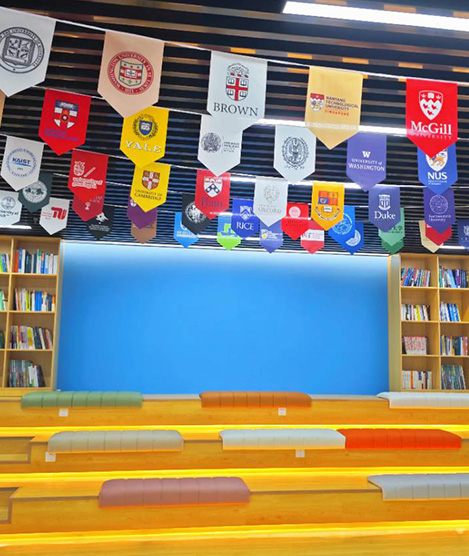
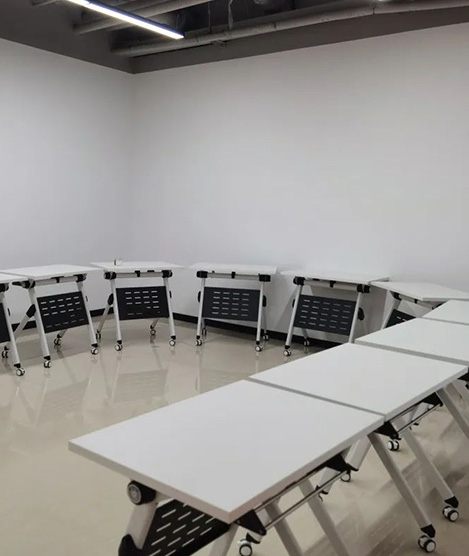
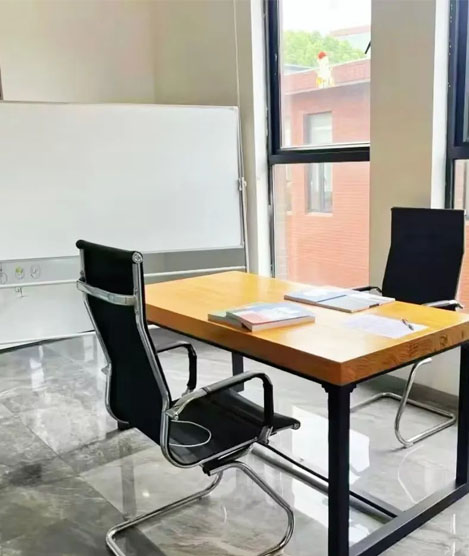
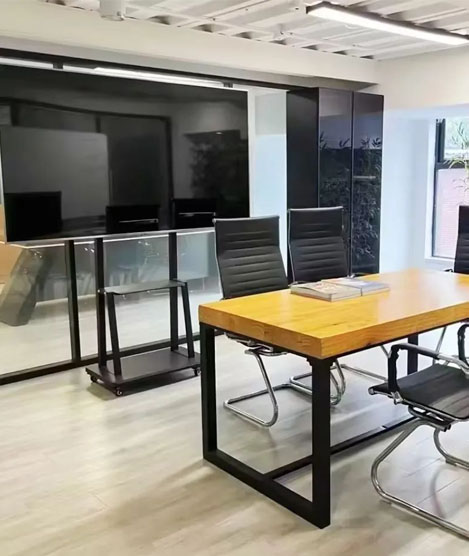
Hanlin learning centres.
Teaching runs from Hanlin's own centres in Shanghai, Shenzhen, Chengdu and Hangzhou, and online for students elsewhere.



Talk to an advisor
Everything Hanlin does for SAGE, in one conversation.
Entry, planning, coaching and the past papers. An advisor will tell you which of these a student actually needs, including when the answer is none of them.
Competition entry and planning
Which competitions suit this student, in what order, and by when - then we handle the registration, including the ones that can only be entered through a school or a centre.
Competition coaching
Taught by full-time subject tutors, on a course tier chosen by placement paper rather than by year group.
International curriculum tutoring
IB, AP, A-Level, IGCSE and the US high school curriculum, taught alongside school and timed around the exam calendar.
Competition past papers, free
A large library of past papers, mark schemes and syllabus breakdowns across every competition on this site. No charge and no enrolment.
Scan to add an advisor
Say which competition or course you are asking about. Replies in Chinese or English.
Or call +86 21 6352 6630FAQ
SAGE, briefly answered.
What students and families ask before entering.
What is different about SAGE?
It judges a business you have actually run for a year - real customers, real accounts and a real social outcome - rather than a written plan or a knowledge test. The scoring follows the operating results.
Who can enter?
Students aged 13 to 19, in teams of at least three, with one adult advisor.
What are the two divisions?
Social Responsibility Business, where the social good is delivered indirectly through a product; and Social Enterprise Business, where it is delivered directly through a service.
What do I submit?
A written annual report of no more than four pages on 8 by 11 inch paper - two sheets printed both sides is acceptable. Exceeding four pages costs the team five points automatically. In China, a product report and video are submitted at entry.
What happens on the day?
Thirty-five minutes. The judges read and score your report in the first ten minutes while you set up. You then present for up to thirteen minutes, take questions until minute thirty, and clear the room while the judges score.
What if I finish the presentation early?
The question period extends by the difference. Finishing in twelve minutes gives eight minutes of questions instead of seven. Running past thirteen minutes gets you cut off.
Can I hand the judges my product?
No. Products may be shown during the presentation but not passed to the judges. You may attach media coverage to the report, and speakers may hand out business cards.
How is it scored?
On business operations, social impact, creativity and innovation, sustainability, measured impact and overall presentation. Note that the published breakdown does not add to the stated total of 100, so confirm the current rubric with the organiser.
How do I reach the World Cup?
The top two teams in each country are invited. World Cup registration is in the first week of September.
What can you win?
$2,000 and a trophy for the champion, $1,000 for the runner-up and $500 for third, with the money earmarked for competing internationally, investing in the venture or continuing education. There are also seventeen special awards, one for the best enterprise against each UN sustainable development goal, each carrying a medal and prize money.
Related
Other entrepreneurship competitions.
What students enter alongside SAGE.
SAGE enquiries
A year of trading, on four pages.
SAGE is the one competition here that will not accept a plan - the team has to have run something and be able to account for how it went. Tell us what the students want to build and when they can start, and an advisor will map the year backwards from the report.