
Competitions · Humanities and writing · River of Words
River of Words.
Poetry and art about the natural world, open from age five - and the artwork has to arrive physically in the post, even if you made it on a screen.

Read this first
An adult has to submit it, and the art has to be posted.
Two process rules shape the whole entry, and both surprise people who are used to uploading a file.
A parent, teacher or counsellor submits
Entries must be submitted by a parent, guardian, educator or counsellor unless the student is eighteen or over. A younger student cannot enter on their own.
Artwork travels by post
Whatever the medium, artwork must be mailed to be entered. Digital work has to be printed out and sent. The information is still submitted through the online form as well.
And art is not returned
Work sent in is not sent back, so post a copy of anything the student wants to keep.
No revisions after submitting
The organisers do not accept changes. Make sure the work is finished before it is entered.
At a glance
What the competition is.
River of Words is a project of the Center for Environmental Literacy, part of the Kalmanovitz School of Education at Saint Mary’s College of California. For more than twenty-five years it has worked at the join between science and art, asking students to turn what they observe into creative work.
- Who can enter
- Students aged 5 to 19, in kindergarten through grade 12
- One condition
- Students must be enrolled in school
- Who submits
- A parent, guardian, educator or counsellor, unless the student is 18 or over
- Two forms
- Poetry and art
- How many
- Up to five poems and up to five artworks - ten in total
- If you send more
- Only the first five in a category are accepted
- One form per submission
- Each poem or artwork submitted requires its own form
- Collaborative work
- Accepted in both poetry and art. Only one student, named as the group representative, is eligible for an award
- Class entries
- Teachers submit all of a class’s group entries together
- Artwork delivery
- Posted, with a printed confirmation from the online form included in the package
- Deadline
- End of January
- Awards
- One winner in each of four age or grade categories for poetry, and one in each of four for art
What it is for
Observation turned into expression.
The competition sits inside an environmental education project, and knowing that explains what it rewards.
Science and art together
The organisers describe twenty-five years of inspiring educators and students through an innovative combination of science and art. It is a place-based education project first.
It asks students to look, then make
The stated aim is students turning their own observations into creative expression - which means observation of somewhere real, not imagination alone.
And it starts very young
Age five upwards means kindergarten entrants compete in their own category. For a young child this is a genuine and gentle first competition.
Class projects are welcomed
Teachers can enter a whole class, and collaborative poems and artworks are accepted. It works as a classroom activity rather than only as an individual entry.
Preparation
How Hanlin prepares an entry.
Ten submissions across two forms, judged in four age bands, with a postal deadline. The logistics matter as much as the work.
Observing somewhere specific
A river, a park, a street, a window. Work grounded in an actual observed place reads entirely differently from work about nature in general.
Using both forms
Five poems and five artworks are separate allowances. A student who does both has ten chances rather than five.
Posting in time
International post to California takes weeks. Working back from the end of January means finishing in December.
And finishing before submitting
No revisions are accepted and artwork is not returned. Photograph or scan everything before it goes in the envelope.
Why Hanlin
Preparation for River of Words at Hanlin is taught by full-time subject tutors, on a course tier chosen by placement paper rather than by year group.
Programme formats
Five ways this is taught.
Group size is the whole difference between these. It decides how much of the tutor's attention a student gets and how far the course can bend to them, so it is worth choosing rather than accepting.
| Format | Group size | What it suits |
|---|---|---|
| One-to-one | One student | Content, pace and emphasis set by what this student actually needs rather than by a syllabus. The only format that can be rebuilt mid-course. |
| Small group | Three to eight | Opens at three. Frequent discussion, and the tutor can slow down or move on according to what the group has absorbed. Most students chasing a higher award are taught in this one. |
| Class | Eight to twelve | Taught by the subject lead or a medal coach. Less back-and-forth, so it suits a student who will say when something is unclear. |
| Large class | Ten to twenty | For students in the middle of the placement range, and a way to try a competition before committing. Students often move to a small group or to one-to-one afterwards. |
| Past-paper class | No cap | Past papers worked through in sequence in the weeks before the sitting. Free to students already enrolled. |
Course length for River of Words is set after a placement paper. The gap between where a student is and what the paper asks for is what the course has to close, and that gap is not the same for two students in the same year group.
How it runs
Six steps, four people on your side.
The same process for every student, so that nothing depends on one tutor remembering to do it.
 Step 1
Pre-course assessment
A placement paper before anything is booked, so the course tier is chosen on evidence rather than on a year group.
 Step 2
Tutor matching
A subject tutor is matched to the result, and their full background is provided before you agree to it.
 Step 3
Plan and group
A study group opens with four people on one student: the tutor, a planner, a supervisor and an academic manager.
 Step 4
Scheduled teaching
The teaching office sets the timetable around the competition date and school term, and teaching begins.
 Step 5
After-class reports
What was covered, and how the student handled it, reported after every lesson.
 Step 6
Homework follow-up
The teaching assistant and the form teacher both check that homework is done, which is where most preparation quietly fails.
Free resource pack
Past questions and writing pack
The same material our own River of Words students work from. Scan the code, say what you need, and an advisor sends it.

Tell an advisor which competition and year group, and the material comes back the same day. Free, and you do not have to enrol in anything. If we do not already hold what you need, we will go and find it.
- PDFEvery past question the competition has set
- PDFShortlisted and published essays, to calibrate the standard
- PDFStructure, referencing and word-count guide
- PDFEntry checklist and the dates for the current cycle
Teaching team
Who would teach it.
Three of the twenty-two tutors on the published Hanlin roster - the ones whose subject this is.

Lu
Master's in education from the University of Pennsylvania and a double major in psychology and philosophy at Mount Holyoke. Cross-cultural teaching experience across China and the US, with research work in child and adolescent development, cognition, and international students' identity.

Yang
Educated at American Heritage School, then English literature and philosophy at the University of British Columbia and a master's in language education at Toronto. Eleven years in North America, with a close working knowledge of the international curricula and overseas admissions.

Zhang
Master's in cognitive science at UC San Diego on full scholarship, after double honours in neurobiology and behaviour and in cognitive science at UC Davis. Ten years overseas, a perfect TOEFL speaking score, and named an outstanding education scholar at UCSD.
Student results
What Hanlin students got.
Taken from Hanlin's published record of student honours and rewritten in English. Figures are as the organisers reported them.
River of Words
- 2020A Finalist placing in poetry
The full record, across every subject and year, is on the student honours page.
Where it is taught
Hanlin learning centres.
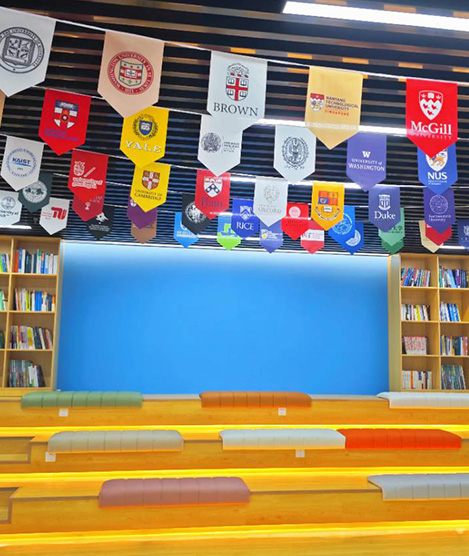
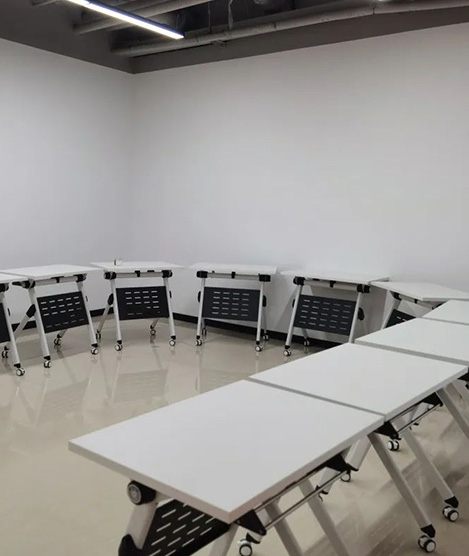
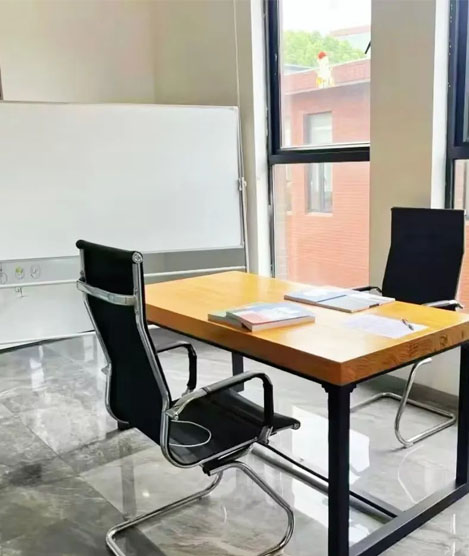
Teaching runs from Hanlin's own centres in Shanghai, Shenzhen, Chengdu and Hangzhou, and online for students elsewhere.




Talk to an advisor
Everything Hanlin does for River of Words, in one conversation.
Entry, planning, coaching and the past papers. An advisor will tell you which of these a student actually needs, including when the answer is none of them.
Competition entry and planning
Which competitions suit this student, in what order, and by when - then we handle the registration, including the ones that can only be entered through a school or a centre.
Competition coaching
Taught by full-time subject tutors, on a course tier chosen by placement paper rather than by year group.
International curriculum tutoring
IB, AP, A-Level, IGCSE and the US high school curriculum, taught alongside school and timed around the exam calendar.
Competition past papers, free
A large library of past papers, mark schemes and syllabus breakdowns across every competition on this site. No charge and no enrolment.
Scan to add an advisor
Say which competition or course you are asking about. Replies in Chinese or English.
Or call +86 21 6352 6630FAQ
River of Words, briefly answered.
What students, parents and teachers ask before entering.
Who can enter?
Students aged 5 to 19, in kindergarten through grade 12, who are enrolled in school.
Can a student submit their own work?
Only if they are eighteen or over. Otherwise entries must be submitted by a parent, guardian, educator or counsellor.
How many pieces can be entered?
Up to five poems and up to five artworks - ten in total. If more than five are sent in a category, only the first five are accepted. Each submission needs its own form.
Is collaborative work accepted?
Yes, in both poetry and art. Only one student, designated as the group representative, is eligible for an award.
How is artwork submitted?
By post, whatever the medium. Digital artwork must be printed and mailed. A printed confirmation from the online form must be included in the package, and the information still has to be submitted online as well.
Will my artwork be returned?
No. Artwork sent in is not returned to the artist.
Can I revise after submitting?
No. The organisers do not accept revisions, so make sure the work is complete before entering.
Can a teacher enter a whole class?
Yes. Teachers should submit all of a class’s group entries together.
How are awards decided?
One winner is chosen in each of four age or grade categories for poetry, and one in each of four for art.
When is the deadline?
The end of January.
Related
Other art and writing competitions.
What students enter alongside this one.
River of Words enquiries
Ten entries, two forms, and an envelope to California.
Open from age five, welcoming class projects, and built on looking closely at a real place. Tell us the student’s age and what they like making, and an advisor will help plan the ten - and the post.