
Competitions · Research and innovation · ISEF
Regeneron ISEF, the International Science and Engineering Fair.
You cannot enter ISEF. You can only win your way in - through an affiliated fair, and which one is open to you depends on where you are at school. About 1,800 students reach the final each year.

Read this first
There is no direct entry.
This is the single most important thing about ISEF and the thing families most often misunderstand. The competition is a final, not an open contest.
Every finalist wins an affiliated fair first
ISEF requires that a competitor be a winner of a regional science fair affiliated to it. Roughly 1,800 students earn a place that way each year.
And your school decides which fair
A student at a Chinese school, at an international school in China, at a US high school, in Hong Kong or in Canada each has a different and non-interchangeable route. The sections below set out all five.
The affiliated fairs run months earlier
The ISEF final is usually in May. Affiliated fairs run anywhere from the previous autumn to that spring, so a student who starts planning in spring has already missed the entry point.
One project, one fair
Each student or team may submit only one research project and may enter only one ISEF-affiliated fair. There is no second attempt within a season.
At a glance
What the competition is.
ISEF is sponsored by Regeneron and is the benchmark research competition for secondary students worldwide, with the highest recognition and the most credible awards in the field.
- Who can enter
- Students in grades 9 to 12
- Categories
- 21, spanning mathematics, physics, chemistry, biology, computing, engineering and the social sciences
- Format
- Individually or in teams of no more than three. A team may compete at the fair local to any one of its members
- Language
- All research content must be presented in English
- Research window
- No more than 12 months of research, and the current year’s project must have begun after January of the previous year
- One entry only
- One project per student or team, at one affiliated fair
- What does not qualify
- Demonstrations, library research summaries, informational projects and explanation models are not eligible ISEF projects
- Paperwork
- A research application form, a research plan and consent forms, all reviewed by an adult mentor before submission. Any change requires re-approval
- The abstract
- Once experiments begin, a written abstract of at most 250 words on one page - purpose, procedure, data and conclusions
- When
- The global final is usually held in May
The rules that disqualify people
Four requirements worth reading before you start.
Most projects that fail to qualify do so on these, and all four are decided before the research is finished.
Twelve months, starting after last January
Research may span no more than twelve months, and the current year’s work must have started after January of the preceding year. A long-running project must be scoped into a defined piece of work.
The student’s part must stand alone
A project may sit inside a larger professional research programme, but the portion submitted must have been completed independently by the student and must be complete in itself.
Human subjects and animals need prior approval
Research involving human subjects, vertebrate animals or potentially hazardous biological agents requires additional review. This routinely determines whether a student can compete at all, and it must be settled in advance.
And it must be research, not explanation
Demonstrations, literature summaries and models built to explain something are explicitly excluded. The project must investigate a question.
Your route in
Five paths, decided by where you are at school.
These are not alternatives to choose between. Your circumstances determine which one is available, so the first task is identifying yours.
| If you are… | Your route | What to know |
|---|---|---|
| At a Chinese school | The National Youth Science and Technology Innovation Contest | China is divided into eight regions, each an ISEF-affiliated fair, and competitors are selected region by region |
| At a Chinese school, grades 9-10 | The Talented Youth Programme | Described as the highest-probability route to ISEF. Open in twenty provinces and cities to students in the top 10% of their year by subject, or the top 15% overall, who then research under the guidance of working scientists |
| A strong independent researcher | Tomorrow’s Little Scientist | Backed by the China Association for Science and Technology and co-organised with the Chinese academies of sciences and engineering and the national science foundation. Open application for high-school students with their own research results; 130 are selected |
| A foreign national at school in China | The Regeneron Cup Sichuan Science Fair | Run by Regeneron China, the International Schools Consortium and Chengdu International School, for grades 9 to 12 holding foreign nationality or foreign permanent residence. Schools register, and winners can go straight to the ISEF final |
| At a US high school | Your state’s affiliated fair | Regional fair, then state fair, then ISEF. Competitiveness differs sharply by state. Start preparing in September or October of grade 10 |
| At a Hong Kong school | The Hong Kong Youth Science and Technology Innovation Competition, or the ISEF Hong Kong preliminary | For full-time Secondary 3 to Secondary 6 students under 20 as at 1 May. First, second and third prize winners may advance; a first prize takes you straight into the next year’s Hong Kong final |
| At a Canadian school | Team Canada | Grades 9 to 12, under 21 as at 1 May, Canadian citizens or permanent residents. Online registration, committee selection, a report and an interview |
Note what this means in practice: a Chinese national at a Chinese school and a foreign national at an international school in China are on entirely separate routes, even in the same city. Confirm which applies before choosing a project.
The awards
What ISEF pays, and to whom.
The award structure runs deep. Fourth place in a single category still carries a cash award, and every category is judged separately.
| Award | Who receives it | Value |
|---|---|---|
| Gordon E. Moore Award | The highest honour of the whole fair | USD 75,000 |
| Regeneron Foundation Young Scientists Award | The two next-best competitors or teams across all categories - second and third overall | USD 5,000 each |
| Best of Category | First place in each of the 21 categories, who then compete for the Moore and Young Scientists awards | USD 5,000, plus USD 1,000 to the winner’s school or team |
| Grand Awards | First, second, third and fourth place within each category | USD 3,000, 1,500, 1,000 and 500 |
| Dudley R. Herschbach SIYSS Award | Three winners | A funded place at the Stockholm International Youth Science Seminar, including the Nobel Prize ceremony. Recipients must be 18 by the December Nobel banquet |
| Special Awards | Awarded by outside bodies across many fields | Provided by organisations including the American Chemical Society, the American Mathematical Society, the American Psychological Association, the American Statistical Association, the ACM, the IEEE, NASA and Oracle Academy |
The Special Awards are worth planning for. They are judged by subject bodies rather than by the fair, which means a project that does not place in its category can still be recognised by the professional society in its field.
The categories
Twenty-one, and the choice matters.
Grand Awards are given within each category, so a project’s category determines the field it competes against. Choosing well is a real strategic decision.
Life sciences
Animal Sciences, Plant Sciences, Cellular and Molecular Biology, Microbiology, Biochemistry, Biomedical and Health Sciences, Translational Medical Science, and Computational Biology and Bioinformatics.
Physical sciences and mathematics
Chemistry, Physics and Astronomy, Mathematics, Materials Science, and Earth and Environmental Sciences.
Engineering and computing
Biomedical Engineering, Engineering Mechanics, Environmental Engineering, Embedded Systems, Energy: Sustainable Materials and Design, Systems Software, Robotics and Intelligent Machines, and Behavioral and Social Sciences.
Preparation
How Hanlin supports an ISEF project.
ISEF is a research programme rather than a competition entry, and the work that decides it happens a year before the fair.
Identifying the route first
Which affiliated fair a student is eligible for determines the deadline, the paperwork and often the language of submission. Nothing else can be planned until it is settled.
Scoping to twelve months
The research window is a hard constraint. Most of the value comes from defining a question that can be answered properly inside it rather than reporting part of something larger.
Clearing the approvals early
Human subjects, vertebrate animals and hazardous biological agents all need prior review. Discovering this after the experiments are done is the commonest way a good project fails to qualify.
Choosing the category deliberately
Grand Awards are given within categories. A project that sits between two fields competes against a different set of entries depending on where it is entered, and that choice is worth making with advice.
Why Hanlin
Hanlin has been entering students for ISEF for years, and publishes what they got. The record is further down this page.
Programme formats
Five ways this is taught.
Group size is the whole difference between these. It decides how much of the tutor's attention a student gets and how far the course can bend to them, so it is worth choosing rather than accepting.
| Format | Group size | What it suits |
|---|---|---|
| One-to-one | One student | Content, pace and emphasis set by what this student actually needs rather than by a syllabus. The only format that can be rebuilt mid-course. |
| Small group | Three to eight | Opens at three. Frequent discussion, and the tutor can slow down or move on according to what the group has absorbed. Most students chasing a higher award are taught in this one. |
| Class | Eight to twelve | Taught by the subject lead or a medal coach. Less back-and-forth, so it suits a student who will say when something is unclear. |
| Large class | Ten to twenty | For students in the middle of the placement range, and a way to try a competition before committing. Students often move to a small group or to one-to-one afterwards. |
| Past-paper class | No cap | Past papers worked through in sequence in the weeks before the sitting. Free to students already enrolled. |
Course length for ISEF is set after a placement paper. The gap between where a student is and what the paper asks for is what the course has to close, and that gap is not the same for two students in the same year group.
How it runs
Six steps, four people on your side.
The same process for every student, so that nothing depends on one tutor remembering to do it.
 Step 1
Pre-course assessment
A placement paper before anything is booked, so the course tier is chosen on evidence rather than on a year group.
 Step 2
Tutor matching
A subject tutor is matched to the result, and their full background is provided before you agree to it.
 Step 3
Plan and group
A study group opens with four people on one student: the tutor, a planner, a supervisor and an academic manager.
 Step 4
Scheduled teaching
The teaching office sets the timetable around the competition date and school term, and teaching begins.
 Step 5
After-class reports
What was covered, and how the student handled it, reported after every lesson.
 Step 6
Homework follow-up
The teaching assistant and the form teacher both check that homework is done, which is where most preparation quietly fails.
Free resource pack
ISEF project and submission pack
The same material our own ISEF students work from. Scan the code, say what you need, and an advisor sends it.

Tell an advisor which competition and year group, and the material comes back the same day. Free, and you do not have to enrol in anything. If we do not already hold what you need, we will go and find it.
- PDFPast finalist project titles and abstracts, by category
- PDFThe category definitions and the judging criteria, broken down
- DOCXThe forms, in the order they have to be signed - this is what catches teams out
- DOCXA project timeline working back from the affiliated fair
Teaching team
Who would teach it.
Three of the twenty-two tutors on the published Hanlin roster - the ones whose subject this is.

Dr An
Mathematics at Illinois Urbana-Champaign with highest honours and the Elizabeth R. Bennett scholarship, then a PhD in mathematics at Johns Hopkins on full funding with the Owen fellowship and the Joel Dean award for excellent teaching. Years of US university teaching, translating high-level mathematics into language students can use.

Yu
Master's in bioinformatics and computational biology from UT Dallas and a nutritional sciences degree from Wisconsin-Madison. Second author on an SCI-indexed paper from the Tanumihardjo vitamin-A laboratory, and formerly at ABS Global.

Tan
Master's in data science from the University of Sydney after a statistics degree at Simon Fraser University, graduating in the top 5% with repeated chancellor's honours; A-Levels at a Cambridge international school, and formerly a data analyst at Tencent. An AMC-accredited coach, a College Board-accredited AP teacher, and holder of a Math League excellent-teacher award.
Student results
What Hanlin students got.
Taken from Hanlin's published record of student honours and rewritten in English. Figures are as the organisers reported them.
Grand Award at the global final, 2024-25
One line from Hanlin's published ISEF record. The rest of it is below.
ISEF
- 2024-25At the global final, one Grand Award, 2 special awards, one first and one fourth place. At the Sichuan Science Fair - which sent only five students forward - Hanlin had one of them, a Finalist who also took a provincial special award
- 2023-24One Grand Award, plus Finalist placings of 2 first, 2 second, 3 third and 3 fourth prizes and more than 10 special awards
Earlier years
- 2022-23Finalist placings of 3 first, 2 second, one third and 6 fourth prizes, with 8 special awards
The full record, across every subject and year, is on the student honours page.
Where it is taught
Hanlin learning centres.
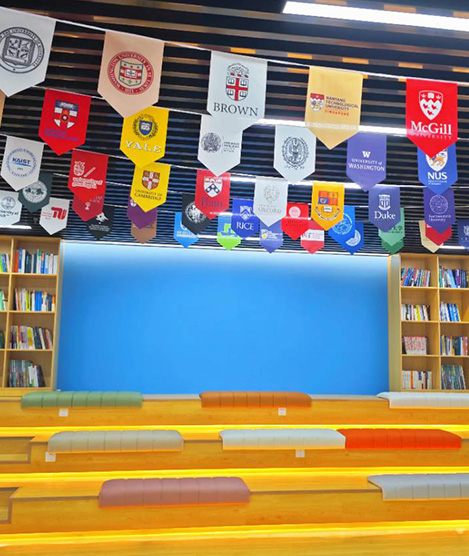
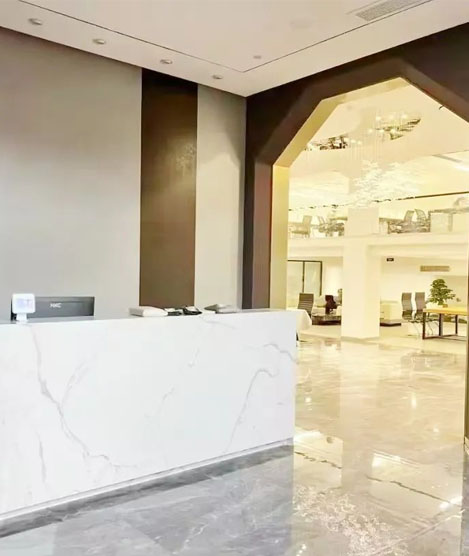
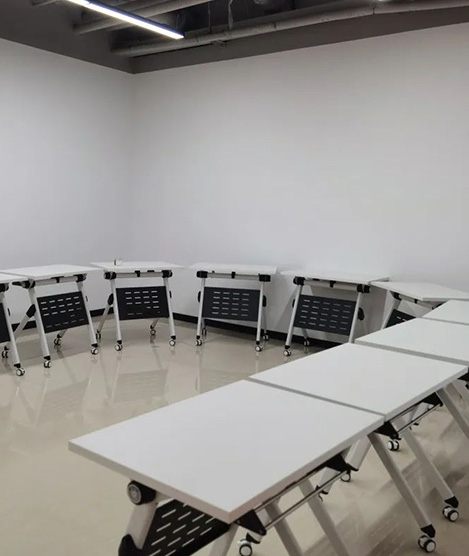
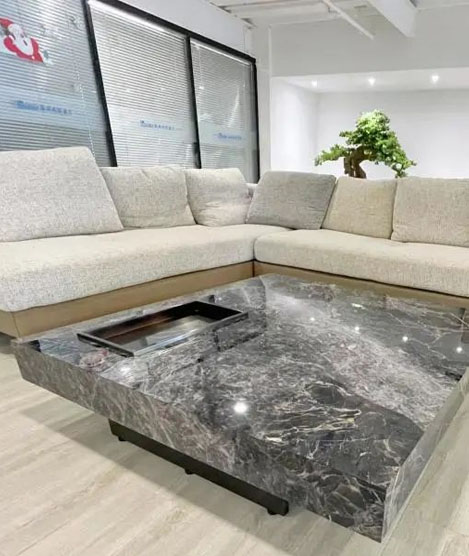
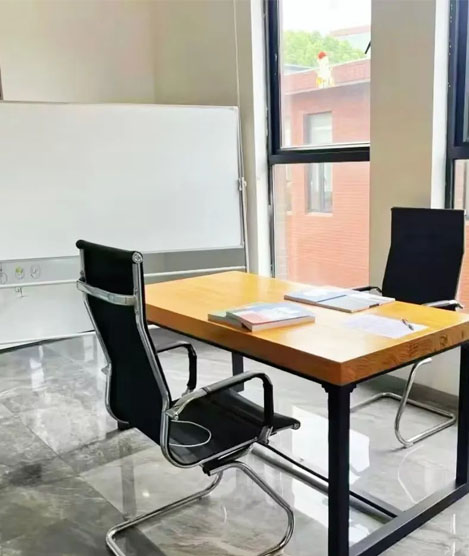
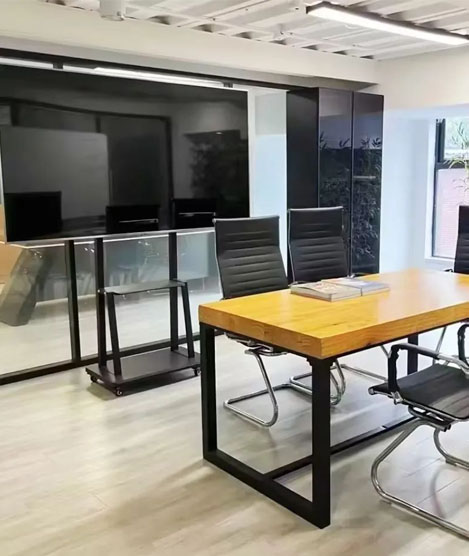
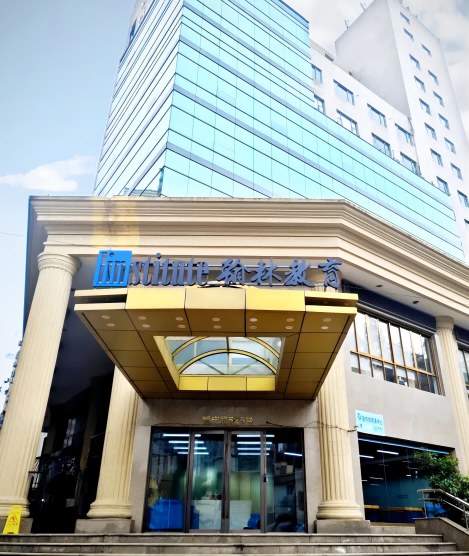
Teaching runs from Hanlin's own centres in Shanghai, Shenzhen, Chengdu and Hangzhou, and online for students elsewhere.
Talk to an advisor
Everything Hanlin does for ISEF, in one conversation.
Entry, planning, coaching and the past papers. An advisor will tell you which of these a student actually needs, including when the answer is none of them.
Competition entry and planning
Which competitions suit this student, in what order, and by when - then we handle the registration, including the ones that can only be entered through a school or a centre.
Competition coaching
Taught by full-time subject tutors, on a course tier chosen by placement paper rather than by year group.
International curriculum tutoring
IB, AP, A-Level, IGCSE and the US high school curriculum, taught alongside school and timed around the exam calendar.
Competition past papers, free
A large library of past papers, mark schemes and syllabus breakdowns across every competition on this site. No charge and no enrolment.
Scan to add an advisor
Say which competition or course you are asking about. Replies in Chinese or English.
Or call +86 21 6352 6630FAQ
ISEF, briefly answered.
What students and families ask before starting a project.
Can I register for ISEF directly?
No. ISEF requires competitors to be winners of an ISEF-affiliated regional fair. Which fair you are eligible for depends on where you are at school.
I am at a Chinese school. What is my route?
The National Youth Science and Technology Innovation Contest, which runs as eight regional affiliated fairs across China. Students in grades 9 and 10 may also enter through the Talented Youth Programme, which the organisers describe as the highest-probability route.
I am a foreign national at an international school in China.
The Regeneron Cup Sichuan Science Fair, run by Regeneron China with the International Schools Consortium and Chengdu International School, for grades 9 to 12 holding foreign nationality or foreign permanent residence. Schools register, and winners can go directly to the ISEF final.
When should a student start?
For a student at a US high school, September or October of grade 10 is the recommended starting point. Affiliated fairs run from the preceding autumn to the spring, and the final is usually in May.
How long can the research take?
No more than twelve months, and the current year’s project must have begun after January of the previous year.
Can I enter as a team?
Yes, in teams of no more than three. A team may compete at the fair local to any one of its members.
What kind of project does not qualify?
Demonstrations, library research summaries, informational projects and explanation models. The project must be an investigation.
What approvals do I need?
A research application form, a research plan and consent forms, all reviewed by an adult mentor before submission. Research involving human subjects, vertebrate animals or potentially hazardous biological agents requires additional review, and this often determines eligibility.
What are the prizes?
The Gordon E. Moore Award of USD 75,000 is the top honour. The two next-best entries receive USD 5,000 each. Best of Category winners receive USD 5,000 plus USD 1,000 for their school. Grand Awards within each category pay USD 3,000, 1,500, 1,000 and 500 for first to fourth.
Do I need to submit a full research paper?
A 250-word abstract is required once experiments begin. A project data book and research paper are not compulsory at ISEF but are strongly recommended, and individual affiliated fairs may require them.
Related
Other research competitions.
What students enter alongside or instead of ISEF.
ISEF enquiries
The first question is which fair you can enter.
A Chinese national at a Chinese school and a foreign national at an international school in the same city are on entirely different routes, with different deadlines and different paperwork. Tell us where the student is at school and an advisor will identify the route before any project work starts.