
Competitions · Humanities and writing · Quill and Scroll
Quill and Scroll, the international journalism contest.
Fifty-one topics across writing, photography, design and multimedia - and you may enter four of them. Judged by working journalists: Super Bowl reporters, a Denver Post staff photographer, editors and journalism lecturers.
What it is
A journalism contest, judged by journalists.
Quill and Scroll is the International Honor Society for High School Journalists, founded at the University of Iowa in April 1926. Its contest is unusual in how specifically it is organised and who assesses it.
The judges work in the field
Reporters who have covered the NFL and the Super Bowl, a staff photographer at the Denver Post, news feature photographers, newspaper sports reporters, magazine and newspaper editors, a reporter working at the Professional Golfers Association, and journalism lecturers at high school and university level.
Fifty-one separate topics
Not four broad categories with subheadings - fifty-one distinct topics, each judged against its own standard. Sports Column Writing is assessed separately from Column Writing, and Sports Action Photography separately from Sports Reaction Photography.
Anchored in school publications
The society’s members are the student editors and reporters of school newspapers and magazines - 14,232 member schools and close to half a million members across 44 countries.
And it rewards specialism
Because the topics are narrow, a student who does one thing well - reviews, infographics, podcasts - has a category built for exactly that.
At a glance
The essentials.
Entry is online, in English, and open to individuals and teams. The entry limit is the rule most worth planning around.
- Who can enter
- Secondary students aged 14 to 19. Note that the contest also runs three middle school categories, which sit below that age floor
- Entries per person
- Four maximum, in any combination - four in one topic, or four different topics
- Four categories
- Writing, Photography, Design and Multimedia
- Topics
- Fifty-one, counting the three middle school categories
- Language
- English
- Individual or team
- Both, depending on the topic
- Original work
- Required. Individual entries must be created alone, not by a team
- Wrong category
- Work that is not correctly identified, or is placed in the wrong topic, is disqualified
- International deadline
- Early January
- Asia invitational
- April, in Beijing
- Media seminar
- Summer, in Dallas
The topics
All four categories, in full.
This list is the reason to look at the contest. Read it for the topic that matches what the student already does rather than choosing a category first.
| Category | Topics |
|---|---|
| Writing 15 topics | News Writing, Feature Writing, Profile Writing, Staff Editorial Writing, Review Writing, Column Writing (non-sports), Sports Column Writing, In-Depth Reporting (individual), In-Depth Reporting (team), Sports Feature Writing, Sports Game or Event Coverage, Health Science and Agricultural Writing, Climate and Environment Writing, News Writer of the Year, Beginning Writer |
| Photography 8 topics | Breaking News Photography, Feature Photography, Sports Action Photography, Sports Reaction Photography, Photo Illustration, Photo Gallery, Profile or Environmental Portrait, Beginning Photographer |
| Design 9 topics | Editorial Cartoon, Informational Graphic, News Magazine Front Page Design, Newspaper Front Page Design, Features Page Design (single page), Features Page Design (two-page spread), Sports Page Design, Editorial Page Design, Beginning Designer/Artist |
| Multimedia 16 topics | Video News Package, Video Sports Package, Video Features Package, Documentary Video, Audio Podcast (single episode), Interactive Informational Graphic, News Show, Multimedia Feature/News Package, Multimedia Sports Package, Multimedia Opinion Package, Social Media (individual), Social Media (team), Beginning Podcaster, Beginning Social Media Journalist, Beginning Multimedia Journalist, Beginning Videographer |
| Middle school 3 topics | Middle School Writing, Middle School Visual, Middle School Multimedia |
Note how many topics begin with "Beginning" - there is a first-time entrant category in every one of the four areas. A student who has never published anything is not competing against the school newspaper editor.
What to submit
The requirements differ by category.
Every entry needs a title. Beyond that, each category has its own rules, and the multimedia time limits are strict.
| Category | What is required |
|---|---|
| Writing | A title, submitted as PDF or JPG. There is no word limit. Work already published in print should be scanned clearly and converted to PDF or JPG |
| Photography | A title, a high-resolution image no larger than 5MB, and an English caption of under 200 words explaining what the image is about |
| Design | A title, and a high-resolution image or document. Photographic work needs an English caption of under 200 words |
| Multimedia | A title, and clear video and audio. Every type must be produced by the student alone, except documentary, which may be individual or team |
| Multimedia running times | News, sports and feature video under 5 minutes. Podcast under 15 minutes. Documentary and news show between 5 and 30 minutes |
| Middle school | Writing as a PDF; visual work as a PDF or photograph, with the original digital file and a shared folder link; multimedia as a URL. Visual entries are judged on action photography, informative captions, layout and design, or on composition, cropping and caption writing |
The disqualification rule is worth taking seriously: work that is not correctly identified, or is entered in the wrong topic, is disqualified rather than moved. With fifty-one narrowly defined topics, choosing correctly is part of the entry.
The awards
Read the first line before judging a result.
The award structure is generous, and it is worth understanding what each level actually signifies.
Around 60% receive a finalist award
Roughly six entries in ten are given a finalist award, which qualifies the entrant for the global summit. That is a wide band, and it describes reaching a standard rather than placing.
Asia awards - gold, silver and bronze per topic
One of each in every one of the fifty-one topics, plus merit awards whose number depends on how many entries that topic drew and how good they were.
Then global judging
Asia award winners may go forward to global judging, which again gives gold, silver and bronze in each of the fifty-one topics, plus merit awards.
So aim at the topic medals
A gold in a narrowly defined topic, judged by a working journalist, is a real result. A finalist award describes being in the top 60%.
Preparation
How Hanlin prepares an entry.
Four entries and fifty-one topics makes selection the first piece of work, and it is the one most entrants skip.
Matching the work to the topic
The topics are narrow and the wrong one disqualifies the entry outright. Reading all fifty-one before deciding takes an hour and is the highest-return hour in the process.
Using the Beginning categories honestly
Every area has a first-time entrant topic. A student new to journalism competing there is in a fair field; the same student in News Writer of the Year is not.
Writing the 200-word caption
Photography and design entries live or die on the caption. Two hundred words to explain what an image is about is a journalistic skill in itself, and it is scored.
Respecting the running times
Under five minutes for a news video, under fifteen for a podcast, five to thirty for a documentary. Editing to a hard limit is the discipline the multimedia categories actually test.
Why Hanlin
Preparation for Quill and Scroll at Hanlin is taught by full-time subject tutors, on a course tier chosen by placement paper rather than by year group.
Programme formats
Five ways this is taught.
Group size is the whole difference between these. It decides how much of the tutor's attention a student gets and how far the course can bend to them, so it is worth choosing rather than accepting.
| Format | Group size | What it suits |
|---|---|---|
| One-to-one | One student | Content, pace and emphasis set by what this student actually needs rather than by a syllabus. The only format that can be rebuilt mid-course. |
| Small group | Three to eight | Opens at three. Frequent discussion, and the tutor can slow down or move on according to what the group has absorbed. Most students chasing a higher award are taught in this one. |
| Class | Eight to twelve | Taught by the subject lead or a medal coach. Less back-and-forth, so it suits a student who will say when something is unclear. |
| Large class | Ten to twenty | For students in the middle of the placement range, and a way to try a competition before committing. Students often move to a small group or to one-to-one afterwards. |
| Past-paper class | No cap | Past papers worked through in sequence in the weeks before the sitting. Free to students already enrolled. |
Course length for Quill and Scroll is set after a placement paper. The gap between where a student is and what the paper asks for is what the course has to close, and that gap is not the same for two students in the same year group.
How it runs
Six steps, four people on your side.
The same process for every student, so that nothing depends on one tutor remembering to do it.
 Step 1
Pre-course assessment
A placement paper before anything is booked, so the course tier is chosen on evidence rather than on a year group.
 Step 2
Tutor matching
A subject tutor is matched to the result, and their full background is provided before you agree to it.
 Step 3
Plan and group
A study group opens with four people on one student: the tutor, a planner, a supervisor and an academic manager.
 Step 4
Scheduled teaching
The teaching office sets the timetable around the competition date and school term, and teaching begins.
 Step 5
After-class reports
What was covered, and how the student handled it, reported after every lesson.
 Step 6
Homework follow-up
The teaching assistant and the form teacher both check that homework is done, which is where most preparation quietly fails.
Free resource pack
Past questions and writing pack
The same material our own Quill and Scroll students work from. Scan the code, say what you need, and an advisor sends it.

Tell an advisor which competition and year group, and the material comes back the same day. Free, and you do not have to enrol in anything. If we do not already hold what you need, we will go and find it.
- PDFEvery past question the competition has set
- PDFShortlisted and published essays, to calibrate the standard
- PDFStructure, referencing and word-count guide
- PDFEntry checklist and the dates for the current cycle
Teaching team
Who would teach it.
Three of the twenty-two tutors on the published Hanlin roster - the ones whose subject this is.

Lu
Master's in education from the University of Pennsylvania and a double major in psychology and philosophy at Mount Holyoke. Cross-cultural teaching experience across China and the US, with research work in child and adolescent development, cognition, and international students' identity.

Yang
Educated at American Heritage School, then English literature and philosophy at the University of British Columbia and a master's in language education at Toronto. Eleven years in North America, with a close working knowledge of the international curricula and overseas admissions.

Zhang
Master's in cognitive science at UC San Diego on full scholarship, after double honours in neurobiology and behaviour and in cognitive science at UC Davis. Ten years overseas, a perfect TOEFL speaking score, and named an outstanding education scholar at UCSD.
Where it is taught
Hanlin learning centres.
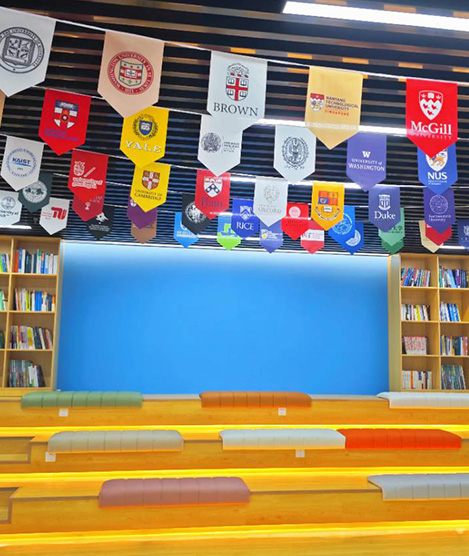
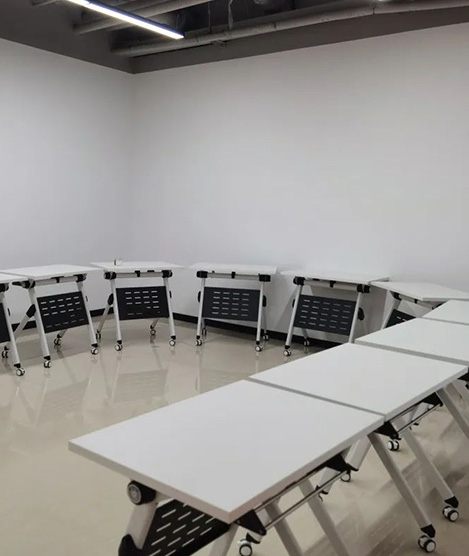
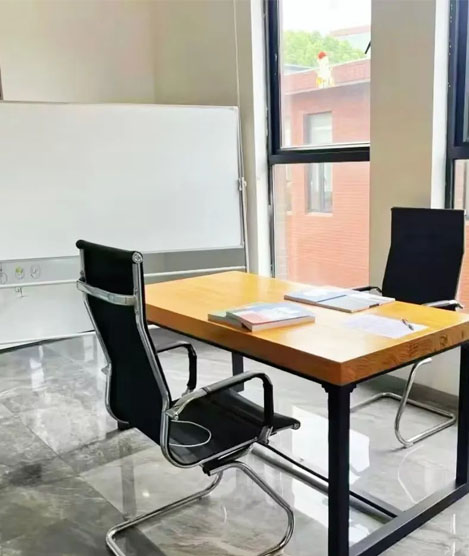
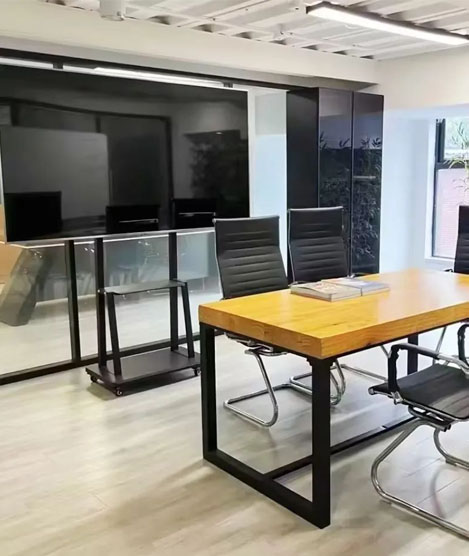
Teaching runs from Hanlin's own centres in Shanghai, Shenzhen, Chengdu and Hangzhou, and online for students elsewhere.



Talk to an advisor
Everything Hanlin does for Quill and Scroll, in one conversation.
Entry, planning, coaching and the past papers. An advisor will tell you which of these a student actually needs, including when the answer is none of them.
Competition entry and planning
Which competitions suit this student, in what order, and by when - then we handle the registration, including the ones that can only be entered through a school or a centre.
Competition coaching
Taught by full-time subject tutors, on a course tier chosen by placement paper rather than by year group.
International curriculum tutoring
IB, AP, A-Level, IGCSE and the US high school curriculum, taught alongside school and timed around the exam calendar.
Competition past papers, free
A large library of past papers, mark schemes and syllabus breakdowns across every competition on this site. No charge and no enrolment.
Scan to add an advisor
Say which competition or course you are asking about. Replies in Chinese or English.
Or call +86 21 6352 6630FAQ
Quill and Scroll, briefly answered.
What students and families ask before entering.
Who runs it?
Quill and Scroll, the International Honor Society for High School Journalists, founded at the University of Iowa in April 1926. It has 14,232 member schools and close to half a million members across 44 countries and all fifty US states.
Who can enter?
Secondary students aged 14 to 19. The contest also runs three middle school categories, which sit below that stated age floor - confirm with the organiser if the student is under 14.
How many entries can I submit?
Four. They may all be in one topic, or spread across four different topics, in any combination of categories.
How many topics are there?
Fifty-one, counting the three middle school categories - 15 in writing, 8 in photography, 9 in design and 16 in multimedia. The published material also gives 30, 37 and 35 in different places; 51 is the number that matches the list itself.
What happens if I enter the wrong topic?
The entry is disqualified rather than moved. With fifty-one narrowly defined topics, reading the definitions properly is part of the work.
Can a team enter?
For some topics. In multimedia, every type must be produced by the student alone except documentary, which may be individual or team. In-Depth Reporting and Social Media each have separate individual and team topics.
What are the file requirements?
Writing: PDF or JPG, with a title, no word limit. Photography: a title, a high-resolution image under 5MB, and an English caption under 200 words. Design: a title and a high-resolution image or document, with a caption for photographic work.
What are the multimedia time limits?
News, sports and feature videos under five minutes; podcasts under fifteen minutes; documentaries and news shows between five and thirty minutes.
What awards are given?
Around 60% of entries receive a finalist award, which qualifies for the global summit. Asia awards give gold, silver and bronze in each of the fifty-one topics plus merit awards, and Asia winners may go forward to global judging on the same structure.
Who judges it?
Working journalists and journalism educators - reporters who have covered the NFL and Super Bowl, a Denver Post staff photographer, news feature photographers, newspaper sports reporters, magazine and newspaper editors, and journalism lecturers.
When are the deadlines?
The international contest closes in early January, with the Asia invitational in Beijing in April and a media seminar in Dallas in the summer.
Related
Other writing and media competitions.
What students enter alongside Quill and Scroll.
Quill and Scroll enquiries
Fifty-one topics, four entries, and one hour of reading first.
The topics are narrow enough that the right one already exists for almost any student who writes, photographs, designs or produces - and the wrong one disqualifies the entry. Tell us what the student has been making and an advisor will find the four topics that fit it.