
Competitions · Physics · PUPC
PUPC, the Princeton University Physics Competition.
Two competitions share this name and almost nothing else: a ninety-minute individual derivation paper, and a week-long team submission you write as a document. Gold goes to roughly the top half of one per cent, which makes it among the most selective contests here.

At a glance
What the competition is, and who runs it.
PUPC is organised by Princeton undergraduates with the support of the university’s physics and astrophysical sciences departments. Princeton authorises Physics Unlimited to run the international regions.
- Organiser
- Princeton undergraduates, supported by the physics and astrophysical sciences departments
- Who can enter
- High-school students in grades 9 to 12 worldwide, and anyone who has not yet begun undergraduate study
- Two competitions
- The Premier Competition, sat onsite and individually, and the Explorer Competition, worked online as a team over a week
- Same paper as the US
- International entrants sit the same questions under the same marking, and are placed in a single global ranking
- Difficulty
- Far above AP Physics C. Calculus is required, and questions draw on current research
- When
- The onsite competition is in November, with registration closing in mid to late October
- Language
- English throughout
- In China since
- 2017. By 2019 more than ninety key and international schools were sending representatives
- Reputation
- Widely described as high in difficulty and low in award rate - gold goes to about the top 0.5%
Two competitions
Premier and Explorer are different exercises entirely.
Choosing between them is not a matter of difficulty level. They test different things and suit different students.
| Premier, onsite | Explorer, online | |
|---|---|---|
| How you enter | Individually | In a team of 2 to 6, with 3 or 4 recommended |
| How long | 90 minutes | One week |
| What you produce | Written derivations to about four problems | A PDF submission with a one-page cover letter |
| What you may use | A non-programmable scientific calculator and a paper dictionary | Any computing resource - software, programming languages - with citation where you draw on others’ work |
| Where | Paper exam at a partner school | Anywhere, submitted online |
The Explorer paper comes in two Sections which are not necessarily worth the same. Teams are encouraged to complete both, but may submit only the one they consider stronger.
The onsite paper
Four problems, ninety minutes, written out.
The Premier competition is a derivation paper. What makes it unusual is how specific the organisers are about what to have learned first.
Around four problems
Ninety minutes to write solutions to roughly four problems, pitched at the level and scope of AP Physics - though the difficulty sits well above AP Physics C.
Lagrangian mechanics, named explicitly
The organisers recommend working through the Lagrangian chapter of John Taylor’s Classical Mechanics before sitting the paper. Very few competitions name a specific textbook chapter as preparation.
The stated minimum
Candidates should at least be comfortable with Newton’s laws, rotational motion and particularly rotational kinetic energy, the Lagrangian formulation, and Kirchhoff’s loop rules with circuits.
Beyond classical mechanics
Questions are likely to reach outside classical mechanics, and may assess anything in AP Physics 1, 2 or C. Revisiting all three is the sensible baseline.
What to bring
The practical requirements are unusually specific.
The organisers list what a candidate needs on the desk, including one item that exists for a single question.
Ten sheets of blank paper
Derivations take room. The organisers ask for at least ten sheets, which is a fair indication of how much writing four problems involves.
A ruler, for one diagram
One of the problems requires a diagram to be drawn. A ruler is on the required list specifically for it.
A simple calculator
A basic digital or scientific calculator with no programming functions. A paper Chinese-English dictionary is also permitted.
A second device, filming from behind
Invigilation requires a mobile device running video software positioned behind the candidate so supervisors can see the desk and any screen. This needs arranging before the day.
Global awards
Where the thresholds fall.
Proportions are calculated from global cut-off scores and shift year to year; these are the most recent published bands.
Reading those bands
What a realistic target looks like.
A gold rate of one in two hundred is worth taking seriously when setting expectations, and the bands below it are where most preparation should aim.
Gold is a very narrow band
About one entrant in two hundred. For almost every candidate this is not the target, and treating it as one distorts how the preparation is planned.
Bronze is the serious ambition
The top 15% is a genuine achievement in a field this selective, and it is reachable by a well-prepared student who has covered Lagrangian mechanics properly.
Honourable mention reaches half the field
At the top 50%, an honourable mention recognises a substantial share of entrants - which matters given how demanding the paper is.
And the ranking is global
International candidates sit the same questions under the same marking as American entrants, in one combined ranking. A national placing is awarded separately.
Preparation
How Hanlin prepares students for PUPC.
PUPC is the rare competition that tells you exactly what to read. The work is in doing it early enough.
Lagrangian mechanics, from the named source
Taylor’s chapter is the organisers’ own recommendation and the clearest single piece of preparation available. It is university material and takes real time.
Calculus inside physics
The paper needs calculus used fluently within a physics argument rather than learned separately. That fluency is built on problems, not on more calculus teaching.
Writing four derivations in ninety minutes
Just over twenty minutes a problem, written out in full. Students practise the full length so that pace and presentation are settled before the day.
Choosing Premier or Explorer
A student who works best alone under a clock and one who works best across a week with a team are different candidates. That choice is made on temperament as much as on physics.
Why Hanlin
Preparation for PUPC at Hanlin is taught by full-time subject tutors, on a course tier chosen by placement paper rather than by year group.
Programme formats
Five ways this is taught.
Group size is the whole difference between these. It decides how much of the tutor's attention a student gets and how far the course can bend to them, so it is worth choosing rather than accepting.
| Format | Group size | What it suits |
|---|---|---|
| One-to-one | One student | Content, pace and emphasis set by what this student actually needs rather than by a syllabus. The only format that can be rebuilt mid-course. |
| Small group | Three to eight | Opens at three. Frequent discussion, and the tutor can slow down or move on according to what the group has absorbed. Most students chasing a higher award are taught in this one. |
| Class | Eight to twelve | Taught by the subject lead or a medal coach. Less back-and-forth, so it suits a student who will say when something is unclear. |
| Large class | Ten to twenty | For students in the middle of the placement range, and a way to try a competition before committing. Students often move to a small group or to one-to-one afterwards. |
| Past-paper class | No cap | Past papers worked through in sequence in the weeks before the sitting. Free to students already enrolled. |
Course length for PUPC is set after a placement paper. The gap between where a student is and what the paper asks for is what the course has to close, and that gap is not the same for two students in the same year group.
How it runs
Six steps, four people on your side.
The same process for every student, so that nothing depends on one tutor remembering to do it.
 Step 1
Pre-course assessment
A placement paper before anything is booked, so the course tier is chosen on evidence rather than on a year group.
 Step 2
Tutor matching
A subject tutor is matched to the result, and their full background is provided before you agree to it.
 Step 3
Plan and group
A study group opens with four people on one student: the tutor, a planner, a supervisor and an academic manager.
 Step 4
Scheduled teaching
The teaching office sets the timetable around the competition date and school term, and teaching begins.
 Step 5
After-class reports
What was covered, and how the student handled it, reported after every lesson.
 Step 6
Homework follow-up
The teaching assistant and the form teacher both check that homework is done, which is where most preparation quietly fails.
Free resource pack
Past papers and preparation pack
The same material our own PUPC students work from. Scan the code, say what you need, and an advisor sends it.

Tell an advisor which competition and year group, and the material comes back the same day. Free, and you do not have to enrol in anything. If we do not already hold what you need, we will go and find it.
- PDFPast papers, every year the organiser has released
- PDFWorked solutions, where the organiser publishes them
- PDFThe syllabus on one page - every topic, and how heavily it is examined
- PDFEntry checklist and the dates for the current cycle
Teaching team
Who would teach it.
Three of the twenty-two tutors on the published Hanlin roster - the ones whose subject this is.
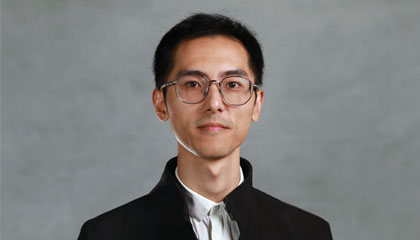
Huang
A College Board-accredited AP teacher. Read mathematics and physics in Southeast University's honours programme, took a master's in aerospace engineering at George Washington University under the lead of NASA's Sigma programme, and a second master's in robotics and AI at Melbourne. Five years teaching international curricula and competitions.
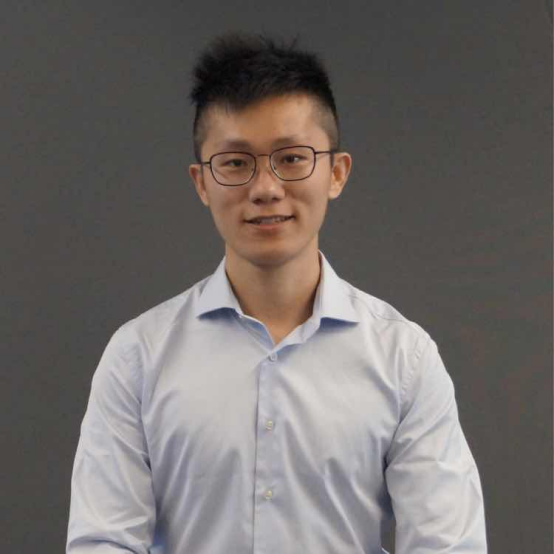
Ding
Master's in physics from Brown University after the physics honours programme at Central China Normal University, with a Berkeley BISP exchange. Two years as a graduate teaching assistant, then teaching alongside Professor Enrico Pajer (cosmology) and Professor Anastasia Romanou (exoplanets). College Board-accredited.

Lu
Master's in astrophysics from UCL after an astronomy degree at Xiamen University. In international education since 2019, teaching for logical structure and framework first - efficient methods and flexible problem-solving over rote coverage.
Student results
What Hanlin students got.
Taken from Hanlin's published record of student honours and rewritten in English. Figures are as the organisers reported them.
PUPC
- 20232 global merit awards
- 202211 global awards, including a top-12 finish and a 25th place
- 202114 global awards, including a 21st place
Earlier years
- 2020The only Gold awarded worldwide
- 2018A team Honourable Mention, scoring 77 out of 80
The full record, across every subject and year, is on the student honours page.
Where it is taught
Hanlin learning centres.
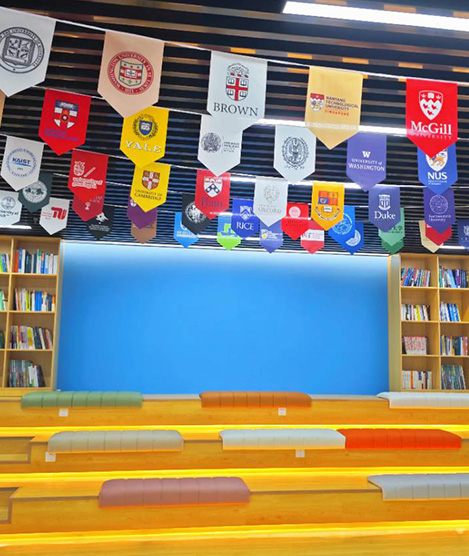
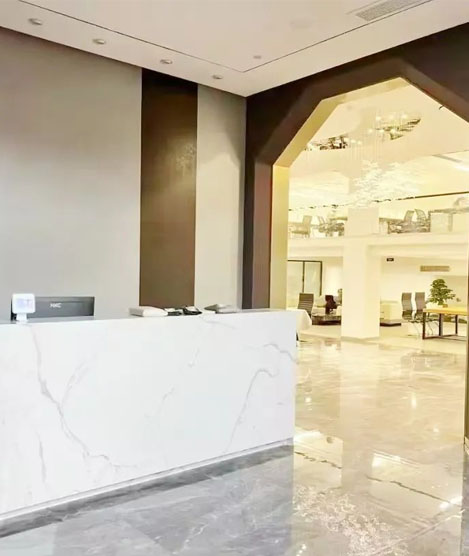
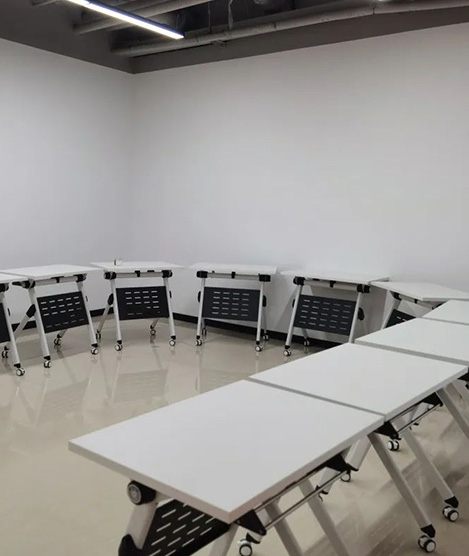
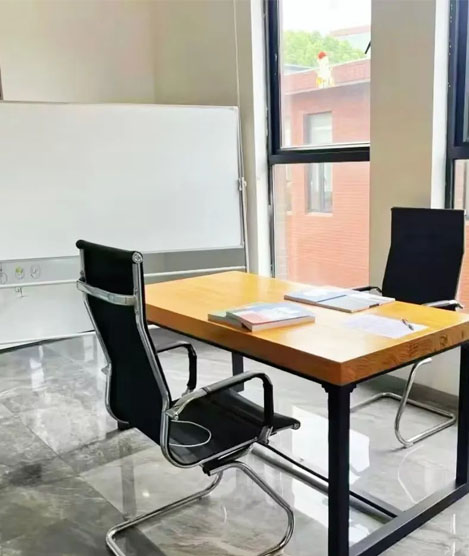
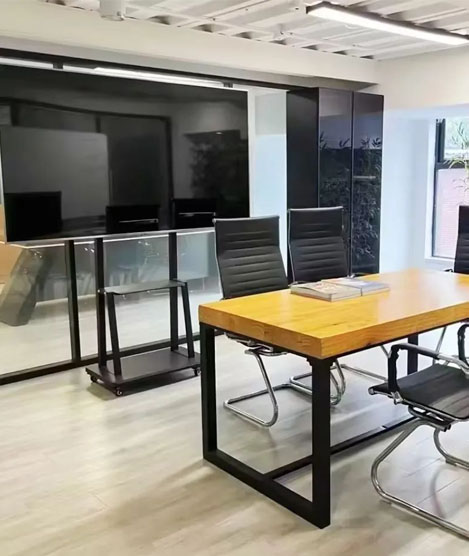
Teaching runs from Hanlin's own centres in Shanghai, Shenzhen, Chengdu and Hangzhou, and online for students elsewhere.


Talk to an advisor
Everything Hanlin does for PUPC, in one conversation.
Entry, planning, coaching and the past papers. An advisor will tell you which of these a student actually needs, including when the answer is none of them.
Competition entry and planning
Which competitions suit this student, in what order, and by when - then we handle the registration, including the ones that can only be entered through a school or a centre.
Competition coaching
Taught by full-time subject tutors, on a course tier chosen by placement paper rather than by year group.
International curriculum tutoring
IB, AP, A-Level, IGCSE and the US high school curriculum, taught alongside school and timed around the exam calendar.
Competition past papers, free
A large library of past papers, mark schemes and syllabus breakdowns across every competition on this site. No charge and no enrolment.
Scan to add an advisor
Say which competition or course you are asking about. Replies in Chinese or English.
Or call +86 21 6352 6630FAQ
PUPC, briefly answered.
What students and families ask before entering.
Who can enter PUPC?
High-school students in grades 9 to 12 anywhere in the world, and anyone who has not yet begun undergraduate study.
What is the difference between Premier and Explorer?
Premier is a 90-minute individual derivation paper sat at a partner school. Explorer is a week-long team submission of 2 to 6 students, produced as a PDF and submitted online. They test different things.
How difficult is it?
Far above AP Physics C. Calculus is required and the questions draw on current research. Gold goes to roughly the top 0.5% of entrants.
What should I study first?
The organisers recommend the Lagrangian chapter of John Taylor’s Classical Mechanics. Beyond that, be comfortable with Newton’s laws, rotational motion and rotational kinetic energy, the Lagrangian formulation, and Kirchhoff’s loop rules with circuits.
What can I bring to the onsite paper?
A non-programmable scientific calculator, a paper Chinese-English dictionary, at least ten sheets of blank paper and a ruler. One question requires a diagram to be drawn.
How is the onsite exam invigilated?
A mobile device with video software must be positioned behind the candidate so supervisors can see the desk and any screen throughout. Arrange this before the day.
Can an Explorer team submit only part of the paper?
Yes. The paper comes in two Sections which are not necessarily worth the same. Teams are encouraged to complete both but may submit only the Section they consider stronger.
Are international entrants ranked separately?
They sit the same questions under the same marking and appear in one global ranking. National placings are awarded separately alongside the global bands.
Related
Other physics contests.
What students commonly enter alongside PUPC.
PUPC enquiries
The reading list is short and it is university material.
PUPC names the Lagrangian chapter it expects you to have worked through, and gold goes to one entrant in two hundred. Tell us the student’s year group and what physics they have covered, and an advisor will set a target that means something.