
Competitions · Physics · Physics Bowl
Physics Bowl.
Forty-five minutes, forty questions, and one paper serving two divisions at once. Run by the American Association of Physics Teachers and sat by students in eleven countries - and in nine years only one student anywhere has finished it with a perfect score.

At a glance
What the contest is, and who sits it.
The paper is written and reviewed by a board of university physics professors and experienced high-school teachers registered with AAPT. It came to China in 2015 and now draws around four thousand Chinese entrants a year.
- Organiser
- The American Association of Physics Teachers (AAPT)
- Scale
- More than 500 schools across eleven countries, with tens of thousands of entrants
- Who can enter
- High-school students in any year, entering one of two divisions
- Format
- 40 multiple-choice questions in 45 minutes. Individual, written, with no practical component
- Where
- Sat online in English, needing a camera-equipped computer and a mobile device
- Equipment
- A paper English-Chinese dictionary and a non-programmable calculator are both permitted
- Calculus
- Generally not required. Where it appears at all it is a simple power or exponential function that basic integration handles
- When
- Mid-March, with registration closing about ten days earlier
- Results
- Within six weeks of the paper
- Registering
- Entrants in China register through ASDAN China. Students at American high schools register through a school advisor on the official site
- Difficulty
- In the past nine years only one high-school student has scored full marks
The divisions
One paper of fifty questions, split two ways.
This is the most useful thing to understand about Physics Bowl, and it is not obvious from the entry form. Both divisions sit the same sheet.
Division 1 answers 1 to 40
Intended for grade 10, including IB year 10 and stronger A-level students in their first and second years. Forty-five minutes for questions one to forty.
Division 2 answers 11 to 50
Intended for grades 11 and 12. The same forty-five minutes, but shifted ten questions along the same paper.
Which means thirty questions are shared
Questions 11 to 40 are common to both. The real difference between the divisions is the first ten questions against the last ten - nothing else.
And those ten are not equivalent
The opening ten cover measurement, error and similar groundwork, and are close to free marks. The closing ten are dense with electromagnetism, mechanics, thermodynamics, optics and relativity.
What that means on the day
The same clock, two different problems.
Because the two divisions face opposite ends of one paper, the time management they need is genuinely different.
Division 1 can spend its time
The opening ten questions should take very little, which frees most of the forty-five minutes for the thirty that follow. A Division 1 candidate who is short of time has usually mismanaged the easy start.
Division 2 has to reserve it
There are no free marks at the start and ten hard questions at the end. A Division 2 candidate has to arrive at question 41 with real time left, which means moving briskly through the shared thirty.
Choosing a division is a real decision
Grade 10 students are advised into Division 1. Grades 11 and 12 choose according to where they actually are - the harder division is not automatically the better result.
And they are ranked separately
Division 1 and Division 2 are ranked apart at every level, individual and team. Entering the harder division does not place you in a more prestigious ranking, only a different one.
Syllabus
Five areas, none of them requiring calculus.
The scope is broad but the technique required is deliberately held below calculus, which is what makes it accessible to a strong school student.
Mechanics
Measurement fundamentals, kinematics, Newton’s three laws, momentum, kinetic energy and angular momentum. The largest single area and the one worth securing first.
Electromagnetism
Coulomb’s law, electric fields, potential and potential energy, and capacitance. Heavily represented among the harder questions at the end of the paper.
Thermodynamics and optics
Molecular motion, internal energy and heat engines; reflection, refraction and interference. Both appear throughout rather than being confined to one section.
Modern physics
Atomic structure, quantum mechanics and wave-particle duality. This is where Division 2’s final ten questions most often go, and where a school course is least likely to have prepared a candidate.
Awards
Individual and team, at three geographic levels.
Physics Bowl awards globally, nationally and regionally, and separately for each division - so a candidate is measured against several fields at once.
| Level | Individual | Team |
|---|---|---|
| Global | Top 100 | Top 50 teams |
| National | Top 10, plus gold at the top 10%, silver at 25% and bronze at 35% | Top 10 teams in each division |
| Regional | Top 10, plus an honourable mention for the regional top 20% not already awarded nationally | Top 10 teams in each division |
A school’s team score is the sum of its five highest individual results, or of all its entrants where fewer than five sat the paper. Division 1 and Division 2 are ranked separately throughout.
Preparation
How Hanlin prepares students for Physics Bowl.
Forty questions in forty-five minutes is just over a minute each. Speed is the constraint, and it is trainable.
Just over a minute a question
There is no time to derive anything from first principles. Practice concentrates on recognising the standard form of a problem fast enough to apply a known result rather than reconstruct one.
Knowing which ten you face
Division 1 and Division 2 need different halves of the same paper rehearsed. Students practise on their own question range rather than the whole sheet.
Modern physics, taught deliberately
Atomic structure, quantum mechanics and wave-particle duality are where school courses stop and the hardest questions begin. They are covered explicitly rather than met for the first time in the last ten minutes.
Entering five, not one
Team scores use a school’s top five results, and teams are ranked globally, nationally and regionally. A school entering a group has three award ladders open to it that a lone entrant does not.
Why Hanlin
Hanlin has been entering students for Physics Bowl for years, and publishes what they got. The record is further down this page.
Programme formats
Five ways this is taught.
Group size is the whole difference between these. It decides how much of the tutor's attention a student gets and how far the course can bend to them, so it is worth choosing rather than accepting.
| Format | Group size | What it suits |
|---|---|---|
| One-to-one | One student | Content, pace and emphasis set by what this student actually needs rather than by a syllabus. The only format that can be rebuilt mid-course. |
| Small group | Three to eight | Opens at three. Frequent discussion, and the tutor can slow down or move on according to what the group has absorbed. Most students chasing a higher award are taught in this one. |
| Class | Eight to twelve | Taught by the subject lead or a medal coach. Less back-and-forth, so it suits a student who will say when something is unclear. |
| Large class | Ten to twenty | For students in the middle of the placement range, and a way to try a competition before committing. Students often move to a small group or to one-to-one afterwards. |
| Past-paper class | No cap | Past papers worked through in sequence in the weeks before the sitting. Free to students already enrolled. |
Course tiers
Which course, and on what evidence.
Every tier for Physics Bowl is entered from a placement paper rather than from a year group. These are the actual standards.
| Course | Hours | Who it is for |
|---|---|---|
| Full course | 50 hours | AP Physics 1 or C, AS physics, IB DP physics taken alongside school, or an equivalent grounding |
| Past-paper class | 20 hours | Past papers worked through. Free to students already enrolled |
Ask for the placement paper before choosing a tier. It takes an hour and it settles the question.
How it runs
Six steps, four people on your side.
The same process for every student, so that nothing depends on one tutor remembering to do it.
 Step 1
Pre-course assessment
A placement paper before anything is booked, so the course tier is chosen on evidence rather than on a year group.
 Step 2
Tutor matching
A subject tutor is matched to the result, and their full background is provided before you agree to it.
 Step 3
Plan and group
A study group opens with four people on one student: the tutor, a planner, a supervisor and an academic manager.
 Step 4
Scheduled teaching
The teaching office sets the timetable around the competition date and school term, and teaching begins.
 Step 5
After-class reports
What was covered, and how the student handled it, reported after every lesson.
 Step 6
Homework follow-up
The teaching assistant and the form teacher both check that homework is done, which is where most preparation quietly fails.
Free resource pack
Physics Bowl past papers and preparation pack
The same material our own Physics Bowl students work from. Scan the code, say what you need, and an advisor sends it.

Tell an advisor which competition and year group, and the material comes back the same day. Free, and you do not have to enrol in anything. If we do not already hold what you need, we will go and find it.
- PDFPast Division 1 and Division 2 papers with answer keys
- PDFWhich division to sit, and what the choice costs you
- PDFThe forty questions by topic, across recent years
- PDFRegistration checklist and the dates for the current cycle
Teaching team
Who would teach it.
Three of the twenty-two tutors on the published Hanlin roster - the ones whose subject this is.
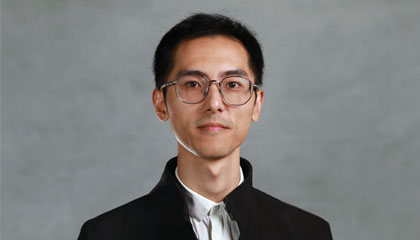
Huang
A College Board-accredited AP teacher. Read mathematics and physics in Southeast University's honours programme, took a master's in aerospace engineering at George Washington University under the lead of NASA's Sigma programme, and a second master's in robotics and AI at Melbourne. Five years teaching international curricula and competitions.
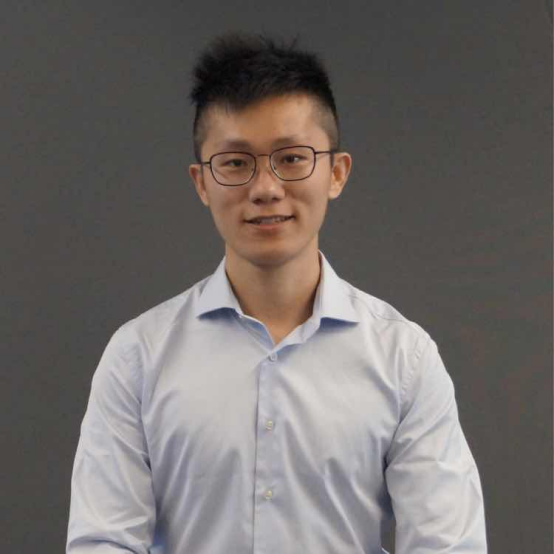
Ding
Master's in physics from Brown University after the physics honours programme at Central China Normal University, with a Berkeley BISP exchange. Two years as a graduate teaching assistant, then teaching alongside Professor Enrico Pajer (cosmology) and Professor Anastasia Romanou (exoplanets). College Board-accredited.

Lu
Master's in astrophysics from UCL after an astronomy degree at Xiamen University. In international education since 2019, teaching for logical structure and framework first - efficient methods and flexible problem-solving over rote coverage.
Student results
What Hanlin students got.
Taken from Hanlin's published record of student honours and rewritten in English. Figures are as the organisers reported them.
Equal in the world, 2025
One line from Hanlin's published Physics Bowl record. The rest of it is below.
Physics Bowl
- 2025Division 1: 3 Super Gold, 15 Gold, 12 Silver, 14 Bronze. Division 2: 6 Super Gold, 12 Gold, 30 Silver, 9 Bronze. Five students reached the global top 100, one with a perfect score placing equal first in the world and another equal second
- 20242 students in the global top 100 and 32 national Golds
- 2023One student in the global top 5
Earlier years
- 20222 students in the global top 10
- 2021Division 1 placings of 4th, 15th and 38th globally; Division 2 placings of 1st, 3rd, 4th, 16th and 50th
The full record, across every subject and year, is on the student honours page.
Where it is taught
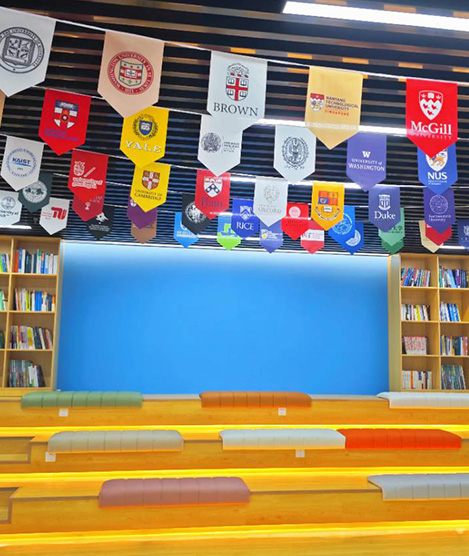
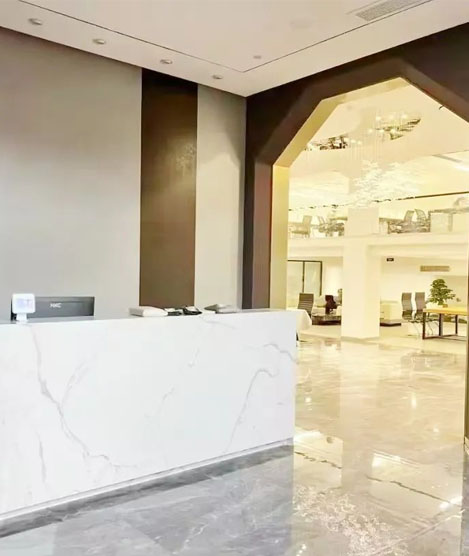
Hanlin learning centres.
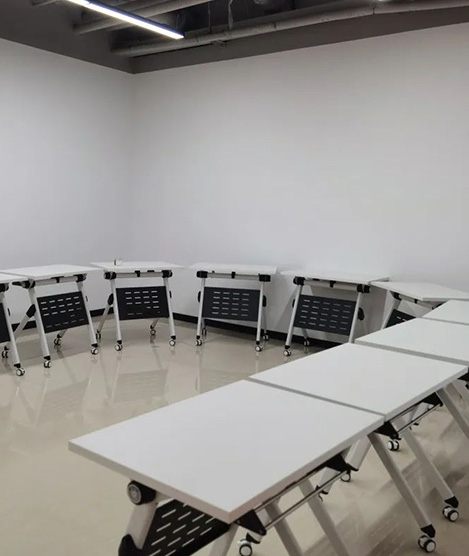
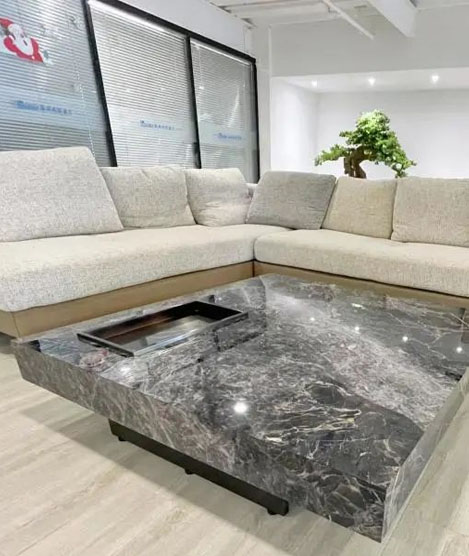
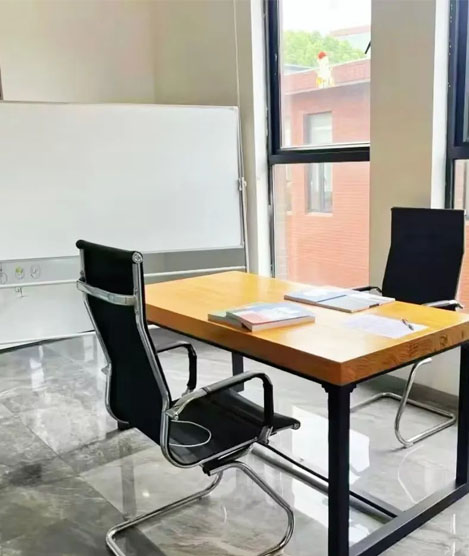
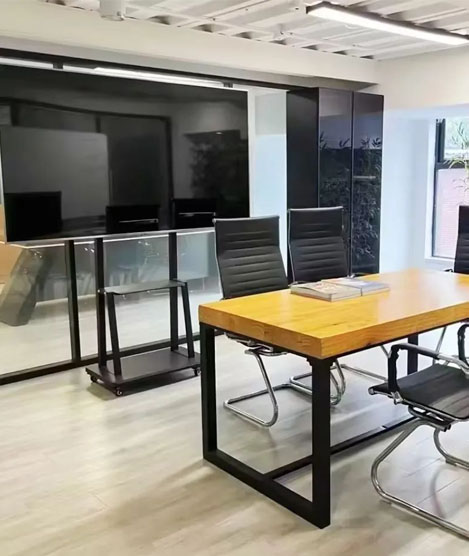
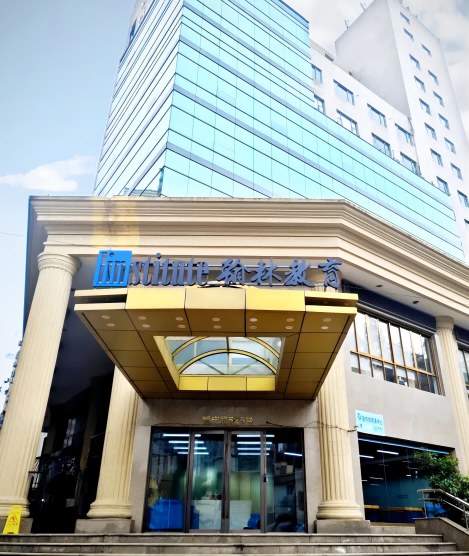
Teaching runs from Hanlin's own centres in Shanghai, Shenzhen, Chengdu and Hangzhou, and online for students elsewhere.
Talk to an advisor
Everything Hanlin does for Physics Bowl, in one conversation.
Entry, planning, coaching and the past papers. An advisor will tell you which of these a student actually needs, including when the answer is none of them.
Competition entry and planning
Which competitions suit this student, in what order, and by when - then we handle the registration, including the ones that can only be entered through a school or a centre.
Competition coaching
Taught by full-time subject tutors, on a course tier chosen by placement paper rather than by year group.
International curriculum tutoring
IB, AP, A-Level, IGCSE and the US high school curriculum, taught alongside school and timed around the exam calendar.
Competition past papers, free
A large library of past papers, mark schemes and syllabus breakdowns across every competition on this site. No charge and no enrolment.
Scan to add an advisor
Say which competition or course you are asking about. Replies in Chinese or English.
Or call +86 21 6352 6630FAQ
Physics Bowl, briefly answered.
What students and schools ask before entering.
Who can enter Physics Bowl?
High-school students in any year. Division 1 is intended for grade 10 including IB year 10, and Division 2 for grades 11 and 12.
What is the difference between the two divisions?
Both sit the same paper. Division 1 answers questions 1 to 40 and Division 2 answers 11 to 50, so thirty questions are shared. The difference is the opening ten, which are close to free marks, against the closing ten, which are the hardest on the paper.
Which division should I choose?
Grade 10 students are advised into Division 1. Older students choose on their actual level, since the two are ranked separately and the harder division is not a more prestigious result.
Do I need calculus?
Generally not. Where calculus appears it involves a simple power or exponential function that basic integration handles.
Can I bring a calculator or dictionary?
Yes to both - a non-programmable calculator and a paper English-Chinese dictionary.
How is the team score calculated?
A school submits the sum of its five highest individual scores. Where fewer than five students sat the paper, all their scores are summed.
How hard is it really?
Hard enough that only one high-school student anywhere has scored full marks in the past nine years. The paper is nonetheless approachable - the difficulty is in speed and breadth rather than technique.
How do I register?
Entrants in China register through ASDAN China. Students at American high schools register through a teacher on the official AAPT site.
Related
Other physics contests.
What students commonly enter alongside or after Physics Bowl.
Physics Bowl enquiries
Your division decides which ten questions you meet.
Both divisions sit one paper and share thirty questions. Which end you face changes how the forty-five minutes should be spent. Tell us the student’s year group and an advisor will settle the division and map the March entry.