
Competitions · Research and innovation · NSL
NSL, the National Science League.
Ten difficulty levels covering grades one to twelve, and the youngest paper comes with pinyin. A younger student may sit a higher level - but nobody may sit a lower one.
At a glance
What the challenge is.
The National Science League was founded in 1980 by two mathematics coaches with more than thirty years of teaching between them, working from the American science curriculum standards and the academic and organisational experience of the Math League, together with a group of experienced science teachers. It is aligned to the Next Generation Science Standards.
- Since
- 1980
- Aligned to
- The Next Generation Science Standards, the American science curriculum framework
- Scale
- More than forty years, over 400 American schools and around 30,000 students a year
- Who can enter
- Students in grades 1 to 12, across ten difficulty levels
- Format
- Individual, multiple choice, 40 minutes
- Where
- At partner schools, or online
- When
- A Thursday in early April, with registration closing about ten days earlier
- Sitting window
- In person, any 40 minutes within an afternoon-to-evening window. Online, a fixed 40-minute slot in the evening
- Language
- Chinese and English for primary and middle school. English only at high school. The very first level is supplied with pinyin
- What the fee covers
- The examination, the marking and the certificate
The ten levels
One paper for every stage of school.
The level, not the year group, is what a student enters. Question counts rise with the level and then fall again at high school, where the questions get harder rather than more numerous.
| Stage | Level | Year group | Questions |
|---|---|---|---|
| Primary | Science Introduction 1 | Grades 1 to 2 | 25 multiple choice, with pinyin supplied |
| Primary | Science Introduction 2 | Grades 3 to 4 | 35 multiple choice |
| Primary | Science Introduction 3 | Grades 5 to 6 | 40 multiple choice |
| Middle | Science Introduction 4 | Grade 7 | 50 multiple choice |
| Middle | Life Science | Grades 8 to 9 | 50 multiple choice |
| Middle | Physical Science | Grades 8 to 9 | 50 multiple choice |
| Middle | Earth Science | Grades 8 to 9 | 40 multiple choice |
| High | Physics | Grades 9 to 12 | 40 multiple choice |
| High | Chemistry | Grades 9 to 12 | 40 multiple choice |
| High | Biology | Grades 9 to 12 | 40 multiple choice |
Students in grades 8 and 9 choose one of life science, physical science or earth science. Students in grades 9 to 12 choose one of physics, chemistry or biology - and a grade 9 student may enter at either stage.
The level rule
You may go up. You may not go down.
This single rule shapes how a school should place its students, and it works in the ambitious student’s favour.
A younger student may sit a higher level
A student in grade 3 may enter Science Introduction 3, which is written for grades 5 and 6. Ability decides, not year group.
But nobody may sit a lower one
That same grade 3 student may not enter Science Introduction 1. There is no route to an easy result by dropping down a band.
Which makes placement a real decision
For a strong younger student the question is how far up to go. Too high and the paper is unreadable; too low and the result says less than it could.
And it protects the younger cohorts
The rule is the reason the youngest levels stay genuinely accessible - they cannot be filled by older students looking for an easy medal.
What each level asks
The demand changes, not just the difficulty.
The three stages are aligned to the same standards but assess different things, which is worth knowing when a student moves up.
Primary - concepts and finding things out
Grasping and understanding basic scientific concepts, and building the ability to look information up and apply it.
Middle - practice and enquiry
Mastering the principles of scientific practice, and developing scientific literacy and a spirit of enquiry.
High - connecting the subjects
Grasping how knowledge in different subjects relates, and using integrated knowledge flexibly rather than within one discipline.
Across natural history and the sciences
Physics, biology, nature and geography, with an emphasis on the pleasure of seeing science in everyday life rather than on abstraction.
The awards
Individual bands, and a school score built from ten.
The school award has an unusual construction that rewards depth of participation rather than one outstanding student.
A medal for a perfect score
Students achieving full marks receive a medal, separately from the percentage bands.
Gold, silver, bronze and merit
Gold for the top 15% in China, silver for the top 25%, bronze for the top 35% and an honourable mention for the top 70%.
And a global school award
Each school’s ten highest scores in a subject are added together to form its score in that subject. One brilliant student cannot carry a school - it needs ten.
Plus an invitation for younger winners
Students in grades 4 to 9 taking bronze or above are invited to an all-star science carnival held over several days in Shanghai, alongside finalists from other science competitions.
Preparation
How Hanlin prepares students for NSL.
Forty minutes and a fixed level make this one of the easier competitions here to prepare for well.
Placing the student correctly
The level can be raised but never lowered, so placement is the first decision. It is worth making from a practice paper rather than from a year group.
Practising at pace
Forty minutes for 25 to 50 questions, depending on the level. At the higher levels that is under a minute a question, which rewards recognition over working.
Working to the standards
The papers follow the Next Generation Science Standards. Preparing against that framework is more efficient than general revision.
And building English science vocabulary early
Chinese and English at primary and middle school, English only at high school. Students who build the terminology at the bilingual stage do not hit a wall at grade 9.
Why Hanlin
Preparation for NSL at Hanlin is taught by full-time subject tutors, on a course tier chosen by placement paper rather than by year group.
Programme formats
Five ways this is taught.
Group size is the whole difference between these. It decides how much of the tutor's attention a student gets and how far the course can bend to them, so it is worth choosing rather than accepting.
| Format | Group size | What it suits |
|---|---|---|
| One-to-one | One student | Content, pace and emphasis set by what this student actually needs rather than by a syllabus. The only format that can be rebuilt mid-course. |
| Small group | Three to eight | Opens at three. Frequent discussion, and the tutor can slow down or move on according to what the group has absorbed. Most students chasing a higher award are taught in this one. |
| Class | Eight to twelve | Taught by the subject lead or a medal coach. Less back-and-forth, so it suits a student who will say when something is unclear. |
| Large class | Ten to twenty | For students in the middle of the placement range, and a way to try a competition before committing. Students often move to a small group or to one-to-one afterwards. |
| Past-paper class | No cap | Past papers worked through in sequence in the weeks before the sitting. Free to students already enrolled. |
Course length for NSL is set after a placement paper. The gap between where a student is and what the paper asks for is what the course has to close, and that gap is not the same for two students in the same year group.
How it runs
Six steps, four people on your side.
The same process for every student, so that nothing depends on one tutor remembering to do it.
 Step 1
Pre-course assessment
A placement paper before anything is booked, so the course tier is chosen on evidence rather than on a year group.
 Step 2
Tutor matching
A subject tutor is matched to the result, and their full background is provided before you agree to it.
 Step 3
Plan and group
A study group opens with four people on one student: the tutor, a planner, a supervisor and an academic manager.
 Step 4
Scheduled teaching
The teaching office sets the timetable around the competition date and school term, and teaching begins.
 Step 5
After-class reports
What was covered, and how the student handled it, reported after every lesson.
 Step 6
Homework follow-up
The teaching assistant and the form teacher both check that homework is done, which is where most preparation quietly fails.
Free resource pack
Motions and case-file pack
The same material our own NSL students work from. Scan the code, say what you need, and an advisor sends it.

Tell an advisor which competition and year group, and the material comes back the same day. Free, and you do not have to enrol in anything. If we do not already hold what you need, we will go and find it.
- PDFPast motions and topic areas
- DOCXA case-file template, ready to fill in
- PDFFormat, speaking times and the judging criteria
- PDFEntry checklist and the dates for the current cycle
Teaching team
Who would teach it.
Three of the twenty-two tutors on the published Hanlin roster - the ones whose subject this is.

Dr An
Mathematics at Illinois Urbana-Champaign with highest honours and the Elizabeth R. Bennett scholarship, then a PhD in mathematics at Johns Hopkins on full funding with the Owen fellowship and the Joel Dean award for excellent teaching. Years of US university teaching, translating high-level mathematics into language students can use.

Yu
Master's in bioinformatics and computational biology from UT Dallas and a nutritional sciences degree from Wisconsin-Madison. Second author on an SCI-indexed paper from the Tanumihardjo vitamin-A laboratory, and formerly at ABS Global.

Tan
Master's in data science from the University of Sydney after a statistics degree at Simon Fraser University, graduating in the top 5% with repeated chancellor's honours; A-Levels at a Cambridge international school, and formerly a data analyst at Tencent. An AMC-accredited coach, a College Board-accredited AP teacher, and holder of a Math League excellent-teacher award.
Where it is taught
Hanlin learning centres.
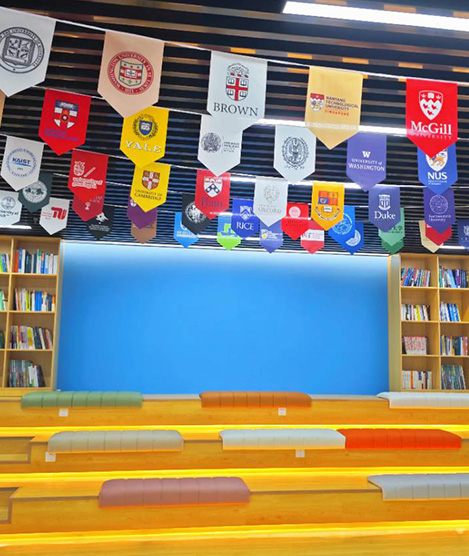
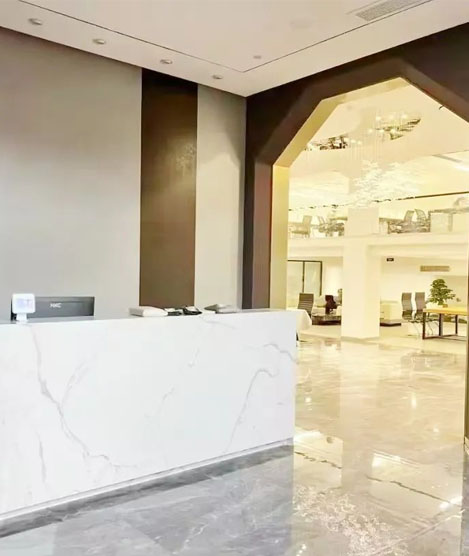
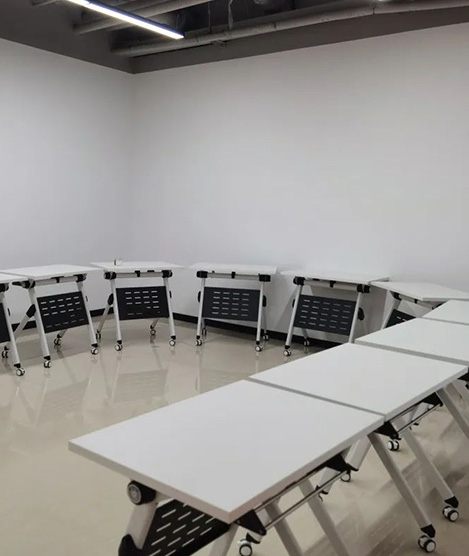
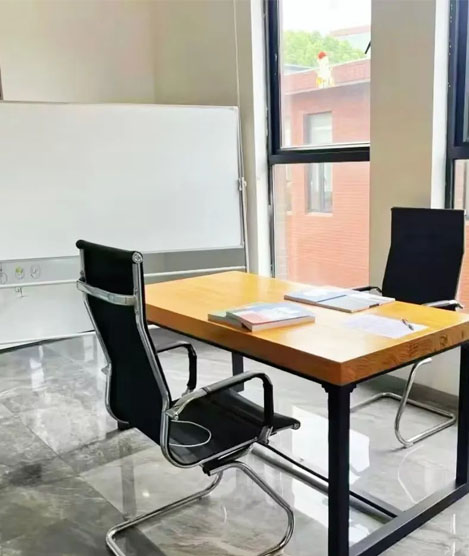
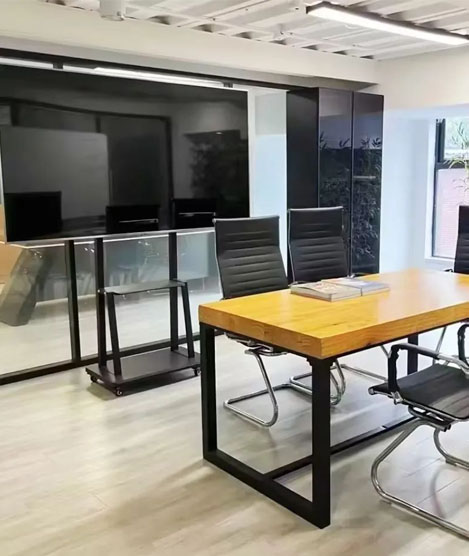
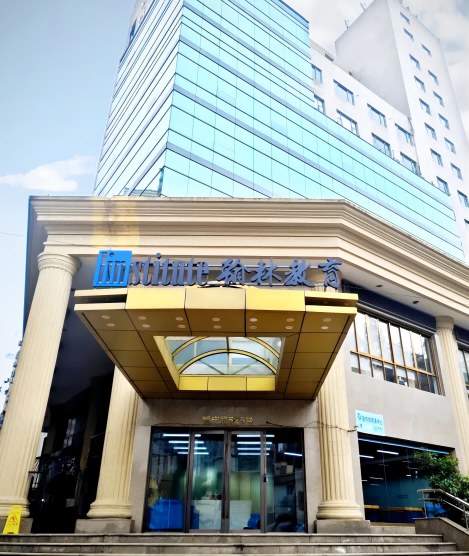
Teaching runs from Hanlin's own centres in Shanghai, Shenzhen, Chengdu and Hangzhou, and online for students elsewhere.

Talk to an advisor
Everything Hanlin does for NSL, in one conversation.
Entry, planning, coaching and the past papers. An advisor will tell you which of these a student actually needs, including when the answer is none of them.
Competition entry and planning
Which competitions suit this student, in what order, and by when - then we handle the registration, including the ones that can only be entered through a school or a centre.
Competition coaching
Taught by full-time subject tutors, on a course tier chosen by placement paper rather than by year group.
International curriculum tutoring
IB, AP, A-Level, IGCSE and the US high school curriculum, taught alongside school and timed around the exam calendar.
Competition past papers, free
A large library of past papers, mark schemes and syllabus breakdowns across every competition on this site. No charge and no enrolment.
Scan to add an advisor
Say which competition or course you are asking about. Replies in Chinese or English.
Or call +86 21 6352 6630FAQ
NSL, briefly answered.
What students, teachers and families ask before entering.
Who can enter?
Students in grades 1 to 12, across ten difficulty levels from Science Introduction 1 up to high-school physics, chemistry and biology.
Can my child enter a higher level than their year group?
Yes. A younger student may sit a higher level - a grade 3 student may take Science Introduction 3. But nobody may sit a level below their year group.
What is the paper?
Multiple choice, sat individually in 40 minutes. The number of questions rises from 25 at the first level to 50 in the middle bands, then settles at 40 for the high-school subjects.
What language is it in?
Chinese and English at primary and middle school. English only at high school. The first level is supplied with pinyin.
When and where is it sat?
A Thursday in early April, at a partner school or online. In person the paper may be taken in any 40 minutes within an afternoon-to-evening window; online it is a fixed evening slot.
Which subject should a grade 9 student take?
Grade 9 students may enter either the middle-school bands - life science, physical science or earth science - or the high-school subjects of physics, chemistry or biology.
What awards are there?
A medal for a perfect score, then gold for the top 15% in China, silver for the top 25%, bronze for the top 35% and an honourable mention for the top 70%.
How does the school award work?
Each school’s ten highest scores in a subject are summed to form the school’s score in that subject, so it rewards a broad cohort rather than one strong student.
Is there anything after the paper?
Students in grades 4 to 9 taking bronze or above are invited to an all-star science carnival in Shanghai, alongside finalists from other science competitions.
What is NSL based on?
The Next Generation Science Standards, the American science curriculum framework. It was founded in 1980 by the people behind the Math League, working with experienced science teachers.
Related
Related competitions.
What students enter alongside NSL.
NSL enquiries
Ten levels, and you can only ever move up.
Placement is the decision that matters here, because a student may sit above their year group but never below it. Tell us the child’s year and what science they have covered, and an advisor will pick the level from a practice paper.