
Competitions · Computer science · NRC
NRC, the National Robotics Challenge.
No equipment requirement, no expensive kit to buy, and a beginners’ group with a fifty per cent award rate. One of the oldest youth robotics competitions there is, and among the cheapest to enter.
At a glance
What the challenge is.
NRC began in 1986, growing out of the Society of Manufacturing Engineers’ Robotic Technology and Engineering Challenge. It has expanded from two themed events to thirteen, and draws more than a thousand students worldwide each year. ASDAN China brought it to the China region in 2018.
- Since
- 1986
- Who can enter
- The introduction gives ages 6 to 18; the city qualifier is open from grade 6 through graduate school, with award bands for elementary, middle school, high school and post-secondary. Confirm the current band before entering
- Team size
- 3 to 5 students. There is no individual entry
- Equipment
- Unrestricted. Competitors are not required to buy expensive robot kits or components, and may bring their own equipment to assemble on site
- What it tests
- Skills and knowledge in manufacturing, technology, robotics and automation, with the emphasis on engineering design thinking
- Stages
- City qualifier, China final, global final
- Language
- Chinese in the China rounds, English at the global final
- China training
- Provided before both the city qualifier and the China final, in partnership with the Beijing Institute of Technology innovation incubation centre - beginners can start from nothing
- Global final
- Three days in April, in the United States, for teams advancing from the China final. Details are sent by invitation
The Rookie group
A fifty per cent award rate, for beginners.
This is the reason NRC is worth knowing about. The city qualifier splits into two groups, and one of them exists specifically for students who have never built a robot.
Rookie - training, then compete
For students with no background. Six days of training precede the competition day, and the published award rate for this group is 50%.
Elite - bring your own robot
For students with experience. No training, and competitors bring their own equipment to the contest.
Which makes the choice strategic
A student with some background can choose either. Rookie means a week of training and a better award rate; Elite means competing directly against experienced teams.
And the split disappears later
At the China final there is no Rookie or Elite division. Everyone competes on the same terms, with equipment provided on site.
The China final
The task is announced on the day.
The final works quite differently from the qualifier, and preparing for it means preparing for uncertainty.
Six days of guidance, one day of competition
Teams receive extended training and guidance in Beijing before the contest day itself.
The theme is published at the venue
The organising committee announces the task on site. Nothing can be built in advance, which levels the field between well-resourced and less well-resourced teams.
And the equipment is supplied
Unlike the qualifier, the final provides the equipment. What a team brings is its thinking, not its hardware.
Teams of three to five throughout
The same team size applies at every stage, so a team that forms for the qualifier carries through.
The events
Thirteen challenges, and each round draws from them at random.
The organisers publish a difficulty guide across three dimensions. Events for each round are drawn from the list, so a team prepares for a range rather than for one.
| Event | Mechanical | Electrical | Overall |
|---|---|---|---|
| Autonomous vehicle | 4 of 5 | 3 of 5 | 5 of 5 |
| Micromouse | 2 of 5 | 3 of 5 | 5 of 5 |
| Manufacturing robot | 5 of 5 | 3 of 5 | — |
| Combat robot | 5 of 5 | 2 of 5 | 3 of 5 |
| Rescue robot | 4 of 5 | 3 of 5 | — |
| Internet-of-things robot | 3 of 5 | 4 of 5 | — |
| Hockey robot | 4 of 5 | 2 of 5 | — |
| Waypoint programming | — | 4 of 5 | — |
| Robot ball | 2 of 5 | 3 of 5 | — |
| Maze robot | 2 of 5 | 3 of 5 | — |
| Smart robot | 2 of 5 | 3 of 5 | — |
| Sumo robot | 3 of 5 | — | — |
Past rounds have also included mini wrestling, sweeping, climbing and mathematics robots. The autonomous vehicle and micromouse events are the hardest overall despite differing sharply in mechanical demand - one is a building problem, the other a programming one.
How it is judged
Eleven criteria, and the robot is only part of it.
NRC assesses the team as much as the machine, which is why engineering design thinking is named as the focus.
What the robot is for
Its ability to solve a problem, and the social value of doing so, is assessed alongside the overall quality of the build.
How it was made
Design thinking, use of resources, programming, the control system, the power system design and engineering design thinking.
And how the team worked
External communication, teamwork and decision-making are explicit criteria. A strong robot from a team that cannot explain it scores less than the build alone would suggest.
Criteria are explained beforehand
The organisers set out the detailed marking to competitors before the competition begins, so none of it is a surprise.
Awards
Team places, plus four named awards.
The China-region structure rewards specific strengths as well as overall placing.
Champion, runner-up, third and merit
One champion team, one or two runners-up, two or three third places, and a number of merit awards.
Best Leader - an individual award
The only individual award in the China region, given to a number of students across the field.
Best Engineering Design and Best Programming
Team awards recognising the two halves of the work separately, so a team strong in one can still take something home.
And a decision-making award
Recognising teams that made good calls under pressure - which, given that the final task is announced on the day, is a real distinction.
Preparation
How Hanlin prepares an NRC team.
An unrestricted-equipment competition with a task announced on the day rewards adaptability more than resources.
Choosing Rookie or Elite honestly
The Rookie group carries a 50% award rate and six days of training. For a team new to robotics, entering Elite to look ambitious is the commonest mistake here.
Practising across several events
Because each round draws events at random from the thirteen, preparation covers a range rather than perfecting one build.
Rehearsing the explanation
Communication, teamwork and decision-making are three of the eleven criteria. Teams practise presenting their reasoning, not only building.
And working within limited resources
Since no expensive kit is required, the advantage goes to teams that use simple components well. That is a skill, and it is coachable.
Why Hanlin
Preparation for NRC at Hanlin is taught by full-time subject tutors, on a course tier chosen by placement paper rather than by year group.
Programme formats
Five ways this is taught.
Group size is the whole difference between these. It decides how much of the tutor's attention a student gets and how far the course can bend to them, so it is worth choosing rather than accepting.
| Format | Group size | What it suits |
|---|---|---|
| One-to-one | One student | Content, pace and emphasis set by what this student actually needs rather than by a syllabus. The only format that can be rebuilt mid-course. |
| Small group | Three to eight | Opens at three. Frequent discussion, and the tutor can slow down or move on according to what the group has absorbed. Most students chasing a higher award are taught in this one. |
| Class | Eight to twelve | Taught by the subject lead or a medal coach. Less back-and-forth, so it suits a student who will say when something is unclear. |
| Large class | Ten to twenty | For students in the middle of the placement range, and a way to try a competition before committing. Students often move to a small group or to one-to-one afterwards. |
| Past-paper class | No cap | Past papers worked through in sequence in the weeks before the sitting. Free to students already enrolled. |
Course length for NRC is set after a placement paper. The gap between where a student is and what the paper asks for is what the course has to close, and that gap is not the same for two students in the same year group.
How it runs
Six steps, four people on your side.
The same process for every student, so that nothing depends on one tutor remembering to do it.
 Step 1
Pre-course assessment
A placement paper before anything is booked, so the course tier is chosen on evidence rather than on a year group.
 Step 2
Tutor matching
A subject tutor is matched to the result, and their full background is provided before you agree to it.
 Step 3
Plan and group
A study group opens with four people on one student: the tutor, a planner, a supervisor and an academic manager.
 Step 4
Scheduled teaching
The teaching office sets the timetable around the competition date and school term, and teaching begins.
 Step 5
After-class reports
What was covered, and how the student handled it, reported after every lesson.
 Step 6
Homework follow-up
The teaching assistant and the form teacher both check that homework is done, which is where most preparation quietly fails.
Free resource pack
Season and build pack
The same material our own NRC students work from. Scan the code, say what you need, and an advisor sends it.

Tell an advisor which competition and year group, and the material comes back the same day. Free, and you do not have to enrol in anything. If we do not already hold what you need, we will go and find it.
- PDFPast season materials and game manuals
- PDFThe judging rubric, broken down by what earns each point
- DOCXBuild log and documentation checklist
- PDFEntry checklist and the dates for the current cycle
Teaching team
Who would teach it.
Three of the twenty-two tutors on the published Hanlin roster - the ones whose subject this is.
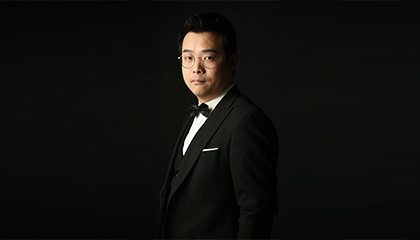
Luo
Bachelor's and master's in computer science from the University of California and ten years in the United States. Works close to the hardware, and teaches for independent problem solving rather than pattern recall.

Tan
Master's in data science from the University of Sydney after a statistics degree at Simon Fraser University, graduating in the top 5% with repeated chancellor's honours; A-Levels at a Cambridge international school, and formerly a data analyst at Tencent. An AMC-accredited coach, a College Board-accredited AP teacher, and holder of a Math League excellent-teacher award.

He
A Cambridge master's after a computer science degree with a mathematics minor at the University of Nebraska-Lincoln, and a US high school GPA of 4.13. Six years overseas and teaches entirely in English, across AMC, Math League, AP Computer Science and AP Calculus.
Where it is taught
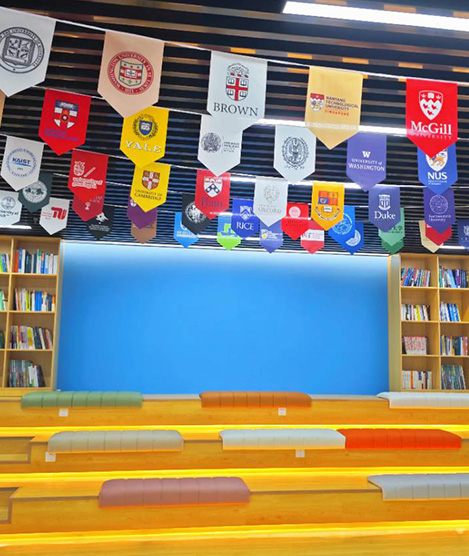
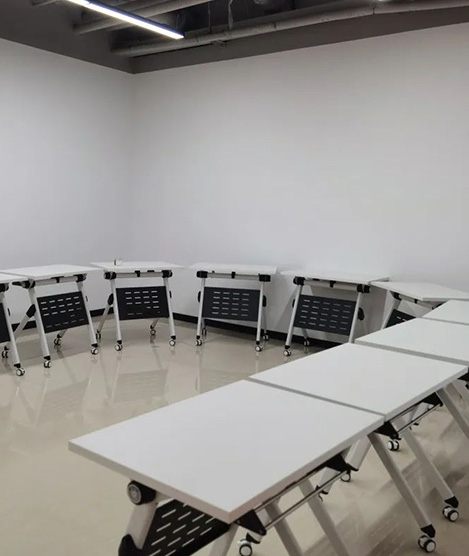
Hanlin learning centres.
Teaching runs from Hanlin's own centres in Shanghai, Shenzhen, Chengdu and Hangzhou, and online for students elsewhere.



Talk to an advisor
Everything Hanlin does for NRC, in one conversation.
Entry, planning, coaching and the past papers. An advisor will tell you which of these a student actually needs, including when the answer is none of them.
Competition entry and planning
Which competitions suit this student, in what order, and by when - then we handle the registration, including the ones that can only be entered through a school or a centre.
Competition coaching
Taught by full-time subject tutors, on a course tier chosen by placement paper rather than by year group.
International curriculum tutoring
IB, AP, A-Level, IGCSE and the US high school curriculum, taught alongside school and timed around the exam calendar.
Competition past papers, free
A large library of past papers, mark schemes and syllabus breakdowns across every competition on this site. No charge and no enrolment.
Scan to add an advisor
Say which competition or course you are asking about. Replies in Chinese or English.
Or call +86 21 6352 6630FAQ
NRC, briefly answered.
What students, teachers and families ask before entering.
Can I enter as an individual?
No. NRC requires teams of three to five students at every stage.
Do we need to buy expensive equipment?
No, and this is one of the competition’s defining features. Equipment is unrestricted, no specific kit is required, and teams may bring their own components to assemble on site. At the China final the equipment is provided.
Can complete beginners enter?
Yes. The city qualifier has a Rookie group specifically for students with no background, with six days of training before the contest and a published award rate of 50%.
What is the difference between Rookie and Elite?
Rookie competitors attend training first and have a higher award rate. Elite competitors skip the training and bring their own equipment. The split exists only at the city qualifier - the China final has no divisions.
Who can enter?
The introduction gives ages 6 to 18, while the city-qualifier section opens entry from grade 6 through graduate school with award bands up to post-secondary. Confirm the current band with the organiser.
What events are there?
Thirteen, including autonomous vehicle, micromouse, manufacturing, combat, rescue, internet-of-things, hockey, maze, smart and sumo robots. Each round draws its events at random from the list.
What happens at the China final?
Six days of training and guidance in Beijing, then one competition day. The task is announced at the venue and the equipment is supplied, so nothing can be built in advance.
How is it judged?
On eleven criteria covering the robot’s problem-solving ability and social value, the overall build, design thinking, use of resources, programming, control and power systems, engineering design thinking, communication, teamwork and decision-making.
What awards are there?
In the China region: a champion, one or two runners-up, two or three third places and a number of merit awards, plus Best Leader for individuals and team awards for Best Engineering Design, Best Programming and decision-making. The global final awards gold, silver and bronze.
Related
Other robotics competitions.
What teams enter alongside NRC.
NRC enquiries
The cheapest way into a real robotics competition.
No kit to buy, training included, and a beginners’ group where half the teams take an award. Tell us how many students you have and what they have built before, and an advisor will pick the group and the events.