
Competitions · Computer science · NOAI
NOAI, the Chinese AI olympiad.
The level test is a pen-and-paper exam, in Chinese, with no computer at all - for a competition about artificial intelligence. It is also the only route to the Chinese team at the youngest of the international science olympiads.
At a glance
What NOAI is, and who runs it.
NOAI is the China branch of IOAI, the International Olympiad in Artificial Intelligence - founded in 2023 by AI researchers worldwide and the youngest member of the international science olympiad family. NOAI is run by ITCCC and operates on non-profit, open and academic principles.
- Part of
- IOAI, the International Olympiad in Artificial Intelligence, founded 2023
- China organiser
- ITCCC. Two Chinese experts sit on the IOAI international council and scientific committee
- Who can enter
- Students in grades 9 to 12 at schools in mainland China
- Language of the questions
- Simplified Chinese
- Level test format
- Individual, on paper. There is no computer-based component
- Where
- At certified assessment centres in cities across China. Entrants must attend in person within China
- Level test
- Registration from November to mid-January; the test on a Sunday morning in late March
- Optional camp
- A three-day AI youth science training camp in June, for students in grade 12 or below with some programming background
- China station
- The following day in June, for the top 200 from the level test
- International station
- July or August, with two teams of eight representing China
- Technology partner
- DP Technology is the official NOAI technology platform provider
The route
Four stages, and the first is a paper exam.
The progression is short compared with the informatics olympiad, but the first stage is unlike anything else in this group.
The level test, on paper
Individually, in Simplified Chinese, at a certified assessment centre, with no computer involved. For a competition about artificial intelligence that is genuinely unusual, and it means preparation is conceptual rather than practical.
The training camp, optional
Three days in June for students with some programming background, in grade 12 or below. It is not a qualifying stage, which makes it available to a wider group than the China station.
The China station, top 200
The two hundred highest scorers from the level test compete the day after the camp ends.
And the international station
Two teams of eight students represent China at IOAI in July or August.
Why IOAI is taken seriously
It is two years old, and already this large.
The scale and the backing are what distinguish IOAI from a new competition finding its feet.
More than ninety countries
Since its formal establishment in December 2023, IOAI has drawn participation from over ninety countries and regions across five continents, and continues to expand.
A record-setting first edition
The first IOAI, in Bulgaria in August 2024, set new records for a debut international science olympiad in both the number of participating countries and the number of competitors.
And a second edition twice the size
The second was held in Beijing, hosted by Beijing National Day School with the NOAI committee, drawing more than sixty countries and regions and eighty teams.
With institutional backing to match
UNESCO has recognised IOAI as closely aligned with its Recommendation on the Ethics of Artificial Intelligence. The scientific committee draws on MIT, Oxford, Tsinghua, the University of Copenhagen and the UAE’s AI university, and Huawei, ByteDance, NVIDIA and DP Technology are among its industry supporters.
What it asks of a competitor
Applying AI to real problems, not reciting it.
The organisers describe a competition designed around what a school student can actually do with the technology.
Frontier technique against real problems
The stated demand is combining current AI methods with real-world problems, rather than demonstrating knowledge of either separately.
Interdisciplinary by design
Compared with the traditional school olympiads, IOAI is framed as an exploration of the AI era, rooted in students’ own study and life, testing capability across subjects rather than within one.
Innovation, application and collaboration
The three qualities the organisers name. The competition aims at future AI innovators and researchers rather than at exam performance.
Theory plus application
Competitors must hold the fundamental theory and be able to use it to solve actual problems. Neither half alone is enough.
Results
How China has done.
Two editions, and the trajectory is the point rather than any single medal.
2024, in Bulgaria
The Chinese delegation took three team silver medals at the first IOAI.
2025, in Beijing
Four individual silvers, three bronzes and an honourable mention, with the team challenge finishing in the global top ten.
Against a field twice the size
The second edition doubled in scale from the first, so the improvement came against considerably more competition.
And China is a founding member
One of the ten founding member countries of IOAI, with two experts on its international council and scientific committee.
Preparation
How Hanlin prepares students for NOAI.
A written first round changes what preparation means, and it favours students who understand rather than students who can only implement.
Concepts, on paper
The level test involves no computer, so the work is understanding how methods function and being able to set that out in writing - not writing code that runs.
Building the theoretical base
The principles of the main model families, what each is for, and where each fails. This is the layer a student who has only used libraries typically lacks.
Then practical work for what follows
The camp and the China station reward students who can build as well as explain. That preparation begins once the level test is behind them.
And connecting AI to a real problem
The stated demand is applying current technique to actual problems. Students who have worked on one of their own arrive with something the others do not.
Why Hanlin
Preparation for NOAI at Hanlin is taught by full-time subject tutors, on a course tier chosen by placement paper rather than by year group.
Programme formats
Five ways this is taught.
Group size is the whole difference between these. It decides how much of the tutor's attention a student gets and how far the course can bend to them, so it is worth choosing rather than accepting.
| Format | Group size | What it suits |
|---|---|---|
| One-to-one | One student | Content, pace and emphasis set by what this student actually needs rather than by a syllabus. The only format that can be rebuilt mid-course. |
| Small group | Three to eight | Opens at three. Frequent discussion, and the tutor can slow down or move on according to what the group has absorbed. Most students chasing a higher award are taught in this one. |
| Class | Eight to twelve | Taught by the subject lead or a medal coach. Less back-and-forth, so it suits a student who will say when something is unclear. |
| Large class | Ten to twenty | For students in the middle of the placement range, and a way to try a competition before committing. Students often move to a small group or to one-to-one afterwards. |
| Past-paper class | No cap | Past papers worked through in sequence in the weeks before the sitting. Free to students already enrolled. |
Course length for NOAI is set after a placement paper. The gap between where a student is and what the paper asks for is what the course has to close, and that gap is not the same for two students in the same year group.
How it runs
Six steps, four people on your side.
The same process for every student, so that nothing depends on one tutor remembering to do it.
 Step 1
Pre-course assessment
A placement paper before anything is booked, so the course tier is chosen on evidence rather than on a year group.
 Step 2
Tutor matching
A subject tutor is matched to the result, and their full background is provided before you agree to it.
 Step 3
Plan and group
A study group opens with four people on one student: the tutor, a planner, a supervisor and an academic manager.
 Step 4
Scheduled teaching
The teaching office sets the timetable around the competition date and school term, and teaching begins.
 Step 5
After-class reports
What was covered, and how the student handled it, reported after every lesson.
 Step 6
Homework follow-up
The teaching assistant and the form teacher both check that homework is done, which is where most preparation quietly fails.
Free resource pack
Past papers and preparation pack
The same material our own NOAI students work from. Scan the code, say what you need, and an advisor sends it.

Tell an advisor which competition and year group, and the material comes back the same day. Free, and you do not have to enrol in anything. If we do not already hold what you need, we will go and find it.
- PDFPast papers, every year the organiser has released
- PDFWorked solutions, where the organiser publishes them
- PDFThe syllabus on one page - every topic, and how heavily it is examined
- PDFEntry checklist and the dates for the current cycle
Teaching team
Who would teach it.
Three of the twenty-two tutors on the published Hanlin roster - the ones whose subject this is.
Luo
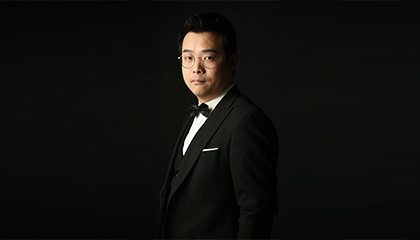
Bachelor's and master's in computer science from the University of California and ten years in the United States. Works close to the hardware, and teaches for independent problem solving rather than pattern recall.

Tan
Master's in data science from the University of Sydney after a statistics degree at Simon Fraser University, graduating in the top 5% with repeated chancellor's honours; A-Levels at a Cambridge international school, and formerly a data analyst at Tencent. An AMC-accredited coach, a College Board-accredited AP teacher, and holder of a Math League excellent-teacher award.
He
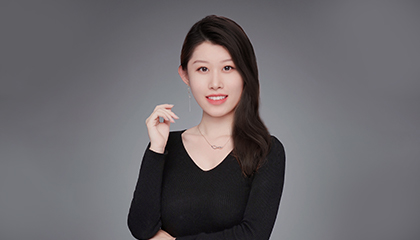
A Cambridge master's after a computer science degree with a mathematics minor at the University of Nebraska-Lincoln, and a US high school GPA of 4.13. Six years overseas and teaches entirely in English, across AMC, Math League, AP Computer Science and AP Calculus.
Where it is taught
Hanlin learning centres.
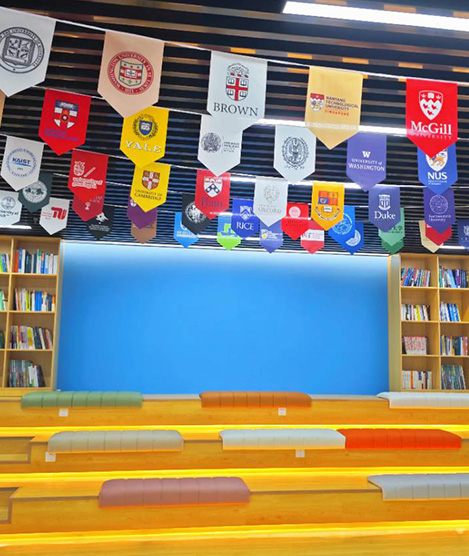
Teaching runs from Hanlin's own centres in Shanghai, Shenzhen, Chengdu and Hangzhou, and online for students elsewhere.





Talk to an advisor
Everything Hanlin does for NOAI, in one conversation.
Entry, planning, coaching and the past papers. An advisor will tell you which of these a student actually needs, including when the answer is none of them.
Competition entry and planning
Which competitions suit this student, in what order, and by when - then we handle the registration, including the ones that can only be entered through a school or a centre.
Competition coaching
Taught by full-time subject tutors, on a course tier chosen by placement paper rather than by year group.
International curriculum tutoring
IB, AP, A-Level, IGCSE and the US high school curriculum, taught alongside school and timed around the exam calendar.
Competition past papers, free
A large library of past papers, mark schemes and syllabus breakdowns across every competition on this site. No charge and no enrolment.
Scan to add an advisor
Say which competition or course you are asking about. Replies in Chinese or English.
Or call +86 21 6352 6630FAQ
NOAI, briefly answered.
What students and families ask before entering.
Who can enter NOAI?
Students in grades 9 to 12 at schools in mainland China. Entrants must attend in person within China, at a certified assessment centre.
Is the level test on a computer?
No. It is an individual pen-and-paper test with no computer-based component, set in Simplified Chinese.
What is the route?
The level test in late March, an optional three-day training camp in June, the China station the following day for the top 200, and the international station in July or August for two teams of eight.
Do I have to attend the camp?
No. It is optional and open to students in grade 12 or below with some programming background. It is not a qualifying stage.
What is IOAI?
The International Olympiad in Artificial Intelligence, founded in 2023 by AI researchers worldwide and the youngest member of the international science olympiad family. More than ninety countries and regions now take part.
Who backs it?
UNESCO has recognised it as closely aligned with its Recommendation on the Ethics of Artificial Intelligence. The scientific committee draws on MIT, Oxford, Tsinghua, the University of Copenhagen and the UAE’s AI university, with Huawei, ByteDance, NVIDIA and DP Technology among its industry supporters.
How has China performed?
Three team silver medals at the first IOAI in Bulgaria in 2024, and four individual silvers, three bronzes and an honourable mention in Beijing in 2025, with the team challenge in the global top ten.
What does the competition actually test?
Combining current AI methods with real problems. Competitors need the underlying theory and the ability to apply it, and the organisers emphasise innovation, application and collaboration across subjects.
What if I am not at school in mainland China?
USAAIO is the equivalent route for students at school in the United States or Canada, or holding citizenship of either. It selects the North American teams for the same international olympiad.
Related
AI and computing contests.
What runs alongside NOAI.
NOAI enquiries
A written exam about artificial intelligence.
The level test asks students to explain how AI methods work rather than to run them, which rewards a different kind of preparation from every other computing contest here. Tell us the student’s year group and an advisor will map the March test and what follows.