
Competitions · Humanities and writing · NHSDLC
NHSDLC, the National High School Debate League of China.
You prepare both sides of the motion and a coin toss decides which one you argue. That single rule is why debate teaches something no essay competition can.

What Public Forum is
Argue the side you are given, not the side you believe.
Public Forum is the format used at every major American tournament, and its defining feature is that you do not choose your position.
Both cases, every time
A team prepares the affirmative and the negative on the same motion. Which one you argue is decided minutes before the round begins.
The coin toss decides two things
The winner of the toss chooses either the side or the speaking order. The loser then takes whichever choice is left. So you can win the toss and still argue a case you disagree with.
Two students, sharing four minutes
A team is two debaters, formed freely. Between them they have four minutes of preparation time across the entire round, usable in any increments before any segment.
And the league supplies the starting material
NHSDLC provides a sample constructive speech and a research packet, so a first-time team is not building from nothing.
The round
How the speeches run.
Every round follows the same shape. The crossfire sections are where most rounds are actually won.
| Segment | Time | What happens |
|---|---|---|
| Constructive | 5 minutes each side | The opening case. NHSDLC provides a sample to work from |
| Crossfire | - | Follows each round of speaking. The first question must go to the debater who just finished, after which both sides question and answer freely |
| Rebuttal | 4 minutes each side | Answering the other case |
| Summary | 2 minutes each side | Drawing the round together |
| Grand Crossfire | - | The last crossfire, with all four debaters involved at once |
| Preparation time | 4 minutes per team, total | Shared between the two debaters and usable before any segment, in any amounts. There is no requirement to use it all at once |
The page’s glossary also lists a Final Focus speech, which is the closing speech in standard Public Forum, but the timing description above does not include it. Confirm the current running order with the organiser.
At a glance
The league.
NHSDLC has run since 2012 and is the largest American-format debate league in China, holding more than fifty regional tournaments a year alongside a national championship and a winter invitational, and sending teams to American invitationals including Stanford and Harvard.
- Formats
- Public Forum debate, Public Speaking, and Junior World Schools Debate
- Public Forum divisions
- Middle School Novice, Middle School, and Open
- Public Speaking divisions
- Primary, middle and high school
- Middle School Division
- Grade 9 and below only
- Open and High School Division
- Grade 12 and below
- Junior World Schools
- Ages 7 to 13
- Team
- Two students, who form a team freely
- Language
- English during speeches and debate. Judges do not evaluate arguments made in another language, though any language may be used during preparation time
- School and nationality
- Neither affects which division you may register for at the national championship
- Recommended
- Providing a TOEFL, IELTS, SAT or similar score to indicate English level
- Partners
- Debate societies at Harvard, Yale, Stanford, Pennsylvania and Chicago, the International Debate Education Association, and Chinese universities including Peking University and Shanghai Jiao Tong
The season
Four windows, and only one needs qualification.
A student can start at any of the three open events. The national championship is the only one with an entry requirement.
| Event | When | Who can enter |
|---|---|---|
| Spring regular season | March to June | Online and in-person city tournaments. Open to anyone meeting the age and experience requirements for a division |
| Autumn regular season | September to December | Online and in-person city tournaments, on the same basis |
| Winter invitational | January to February | Online. Open on the same basis |
| National championship | July to August | In person, and by qualification only - see below |
To enter the national championship a student needs at least one of: reaching the elimination rounds of a regional or online tournament in the corresponding division; qualifying at a designated championship for Public Forum and Public Speaking, or at a Junior World Schools invitational; attending a training camp; or applying independently as a strong debater, subject to committee review.
Two rules worth knowing early
The novice division, and what happens if a division is small.
Both affect who a student actually ends up debating, which matters more than the division name.
The novice division is for genuine beginners
Introduced for students with little competitive experience. A student qualifies if it is their first NHSDLC regular season and they are eligible for the qualifying events that season.
Divisions merge below twelve teams
If fewer than twelve teams register for a division, it is merged. Experience takes priority: Middle School and Open combine, with students competing as Novice or Open. Age is considered second: Middle School Novice and Middle School Open combine.
Which means the field can change after you register
A middle school entrant may find themselves in a merged field. Knowing this in advance is better than discovering it at the tournament.
And you cannot switch once it starts
The registered event cannot be changed after the competition begins, except where NHSDLC made a recording error, and debaters must compete in the event they registered for unless the tournament director explicitly permits otherwise.
On the day
Four things that get debaters disqualified or penalised.
The tournament rules are short and enforced. These are the ones that catch first-time competitors.
Lateness disqualifies
Arriving late results in disqualification from the round. If one team forfeits by being late, the other must remain in the assigned room while staff decide whether to arrange a new opponent.
English only, once you are speaking
Judges will not evaluate an argument made in another language. Preparation time is unrestricted.
Devices are allowed, searching is not
Electronic devices that assist the debate are permitted. Searching for information during the round, or communicating with anyone to gain an advantage, is prohibited.
And recording is unclear
One rule permits audio, video or transcription of preliminary debates; the next says staff may force deletion of any recording found. Ask before recording anything.
Preparation
How Hanlin prepares a debate team.
Public Forum rewards preparation that transfers - the research is reusable, the skills are not subject-specific.
Building both cases properly
Teams that build one strong case and one thin one lose half their rounds on the coin toss. The weaker case is where the season is decided.
Rehearsing crossfire
Three crossfires per round, plus a four-person grand crossfire. Answering a hostile question without conceding the point is a specific skill and it is drillable.
Spending four minutes wisely
Four minutes of prep for the whole round, shared between two people. Deciding in advance where it goes - and where it does not - is worth more than the research.
And starting from the league’s own packet
NHSDLC supplies a research packet and a sample constructive. A first-time team that works through those is far better placed than one starting from a blank page.
Why Hanlin
Preparation for NHSDLC at Hanlin is taught by full-time subject tutors, on a course tier chosen by placement paper rather than by year group.
Programme formats
Five ways this is taught.
Group size is the whole difference between these. It decides how much of the tutor's attention a student gets and how far the course can bend to them, so it is worth choosing rather than accepting.
| Format | Group size | What it suits |
|---|---|---|
| One-to-one | One student | Content, pace and emphasis set by what this student actually needs rather than by a syllabus. The only format that can be rebuilt mid-course. |
| Small group | Three to eight | Opens at three. Frequent discussion, and the tutor can slow down or move on according to what the group has absorbed. Most students chasing a higher award are taught in this one. |
| Class | Eight to twelve | Taught by the subject lead or a medal coach. Less back-and-forth, so it suits a student who will say when something is unclear. |
| Large class | Ten to twenty | For students in the middle of the placement range, and a way to try a competition before committing. Students often move to a small group or to one-to-one afterwards. |
| Past-paper class | No cap | Past papers worked through in sequence in the weeks before the sitting. Free to students already enrolled. |
Course length for NHSDLC is set after a placement paper. The gap between where a student is and what the paper asks for is what the course has to close, and that gap is not the same for two students in the same year group.
How it runs
Six steps, four people on your side.
The same process for every student, so that nothing depends on one tutor remembering to do it.
 Step 1
Pre-course assessment
A placement paper before anything is booked, so the course tier is chosen on evidence rather than on a year group.
 Step 2
Tutor matching
A subject tutor is matched to the result, and their full background is provided before you agree to it.
 Step 3
Plan and group
A study group opens with four people on one student: the tutor, a planner, a supervisor and an academic manager.
 Step 4
Scheduled teaching
The teaching office sets the timetable around the competition date and school term, and teaching begins.
 Step 5
After-class reports
What was covered, and how the student handled it, reported after every lesson.
 Step 6
Homework follow-up
The teaching assistant and the form teacher both check that homework is done, which is where most preparation quietly fails.
Free resource pack
Motions and case-file pack
The same material our own NHSDLC students work from. Scan the code, say what you need, and an advisor sends it.

Tell an advisor which competition and year group, and the material comes back the same day. Free, and you do not have to enrol in anything. If we do not already hold what you need, we will go and find it.
- PDFPast motions and topic areas
- DOCXA case-file template, ready to fill in
- PDFFormat, speaking times and the judging criteria
- PDFEntry checklist and the dates for the current cycle
Teaching team
Who would teach it.
Three of the twenty-two tutors on the published Hanlin roster - the ones whose subject this is.

Lu
Master's in education from the University of Pennsylvania and a double major in psychology and philosophy at Mount Holyoke. Cross-cultural teaching experience across China and the US, with research work in child and adolescent development, cognition, and international students' identity.

Yang
Educated at American Heritage School, then English literature and philosophy at the University of British Columbia and a master's in language education at Toronto. Eleven years in North America, with a close working knowledge of the international curricula and overseas admissions.

Zhang
Master's in cognitive science at UC San Diego on full scholarship, after double honours in neurobiology and behaviour and in cognitive science at UC Davis. Ten years overseas, a perfect TOEFL speaking score, and named an outstanding education scholar at UCSD.
Where it is taught
Hanlin learning centres.
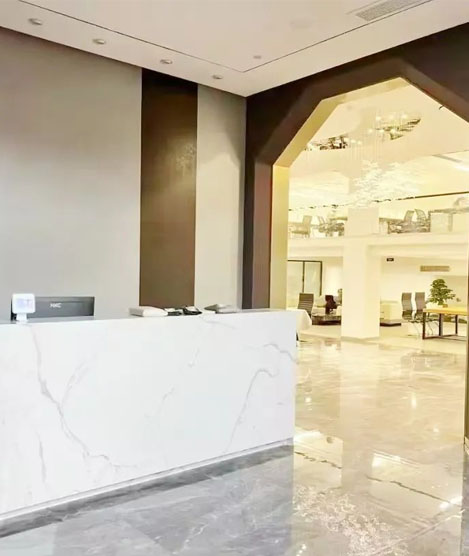
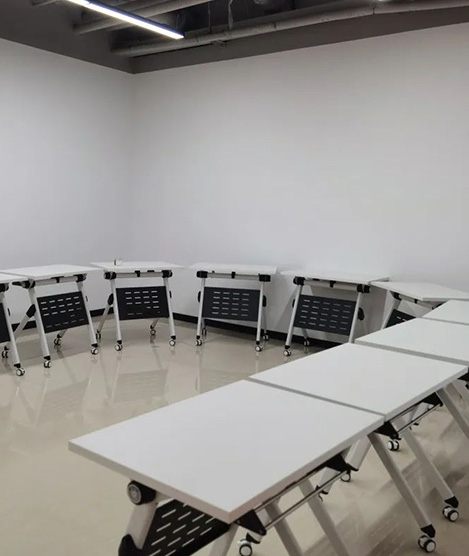
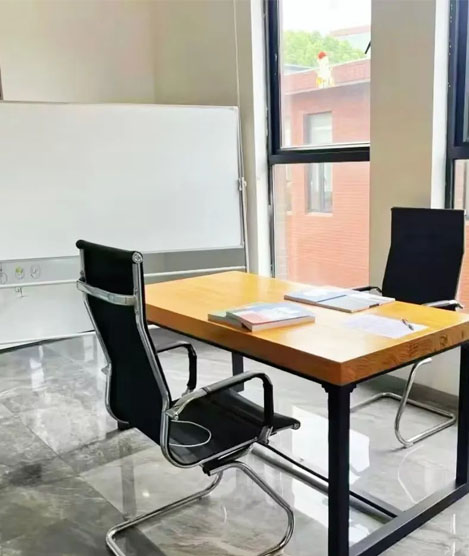
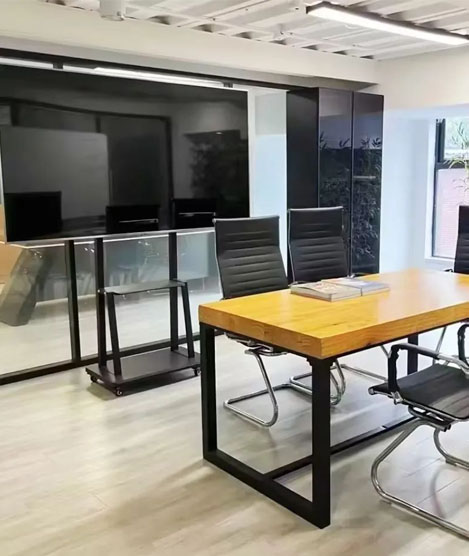
Teaching runs from Hanlin's own centres in Shanghai, Shenzhen, Chengdu and Hangzhou, and online for students elsewhere.


Talk to an advisor
Everything Hanlin does for NHSDLC, in one conversation.
Entry, planning, coaching and the past papers. An advisor will tell you which of these a student actually needs, including when the answer is none of them.
Competition entry and planning
Which competitions suit this student, in what order, and by when - then we handle the registration, including the ones that can only be entered through a school or a centre.
Competition coaching
Taught by full-time subject tutors, on a course tier chosen by placement paper rather than by year group.
International curriculum tutoring
IB, AP, A-Level, IGCSE and the US high school curriculum, taught alongside school and timed around the exam calendar.
Competition past papers, free
A large library of past papers, mark schemes and syllabus breakdowns across every competition on this site. No charge and no enrolment.
Scan to add an advisor
Say which competition or course you are asking about. Replies in Chinese or English.
Or call +86 21 6352 6630FAQ
NHSDLC, briefly answered.
What students and families ask before entering.
Do I choose which side to argue?
No. You prepare both sides, and a coin toss before each round decides. The toss winner chooses either the side or the speaking order, and the loser takes the remaining choice.
How big is a team?
Two students in Public Forum, formed freely. They share four minutes of preparation time across the whole round.
What are the divisions?
Public Forum runs Middle School Novice, Middle School and Open. Public Speaking runs primary, middle and high school divisions. Junior World Schools Debate is for ages 7 to 13.
Which division am I eligible for?
The Middle School Division is open only to students in grade 9 and below. The Open and High School Division is open to grade 12 and below. Junior World Schools is ages 7 to 13.
What happens if my division is small?
If fewer than twelve teams register, divisions are merged - by experience first, combining Middle School and Open into Novice and Open fields, and by age second.
When can I compete?
Spring regular season from March to June, autumn from September to December, and a winter invitational in January and February. All three are open to anyone meeting the division requirements.
How do I reach the national championship?
By one of: reaching the elimination rounds of a regional or online tournament in your division; qualifying at a designated championship or a Junior World Schools invitational; attending a training camp; or applying independently as a strong debater, subject to committee review.
What language do I debate in?
English, once you are speaking. Judges do not evaluate arguments made in another language, though preparation time is unrestricted.
Can I use a laptop during the round?
Electronic devices that help the debate are allowed, but searching for information during the round or communicating with anyone for advantage is prohibited.
What happens if I am late?
Lateness results in disqualification from the round. If your opponents forfeit by being late, you must stay in the assigned room while staff decide whether to arrange a new opponent.
Can I get a refund if I withdraw?
The league publishes a transfer and withdrawal procedure. Requests are made by email before the registration deadline, transfers are processed within 48 hours, and fees - including accommodation booked through the league - are refunded to the original payment account.
Related
Other debate and speaking competitions.
What students enter alongside NHSDLC.
NHSDLC enquiries
Two students, both sides, and a coin.
Public Forum is the format every major American tournament uses, and preparing to argue a case you disagree with is the part that changes how a student thinks. Tell us the year group and whether they have debated before, and an advisor will find the right division and season.