
Competitions · Research and innovation · NAQT
NAQT, the academic quiz tournaments.
Eleven subject areas, from ancient history to popular culture, answered on a buzzer before the question has finished. Four on the floor from a squad of six, and every player owns their subjects.
At a glance
What quiz bowl is.
Buzzer quiz has been a fixture of university life since 1953 and is supported at Harvard, Yale, Princeton, Berkeley, Cambridge and Oxford, where it has become an institutional tradition - the Super Bowl of the mind. NAQT runs the tournaments at middle school, high school and university level, with more than 40,000 high-school students competing each year.
- Organiser
- National Academic Quiz Tournaments
- Scale
- More than 10,000 schools registered and over 300,000 students to date. NAQT itself has run for around 27 years
- Who can enter
- Students in grades 9 to 12. Teams may mix year groups
- Squad
- Four to six students, with rotation permitted. A maximum of four play at any one time, and each squad names a captain
- One team only
- A student may not represent more than one team, and all members of a squad must be in the same difficulty division
- Divisions
- Two - Pre for entry level and Pro for advanced. The choice cannot be changed once submitted
- Subject areas
- Eleven, running from mathematics and science through history and literature to geography and popular culture
- A round
- Thirty to forty-five minutes, two teams head to head
- The season
- Registration from September to the end of November, the China station in February, and the global station in Atlanta in May
- Language
- English throughout
How a question works
Every question is two questions.
The tossup and bonus structure is what makes quiz bowl a team sport rather than a race, and understanding it changes how a squad trains.
The tossup, answered alone
The moderator begins reading and any player on either team may buzz the moment they think they know. There is no conferring - this part is individual.
The bonus, answered together
Answering the tossup correctly earns your team the bonus, which carries the higher value and is worked on as a team. The buzzer is how you unlock team points.
Clues run from hard to easy
Questions are written so the early clues are obscure and the later ones obvious. Buzzing early is worth more risk and more reward, and knowing when to commit is the central skill.
And it is never over
The higher score after all questions wins the round. Because clues get easier as they are read, a trailing team can take the last few questions - which is why the organisers describe the right mindset as "next question, next match".
The two divisions
Pre and Pro, and they need different squads.
The division decides not only the difficulty but how a squad divides its subjects, which is a genuine strategic difference.
Pre - four areas, one or two each
Literature, history, mathematics and science, and general knowledge. Each player takes responsibility for one or two subjects. A squad of four can cover the whole board.
Pro - three major and eight minor
Three main subjects - literature, history, mathematics and science - plus eight secondary areas. Each player covers one or two major subjects and two or three minor ones.
Which makes Pro a squad problem
Eleven areas across four players on the floor means real allocation. A gap that nobody owns will be found repeatedly across a tournament.
Choose carefully - it is final
The division cannot be changed once submitted, and every member of a squad must be in the same one.
How a tournament is decided
Round robin, and every match counts equally.
There is no single decisive round, which changes how a squad should think about a bad start.
Every team plays every team in its group
A single round robin within each group. A win records as 1-0 and the results accumulate across however many rounds the field requires.
Ranked on win-loss record
Group standings follow the record rather than total points, so a narrow win counts the same as a wide one.
And you can rotate the squad
Six registered, four on the floor. Players can be swapped between rounds, which is how a squad covers eleven subject areas without anyone playing every match.
So no round is fatal
The organisers make the point directly: the ranking is still open until the last round, and a match is still winnable until the last question.
NAQT and NSB
Same mechanic, very different reading list.
Both are buzzer quizzes built on tossups and bonuses. What separates them is the breadth of what you have to know.
NAQT covers everything
Eleven areas including geography, religious literature, ancient history and popular culture. A student who reads widely rather than deeply belongs here.
NSB covers six sciences
Earth and space science, energy, mathematics, physics, biology and chemistry. A science specialist belongs there.
Squad sizes differ too
NAQT registers four to six and plays four. NSB fields four players plus one alternate and requires all members to attend the same school.
The training transfers
Buzzer discipline, deciding when to commit mid-question, and conferring efficiently on a bonus are the same skills in both. Only the reading changes.
Preparation
How Hanlin prepares a NAQT squad.
Eleven subject areas cannot be covered by anyone individually, so the preparation is structural before it is academic.
Assigning subjects, then honouring the assignment
Each player owns one or two major and two or three minor areas. The point is that nobody buzzes on somebody else’s subject unless they are certain.
Practising the buzz decision
Clues run from obscure to obvious. Learning where your own confidence threshold sits, and buzzing at it rather than after it, is worth more than extra reading.
Listening, not reading
Questions are heard, in English, at speed. Comprehension under that pressure is a separate skill from reading the same material on a page.
And rehearsing the bonus confer
Three or four people producing one answer, quickly, without talking over each other. Squads that have not practised it waste the whole window.
Why Hanlin
Preparation for NAQT at Hanlin is taught by full-time subject tutors, on a course tier chosen by placement paper rather than by year group.
Programme formats
Five ways this is taught.
Group size is the whole difference between these. It decides how much of the tutor's attention a student gets and how far the course can bend to them, so it is worth choosing rather than accepting.
| Format | Group size | What it suits |
|---|---|---|
| One-to-one | One student | Content, pace and emphasis set by what this student actually needs rather than by a syllabus. The only format that can be rebuilt mid-course. |
| Small group | Three to eight | Opens at three. Frequent discussion, and the tutor can slow down or move on according to what the group has absorbed. Most students chasing a higher award are taught in this one. |
| Class | Eight to twelve | Taught by the subject lead or a medal coach. Less back-and-forth, so it suits a student who will say when something is unclear. |
| Large class | Ten to twenty | For students in the middle of the placement range, and a way to try a competition before committing. Students often move to a small group or to one-to-one afterwards. |
| Past-paper class | No cap | Past papers worked through in sequence in the weeks before the sitting. Free to students already enrolled. |
Course length for NAQT is set after a placement paper. The gap between where a student is and what the paper asks for is what the course has to close, and that gap is not the same for two students in the same year group.
How it runs
Six steps, four people on your side.
The same process for every student, so that nothing depends on one tutor remembering to do it.
 Step 1
Pre-course assessment
A placement paper before anything is booked, so the course tier is chosen on evidence rather than on a year group.
 Step 2
Tutor matching
A subject tutor is matched to the result, and their full background is provided before you agree to it.
 Step 3
Plan and group
A study group opens with four people on one student: the tutor, a planner, a supervisor and an academic manager.
 Step 4
Scheduled teaching
The teaching office sets the timetable around the competition date and school term, and teaching begins.
 Step 5
After-class reports
What was covered, and how the student handled it, reported after every lesson.
 Step 6
Homework follow-up
The teaching assistant and the form teacher both check that homework is done, which is where most preparation quietly fails.
Free resource pack
Motions and case-file pack
The same material our own NAQT students work from. Scan the code, say what you need, and an advisor sends it.

Tell an advisor which competition and year group, and the material comes back the same day. Free, and you do not have to enrol in anything. If we do not already hold what you need, we will go and find it.
- PDFPast motions and topic areas
- DOCXA case-file template, ready to fill in
- PDFFormat, speaking times and the judging criteria
- PDFEntry checklist and the dates for the current cycle
Teaching team
Who would teach it.
Three of the twenty-two tutors on the published Hanlin roster - the ones whose subject this is.

Dr An
Mathematics at Illinois Urbana-Champaign with highest honours and the Elizabeth R. Bennett scholarship, then a PhD in mathematics at Johns Hopkins on full funding with the Owen fellowship and the Joel Dean award for excellent teaching. Years of US university teaching, translating high-level mathematics into language students can use.

Yu
Master's in bioinformatics and computational biology from UT Dallas and a nutritional sciences degree from Wisconsin-Madison. Second author on an SCI-indexed paper from the Tanumihardjo vitamin-A laboratory, and formerly at ABS Global.

Tan
Master's in data science from the University of Sydney after a statistics degree at Simon Fraser University, graduating in the top 5% with repeated chancellor's honours; A-Levels at a Cambridge international school, and formerly a data analyst at Tencent. An AMC-accredited coach, a College Board-accredited AP teacher, and holder of a Math League excellent-teacher award.
Where it is taught
Hanlin learning centres.
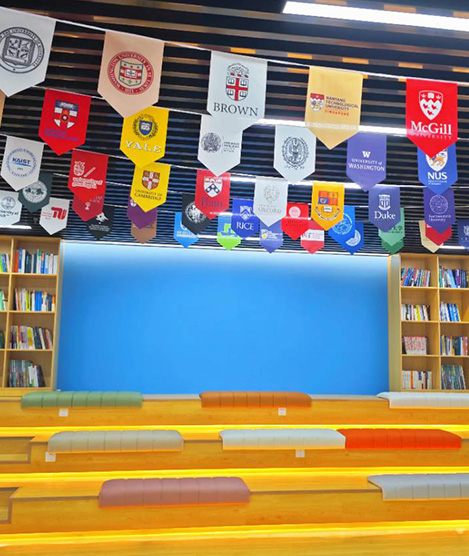
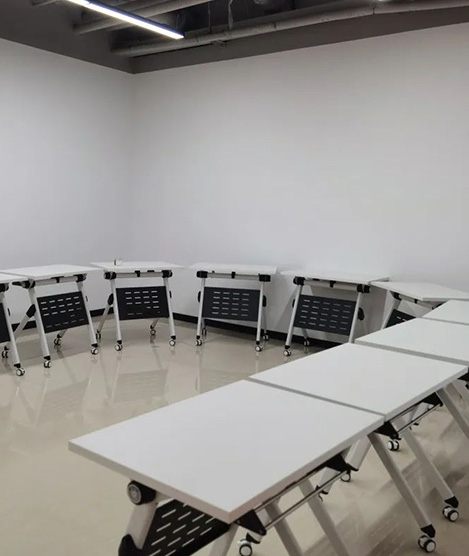
Teaching runs from Hanlin's own centres in Shanghai, Shenzhen, Chengdu and Hangzhou, and online for students elsewhere.





Talk to an advisor
Everything Hanlin does for NAQT, in one conversation.
Entry, planning, coaching and the past papers. An advisor will tell you which of these a student actually needs, including when the answer is none of them.
Competition entry and planning
Which competitions suit this student, in what order, and by when - then we handle the registration, including the ones that can only be entered through a school or a centre.
Competition coaching
Taught by full-time subject tutors, on a course tier chosen by placement paper rather than by year group.
International curriculum tutoring
IB, AP, A-Level, IGCSE and the US high school curriculum, taught alongside school and timed around the exam calendar.
Competition past papers, free
A large library of past papers, mark schemes and syllabus breakdowns across every competition on this site. No charge and no enrolment.
Scan to add an advisor
Say which competition or course you are asking about. Replies in Chinese or English.
Or call +86 21 6352 6630FAQ
NAQT, briefly answered.
What students, teachers and families ask before entering.
Who can enter?
Students in grades 9 to 12, in squads of four to six. Teams may mix year groups, but a student may represent only one team.
How many play at once?
Four. A squad may register up to six and rotate players between rounds.
How does a question work?
Each question has two parts. The tossup is read aloud and any player may buzz as soon as they think they know, with no conferring. Answering it correctly earns the team a higher-value bonus, which the team works on together.
What are the two divisions?
Pre, at entry level, covering literature, history, mathematics and science and general knowledge, with each player taking one or two subjects. Pro, at advanced level, covering three major subjects and eight secondary ones, with each player taking one or two major and two or three minor areas.
Can we change division later?
No. The choice is final once submitted, and every member of a squad must be in the same division.
What subjects come up?
Eleven areas, from mathematics and science through history and literature to geography and popular culture. Literature alone spans British and American, European and world, and religious literature.
How long is a round?
Thirty to forty-five minutes, two teams head to head, with the higher score at the end winning.
How is a tournament won?
A single round robin within each group, ranked on win-loss record. Every match counts equally, so the standings stay open until the final round.
How does it compare with the National Science Bowl?
The mechanic is the same - tossups and bonuses on a buzzer - but NSB covers six science subjects while NAQT covers eleven areas across the whole curriculum and beyond it.
Where is it held?
The China station runs in February and the global station in Atlanta, Georgia, in May.
Related
Other quiz and knowledge competitions.
What students enter alongside NAQT.
NAQT enquiries
Nobody knows all eleven areas. That is the point.
A squad works because four players each own their subjects and trust the others with theirs. Tell us who you have and what they read, and an advisor will help allocate the board and choose the division.