
Competitions · Mathematics · Math Prize for Girls
Math Prize for Girls, at MIT.
Twenty questions in two and a half hours, sat each October at MIT by around 260 young women selected on their AMC 10 or AMC 12 scores. It is among the largest mathematics contests for women anywhere, and it carries the largest prize fund of any secondary-school mathematics competition.

At a glance
What the contest is, and who may apply.
Math Prize for Girls has run each October since 2009, organised by Advantage Testing, whose stated purpose is to widen access to mathematics and to promote gender equality in STEM.
- Organiser
- Advantage Testing, which holds partnerships with Harvard, NYU, MIT and Princeton
- Where and when
- At MIT in Cambridge, Massachusetts, on a Sunday in early October each year
- Scale
- Around 260 entrants a year - 253 in 2025, 274 in 2024 and 262 in 2023
- Year group
- Grade 11 or below as of early March in the contest year, and not expected to leave school or begin full-time university before the contest
- Gender
- Applicants must identify as female
- Where you must live
- Applicants must be resident in Canada or the United States at the time of applying. US permanent residents and citizens living elsewhere should contact the organisers about what documentation is required
- Prior contest
- Applicants must have sat the previous year’s AMC 10 or AMC 12, and the score goes on the application form
- Exclusion
- Immediate family members of Advantage Testing employees may not enter
- Format
- One round of 20 questions in 2.5 hours, with a proof-based olympiad round for the strongest finishers
- Application deadline
- End of May, for the contest the following October
The papers
One qualifying round, then an olympiad.
The main contest is the one nearly everyone sits. The second round is invitation-only and looks nothing like the first.
The main contest
Twenty questions in two and a half hours - seven and a half minutes each. It rewards creativity and insight rather than technique, and the paper is designed to be approached rather than worked through mechanically.
The Math Prize Olympiad
A proof-based round of four questions in four hours, run in November or December at each invited student’s own school. Structurally the invitation goes to honourable mention and above, which in recent years has meant between 45 and 52 students.
What is examined
Pre-college mathematics, with trigonometry, algebra and geometry as the main subjects. Nothing goes beyond the high-school syllabus and no calculus appears.
What is actually tested
Mathematical creativity and insight rather than coverage. Students are asked to apply what they already know to unfamiliar problems and to show an individual line of reasoning, which is why preparation cannot be a syllabus exercise.
Prizes
The largest prize fund in school mathematics.
Around US$100,000 is awarded each year. The scale of it is part of the point: the organisers use it to signal that this is a serious professional competition rather than a school exercise.
| Placing | Cash prize |
|---|---|
| First | US$50,000 |
| Second | US$20,000 |
| Third | US$10,000 |
| Fourth and fifth | US$4,000 each |
| Sixth to tenth | US$2,000 each |
| Youth Prize | US$2,000 to the strongest entrant in grade 9 or below, shared if tied |
No student may win more than US$100,000 in total across all the years she enters. Where scores tie, a tiebreaker decides only which student receives which trophy, not how the prize money is divided.
Beyond the cash
What entrants receive besides prize money.
The awards below the top ten are where most entrants actually land, and they are worth more than they first appear.
Honourable mention
Trophies go to twenty-five further high performers beyond the top ten. It is the award most realistically in reach for a strong entrant, and it carries a consequence beyond the trophy itself.
A summer camp scholarship
Every student winning honourable mention or better receives a US$500 scholarship toward a summer mathematics programme in Canada or the United States - which is often the more useful half of the award.
An invitation to the olympiad
Honourable mention and above also brings an invitation to the proof-based Math Prize Olympiad, run in partnership with the Advantage Testing Foundation and Jane Street, and sat at the student’s own school.
Software for every entrant
All entrants receive gifts including a one-year licence for Wolfram|One and Wolfram|Alpha Pro. Nobody leaves the contest with nothing, whatever their placing.
Recent years
The contest in numbers.
The competition has run annually since 2009 and reached its seventeenth edition in 2025. Entry numbers have held steady between 250 and 275.
| Year | Edition | Entrants | Invited to the olympiad |
|---|---|---|---|
| 2025 | Seventeenth | 253 from the US and Canada | 52 |
| 2024 | Sixteenth | 274 from the US and Canada | 47 |
| 2023 | Fifteenth | 262 from the US and Canada | 45 |
The olympiad round is held some weeks after the main contest, on a Thursday in late November or early December, and follows the same format each year: four proof-based questions in four hours.
Preparation
How Hanlin prepares students for this contest.
Because entry depends on an AMC score submitted months earlier, preparation here begins with the AMC season rather than with this paper.
The AMC score is the gate
Applications require the previous year’s AMC 10 or AMC 12 result, so the work that decides whether a student can apply happens the November before. Preparation is planned backwards from that, not from the October contest.
Insight, not more syllabus
Nothing on the paper goes beyond high-school mathematics and there is no calculus. What separates entrants is creative problem solving, so practice is on unfamiliar problems rather than on covering new content.
Seven minutes a question
Twenty questions in two and a half hours leaves no room to grind. Timed practice builds the judgement to recognise quickly which problems are worth committing to on the day.
Proof writing, if the olympiad follows
An honourable mention brings an invitation to a four-hour proof round weeks later. Students in reach of that band prepare for both papers, because there is little time to learn proof writing in between.
Why Hanlin
Preparation for Math Prize for Girls at Hanlin is taught by full-time subject tutors, on a course tier chosen by placement paper rather than by year group.
Programme formats
Five ways this is taught.
Group size is the whole difference between these. It decides how much of the tutor's attention a student gets and how far the course can bend to them, so it is worth choosing rather than accepting.
| Format | Group size | What it suits |
|---|---|---|
| One-to-one | One student | Content, pace and emphasis set by what this student actually needs rather than by a syllabus. The only format that can be rebuilt mid-course. |
| Small group | Three to eight | Opens at three. Frequent discussion, and the tutor can slow down or move on according to what the group has absorbed. Most students chasing a higher award are taught in this one. |
| Class | Eight to twelve | Taught by the subject lead or a medal coach. Less back-and-forth, so it suits a student who will say when something is unclear. |
| Large class | Ten to twenty | For students in the middle of the placement range, and a way to try a competition before committing. Students often move to a small group or to one-to-one afterwards. |
| Past-paper class | No cap | Past papers worked through in sequence in the weeks before the sitting. Free to students already enrolled. |
Course length for Math Prize for Girls is set after a placement paper. The gap between where a student is and what the paper asks for is what the course has to close, and that gap is not the same for two students in the same year group.
How it runs
Six steps, four people on your side.
The same process for every student, so that nothing depends on one tutor remembering to do it.
 Step 1
Pre-course assessment
A placement paper before anything is booked, so the course tier is chosen on evidence rather than on a year group.
 Step 2
Tutor matching
A subject tutor is matched to the result, and their full background is provided before you agree to it.
 Step 3
Plan and group
A study group opens with four people on one student: the tutor, a planner, a supervisor and an academic manager.
 Step 4
Scheduled teaching
The teaching office sets the timetable around the competition date and school term, and teaching begins.
 Step 5
After-class reports
What was covered, and how the student handled it, reported after every lesson.
 Step 6
Homework follow-up
The teaching assistant and the form teacher both check that homework is done, which is where most preparation quietly fails.
Free resource pack
Past papers and preparation pack
The same material our own Math Prize for Girls students work from. Scan the code, say what you need, and an advisor sends it.

Tell an advisor which competition and year group, and the material comes back the same day. Free, and you do not have to enrol in anything. If we do not already hold what you need, we will go and find it.
- PDFPast papers, every year the organiser has released
- PDFWorked solutions, where the organiser publishes them
- PDFThe syllabus on one page - every topic, and how heavily it is examined
- PDFEntry checklist and the dates for the current cycle
Teaching team
Who would teach it.
Three of the twenty-two tutors on the published Hanlin roster - the ones whose subject this is.

Dr Zhang
PhD in theoretical mathematics from the University of Rochester and a postdoctoral fellow at the Shanghai Center for Mathematical Sciences at Fudan. An AMC-accredited coach, ASDAN-accredited for DMM and ITCCC, and an accredited UKMT BMO2 and PUMaC coach. His students have gone on to read mathematics and physics at Harvard, MIT, Princeton, Caltech and Cambridge.

Dr Zhuang
PhD in mathematics from the University of Denver, working in mathematical logic, after a first degree in applied mathematics at Southeast University. A repeat conference speaker on his research, with three years lecturing and assisting on undergraduate mathematics at Denver.

He
A Cambridge master's after a computer science degree with a mathematics minor at the University of Nebraska-Lincoln, and a US high school GPA of 4.13. Six years overseas and teaches entirely in English, across AMC, Math League, AP Computer Science and AP Calculus.
Where it is taught
Hanlin learning centres.
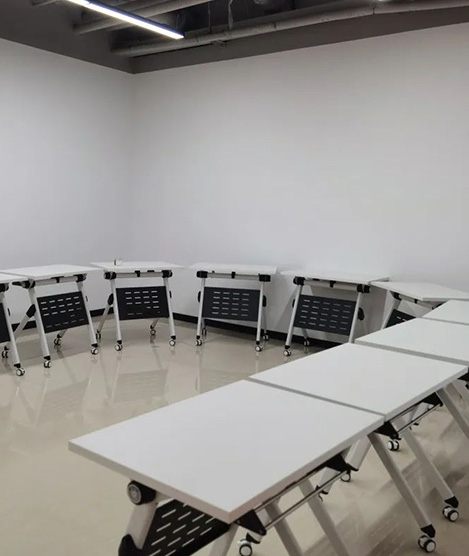
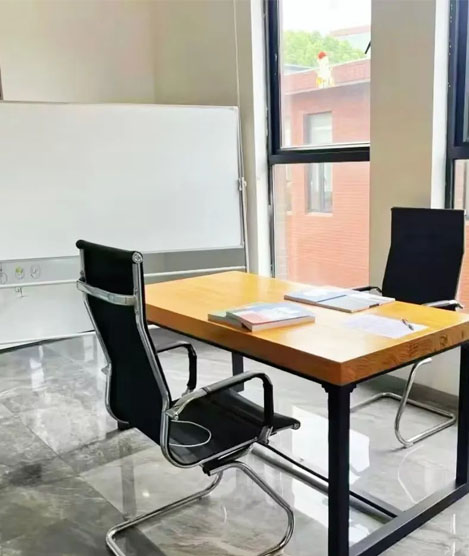
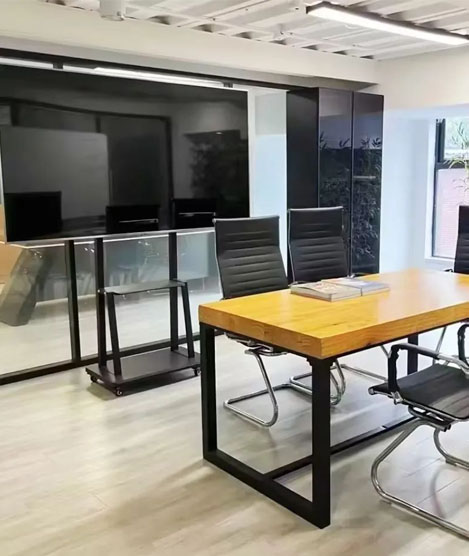
Teaching runs from Hanlin's own centres in Shanghai, Shenzhen, Chengdu and Hangzhou, and online for students elsewhere.




Talk to an advisor
Everything Hanlin does for Math Prize for Girls, in one conversation.
Entry, planning, coaching and the past papers. An advisor will tell you which of these a student actually needs, including when the answer is none of them.
Competition entry and planning
Which competitions suit this student, in what order, and by when - then we handle the registration, including the ones that can only be entered through a school or a centre.
Competition coaching
Taught by full-time subject tutors, on a course tier chosen by placement paper rather than by year group.
International curriculum tutoring
IB, AP, A-Level, IGCSE and the US high school curriculum, taught alongside school and timed around the exam calendar.
Competition past papers, free
A large library of past papers, mark schemes and syllabus breakdowns across every competition on this site. No charge and no enrolment.
Scan to add an advisor
Say which competition or course you are asking about. Replies in Chinese or English.
Or call +86 21 6352 6630FAQ
Math Prize for Girls, briefly answered.
What students and families ask before applying.
Who is eligible to enter?
Students who identify as female, in grade 11 or below as of early March in the contest year, who are resident in Canada or the United States when they apply, and who sat the previous year’s AMC 10 or AMC 12. Immediate family members of Advantage Testing employees may not enter.
Can a student living in China apply?
The published requirement is residence in Canada or the United States at the time of application. US permanent residents and citizens who are living elsewhere are advised by the organisers to contact them directly about what documentation would be needed. Confirm before planning around it.
How do I apply?
By completing the application form, which includes the applicant’s AMC 10 or AMC 12 score for that year. Applications close at the end of May for the contest the following October.
What is on the paper?
Twenty questions in two and a half hours, covering pre-college mathematics with trigonometry, algebra and geometry as the main subjects. Nothing reaches beyond the high-school syllabus and there is no calculus.
What is the second round?
The Math Prize Olympiad - four proof-based questions in four hours, sat at the student’s own school in late November or December. Students winning honourable mention or above are invited; recently that has been between 45 and 52 students.
How much prize money is there?
Around US$100,000 a year. First place takes US$50,000, second US$20,000, third US$10,000, fourth and fifth US$4,000 each and sixth to tenth US$2,000 each. No student may win more than US$100,000 across all the years she enters.
What do students who do not place receive?
Twenty-five trophies go to honourable mentions beyond the top ten, each carrying a US$500 scholarship toward a summer mathematics programme. Every entrant also receives gifts including a year of Wolfram|One and Wolfram|Alpha Pro.
Is there a prize for younger students?
Yes. The Youth Prize awards US$2,000 to the strongest entrant in grade 9 or below, shared where there is a tie.
Related
The contests around it.
The paper that qualifies for it, and other olympiad-route mathematics.
Math Prize for Girls enquiries
Check eligibility before you plan a year around it.
Entry requires an AMC score from the previous November and residence in Canada or the United States. Tell us the student’s situation and an advisor will say plainly whether this contest is open to them, and what else is if it is not.