
Competitions · Business and economics · MEC
MEC, the Model Entrepreneur Competition.
In the final, you do not just present to the judges. You spend three and a half minutes questioning the team you are up against, and then they get three and a half minutes on you.

What makes it different
Teams cross-examine each other.
Almost every business plan competition ends with judges asking the questions. MEC hands the questions to your competitors first, which changes what you have to prepare for.
You question the opposing team
In the first final room, each team gives a 30-second summary and then spends three and a half minutes questioning the other. Reading someone else’s business plan for weaknesses is scored work.
And they question you
The roles reverse immediately afterwards. A team that has only rehearsed friendly questions from a mentor is at a real disadvantage here.
Then eight minutes with the judges
The second room is 30 seconds from each team and then eight minutes of judges’ questions to both, which may cover anything at all in the business plan.
And a public vote counts
One of the four final components is a public vote on the promotional video. It is the only part of the competition decided by people who are not judges.
At a glance
What the competition is.
MEC was founded in 2014 by Venture For All, the global entrepreneurship centre at Columbia Business School, together with IEG. It runs in two editions - the Americas and Asia - and Columbia faculty review the preliminary business plans and select the finalists.
- Who can enter
- Students in grades 9 to 12
- Team
- Three to five students
- What you submit
- One original business plan per team. Plagiarism is prohibited
- Language
- English
- Registration
- Online, October to January
- First submission
- January
- Preliminary
- February. Columbia faculty review the plans and choose the finalists
- Final
- April or May, in person or online
- The final format
- Four parts - a public vote on the promotional video, the promotional video itself, a roadshow video, and a 20-minute presentation and question session
- Where the parts are scored
- The public vote is open; the two videos are scored in person; the presentation and questions are scored online
The business plan
Six sections, published in order.
MEC tells you exactly what the plan must contain, which removes most of the guesswork. The brief is to find a real pain point in daily life and propose a product or service against it with a workable business model.
| Section | What goes in it |
|---|---|
| One | The cover - team name, logo, member names, school and the advising teacher |
| Two | How you arrived at the idea, and why you want to start and run this particular venture |
| Three | The business problem that exists, or the opportunity you have identified |
| Four | The product or service you have designed |
| Five | Your customers - who they are, and which group most needs what you are offering |
| Six | The business value proposition |
The organisers state that diversity, equity and inclusion matter commercially - driving innovation, growth, cost saving and a varied working culture - and that the competition weighs it seriously. Build it into the plan rather than appending it.
What gets analysed
Five analyses, and two of them are numerical.
The published requirements go well beyond a pitch. Two of the five ask for actual financial modelling, which is where most school teams are weakest.
Market analysis
The market pain point, your solution to it, and the size of the market you are addressing.
Product analysis
Competitive analysis, a SWOT, and a brand positioning map placing you against the alternatives.
Sales plan
Target audience segmentation, the marketing plan, and how the product actually reaches customers through channels.
Financial planning
A projected profit and loss statement and a break-even analysis. Real numbers, not a revenue aspiration.
Risk assessment
Scenario analysis and sensitivity analysis - what happens to the model when the assumptions move.
Which tells you what to build first
A team with a good idea and no financial model will lose to a team with an ordinary idea and a defensible one. The modelling is the differentiator.
The final, minute by minute
Twenty minutes, two rooms.
The fourth part of the final is published to the half-minute. Rehearse against this clock, not a generic one.
| Room | Sequence |
|---|---|
| Room one 10 minutes | Team A summarises its plan in 30 seconds. Team B questions Team A for 3 minutes 30. Team B summarises in 30 seconds. Team A questions Team B for 3 minutes 30. One minute of judges’ feedback to both. |
| Room two 10 minutes | Team A summarises in 30 seconds. Team B summarises in 30 seconds. Eight minutes of judges’ questions to both teams, which may cover anything in either business plan. |
Note that you summarise your plan in 30 seconds twice, to two different rooms. That summary is worth writing and drilling as a piece in its own right.
The awards
Six places are paid.
Prize money comes from the organisers, and every one of the top six receives something. Note that the totals are the organiser’s stated maximum and do not reconcile with a team of three to five - see the note below.
| Place | What the components are | Stated maximum |
|---|---|---|
| First | A $1,500 venture fund for the team, plus a $600 IEG scholarship for each member | Up to $6,300 |
| Second | A $1,200 venture fund, plus a $600 scholarship each | Up to $6,000 |
| Third | An $800 venture fund, plus a $600 scholarship each | Up to $5,600 |
| Fourth | A $30 gift card and a $600 scholarship for each member | Up to $5,000 |
| Fifth | A $25 gift card and a $600 scholarship for each member | Up to $5,000 |
| Sixth | A $20 gift card and a $600 scholarship for each member | Up to $5,000 |
Do the arithmetic before you plan around these figures. First place at $6,300 less the $1,500 venture fund leaves $4,800, which is eight $600 scholarships - but the rules say a team is three to five students. On a team of five, first place would come to $4,500. Ask the organiser what the totals assume.
Preparation
How Hanlin prepares an MEC team.
The plan is written once and defended three times, in three different formats. Teams underestimate the second half.
Building the financial model
A projected P&L, a break-even analysis, scenario and sensitivity work. These are genuinely teachable, rarely taught at school, and the fastest way to look serious in front of Columbia faculty.
Practising the cross-examination
Preparing questions to put to another team is a different exercise from preparing answers. Working teams against each other in rehearsal is the only way to build it.
Drilling the thirty-second summary
It is delivered twice, in two rooms, and it is the first thing every judge hears. Thirty seconds is about seventy-five words - so it has to be written, not improvised.
And making the videos count
Two of the four final components are videos, and one of those is decided by public vote. That is a production task, not a business one, and it needs its own time.
Why Hanlin
Preparation for MEC at Hanlin is taught by full-time subject tutors, on a course tier chosen by placement paper rather than by year group.
Programme formats
Five ways this is taught.
Group size is the whole difference between these. It decides how much of the tutor's attention a student gets and how far the course can bend to them, so it is worth choosing rather than accepting.
| Format | Group size | What it suits |
|---|---|---|
| One-to-one | One student | Content, pace and emphasis set by what this student actually needs rather than by a syllabus. The only format that can be rebuilt mid-course. |
| Small group | Three to eight | Opens at three. Frequent discussion, and the tutor can slow down or move on according to what the group has absorbed. Most students chasing a higher award are taught in this one. |
| Class | Eight to twelve | Taught by the subject lead or a medal coach. Less back-and-forth, so it suits a student who will say when something is unclear. |
| Large class | Ten to twenty | For students in the middle of the placement range, and a way to try a competition before committing. Students often move to a small group or to one-to-one afterwards. |
| Past-paper class | No cap | Past papers worked through in sequence in the weeks before the sitting. Free to students already enrolled. |
Course length for MEC is set after a placement paper. The gap between where a student is and what the paper asks for is what the course has to close, and that gap is not the same for two students in the same year group.
How it runs
Six steps, four people on your side.
The same process for every student, so that nothing depends on one tutor remembering to do it.
 Step 1
Pre-course assessment
A placement paper before anything is booked, so the course tier is chosen on evidence rather than on a year group.
 Step 2
Tutor matching
A subject tutor is matched to the result, and their full background is provided before you agree to it.
 Step 3
Plan and group
A study group opens with four people on one student: the tutor, a planner, a supervisor and an academic manager.
 Step 4
Scheduled teaching
The teaching office sets the timetable around the competition date and school term, and teaching begins.
 Step 5
After-class reports
What was covered, and how the student handled it, reported after every lesson.
 Step 6
Homework follow-up
The teaching assistant and the form teacher both check that homework is done, which is where most preparation quietly fails.
Free resource pack
Case and submission pack
The same material our own MEC students work from. Scan the code, say what you need, and an advisor sends it.

Tell an advisor which competition and year group, and the material comes back the same day. Free, and you do not have to enrol in anything. If we do not already hold what you need, we will go and find it.
- PDFPast cases and question sets
- PDFA worked example of a full submission
- PDFEvent categories and the judging criteria, broken down
- PDFEntry checklist and the dates for the current cycle
Teaching team
Who would teach it.
Three of the twenty-two tutors on the published Hanlin roster - the ones whose subject this is.

Bai
Master's in social entrepreneurship from Hult International Business School in San Francisco and a business administration degree from the Universitat Autonoma de Barcelona, with an exchange at Texas A&M's Mays Business School. Accredited by the College Board, Cambridge International and the IBO, a certified intermediate economist, and a judge at the 2020 Diamond Challenge global final and the 2021 NEC China final.

Zhang
Master's in engineering management from NYU and a double degree in finance and supply-chain management from Syracuse. Nearly nine years overseas and in finance, including at a well-known venture firm - experience that feeds scenario-based teaching. College Board-accredited.

Jiang
Master's in business analytics from the Schulich School of Business, a finance and business economics degree from York University and a software engineering degree from the Harbin Institute of Technology. Years in North America, university teaching before returning, and long experience across the whole economics curriculum.
Student results
What Hanlin students got.
Taken from Hanlin's published record of student honours and rewritten in English. Figures are as the organisers reported them.
MEC
- 2025Reached the China final
- 2024Reached the global round
Earlier years
- 2020Reached the national final and took the best marketing award
- 2019Second nationally
The full record, across every subject and year, is on the student honours page.
Where it is taught
Hanlin learning centres.
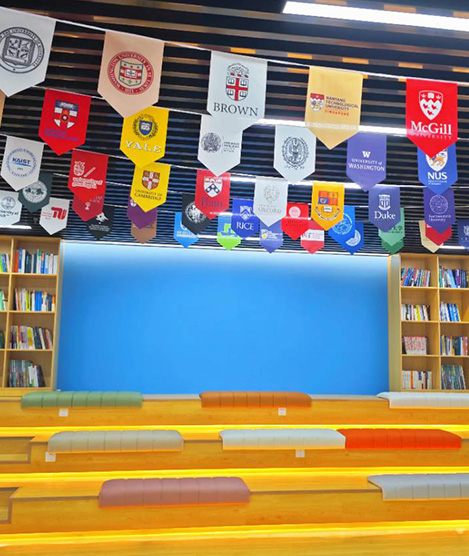
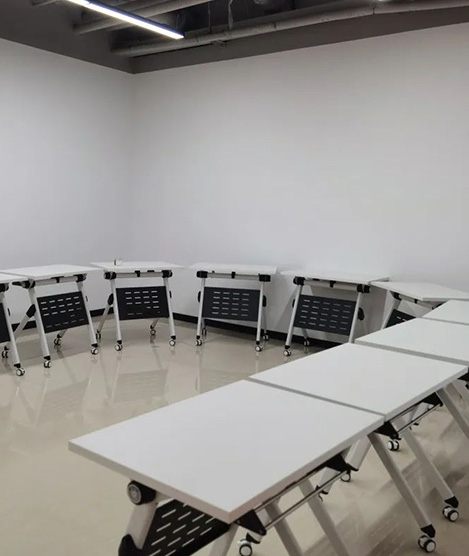
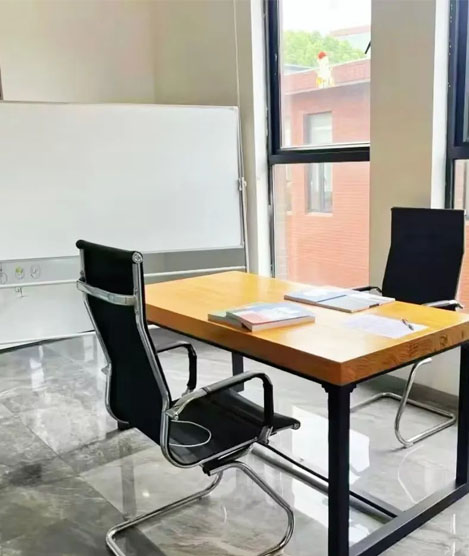
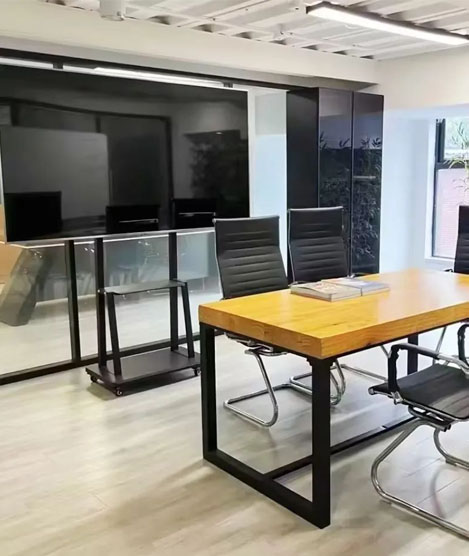
Teaching runs from Hanlin's own centres in Shanghai, Shenzhen, Chengdu and Hangzhou, and online for students elsewhere.



Talk to an advisor
Everything Hanlin does for MEC, in one conversation.
Entry, planning, coaching and the past papers. An advisor will tell you which of these a student actually needs, including when the answer is none of them.
Competition entry and planning
Which competitions suit this student, in what order, and by when - then we handle the registration, including the ones that can only be entered through a school or a centre.
Competition coaching
Taught by full-time subject tutors, on a course tier chosen by placement paper rather than by year group.
International curriculum tutoring
IB, AP, A-Level, IGCSE and the US high school curriculum, taught alongside school and timed around the exam calendar.
Competition past papers, free
A large library of past papers, mark schemes and syllabus breakdowns across every competition on this site. No charge and no enrolment.
Scan to add an advisor
Say which competition or course you are asking about. Replies in Chinese or English.
Or call +86 21 6352 6630FAQ
MEC, briefly answered.
What students and families ask before entering.
Who runs MEC?
Venture For All, the global entrepreneurship centre at Columbia Business School, together with IEG. It began in 2014 and runs in an Americas edition and an Asia edition.
Who can enter?
Students in grades 9 to 12, in teams of three to five. Each team submits one original business plan; plagiarism is prohibited.
How does the preliminary work?
Teams submit a business plan in January. Columbia faculty review the plans in February and select the teams that go through to the final.
What goes in the business plan?
Six sections: a cover with team name, logo, members, school and advising teacher; how you arrived at the idea and why; the business problem or opportunity; the product or service; the customer group; and the value proposition. The analysis should cover market, product, sales, financial planning and risk.
What financial work is expected?
A projected profit and loss statement and a break-even analysis, plus scenario and sensitivity analysis under risk assessment.
What happens in the final?
Four parts - a public vote on the promotional video, the promotional video scored in person, a roadshow video scored in person, and a 20-minute presentation and question session scored online.
What is the twenty-minute session like?
Two rooms of ten minutes. In the first, each team summarises its plan in 30 seconds and then questions the opposing team for three and a half minutes, with a minute of judges’ feedback at the end. In the second, each team summarises in 30 seconds and the judges then question both teams for eight minutes.
What are the prizes?
Six places are paid. First carries a $1,500 venture fund plus a $600 scholarship per member, second $1,200, third $800, and fourth to sixth a gift card plus the scholarship. The stated totals imply more members than the maximum team size, so confirm what they assume.
Does diversity and inclusion factor into judging?
The organisers say it does, on the basis that it drives innovation, growth, cost saving and a varied working culture. It should be part of the plan rather than an addition to it.
When does it run?
Online registration from October to January, first submission in January, the preliminary in February, and the final in April or May.
Related
Other business and entrepreneurship competitions.
What students enter alongside MEC.
MEC enquiries
The plan is the easy part.
Columbia faculty read the business plan, but the final is won in twenty minutes of questions - half of them from the team sitting opposite you. Tell us what the students want to build and an advisor will map the plan, the model and the rehearsal.