
Competitions · Research and innovation · MATE ROV
The MATE ROV Challenge.
Build an underwater robot, then send it down to count invasive crabs, track an iceberg and service a subsea observatory. The tasks are models of real oceanographic work, and they are scored in points.
At a glance
What the challenge is.
MATE ROV is an international underwater robotics challenge - ROV standing for remotely operated vehicle - founded in Monterey, California in 2001. Regional competitions run in around forty countries and regions each year, with the strongest teams invited to the international final in the United States.
- Since
- 2001
- Reach
- Regional competitions in about forty countries and regions. The programme has reached more than 25,000 students, 2,000 teachers and 2,000 formal and informal educational institutions
- Who can enter
- University and secondary students who want to build underwater robots
- Team
- Up to ten students
- Skill levels
- Five, from junior to senior - SCOUT, NAVIGATOR, RANGER, PIONEER and EXPLORER
- What a team builds
- An ROV, together with the sensors and tools its missions require
- The China station
- Held in late April in Shanghai, at a university swimming pool, covering the RANGER, PIONEER and EXPLORER levels
- For younger entrants
- A summer camp has opened the SCOUT and NAVIGATOR levels to students aged 10 to 15 - six days of guided work building a robot, ending in the China-station competition. No prior experience assumed
- Cost
- The China-station fee covers camp teaching, the group kit and tools, on-site guidance and the challenge certificate. Travel, accommodation and meals are not included, though the organisers offer a hotel option
- Context
- The challenge is aligned with the United Nations Decade of Ocean Science for Sustainable Development
The five levels
A ladder, not a set of age brackets.
The levels are progressive: each adds knowledge, skills, new kinds of mission task and new engineering and communications components to work with.
SCOUT and NAVIGATOR
The entry levels, opened in China through a summer camp for students aged 10 to 15. Zero experience is assumed - students build a working robot over six days with mentors.
RANGER
The first of the three levels contested at the China station, and the usual step up for a school team that has built before.
PIONEER and EXPLORER
The senior levels. EXPLORER is where university teams compete, and the missions demand full engineering and communications systems.
Designed to be climbed
The progression exists so that a student who starts at ten has somewhere to go at fifteen and again at eighteen. Few competitions on this site span that range with one skill set.
The missions
What the robot actually has to do.
Missions change each season and are modelled on real oceanographic and offshore work. One recent season ran three missions worth 280 points between them.
| Mission | Points | Tasks |
|---|---|---|
| Seabed 2030: a kaleidoscope of cold-water coral | 85 | Collect two basket stars and two coral species and return them poolside; build a scaled 3D model of the coral garden, either autonomously by photogrammetry or manually in CAD; and fly a transect along the reef shooting panoramic video |
| The SmartAtlantic alliance: better information, better decisions | 135 | Count invasive European green crabs in a sample and upload the data; track an iceberg drifting toward an oil platform, measuring five points around it and its keel depth, then use position, heading and draught to assign a threat level to four platform zones; test whale-safe fishing gear by simulating an acoustic release and recovering a lobster trap; remove a buoy anchor; and service a subsea observatory - restoring a biodiversity sensor, installing a new one and clearing marine growth from camera equipment |
| Wind-powered offshore oil platform | 60 | Install micropiles, and power the platform from a wind turbine |
Note what these are. Counting an invasive species, assessing iceberg risk to infrastructure and maintaining a seafloor observatory are all jobs that real ROVs do. The competition is a scale model of an industry.
What the missions teach
Engineering, but pointed at something.
The organisers frame the whole challenge around applying science and engineering to problems that exist, and the mission list follows from that.
Climate and clean energy
Offshore wind powering platforms, and the engineering questions that come with putting structures in the sea.
Ocean health
Monitoring coral, counting invasive species and maintaining the sensors that watch the seafloor over time.
And protecting what is already there
Whale-safe fishing gear, and preserving maritime history - both named among the purposes the challenge is built around.
Which is why it is scored in points
Each task carries a value, so a team decides which missions to attempt and in what order. That is engineering project management as much as robotics.
Preparation
How Hanlin supports a MATE ROV team.
An underwater robot is a harder build than a land robot, and the missions reward planning more than speed.
Building for the missions, not in general
The tasks are published in advance and carry point values. A robot designed around the specific manipulations required beats a more capable general-purpose one.
Deciding what to attempt
With 280 points spread unevenly across three missions, a team that attempts everything usually completes less than a team that chooses. That calculation is part of the preparation.
Dividing a team of ten
Frame and propulsion, manipulators, sensors and cameras, control software, and the pilot. Ten people is enough for real specialisation.
And practising in water
Buoyancy, tether management and piloting from a screen are all skills that cannot be developed dry. Pool time is the constraint most teams underestimate.
Why Hanlin
Preparation for MATE ROV at Hanlin is taught by full-time subject tutors, on a course tier chosen by placement paper rather than by year group.
Programme formats
Five ways this is taught.
Group size is the whole difference between these. It decides how much of the tutor's attention a student gets and how far the course can bend to them, so it is worth choosing rather than accepting.
| Format | Group size | What it suits |
|---|---|---|
| One-to-one | One student | Content, pace and emphasis set by what this student actually needs rather than by a syllabus. The only format that can be rebuilt mid-course. |
| Small group | Three to eight | Opens at three. Frequent discussion, and the tutor can slow down or move on according to what the group has absorbed. Most students chasing a higher award are taught in this one. |
| Class | Eight to twelve | Taught by the subject lead or a medal coach. Less back-and-forth, so it suits a student who will say when something is unclear. |
| Large class | Ten to twenty | For students in the middle of the placement range, and a way to try a competition before committing. Students often move to a small group or to one-to-one afterwards. |
| Past-paper class | No cap | Past papers worked through in sequence in the weeks before the sitting. Free to students already enrolled. |
Course length for MATE ROV is set after a placement paper. The gap between where a student is and what the paper asks for is what the course has to close, and that gap is not the same for two students in the same year group.
How it runs
Six steps, four people on your side.
The same process for every student, so that nothing depends on one tutor remembering to do it.
 Step 1
Pre-course assessment
A placement paper before anything is booked, so the course tier is chosen on evidence rather than on a year group.
 Step 2
Tutor matching
A subject tutor is matched to the result, and their full background is provided before you agree to it.
 Step 3
Plan and group
A study group opens with four people on one student: the tutor, a planner, a supervisor and an academic manager.
 Step 4
Scheduled teaching
The teaching office sets the timetable around the competition date and school term, and teaching begins.
 Step 5
After-class reports
What was covered, and how the student handled it, reported after every lesson.
 Step 6
Homework follow-up
The teaching assistant and the form teacher both check that homework is done, which is where most preparation quietly fails.
Free resource pack
Season and build pack
The same material our own MATE ROV students work from. Scan the code, say what you need, and an advisor sends it.

Tell an advisor which competition and year group, and the material comes back the same day. Free, and you do not have to enrol in anything. If we do not already hold what you need, we will go and find it.
- PDFPast season materials and game manuals
- PDFThe judging rubric, broken down by what earns each point
- DOCXBuild log and documentation checklist
- PDFEntry checklist and the dates for the current cycle
Teaching team
Who would teach it.
Three of the twenty-two tutors on the published Hanlin roster - the ones whose subject this is.

Dr An
Mathematics at Illinois Urbana-Champaign with highest honours and the Elizabeth R. Bennett scholarship, then a PhD in mathematics at Johns Hopkins on full funding with the Owen fellowship and the Joel Dean award for excellent teaching. Years of US university teaching, translating high-level mathematics into language students can use.

Yu
Master's in bioinformatics and computational biology from UT Dallas and a nutritional sciences degree from Wisconsin-Madison. Second author on an SCI-indexed paper from the Tanumihardjo vitamin-A laboratory, and formerly at ABS Global.

Tan
Master's in data science from the University of Sydney after a statistics degree at Simon Fraser University, graduating in the top 5% with repeated chancellor's honours; A-Levels at a Cambridge international school, and formerly a data analyst at Tencent. An AMC-accredited coach, a College Board-accredited AP teacher, and holder of a Math League excellent-teacher award.
Where it is taught
Hanlin learning centres.
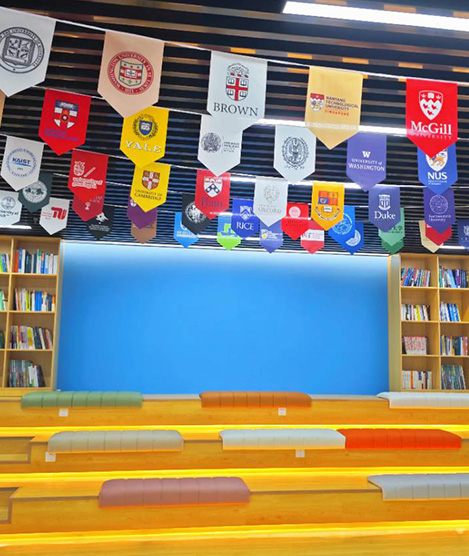
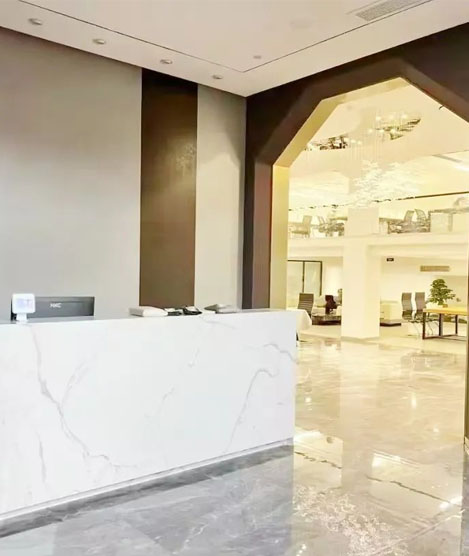
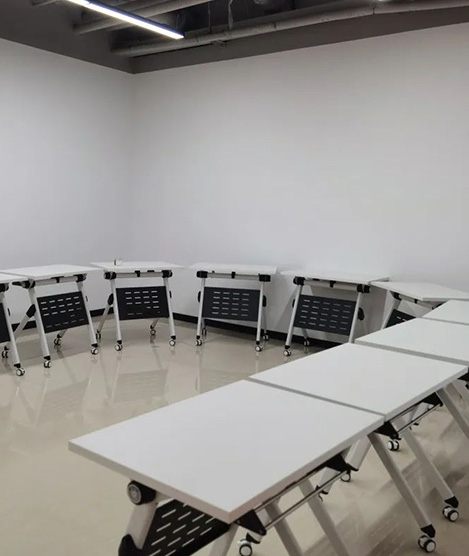
Teaching runs from Hanlin's own centres in Shanghai, Shenzhen, Chengdu and Hangzhou, and online for students elsewhere.

Talk to an advisor
Everything Hanlin does for MATE ROV, in one conversation.
Entry, planning, coaching and the past papers. An advisor will tell you which of these a student actually needs, including when the answer is none of them.
Competition entry and planning
Which competitions suit this student, in what order, and by when - then we handle the registration, including the ones that can only be entered through a school or a centre.
Competition coaching
Taught by full-time subject tutors, on a course tier chosen by placement paper rather than by year group.
International curriculum tutoring
IB, AP, A-Level, IGCSE and the US high school curriculum, taught alongside school and timed around the exam calendar.
Competition past papers, free
A large library of past papers, mark schemes and syllabus breakdowns across every competition on this site. No charge and no enrolment.
Scan to add an advisor
Say which competition or course you are asking about. Replies in Chinese or English.
Or call +86 21 6352 6630FAQ
MATE ROV, briefly answered.
What students, teachers and families ask before entering.
What is an ROV?
A remotely operated vehicle - an underwater robot controlled from the surface through a tether. Teams build their own, along with the sensors and tools their missions need.
Who can enter?
University and secondary students, in teams of up to ten, across five skill levels from SCOUT and NAVIGATOR through RANGER and PIONEER to EXPLORER.
Is there a route for a beginner?
Yes. A summer camp opens the SCOUT and NAVIGATOR levels to students aged 10 to 15 with no prior experience - six days of guided work building a robot, ending in the China-station competition.
What do the missions involve?
They are modelled on real oceanographic work. A recent season asked teams to collect coral specimens and build a 3D model of a coral garden, count invasive crabs, track an iceberg and assess its threat to oil platforms, test whale-safe fishing gear, remove a buoy anchor, service a subsea observatory, and install micropiles for a wind-powered platform.
How is it scored?
In points, with each mission carrying a value - 85, 135 and 60 in the season described, for 280 in total. Teams choose which tasks to attempt.
Where is the China station held?
In Shanghai in late April, at a university swimming pool, covering the RANGER, PIONEER and EXPLORER levels.
What does the fee cover?
Camp teaching, the group kit and tools, on-site guidance during the project and the challenge certificate. Travel, accommodation and meals are not included, though the organisers offer a hotel option.
How large is the competition?
Regional competitions run in about forty countries and regions, and the strongest teams are invited to the international final in the United States. The programme has reached more than 25,000 students.
What is it connected to?
The United Nations Decade of Ocean Science for Sustainable Development. The missions are drawn from climate, clean energy, ocean health and maritime heritage.
Related
Other robotics and engineering competitions.
What teams enter alongside MATE ROV.
MATE ROV enquiries
The tasks are the ones real ROVs are sent down to do.
Counting an invasive species, assessing iceberg risk and servicing a seafloor observatory - scored in points, in a swimming pool. Tell us the students’ ages and whether they have built before, and an advisor will pick the level.