
Competitions · Research and innovation · JSOC
JSOC, the Junior Science Olympiad of Canada.
Forty-five questions split exactly fifteen apiece across physics, chemistry and biology, on the Canadian grade 7 to 10 curriculum. Bilingual papers, and an award rate above sixty per cent.
What it is honest about
The organisers state what this is not.
The China-region material carries a regulatory statement, and it is worth reading before anything else because it corrects a common assumption.
No admission advantage in China
The organisers state that the activity is not linked to any bonus or advantage in admission to Chinese universities, secondary schools or primary schools, and that results are not a basis for admission or for merit evaluation at any Chinese school.
It is an interest activity and an exchange
Its stated position is as an extracurricular interest activity for secondary science enthusiasts, and as an international science teaching exchange.
And it was renamed for that reason
The Chinese name was changed under the education ministry’s rules on national academic activities for school students. The competition itself is unchanged.
Which is a good sign, not a bad one
A competition that tells you plainly what it does not do is more trustworthy about what it does. The reason to enter is the science, and the route it opens.
At a glance
What the olympiad is.
JSOC exists to connect what students learn to real problems, drawing chemistry, physics and biology together to build reasoning and problem-solving. ASDAN China has been the China-region host since 2020.
- Who can enter
- Students in grades 7 to 10
- Subjects
- Physics, chemistry and biology, in equal measure
- Stage one paper
- 45 multiple-choice questions - 15 physics, 15 chemistry and 15 biology - based on the Canadian grades 7 to 10 science curriculum
- Duration
- 90 minutes at stage one, 120 at stage two and 180 at stage three
- Format
- Individual
- Language
- Chinese and English. The China region supplies bilingual papers
- Award rate
- Above 60% in the China region
- Awards
- National gold, silver and bronze
- For the top twenty
- The chance to train alongside members of the Canadian national team reserve
- Where it leads
- The competition selects the six students who represent Canada at the International Junior Science Olympiad
What it is for
Six stated purposes, and one of them is unusual.
The organisers publish what the olympiad exists to do, and the list is more specific than most.
Classroom resources, and a national team
Curriculum-embedded online and laboratory resources for grades 7 to 10 to enrich science teaching, alongside selecting the six students who represent Canada internationally.
Theory and practical skill together
Giving strong intermediate science students the chance to develop and test both theoretical and practical laboratory skills across chemistry, physics and biology.
Collaboration, and a measure of the system
Global science collaboration for students aged 12 to 15, and evidence and feedback on how Canadian science education compares in relevance and quality with other participating countries.
And getting girls into STEM
Fostering girls’ interest in science, technology, engineering and mathematics is named among the olympiad’s own objectives - which few competitions state explicitly.
The three stages
Ninety minutes, then two hours, then three.
The papers lengthen sharply as the stages progress. The published dates do not run in calendar order, so confirm the current cycle before planning.
| Stage | Length | What is known |
|---|---|---|
| Stage one | 90 minutes | 45 multiple-choice questions, 15 each in physics, chemistry and biology, on the Canadian grades 7 to 10 science curriculum. Bilingual. National gold, silver and bronze awards |
| Stage two | 120 minutes | Held in September. Half again as long as stage one |
| Stage three | 180 minutes | Held in late December, and twice the length of stage one |
The published schedule lists stage one in May of the following year, after stages two and three. That cannot be the intended order, so confirm the current cycle’s dates with the organiser before registering.
JSOC and IJSO
This is the Canadian route to the junior science olympiad.
JSOC feeds the same international competition that China selects for through its own national process, which makes the comparison useful.
Six places on the Canadian team
JSOC selects the six students who represent Canada at the International Junior Science Olympiad - the same number China selects through its own route.
The same three subjects, equally weighted
Physics, chemistry and biology in equal parts is the defining feature of IJSO, and JSOC mirrors it from stage one.
But the China region is its own thing
For a student in China, JSOC is a bilingual multi-stage science paper with a high award rate - a good introduction to integrated science testing rather than a route onto a national team.
And it is good preparation for IJSO itself
A student who does well here has the profile IJSO’s China selection is looking for: comfortable across all three sciences rather than strong in one.
Preparation
How Hanlin prepares students for JSOC.
An equal split across three subjects is the whole challenge, and it is a different problem from a single-subject olympiad.
No subject can be neglected
Fifteen marks each in physics, chemistry and biology means a student strong in two and weak in one loses a third of the paper. Preparation is a sweep rather than a specialisation.
Working to the Canadian curriculum
Stage one questions are based on the Canadian grades 7 to 10 science curriculum. Working against that framework is more efficient than general revision.
Using the bilingual paper deliberately
The China region supplies papers in both languages. Reading the English alongside the Chinese builds the terminology that IJSO and every later olympiad assume.
And preparing for the longer stages
Ninety minutes, then two hours, then three. Stamina across a three-hour integrated science paper is worth practising before meeting it.
Why Hanlin
Preparation for JSOC at Hanlin is taught by full-time subject tutors, on a course tier chosen by placement paper rather than by year group.
Programme formats
Five ways this is taught.
Group size is the whole difference between these. It decides how much of the tutor's attention a student gets and how far the course can bend to them, so it is worth choosing rather than accepting.
| Format | Group size | What it suits |
|---|---|---|
| One-to-one | One student | Content, pace and emphasis set by what this student actually needs rather than by a syllabus. The only format that can be rebuilt mid-course. |
| Small group | Three to eight | Opens at three. Frequent discussion, and the tutor can slow down or move on according to what the group has absorbed. Most students chasing a higher award are taught in this one. |
| Class | Eight to twelve | Taught by the subject lead or a medal coach. Less back-and-forth, so it suits a student who will say when something is unclear. |
| Large class | Ten to twenty | For students in the middle of the placement range, and a way to try a competition before committing. Students often move to a small group or to one-to-one afterwards. |
| Past-paper class | No cap | Past papers worked through in sequence in the weeks before the sitting. Free to students already enrolled. |
Course length for JSOC is set after a placement paper. The gap between where a student is and what the paper asks for is what the course has to close, and that gap is not the same for two students in the same year group.
How it runs
Six steps, four people on your side.
The same process for every student, so that nothing depends on one tutor remembering to do it.
 Step 1
Pre-course assessment
A placement paper before anything is booked, so the course tier is chosen on evidence rather than on a year group.
 Step 2
Tutor matching
A subject tutor is matched to the result, and their full background is provided before you agree to it.
 Step 3
Plan and group
A study group opens with four people on one student: the tutor, a planner, a supervisor and an academic manager.
 Step 4
Scheduled teaching
The teaching office sets the timetable around the competition date and school term, and teaching begins.
 Step 5
After-class reports
What was covered, and how the student handled it, reported after every lesson.
 Step 6
Homework follow-up
The teaching assistant and the form teacher both check that homework is done, which is where most preparation quietly fails.
Free resource pack
Project and submission pack
The same material our own JSOC students work from. Scan the code, say what you need, and an advisor sends it.
Tell an advisor which competition and year group, and the material comes back the same day. Free, and you do not have to enrol in anything. If we do not already hold what you need, we will go and find it.
- PDFPast finalist project titles and abstracts
- PDFCategory definitions and the judging criteria, broken down
- DOCXA project timeline working back from the submission date
- PDFEntry checklist and the dates for the current cycle
Teaching team
Who would teach it.
Three of the twenty-two tutors on the published Hanlin roster - the ones whose subject this is.
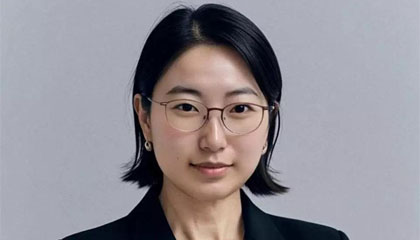
Dr An
Mathematics at Illinois Urbana-Champaign with highest honours and the Elizabeth R. Bennett scholarship, then a PhD in mathematics at Johns Hopkins on full funding with the Owen fellowship and the Joel Dean award for excellent teaching. Years of US university teaching, translating high-level mathematics into language students can use.

Yu
Master's in bioinformatics and computational biology from UT Dallas and a nutritional sciences degree from Wisconsin-Madison. Second author on an SCI-indexed paper from the Tanumihardjo vitamin-A laboratory, and formerly at ABS Global.

Tan
Master's in data science from the University of Sydney after a statistics degree at Simon Fraser University, graduating in the top 5% with repeated chancellor's honours; A-Levels at a Cambridge international school, and formerly a data analyst at Tencent. An AMC-accredited coach, a College Board-accredited AP teacher, and holder of a Math League excellent-teacher award.
Where it is taught
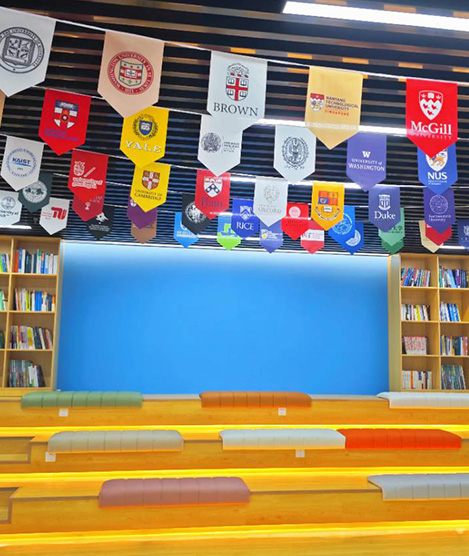
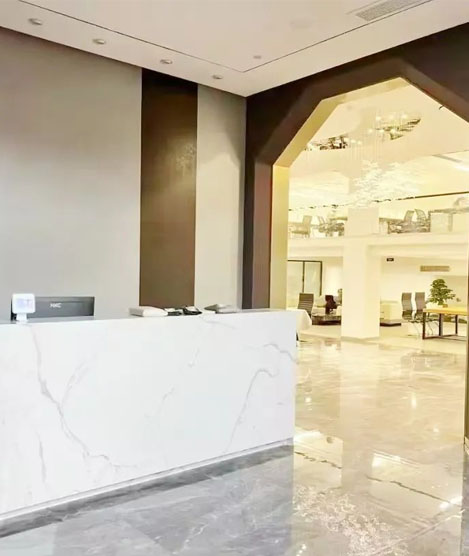
Hanlin learning centres.
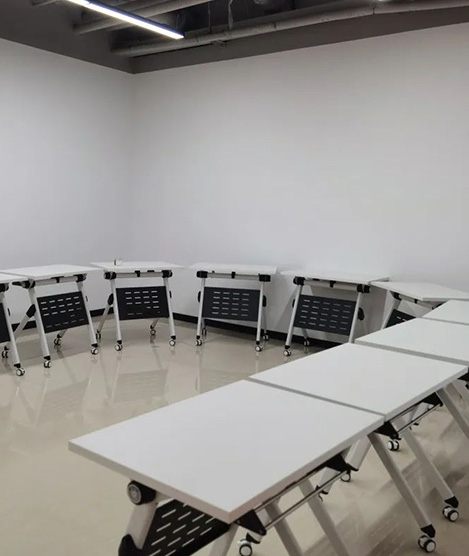
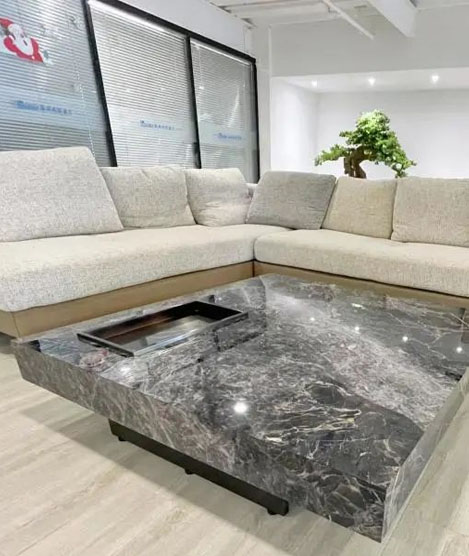
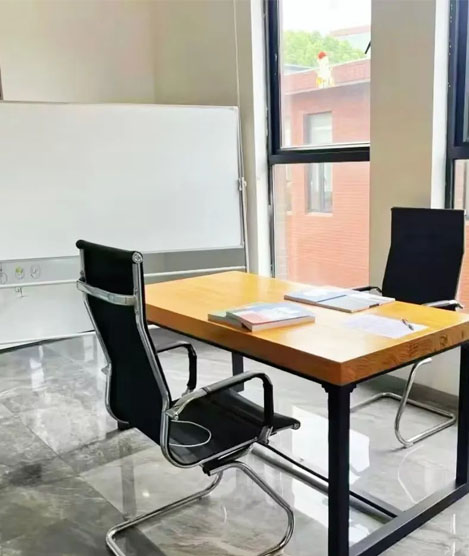
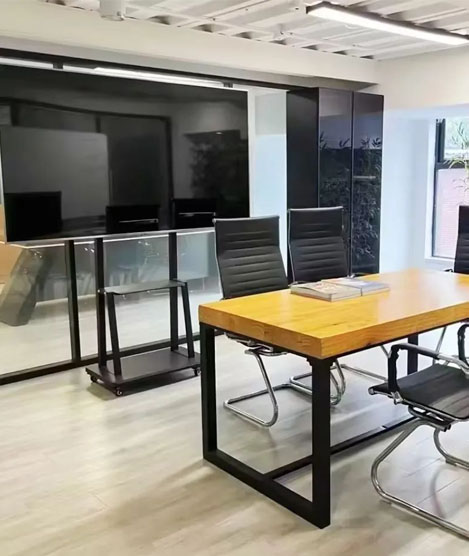
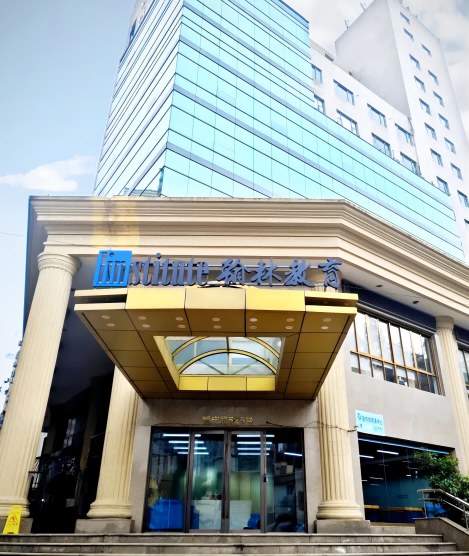
Teaching runs from Hanlin's own centres in Shanghai, Shenzhen, Chengdu and Hangzhou, and online for students elsewhere.
Talk to an advisor
Everything Hanlin does for JSOC, in one conversation.
Entry, planning, coaching and the past papers. An advisor will tell you which of these a student actually needs, including when the answer is none of them.
Competition entry and planning
Which competitions suit this student, in what order, and by when - then we handle the registration, including the ones that can only be entered through a school or a centre.
Competition coaching
Taught by full-time subject tutors, on a course tier chosen by placement paper rather than by year group.
International curriculum tutoring
IB, AP, A-Level, IGCSE and the US high school curriculum, taught alongside school and timed around the exam calendar.
Competition past papers, free
A large library of past papers, mark schemes and syllabus breakdowns across every competition on this site. No charge and no enrolment.
Scan to add an advisor
Say which competition or course you are asking about. Replies in Chinese or English.
Or call +86 21 6352 6630FAQ
JSOC, briefly answered.
What students and families ask before entering.
Does this help with school admission in China?
No, and the organisers say so directly. The activity is not linked to any admission bonus at Chinese universities, secondary schools or primary schools, and results are not a basis for admission or merit evaluation. It is positioned as an extracurricular interest activity and an international teaching exchange.
Who can enter?
Students in grades 7 to 10.
What is the stage one paper?
Forty-five multiple-choice questions in ninety minutes - fifteen physics, fifteen chemistry and fifteen biology - based on the Canadian grades 7 to 10 science curriculum.
What language is it in?
Chinese and English. The China region supplies bilingual papers.
How likely is an award?
The China-region award rate is above 60%, across national gold, silver and bronze.
What happens if I finish in the top twenty?
The top twenty competitors have the opportunity to train alongside members of the Canadian national team reserve.
How long are the later stages?
Stage two runs 120 minutes and stage three 180 minutes, against 90 at stage one.
When do the stages run?
Stage two in September and stage three in late December. The published schedule lists stage one the following May, which cannot be the intended order - confirm the current cycle with the organiser.
What does the olympiad lead to?
It selects the six students who represent Canada at the International Junior Science Olympiad.
Why was it renamed?
The Chinese name was changed to comply with the education ministry’s rules on national academic activities for school students. The competition itself is unchanged.
Related
Other science competitions.
What students enter alongside JSOC.
JSOC enquiries
Fifteen marks each. You cannot skip a subject.
Physics, chemistry and biology in exactly equal parts, on a bilingual paper with a high award rate - a good first integrated science competition. Tell us the year group and an advisor will map the stages.