
Competitions · Humanities and writing · John Locke Essay Competition
The John Locke Essay Competition.
Two thousand words, one question, ten subjects to choose from - and a filename rule that gets essays rejected before anyone reads them. Free to enter if you submit on time.

Read this first
Four rules that reject essays before they are read.
The John Locke Institute publishes its submission requirements precisely and applies them literally. Each of these has ended an otherwise good entry.
The filename is a rule, not a suggestion
The PDF must be named FirstName-LastName-Category-QuestionNumber.pdf. The organisers state that essays not in this format will be rejected. Get it exactly right, including the hyphens.
No footnotes at all
Candidates should not add footnotes. Endnotes and a clearly titled bibliography are permitted. This catches students trained to footnote everything.
You need an academic referee
Every candidate provides the email address of an academic referee familiar with their written work - ideally a school teacher, or another responsible adult unrelated to them. The Institute emails that person to verify the essay is the candidate’s own.
And you must register before you can submit
Registration closes two months before the submission deadline. A student who misses registration cannot submit at all, however finished the essay is.
At a glance
What the competition is.
The John Locke Institute is an independent educational organisation in Oxford, named after the seventeenth-century philosopher, which works with academics from Oxford, Princeton, Brown, Buckingham and elsewhere. The competition asks students to show independent thought, depth of knowledge, clear reasoning, critical analysis and a persuasive style.
- Who can enter
- Students from any country
- Senior category
- Under 19 on the submission deadline
- Junior category
- Under 15 on the submission deadline
- Cost
- Free, if you submit by the deadline. Extensions are available and are charged - the amounts are not published
- Length
- 2,000 words maximum, excluding diagrams, data tables, endnotes, bibliography and the author’s declaration
- One question only
- One essay answering one question from one category
- Format
- PDF, named FirstName-LastName-Category-QuestionNumber.pdf
- Referee
- The email address of an academic referee, who is contacted to verify authorship
- Registration
- Opens in early February and closes at the end of March
- Submission
- Opens at the start of April and closes at the end of May
- Extensions
- Seven days or twenty-one days beyond the deadline
- Shortlist
- Announced in early July
- The conference
- Three days in early October, with the awards dinner on the middle day
The ten subjects
Three questions in each, and three categories are new.
The questions change every year and are published on the Institute’s own site. What follows is the shape of each category - read the current questions there before choosing.
| Subject | The kind of question it asks |
|---|---|
| Philosophy | Moral reasoning and its limits - motive versus outcome, what philosophy is actually for, and questions most people would rather not examine |
| Politics | Rights, legitimacy and the health of democratic institutions, usually framed as a claim you have to accept or reject |
| Economics | Concrete mechanisms and their consequences - payment systems, pricing practices, and how particular fortunes are actually made |
| History | Counterfactuals, and the testing of received sayings and reputations against the record |
| Law | Sentencing, criminal responsibility, and whether long-standing legal institutions still do what they were built to do |
| Psychology | Why people hold the attitudes they do, and whether observed changes in diagnosis or belief reflect the world or the measurement |
| Theology | Competing explanations of religious experience, and the relationship between belief and measurable social outcomes |
| Public Policy - new | Trade-offs across long horizons, unintended consequences, and where compulsion is justified in an emergency |
| International Relations - new | Aid, trade and the effects of one country’s policy on another’s population |
| Science & Technology - new | The conditions science needs, what is worth funding, and how we should relate to the systems we build |
Note the three new categories. A category in its first years typically draws fewer entries than Philosophy or Economics, which is worth weighing if the student has a genuine interest in one of them.
The year
February to October.
The gap between the deadline and the conference is four months, so this is a commitment that spans two school years.
Registration opens
Registration is separate from submission and must be completed first.
Registration closes
After this you cannot submit, whatever state the essay is in. This is the deadline students most often miss, because it is two months before the essay is due.
The submission window
Submission opens at the start of April. The essay is due at the end of May, and submitting inside this window is free.
The paid extensions
Seven days or twenty-one days beyond the deadline. Both are charged and the amounts are not published - ask the Institute before relying on one.
Shortlisted authors notified
Roughly five weeks after the deadline.
The academic conference and awards dinner
Three days, with the dinner on the middle day.
How it is judged
Three criteria, and an anti-cheating system.
The published criteria are short and all three are about argument rather than prose style.
Depth of understanding
How well the essay understands the knowledge and the relevant material. Reading widely and showing it is doing real work here.
Use of evidence
The ability to cite evidence that actually supports the position taken. Assertion without support is what separates most entries from the shortlist.
Quality of the argument
The quality of the case being made. The Institute also states that its scoring system is proprietary and uses various means to detect cheating.
Preparation
How Hanlin prepares a John Locke essay.
Two thousand words on a genuinely hard question is a small target, and most of the work happens before any writing.
Choosing the question honestly
One question, one category, and the choice cannot be hedged. The right question is usually the one the student already has an argument about, not the one that sounds most impressive.
Reading enough to have something to cite
Depth of understanding and use of evidence are two of the three criteria. An essay built on reading reads completely differently from one built on opinion.
Writing to 2,000 words
Excluding endnotes and bibliography. Drafting long and cutting produces a much tighter argument than writing to length first time.
And arranging the referee early
A teacher who knows the student’s written work has to be willing to confirm authorship by email. Asking them in April is easier than asking them in the last week of May.
Why Hanlin
Hanlin has been entering students for John Locke Essay Competition for years, and publishes what they got. The record is further down this page.
Programme formats
Five ways this is taught.
Group size is the whole difference between these. It decides how much of the tutor's attention a student gets and how far the course can bend to them, so it is worth choosing rather than accepting.
| Format | Group size | What it suits |
|---|---|---|
| One-to-one | One student | Content, pace and emphasis set by what this student actually needs rather than by a syllabus. The only format that can be rebuilt mid-course. |
| Small group | Three to eight | Opens at three. Frequent discussion, and the tutor can slow down or move on according to what the group has absorbed. Most students chasing a higher award are taught in this one. |
| Class | Eight to twelve | Taught by the subject lead or a medal coach. Less back-and-forth, so it suits a student who will say when something is unclear. |
| Large class | Ten to twenty | For students in the middle of the placement range, and a way to try a competition before committing. Students often move to a small group or to one-to-one afterwards. |
| Past-paper class | No cap | Past papers worked through in sequence in the weeks before the sitting. Free to students already enrolled. |
Course length for John Locke Essay Competition is set after a placement paper. The gap between where a student is and what the paper asks for is what the course has to close, and that gap is not the same for two students in the same year group.
How it runs
Six steps, four people on your side.
The same process for every student, so that nothing depends on one tutor remembering to do it.
 Step 1
Pre-course assessment
A placement paper before anything is booked, so the course tier is chosen on evidence rather than on a year group.
 Step 2
Tutor matching
A subject tutor is matched to the result, and their full background is provided before you agree to it.
 Step 3
Plan and group
A study group opens with four people on one student: the tutor, a planner, a supervisor and an academic manager.
 Step 4
Scheduled teaching
The teaching office sets the timetable around the competition date and school term, and teaching begins.
 Step 5
After-class reports
What was covered, and how the student handled it, reported after every lesson.
 Step 6
Homework follow-up
The teaching assistant and the form teacher both check that homework is done, which is where most preparation quietly fails.
Free resource pack
John Locke past questions and writing pack
The same material our own John Locke Essay Competition students work from. Scan the code, say what you need, and an advisor sends it.

Tell an advisor which competition and year group, and the material comes back the same day. Free, and you do not have to enrol in anything. If we do not already hold what you need, we will go and find it.
- PDFEvery past question, across all seven subject categories
- PDFWinning and shortlisted essays, to calibrate the standard
- PDFThe 2,000-word limit, the referencing rules, and what gets entries rejected
- PDFSubmission checklist and the dates for the current cycle
Teaching team
Who would teach it.
Three of the twenty-two tutors on the published Hanlin roster - the ones whose subject this is.

Lu
Master's in education from the University of Pennsylvania and a double major in psychology and philosophy at Mount Holyoke. Cross-cultural teaching experience across China and the US, with research work in child and adolescent development, cognition, and international students' identity.

Yang
Educated at American Heritage School, then English literature and philosophy at the University of British Columbia and a master's in language education at Toronto. Eleven years in North America, with a close working knowledge of the international curricula and overseas admissions.

Zhang
Master's in cognitive science at UC San Diego on full scholarship, after double honours in neurobiology and behaviour and in cognitive science at UC Davis. Ten years overseas, a perfect TOEFL speaking score, and named an outstanding education scholar at UCSD.
Student results
What Hanlin students got.
Taken from Hanlin's published record of student honours and rewritten in English. Figures are as the organisers reported them.
Shortlisted in 2026
One line from Hanlin's published John Locke Essay Competition record. The rest of it is below.
John Locke Essay Competition
- 202657 students shortlisted, a 17.5% shortlisting rate
- 202586 students shortlisted
- 202495 shortlisted and 45 global prizes
Earlier years
- 2023108 students shortlisted
- 202245 shortlisted and 12 prizes, including 10 High Commendations
- 202113 shortlisted and 6 High Commendations
The full record, across every subject and year, is on the student honours page.
Where it is taught
Hanlin learning centres.
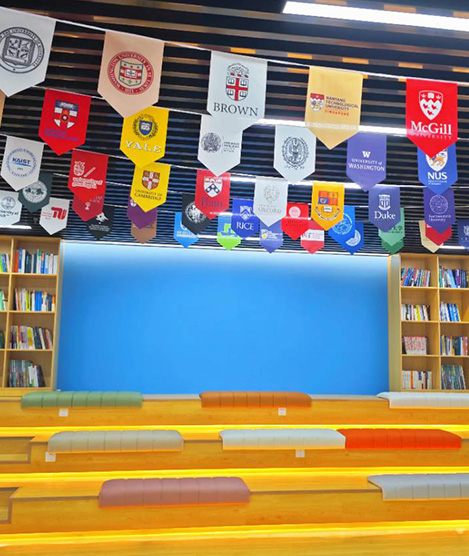
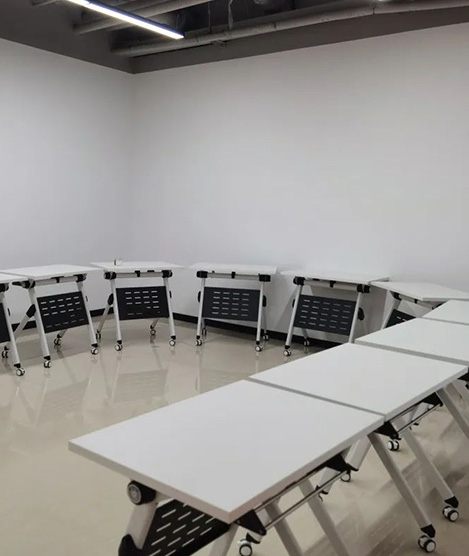
Teaching runs from Hanlin's own centres in Shanghai, Shenzhen, Chengdu and Hangzhou, and online for students elsewhere.





Talk to an advisor
Everything Hanlin does for John Locke Essay Competition, in one conversation.
Entry, planning, coaching and the past papers. An advisor will tell you which of these a student actually needs, including when the answer is none of them.
Competition entry and planning
Which competitions suit this student, in what order, and by when - then we handle the registration, including the ones that can only be entered through a school or a centre.
Competition coaching
Taught by full-time subject tutors, on a course tier chosen by placement paper rather than by year group.
International curriculum tutoring
IB, AP, A-Level, IGCSE and the US high school curriculum, taught alongside school and timed around the exam calendar.
Competition past papers, free
A large library of past papers, mark schemes and syllabus breakdowns across every competition on this site. No charge and no enrolment.
Scan to add an advisor
Say which competition or course you are asking about. Replies in Chinese or English.
Or call +86 21 6352 6630FAQ
John Locke, briefly answered.
What students and families ask before entering.
Who can enter?
Students from any country. The senior category is for entrants under 19 on the submission deadline, and the junior category for entrants under 15.
Does it cost anything?
No, if you submit by the deadline. The organisers advise submitting early to ensure the submission is free, which means the seven-day and twenty-one-day extensions are charged. The amounts are not published, so ask before relying on one.
How long can the essay be?
2,000 words maximum, excluding diagrams, data tables, endnotes, bibliography and the author’s declaration.
How many questions can I answer?
One. A single essay answering one question from one category.
What subjects are available?
Philosophy, Politics, Economics, History, Law, Psychology, Theology, and three newer categories - Public Policy, International Relations, and Science and Technology. Each carries three questions, published on the Institute’s site and changed annually.
Can I use footnotes?
No. Candidates should not add footnotes. Endnotes and a clearly titled bibliography are permitted.
How should the file be named?
FirstName-LastName-Category-QuestionNumber.pdf - so a candidate named Alexander Popham answering the second Psychology question submits Alexander-Popham-Psychology-2.pdf. Essays not in this format are rejected.
What is the referee for?
Every candidate gives the email address of an academic referee familiar with their written work - ideally a school teacher, or another responsible adult unrelated to them. The Institute emails that person to verify the essay is the candidate’s original work.
What are the deadlines?
Registration opens in early February and closes at the end of March. Submission opens at the start of April and closes at the end of May. You must register before you can submit.
How is it judged?
On depth of understanding of the knowledge and relevant material, the ability to cite evidence supporting the argument, and the quality of the argument itself. The Institute states that its scoring system is proprietary and includes means of detecting cheating.
What happens if I am shortlisted?
Shortlisted authors are notified in early July and invited to the academic conference in early October, with the awards dinner on the middle day of three.
Related
Other writing and humanities competitions.
What students enter alongside John Locke.
John Locke enquiries
Register in March, or the essay does not count.
The registration deadline falls two months before the essay is due, and it is the one students miss. Tell us which subject interests the student and an advisor will help choose the question and plan the reading - starting with the calendar.