
Competitions · Physics · IYPT
IYPT, the International Young Physicists’ Tournament.
Known as the Physics World Cup, and unlike anything else here: teams argue physics against each other in front of a jury. The problems are published a year in advance and have no fixed answers - what is being judged is how well you defend a solution and attack someone else’s.

At a glance
What the tournament is.
IYPT stands with the International Physics Olympiad and the International Conference of Young Scientists as one of the three senior international physics events for school students. It is the only one contested as a debate.
- What it is
- A team tournament in which teams present, attack and assess physics solutions in front of a jury. Each round is called a Physics Fight
- Who can enter
- Secondary students who are citizens or permanent residents of the country they represent
- Team size
- Three to five students, with one or two team leaders. One leader acts as the team’s official representative in the Physics Fights
- One team per country
- Each invited country sends a single team. There is no second entry
- Team changes
- None. The composition is fixed once the tournament begins
- The problems
- Published a year in advance, open-ended, with no fixed answers
- Language
- English, which for most participants is a second language
- Format
- In person, across roughly a week
- When
- Early July, with registration closing in late May
- What it demands
- Theoretical physics, experimental work, and the ability to argue a case under pressure
The three roles
Every team plays all three.
A Physics Fight runs in three stages, and in each one a team takes a different role. Teams rotate, so preparation cannot specialise.
Reporter
Presents the essence of a solution, drawing attention to the main physical ideas and conclusions. This is the role that carries the most weight and the most risk.
Opponent
Questions the Reporter and criticises the report, identifying inaccuracies and errors and weighing the solution’s strengths against its weaknesses. Crucially, the Opponent must not present their own solution instead.
Reviewer
Gives a brief assessment of both the Reporter’s and the Opponent’s performances. In a four-team fight a fourth team observes without participating.
Scoring
The role you play decides what your marks are worth.
Jury members each score from 1 to 10. The highest and lowest are averaged together to count as a single score, and the result is multiplied by a coefficient set by role.
| Role | Coefficient | What that means |
|---|---|---|
| Reporter | Up to 3.0 | Worth three times a Reviewer’s marks - and the only coefficient that can be reduced |
| Opponent | 2.0 | Twice a Reviewer’s. Attacking well is worth almost as much as presenting well |
| Reviewer | 1.0 | The baseline. Brief, but still scored |
A team’s score in a fight is the sum of its weighted averages. Across the tournament, the total of those sums decides who reaches the final.
The rejection mechanic
You can refuse a problem. It costs you.
This is the strategic heart of IYPT, and it is worth understanding before a team decides which problems to prepare.
Five free refusals
Across the selective fights, a Reporter may reject five different problems without any penalty. That is the budget a team has for problems it has not prepared.
Then the coefficient falls
Every rejection after the fifth reduces the Reporter’s coefficient by 0.2 - and the reduction carries forward into later fights. The cost compounds rather than resetting.
Eight is the hard ceiling
A team may reject at most eight different problems across the whole tournament. Beyond that there is no option to refuse at all.
Which shapes how a team prepares
With the problem set published a year ahead and only five free refusals, a team cannot prepare a handful and hope. Breadth of preparation is the direct consequence of this rule.
Speaking limits
No team can be carried by one student.
IYPT enforces participation through hard limits on who may speak, which is why a team of three to five must genuinely all be able to perform.
One speaker per role
Only one team member speaks as Reporter, Opponent or Reviewer in a given fight. Others may add brief comments or help with a demonstration, but not take over.
Twice per fight, at most
No team member may speak more than twice during a single selective Physics Fight. The roles have to be distributed.
Three times as Reporter, in total
Across all five selective fights, no individual may report more than three times. A team with one strong presenter and four quiet members will run out of reporters.
Once each in the final
In the final Physics Fight, any team member may speak only once. The final is explicitly designed so that the whole team performs.
The tournament
Five selective fights, then a final.
The structure is closest to a football group stage followed by a decider, and it includes one deliberate fairness provision.
Groups drawn by lot
Teams are drawn into groups of three - or four where the numbers do not divide - and each group holds a fight in parallel. Groups are redrawn for each subsequent round.
Ranked on total points
Every team plays five selective fights. The three highest totals across those five reach the final, with fights won used to separate teams on equal totals.
A fourth place for a team that won everything
If a team won all five of its fights but still misses the final on total points, the best such team joins as a fourth finalist. Winning consistently against stronger groups is not penalised.
The last fight is chosen, not challenged
In the final selective fight the challenge process is dropped and each team picks its own problem, submitted within fifteen minutes of the previous fight ending. Ties in choice go to the higher-scoring team.
What it develops
Why the format is the point.
IYPT is not a harder physics exam. It trains a different set of things, and those are what a reader should weigh when deciding whether it fits.
Research, not problem sets
Because the problems are open-ended with no fixed answer, working on them is close to genuine research: deciding what to investigate, designing experiments, and accepting that a result may be partial.
Arguing under pressure
A team must present convincingly, then respond spontaneously to another team’s report and prepare a critique in minutes. That is a rhetorical skill as much as a physical one.
Real division of labour
The speaking limits force a team to distribute work and trust each other. Organising a group over a year of preparation is itself part of what is being assessed.
And scientific English
The tournament runs in English, a second language for most participants. Technical vocabulary and the ability to defend an argument in it are trained by necessity.
Preparation
How Hanlin prepares an IYPT team.
A year of lead time and a published problem set makes IYPT the most planned competition on this site - and the one where preparation looks least like studying.
Working the published problems
The set is out a year ahead. A team works through them experimentally and theoretically, building a defensible position on as many as it can rather than a perfect answer to a few.
Preparing to oppose, not only to report
The Opponent coefficient is 2.0, two thirds of a Reporter’s. Teams practise attacking a solution they did not write, which is a distinct skill and frequently neglected.
Rotating every member through every role
The speaking limits guarantee that all three roles will be played by different people. Rehearsal rotates deliberately so no member is untested in any role.
Presenting in English, to a jury
Twelve minutes of report followed by open questioning is a performance. Teams rehearse it as one, with someone playing the jury.
Why Hanlin
Preparation for IYPT at Hanlin is taught by full-time subject tutors, on a course tier chosen by placement paper rather than by year group.
Programme formats
Five ways this is taught.
Group size is the whole difference between these. It decides how much of the tutor's attention a student gets and how far the course can bend to them, so it is worth choosing rather than accepting.
| Format | Group size | What it suits |
|---|---|---|
| One-to-one | One student | Content, pace and emphasis set by what this student actually needs rather than by a syllabus. The only format that can be rebuilt mid-course. |
| Small group | Three to eight | Opens at three. Frequent discussion, and the tutor can slow down or move on according to what the group has absorbed. Most students chasing a higher award are taught in this one. |
| Class | Eight to twelve | Taught by the subject lead or a medal coach. Less back-and-forth, so it suits a student who will say when something is unclear. |
| Large class | Ten to twenty | For students in the middle of the placement range, and a way to try a competition before committing. Students often move to a small group or to one-to-one afterwards. |
| Past-paper class | No cap | Past papers worked through in sequence in the weeks before the sitting. Free to students already enrolled. |
Course length for IYPT is set after a placement paper. The gap between where a student is and what the paper asks for is what the course has to close, and that gap is not the same for two students in the same year group.
How it runs
Six steps, four people on your side.
The same process for every student, so that nothing depends on one tutor remembering to do it.
 Step 1
Pre-course assessment
A placement paper before anything is booked, so the course tier is chosen on evidence rather than on a year group.
 Step 2
Tutor matching
A subject tutor is matched to the result, and their full background is provided before you agree to it.
 Step 3
Plan and group
A study group opens with four people on one student: the tutor, a planner, a supervisor and an academic manager.
 Step 4
Scheduled teaching
The teaching office sets the timetable around the competition date and school term, and teaching begins.
 Step 5
After-class reports
What was covered, and how the student handled it, reported after every lesson.
 Step 6
Homework follow-up
The teaching assistant and the form teacher both check that homework is done, which is where most preparation quietly fails.
Free resource pack
Past papers and preparation pack
The same material our own IYPT students work from. Scan the code, say what you need, and an advisor sends it.

Tell an advisor which competition and year group, and the material comes back the same day. Free, and you do not have to enrol in anything. If we do not already hold what you need, we will go and find it.
- PDFPast papers, every year the organiser has released
- PDFWorked solutions, where the organiser publishes them
- PDFThe syllabus on one page - every topic, and how heavily it is examined
- PDFEntry checklist and the dates for the current cycle
Teaching team
Who would teach it.
Three of the twenty-two tutors on the published Hanlin roster - the ones whose subject this is.
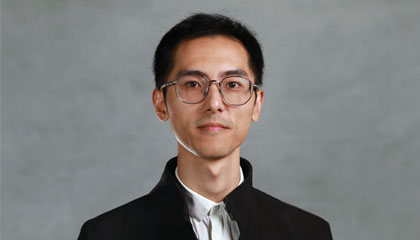
Huang
A College Board-accredited AP teacher. Read mathematics and physics in Southeast University's honours programme, took a master's in aerospace engineering at George Washington University under the lead of NASA's Sigma programme, and a second master's in robotics and AI at Melbourne. Five years teaching international curricula and competitions.
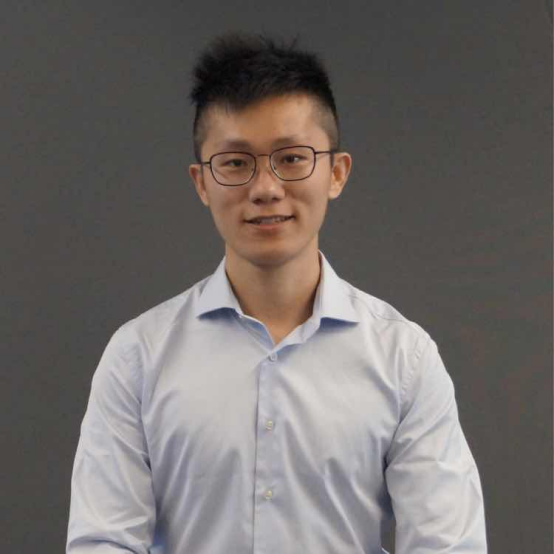
Ding
Master's in physics from Brown University after the physics honours programme at Central China Normal University, with a Berkeley BISP exchange. Two years as a graduate teaching assistant, then teaching alongside Professor Enrico Pajer (cosmology) and Professor Anastasia Romanou (exoplanets). College Board-accredited.

Lu
Master's in astrophysics from UCL after an astronomy degree at Xiamen University. In international education since 2019, teaching for logical structure and framework first - efficient methods and flexible problem-solving over rote coverage.
Where it is taught
Hanlin learning centres.
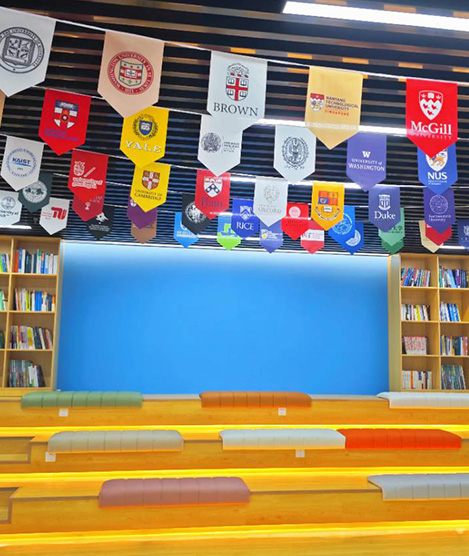
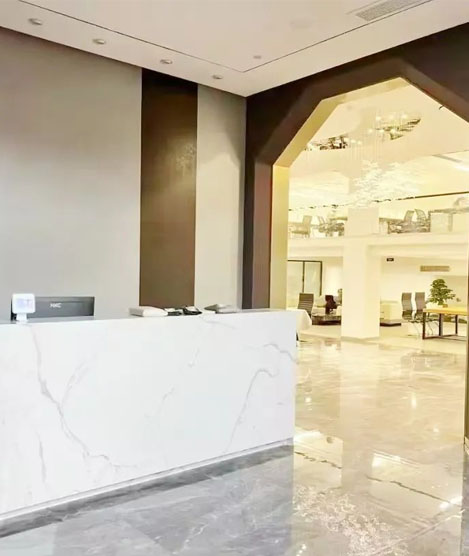
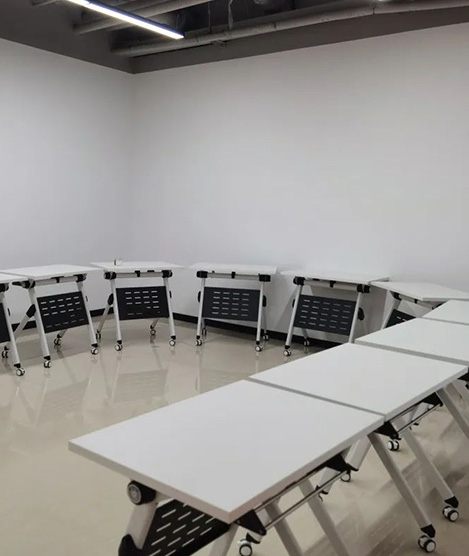
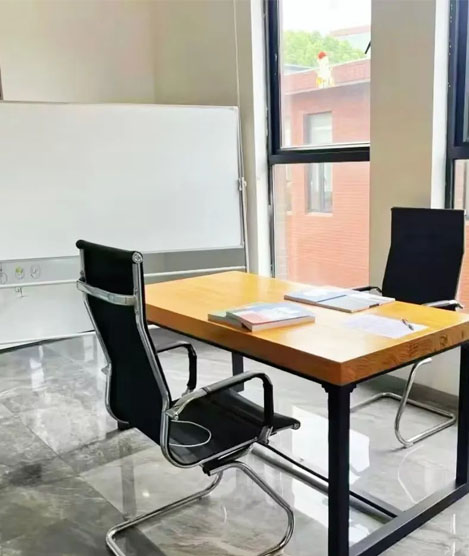
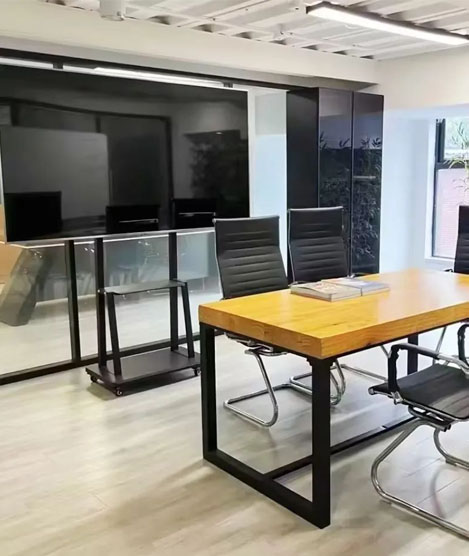
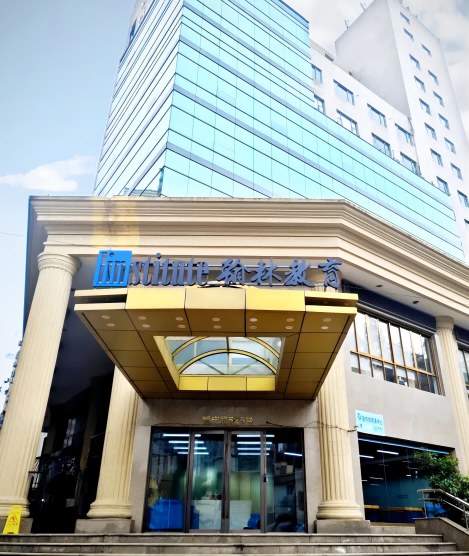
Teaching runs from Hanlin's own centres in Shanghai, Shenzhen, Chengdu and Hangzhou, and online for students elsewhere.

Talk to an advisor
Everything Hanlin does for IYPT, in one conversation.
Entry, planning, coaching and the past papers. An advisor will tell you which of these a student actually needs, including when the answer is none of them.
Competition entry and planning
Which competitions suit this student, in what order, and by when - then we handle the registration, including the ones that can only be entered through a school or a centre.
Competition coaching
Taught by full-time subject tutors, on a course tier chosen by placement paper rather than by year group.
International curriculum tutoring
IB, AP, A-Level, IGCSE and the US high school curriculum, taught alongside school and timed around the exam calendar.
Competition past papers, free
A large library of past papers, mark schemes and syllabus breakdowns across every competition on this site. No charge and no enrolment.
Scan to add an advisor
Say which competition or course you are asking about. Replies in Chinese or English.
Or call +86 21 6352 6630FAQ
IYPT, briefly answered.
What students, teachers and families ask about the tournament.
What actually happens at IYPT?
Teams meet in rounds called Physics Fights. In each stage one team reports a solution, another opposes and criticises it, and a third reviews both performances. A jury scores every team, and the roles rotate.
Who can take part?
Secondary students who are citizens or permanent residents of the country they represent, in teams of three to five with one or two leaders. Each invited country sends only one team.
When are the problems released?
A year in advance. They are open-ended and have no fixed answers, so preparation is closer to research than to revision.
Can we decline a problem we have not prepared?
Yes, but it is limited and costly. A Reporter may reject five different problems without penalty across the selective fights. Each further rejection cuts the Reporter coefficient by 0.2, carrying forward, and a team may reject at most eight in total.
How is the scoring weighted?
Jury members score 1 to 10. The highest and lowest are averaged into a single score and added to the rest. That average is multiplied by 3.0 or less for the Reporter, 2.0 for the Opponent and 1.0 for the Reviewer.
Can one strong student carry the team?
No, by design. No member may speak more than twice in a fight or report more than three times across all five selective fights, and in the final each member may speak only once.
How does a team reach the final?
The three highest total scores across the five selective fights qualify, with fights won breaking ties. A team that won all five but missed on total points joins as a fourth finalist.
What language is it in?
English, which is a second language for most participants. Technical vocabulary and the ability to argue in it are part of what the tournament develops.
Related
Other physics contests.
What students preparing for IYPT commonly also enter.
IYPT enquiries
A year of preparation, and every member has to speak.
IYPT publishes its problems a year ahead, limits how often any student may report, and scores you on attacking other teams as well as defending your own. Tell us who you have and an advisor will set out what a serious entry involves.