
Competitions · Humanities and writing · IPsyO
IPsyO, the International Psychology Olympiad.
A large international psychology competition - students from seventy-five countries in its most recent edition. But almost nothing about the current cycle is published, including when it opens.
Read this first
The current calendar is not published.
This page exists so a family can see what is actually known about IPsyO, which is less than it first appears.
The schedule lists three past years
The timetable is headed with the coming year and then gives registration deadlines from three previous cycles. No current date appears anywhere.
So the first step is asking
Before planning anything, contact the organiser for the current registration deadline, the format of each stage, and what an entry actually requires.
What is known is the shape
An annual competition for high school students, run in multiple stages combining psychology research with knowledge assessment.
And there are two better-documented alternatives
The British Psychology Olympiad and the Scholars of Tomorrow essay competition both publish their rules, deadlines and awards in full.
What is published
The essentials, as far as they go.
IPsyO describes itself as the leading psychology competition for high school students, existing to identify, motivate and support students interested in psychology, and to develop their knowledge and skills for the benefit of society.
- Who it is for
- High school students
- Frequency
- Annual
- Scale
- The most recent edition set a participation record, with students from 75 countries and regions taking part
- Structure
- Multiple stages, combining psychology research with knowledge assessment
- Stated purpose
- To bring together capable students, and to develop the next generation of leaders in the mind and behavioural sciences
- Registration
- Only basic information about the school or organisation is needed to register. A full list of participating students is requested later
- Current deadline
- Not published. Ask the organiser
- Format of each stage
- Not published in the material we have
- Awards
- Not published in the material we have
How registration works
The school registers first, then names the students.
One useful process detail is published, and it is worth knowing because it changes the order of the work.
A school or organisation registers
Registration needs only basic information about the institution. There is no requirement to have chosen students at that point.
The student list comes later
The organisers confirm they ask for the full list of participants afterwards, so registration can be completed before a team is settled.
Which means registering early costs nothing
If the school intends to take part at all, registering removes the deadline risk without committing to particular students.
And it tells you it is school-mediated
Entry runs through a school or organisation rather than through individual students signing up.
The alternatives
Two psychology competitions with published rules.
Psychology is thinly served at school level, so it is worth knowing what else exists before committing to a competition whose calendar is unclear.
The British Psychology Olympiad
Grades 9 to 12, three published rounds - a qualifying paper with a stated threshold, a February research camp with individual and team challenges, and a global essay competition leading to a summer programme at Oxford.
The Scholars of Tomorrow essay competition
Open to any student anywhere aged eighteen or under. Fifteen hundred words on a social issue seen through psychology, judged by an academic committee, with published deadlines and format rules.
They test different things
BPO is a full season with research training built in. The essay competition is a single piece of writing. A student can do both in one year.
And both publish what IPsyO does not
Deadlines, formats, thresholds and awards. That is the practical reason to start with them.
Preparation
What preparing for psychology competitions looks like.
The preparation transfers across all three, so nothing is wasted while the IPsyO calendar is confirmed.
Reading actual studies
Not textbook summaries - papers, with their methods and their limitations. Every psychology competition rewards a student who can talk about evidence.
Learning research methods properly
Sampling, controls, effect size, what a correlation can and cannot show. This is where school-age writing about psychology most often falls down.
Writing about findings
Explaining what a study found, what it did not, and what follows - clearly and in a limited number of words.
And confirming the calendar before committing
For IPsyO specifically: get the current dates in writing before building a season around it.
Why Hanlin
Hanlin has been entering students for IPsyO for years, and publishes what they got. The record is further down this page.
Programme formats
Five ways this is taught.
Group size is the whole difference between these. It decides how much of the tutor's attention a student gets and how far the course can bend to them, so it is worth choosing rather than accepting.
| Format | Group size | What it suits |
|---|---|---|
| One-to-one | One student | Content, pace and emphasis set by what this student actually needs rather than by a syllabus. The only format that can be rebuilt mid-course. |
| Small group | Three to eight | Opens at three. Frequent discussion, and the tutor can slow down or move on according to what the group has absorbed. Most students chasing a higher award are taught in this one. |
| Class | Eight to twelve | Taught by the subject lead or a medal coach. Less back-and-forth, so it suits a student who will say when something is unclear. |
| Large class | Ten to twenty | For students in the middle of the placement range, and a way to try a competition before committing. Students often move to a small group or to one-to-one afterwards. |
| Past-paper class | No cap | Past papers worked through in sequence in the weeks before the sitting. Free to students already enrolled. |
Course length for IPsyO is set after a placement paper. The gap between where a student is and what the paper asks for is what the course has to close, and that gap is not the same for two students in the same year group.
How it runs
Six steps, four people on your side.
The same process for every student, so that nothing depends on one tutor remembering to do it.
 Step 1
Pre-course assessment
A placement paper before anything is booked, so the course tier is chosen on evidence rather than on a year group.
 Step 2
Tutor matching
A subject tutor is matched to the result, and their full background is provided before you agree to it.
 Step 3
Plan and group
A study group opens with four people on one student: the tutor, a planner, a supervisor and an academic manager.
 Step 4
Scheduled teaching
The teaching office sets the timetable around the competition date and school term, and teaching begins.
 Step 5
After-class reports
What was covered, and how the student handled it, reported after every lesson.
 Step 6
Homework follow-up
The teaching assistant and the form teacher both check that homework is done, which is where most preparation quietly fails.
Free resource pack
Past papers and preparation pack
The same material our own IPsyO students work from. Scan the code, say what you need, and an advisor sends it.

Tell an advisor which competition and year group, and the material comes back the same day. Free, and you do not have to enrol in anything. If we do not already hold what you need, we will go and find it.
- PDFPast papers, every year the organiser has released
- PDFWorked solutions, where the organiser publishes them
- PDFThe syllabus on one page - every topic, and how heavily it is examined
- PDFEntry checklist and the dates for the current cycle
Teaching team
Who would teach it.
Three of the twenty-two tutors on the published Hanlin roster - the ones whose subject this is.

Zhang
Master's in cognitive science at UC San Diego on full scholarship, after double honours in neurobiology and behaviour and in cognitive science at UC Davis. Ten years overseas, a perfect TOEFL speaking score, and named an outstanding education scholar at UCSD.

Lu
Master's in education from the University of Pennsylvania and a double major in psychology and philosophy at Mount Holyoke. Cross-cultural teaching experience across China and the US, with research work in child and adolescent development, cognition, and international students' identity.

Yang
Educated at American Heritage School, then English literature and philosophy at the University of British Columbia and a master's in language education at Toronto. Eleven years in North America, with a close working knowledge of the international curricula and overseas admissions.
Student results
What Hanlin students got.
Taken from Hanlin's published record of student honours and rewritten in English. Figures are as the organisers reported them.
Advanced in 2025
One line from Hanlin's published IPsyO record. The rest of it is below.
IPsyO
- 202513 students advanced, with 7 Higher Distinction, 4 Distinction and 2 Excellence awards
The full record, across every subject and year, is on the student honours page.
Where it is taught
Hanlin learning centres.
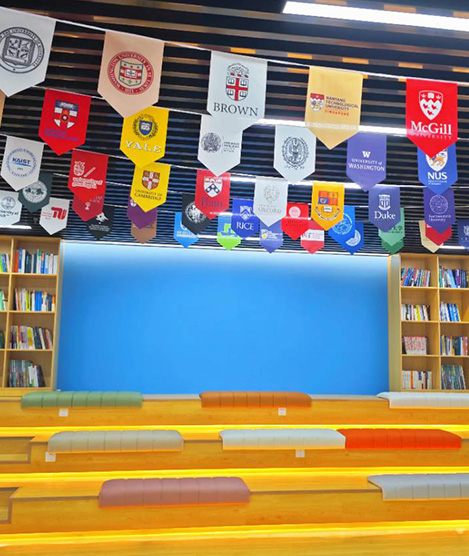
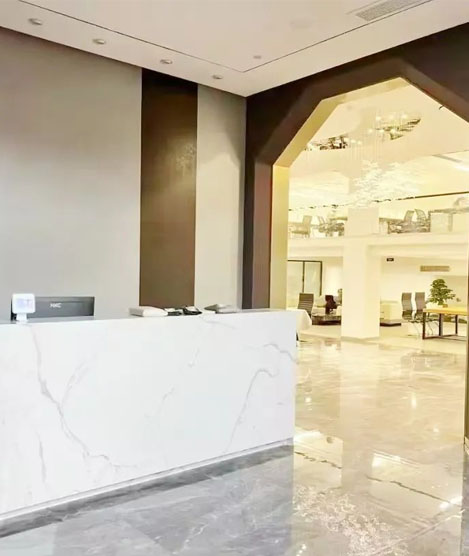
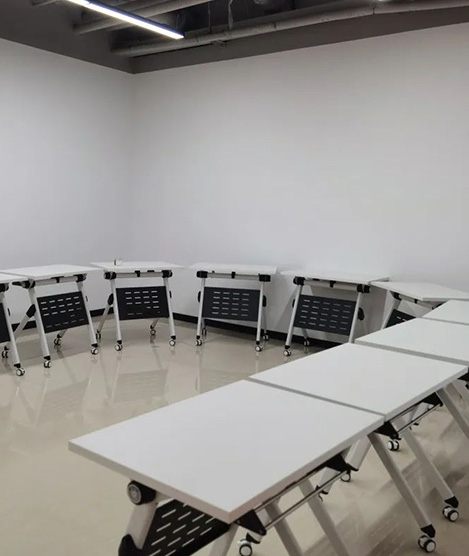
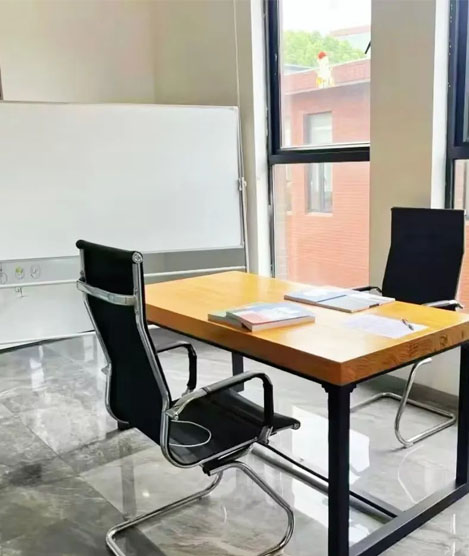
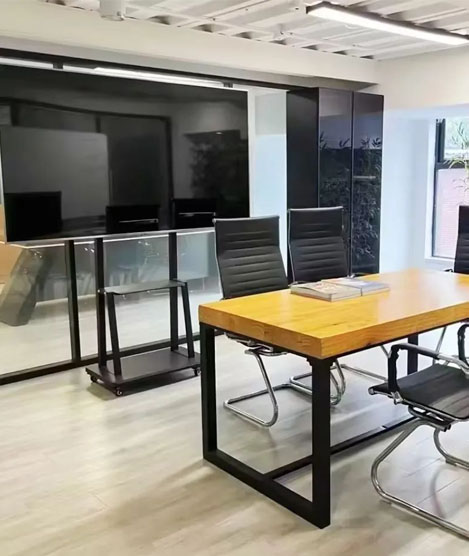
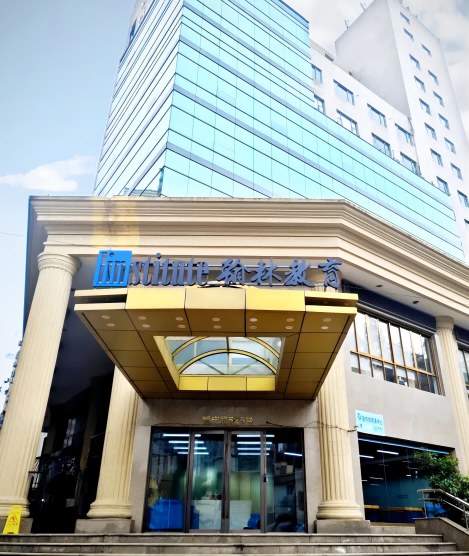
Teaching runs from Hanlin's own centres in Shanghai, Shenzhen, Chengdu and Hangzhou, and online for students elsewhere.

Talk to an advisor
Everything Hanlin does for IPsyO, in one conversation.
Entry, planning, coaching and the past papers. An advisor will tell you which of these a student actually needs, including when the answer is none of them.
Competition entry and planning
Which competitions suit this student, in what order, and by when - then we handle the registration, including the ones that can only be entered through a school or a centre.
Competition coaching
Taught by full-time subject tutors, on a course tier chosen by placement paper rather than by year group.
International curriculum tutoring
IB, AP, A-Level, IGCSE and the US high school curriculum, taught alongside school and timed around the exam calendar.
Competition past papers, free
A large library of past papers, mark schemes and syllabus breakdowns across every competition on this site. No charge and no enrolment.
Scan to add an advisor
Say which competition or course you are asking about. Replies in Chinese or English.
Or call +86 21 6352 6630FAQ
IPsyO, briefly answered.
What students and families ask - including what cannot be answered from the published material.
When is the registration deadline?
Not published. The schedule in circulation is headed with the coming year and then lists deadlines from three past cycles. Contact the organiser for the current date before planning.
Who can enter?
High school students. Entry runs through a school or organisation rather than by individual sign-up.
How do we register?
The school or organisation registers with basic institutional information. The full list of participating students is requested later, so registration can be completed before the team is chosen.
How big is the competition?
The most recent edition set a participation record, with students from 75 countries and regions taking part across multiple stages.
What does the competition involve?
Multiple stages combining psychology research with knowledge assessment. The format of each stage is not set out in the material available.
What awards are given?
Not published in the material available. Ask the organiser.
Is there anything similar with clearer rules?
Yes. The British Psychology Olympiad publishes its three rounds, thresholds and awards in full, and the Scholars of Tomorrow psychology essay competition publishes its deadlines, word limit, format requirements and judging panel.
Can a student do more than one?
Yes. The three run on different calendars and ask for different work - a full season with research training, a single essay, and a multi-stage international assessment.
Related
Psychology competitions with published rules.
Where to start while the IPsyO calendar is confirmed.
Psychology competition enquiries
Get the dates in writing first.
IPsyO is large and real, and its current calendar is not published anywhere we can find. Tell us the school and an advisor will chase the organiser for the dates - and in the meantime map the two psychology competitions whose rules are fully set out.