
Competitions · Humanities and writing · IOL
IOL, the International Linguistics Olympiad.
You are given fragments of a language you have never seen and enough data to work out its rules. No linguistics knowledge is required or expected - it is a logic competition wearing a humanities coat.

What it actually is
A puzzle competition that happens to use languages.
This is the thing families most often misunderstand. IOL does not test how many languages a student speaks, and knowing several is very little help.
You are given the data you need
Each problem presents fragments of a real, surveyed language along with enough information to derive the rules behind it. Everything required is on the page.
It rewards logic, not vocabulary
Pattern recognition, systematic reasoning, holding several hypotheses at once and testing them against evidence. The organisers describe it as building computational thinking and data analysis.
Arts and science students both do well
A mathematician and a classicist can be equally good at this. It is one of very few competitions where that is genuinely true rather than a marketing line.
And the languages are real
The material comes from languages that have actually been surveyed and documented, which is part of why the organisers frame it around preserving the world’s language resources.
At a glance
The route, from a test centre to Bucharest.
IOL requires each participating country to run at least one domestic selection round and to send no more than two teams - eight students - to the international olympiad. China joined in 2012, and ITCCC is IOL’s sole contractor in the country.
- Who can enter
- Students in grades 7 to 12 who are Chinese nationals or enrolled at a school in China
- Age limit
- Under 20 on 30 June of the competition year
- Prior knowledge
- None required. Interest in language and in solving puzzles is what the organisers ask for
- Team
- Enter individually or in a team of two to four. Teams may cross schools, and a team score is the sum of its members’ individual scores
- Assessment language
- Simplified Chinese for the China rounds. The international round is not
- Registration
- Early November to early January
- Regional round
- A Sunday in March, at local assessment centres
- National round
- Three days in late April
- International round
- July, in Bucharest
- Scale
- IOL has drawn more than 54 teams from 34 countries
The three rounds
Four puzzles, then eleven hours, then Romania.
Each round is longer and harder than the last. The jump from the regional round to the national one is the largest in the sequence.
| Round | Format | How you advance |
|---|---|---|
| Regional a Sunday in March | Individual, at a local assessment centre. Four linguistics puzzles, worked alone | Top 30% on individual academic performance, or top 15% by individual score overall; teams in the national top 30%. The two individual thresholds overlap - confirm which applies |
| National three days in late April | Entered in teams of two to four. A five-hour individual challenge and a three-hour team challenge | The top twelve individuals on points go to interview. Eight are then chosen to form two teams for the international round |
| International July, Bucharest | A six-hour individual challenge with five problems, and a three-hour team challenge with one | - |
Note the interview stage. Twelve students reach it and eight go forward, so four people who have already placed in the national top twelve do not travel. The organisers state that invitations to the international round go to students who perform well and whose conduct and values meet the programme’s expectations, and that attendance is voluntary.
Two things worth planning around
The language switch, and the eleven-hour day.
Both are visible in the schedule and neither is obvious until you look for it.
The China rounds are in Chinese
Assessment is in simplified Chinese domestically. The international round is not, so a student who reaches Bucharest solves the same kind of puzzle in a different language of instruction.
The national round is eight hours of assessment
Five hours individual and three hours team, across three days. That is closer to a university examination period than to a school competition.
And the team score is just a sum
A team’s score is its members’ individual scores added together, so there is no collaboration advantage in the regional round - only more scores.
Which makes team entry a numbers decision
Four strong individuals score more than two. If the aim is the team threshold, team size matters more than team chemistry at that stage.
How the activity is framed
Two descriptions of the same thing.
The published material describes the China activity in two ways, and a family planning around it should know both.
Officially, not a competition
The organisers state that the China activity is a voluntary extracurricular interest activity, that it is not a competition and gives no awards, and that participants receive a certificate of academic performance.
In practice, a selection process
The same page describes advancement thresholds, point scores, national rankings, an interview stage and the selection of two national teams. Both descriptions are accurate about different aspects.
Which matters for what a result means
A certificate of academic performance is what the domestic rounds formally produce. Selection for the national team is what they actually decide.
And it is built as a programme
Alongside the assessments the activity includes campus ambassadors and clubs, linguistics workshops, an academic exploration camp and expert lectures.
Preparation
How Hanlin prepares students for IOL.
Because no prior knowledge is assumed, preparation is almost entirely about method - which makes it unusually teachable.
Working through past problems
The problem types recur: writing systems, morphology, number systems, kinship terms, phonological rules. Recognising which kind of puzzle you are looking at saves a large share of the time.
Building a systematic method
Tabulate what you are given, form a hypothesis, test it against every example, and record what fails. Students who work by intuition solve the easy problems and stall on the rest.
Practising at length
Five hours individually at the national round and six at the international. Working accurately in the fourth hour is a specific skill and it needs rehearsing.
And using team entry deliberately
A team score is the sum of individual scores, so a fuller team clears the team threshold more easily. Deciding that before registration is worth a conversation.
Why Hanlin
Hanlin has been entering students for IOL for years, and publishes what they got. The record is further down this page.
Programme formats
Five ways this is taught.
Group size is the whole difference between these. It decides how much of the tutor's attention a student gets and how far the course can bend to them, so it is worth choosing rather than accepting.
| Format | Group size | What it suits |
|---|---|---|
| One-to-one | One student | Content, pace and emphasis set by what this student actually needs rather than by a syllabus. The only format that can be rebuilt mid-course. |
| Small group | Three to eight | Opens at three. Frequent discussion, and the tutor can slow down or move on according to what the group has absorbed. Most students chasing a higher award are taught in this one. |
| Class | Eight to twelve | Taught by the subject lead or a medal coach. Less back-and-forth, so it suits a student who will say when something is unclear. |
| Large class | Ten to twenty | For students in the middle of the placement range, and a way to try a competition before committing. Students often move to a small group or to one-to-one afterwards. |
| Past-paper class | No cap | Past papers worked through in sequence in the weeks before the sitting. Free to students already enrolled. |
Course length for IOL is set after a placement paper. The gap between where a student is and what the paper asks for is what the course has to close, and that gap is not the same for two students in the same year group.
How it runs
Six steps, four people on your side.
The same process for every student, so that nothing depends on one tutor remembering to do it.
 Step 1
Pre-course assessment
A placement paper before anything is booked, so the course tier is chosen on evidence rather than on a year group.
 Step 2
Tutor matching
A subject tutor is matched to the result, and their full background is provided before you agree to it.
 Step 3
Plan and group
A study group opens with four people on one student: the tutor, a planner, a supervisor and an academic manager.
 Step 4
Scheduled teaching
The teaching office sets the timetable around the competition date and school term, and teaching begins.
 Step 5
After-class reports
What was covered, and how the student handled it, reported after every lesson.
 Step 6
Homework follow-up
The teaching assistant and the form teacher both check that homework is done, which is where most preparation quietly fails.
Free resource pack
Past papers and preparation pack
The same material our own IOL students work from. Scan the code, say what you need, and an advisor sends it.

Tell an advisor which competition and year group, and the material comes back the same day. Free, and you do not have to enrol in anything. If we do not already hold what you need, we will go and find it.
- PDFPast papers, every year the organiser has released
- PDFWorked solutions, where the organiser publishes them
- PDFThe syllabus on one page - every topic, and how heavily it is examined
- PDFEntry checklist and the dates for the current cycle
Teaching team
Who would teach it.
Three of the twenty-two tutors on the published Hanlin roster - the ones whose subject this is.

Lu
Master's in education from the University of Pennsylvania and a double major in psychology and philosophy at Mount Holyoke. Cross-cultural teaching experience across China and the US, with research work in child and adolescent development, cognition, and international students' identity.

Yang
Educated at American Heritage School, then English literature and philosophy at the University of British Columbia and a master's in language education at Toronto. Eleven years in North America, with a close working knowledge of the international curricula and overseas admissions.

Dr Zhuang
PhD in mathematics from the University of Denver, working in mathematical logic, after a first degree in applied mathematics at Southeast University. A repeat conference speaker on his research, with three years lecturing and assisting on undergraduate mathematics at Denver.
Student results
What Hanlin students got.
Taken from Hanlin's published record of student honours and rewritten in English. Figures are as the organisers reported them.
Of IOL Team China, 2021
One line from Hanlin's published IOL record. The rest of it is below.
IOL
- 2025Two students took Best Solution awards individually at the exploration camp; in IOLC, 3 High Distinctions in the advanced division
- 2023One student was selected for the Canadian national team from the regional advanced division
Earlier years
- 20214 individual Golds at the China round. Hanlin students made up half of IOL Team China
The full record, across every subject and year, is on the student honours page.
Where it is taught
Hanlin learning centres.
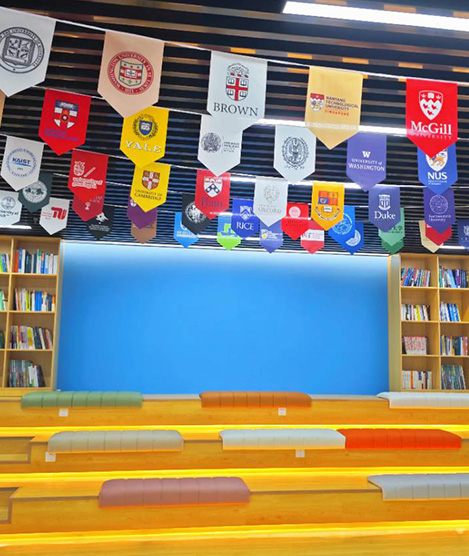
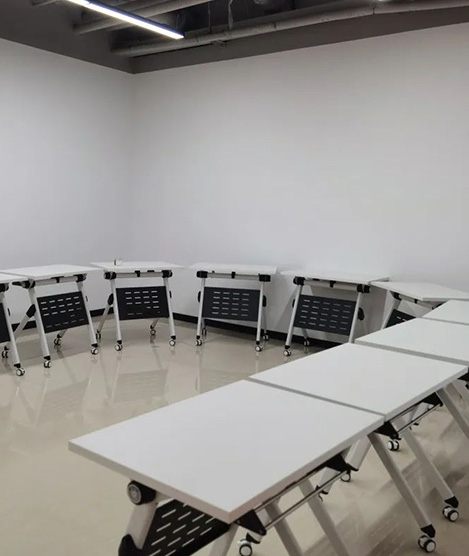
Teaching runs from Hanlin's own centres in Shanghai, Shenzhen, Chengdu and Hangzhou, and online for students elsewhere.





Talk to an advisor
Everything Hanlin does for IOL, in one conversation.
Entry, planning, coaching and the past papers. An advisor will tell you which of these a student actually needs, including when the answer is none of them.
Competition entry and planning
Which competitions suit this student, in what order, and by when - then we handle the registration, including the ones that can only be entered through a school or a centre.
Competition coaching
Taught by full-time subject tutors, on a course tier chosen by placement paper rather than by year group.
International curriculum tutoring
IB, AP, A-Level, IGCSE and the US high school curriculum, taught alongside school and timed around the exam calendar.
Competition past papers, free
A large library of past papers, mark schemes and syllabus breakdowns across every competition on this site. No charge and no enrolment.
Scan to add an advisor
Say which competition or course you are asking about. Replies in Chinese or English.
Or call +86 21 6352 6630FAQ
IOL, briefly answered.
What students and families ask before entering.
Do I need to know several languages?
No. The problems supply fragments of a language along with enough data to work out its rules. It tests logic, pattern recognition and systematic reasoning rather than language knowledge.
Who can enter?
Students in grades 7 to 12 who are Chinese nationals or enrolled at a school in China, and who are under 20 on 30 June of the competition year.
Can I enter as a team?
Yes - individually or in a team of two to four, and teams may cross schools. A team score is the sum of its members’ individual scores.
What language is the assessment in?
Simplified Chinese for the China rounds. The international round is not in Chinese, so students who advance work in a different language of instruction.
What are the rounds?
A regional round in March - four linguistics puzzles, worked individually at a local assessment centre. A three-day national round in late April with a five-hour individual challenge and a three-hour team challenge. Then the international round in July in Bucharest, with a six-hour individual challenge of five problems and a three-hour team challenge of one.
How do I reach the national team?
The top twelve individuals from the national round go to interview, and eight are selected to form two teams. The organisers state that invitations go to students who perform well and whose conduct and values meet the programme’s expectations, and that attendance is voluntary.
How many students go to the international round?
Eight - two teams of four. IOL rules allow each country a maximum of two teams.
Is it a competition?
The organisers describe the China activity as a voluntary extracurricular interest activity that is not a competition and gives no awards, with participants receiving a certificate of academic performance. The same material describes advancement thresholds, scores, rankings and national team selection.
What else is in the programme?
Campus ambassadors and clubs, linguistics workshops, an academic exploration camp and expert lectures, alongside the assessments.
When do I register?
Registration runs from early November to early January, ahead of the regional round in March.
Related
Other humanities competitions.
What students enter alongside IOL.
IOL enquiries
The competition that needs no prior knowledge.
IOL suits a student who enjoys puzzles and has never found a competition that fits - arts or sciences, it makes no difference. Tell us the year group and an advisor will start with past problems, which is where everyone should start.