
Competitions · Research and innovation · IJSO
IJSO, the International Junior Science Olympiad.
The only science olympiad in the world for students under sixteen - and it refuses to separate physics, chemistry and biology. Equal thirds, one paper, and the practical is done in teams of three.

At a glance
What the olympiad is.
IJSO is one of the international olympiads and the only one in the natural sciences open to students under sixteen. Its distinguishing feature is that it integrates physics, chemistry and biology rather than examining them separately - the aim being to get students looking at a problem from several angles at once.
- Who can enter
- Students under 16 as at 31 December of the competition year
- Subjects
- Physics, chemistry and biology, weighted equally at a third each. Experimental technique and mathematical skill are assessed alongside
- Format
- Both individual and team. The practical is worked in threes
- Scale
- Teams from more than seventy countries and regions
- Language
- Chinese or English
- The international final
- Early December, running ten days with competition and cultural activities alternating
- Equipment
- Mathematical tables, tables of physical constants, a non-programmable calculator and drawing instruments are permitted. Recent hosts have supplied a scientific calculator for the exam
- Since
- 2004
- The route
- A national preliminary, a national final, then national team selection, then the international competition
What makes it different
Three sciences, one problem.
Every other science olympiad on this site examines one subject. IJSO is built on the premise that real problems do not arrive labelled.
Cross-disciplinary by design
Questions ask students to analyse a real situation from physical, chemical and biological angles at once. The organisers describe the goal as breaking rigid single-subject thinking.
Reasoning over recall
The theory questions are written to test inference rather than memory. The organisers say so explicitly - reasoning is what reveals the nature of a problem, and it is weighted accordingly.
And the practical is a team of three
Forty per cent of the marks come from a practical worked collaboratively, with the work divided and the analysis completed together inside a time limit. Leadership and division of labour are part of what is assessed.
With international exchange as a stated aim
The olympiad’s published objectives include building friendships from a young age and comparing science teaching between participating countries. The ten-day final alternates competition with cultural activity for that reason.
The international paper
Three papers, three hours each, one hundred marks.
The structure is fixed and the weighting is published, which makes preparation unusually plannable for an olympiad.
| Paper | Length | Content | Marks |
|---|---|---|---|
| Multiple choice | 3 hours | 30 single-answer questions - ten each in physics, chemistry and biology. One mark for a correct answer, nothing for a blank, and 0.25 deducted for a wrong one | 30 |
| Theory | About 3 hours | Two or three extended questions combining physics, chemistry and biology. Every answer must include both a result and the full reasoning behind it | 30 |
| Practical | About 3 hours | Two or three tasks spread evenly across the three subjects, worked in teams of three. Answers must contain the theoretical analysis - the plan and the discussion - as well as the experimental work | 40 |
Note the negative marking on the multiple-choice paper: a wrong answer costs a quarter of a mark while a blank costs nothing. And note where the weight sits - the practical is worth more than either written paper.
The China route
Four stages, and only six students reach the last one.
The national route runs across most of a year and narrows sharply. Six places on the national team is the tightest gate of any competition in this group.
| Stage | When | What happens |
|---|---|---|
| Registration | January to March | Online, through the organising committee |
| National preliminary | April | At regional centres. Entered individually or as a team of three, but the paper is individual: 30 multiple-choice questions in 90 minutes, ten each in physics, chemistry and biology. The source gives the advancement rate as about 50% in one place and the top 30% in another |
| Summer camp | July | Practical training ahead of the national final |
| National final | August, at Beijing Normal University | The same structure as the international competition - multiple choice 30%, theory 30%, practical 40% - alongside expert lectures and an awards ceremony. The top 50 go through to national team assessment |
| National team assessment | August | A three-hour practical task and a group interview of fifteen to twenty minutes. The six best overall become the national team |
The group interview is worth preparing for specifically. It is the only point in this whole route where a student is assessed on how they talk about science rather than on what they can produce on paper or at a bench.
Preparation
How Hanlin prepares students for IJSO.
A published weighting, negative marking and a team practical each call for something different.
Practising across subjects, not within them
The whole point is analysing one situation from three angles. Studying physics, chemistry and biology in sequence prepares for three olympiads, not this one.
Learning when not to answer
A wrong multiple-choice answer costs a quarter mark and a blank costs nothing. Knowing where your own guessing threshold sits is worth marks on a 30-question paper.
Rehearsing the practical as a three
Forty per cent of the marks, worked collaboratively under time pressure, with written theoretical analysis required alongside the bench work. Teams that have never practised together lose time deciding who does what.
And writing full reasoning
Every theory answer must carry its complete justification, not just a result. That is a writing habit and it is the cheapest thing to fix.
Why Hanlin
Preparation for IJSO at Hanlin is taught by full-time subject tutors, on a course tier chosen by placement paper rather than by year group.
Programme formats
Five ways this is taught.
Group size is the whole difference between these. It decides how much of the tutor's attention a student gets and how far the course can bend to them, so it is worth choosing rather than accepting.
| Format | Group size | What it suits |
|---|---|---|
| One-to-one | One student | Content, pace and emphasis set by what this student actually needs rather than by a syllabus. The only format that can be rebuilt mid-course. |
| Small group | Three to eight | Opens at three. Frequent discussion, and the tutor can slow down or move on according to what the group has absorbed. Most students chasing a higher award are taught in this one. |
| Class | Eight to twelve | Taught by the subject lead or a medal coach. Less back-and-forth, so it suits a student who will say when something is unclear. |
| Large class | Ten to twenty | For students in the middle of the placement range, and a way to try a competition before committing. Students often move to a small group or to one-to-one afterwards. |
| Past-paper class | No cap | Past papers worked through in sequence in the weeks before the sitting. Free to students already enrolled. |
Course length for IJSO is set after a placement paper. The gap between where a student is and what the paper asks for is what the course has to close, and that gap is not the same for two students in the same year group.
How it runs
Six steps, four people on your side.
The same process for every student, so that nothing depends on one tutor remembering to do it.
 Step 1
Pre-course assessment
A placement paper before anything is booked, so the course tier is chosen on evidence rather than on a year group.
 Step 2
Tutor matching
A subject tutor is matched to the result, and their full background is provided before you agree to it.
 Step 3
Plan and group
A study group opens with four people on one student: the tutor, a planner, a supervisor and an academic manager.
 Step 4
Scheduled teaching
The teaching office sets the timetable around the competition date and school term, and teaching begins.
 Step 5
After-class reports
What was covered, and how the student handled it, reported after every lesson.
 Step 6
Homework follow-up
The teaching assistant and the form teacher both check that homework is done, which is where most preparation quietly fails.
Free resource pack
Project and submission pack
The same material our own IJSO students work from. Scan the code, say what you need, and an advisor sends it.
Tell an advisor which competition and year group, and the material comes back the same day. Free, and you do not have to enrol in anything. If we do not already hold what you need, we will go and find it.
- PDFPast finalist project titles and abstracts
- PDFCategory definitions and the judging criteria, broken down
- DOCXA project timeline working back from the submission date
- PDFEntry checklist and the dates for the current cycle
Teaching team
Who would teach it.
Three of the twenty-two tutors on the published Hanlin roster - the ones whose subject this is.
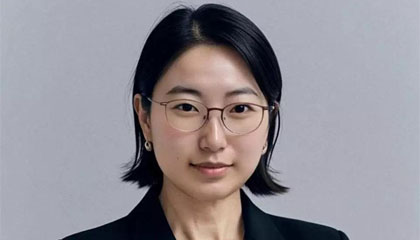
Dr An
Mathematics at Illinois Urbana-Champaign with highest honours and the Elizabeth R. Bennett scholarship, then a PhD in mathematics at Johns Hopkins on full funding with the Owen fellowship and the Joel Dean award for excellent teaching. Years of US university teaching, translating high-level mathematics into language students can use.

Yu
Master's in bioinformatics and computational biology from UT Dallas and a nutritional sciences degree from Wisconsin-Madison. Second author on an SCI-indexed paper from the Tanumihardjo vitamin-A laboratory, and formerly at ABS Global.

Tan
Master's in data science from the University of Sydney after a statistics degree at Simon Fraser University, graduating in the top 5% with repeated chancellor's honours; A-Levels at a Cambridge international school, and formerly a data analyst at Tencent. An AMC-accredited coach, a College Board-accredited AP teacher, and holder of a Math League excellent-teacher award.
Where it is taught
Hanlin learning centres.
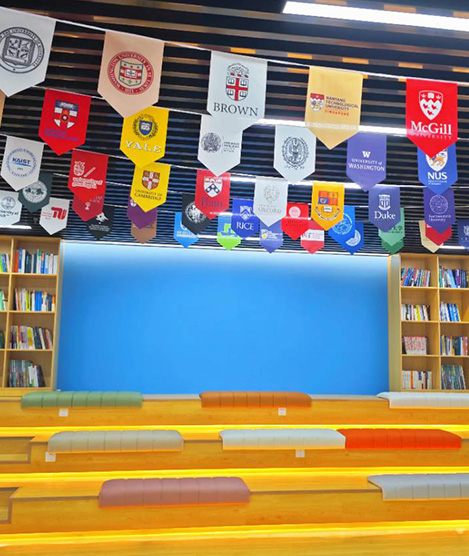
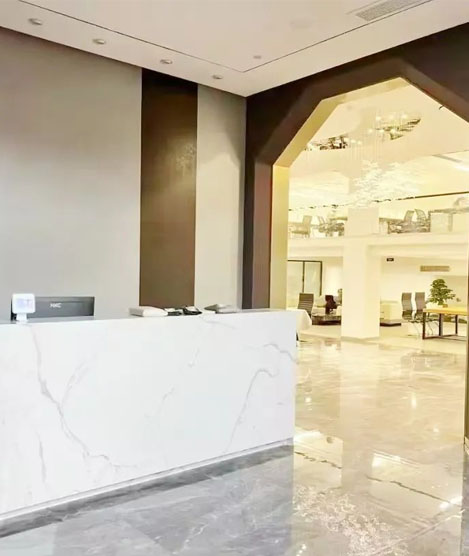
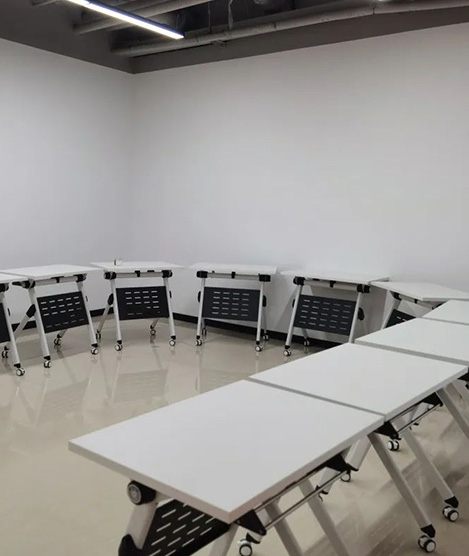
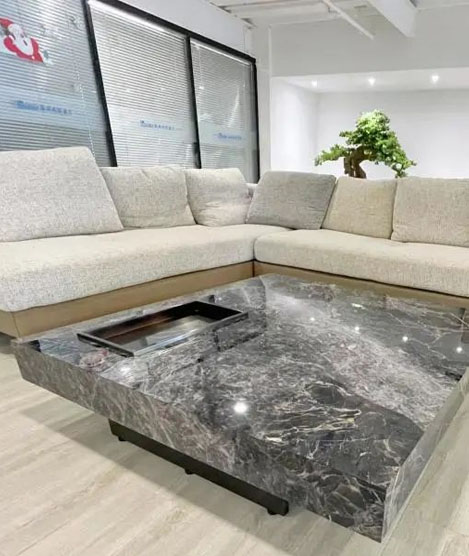
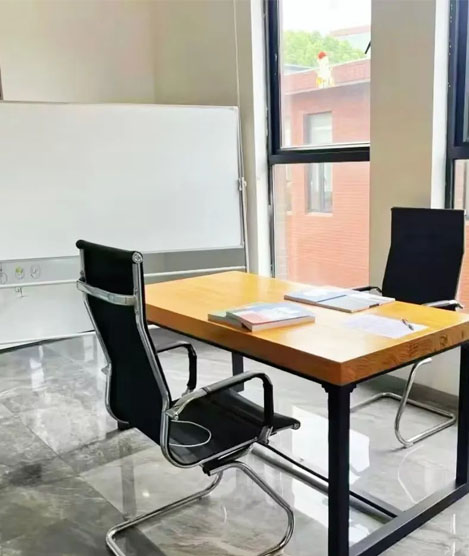
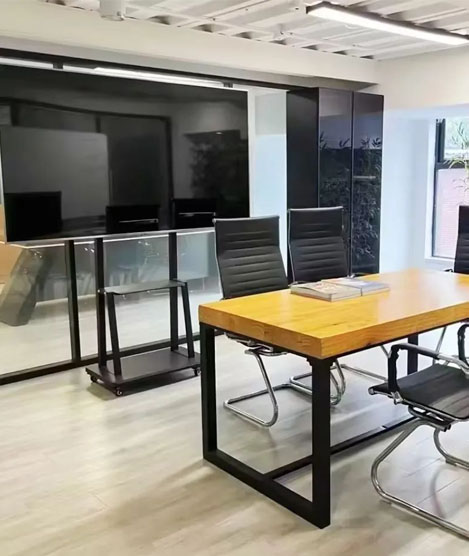
Teaching runs from Hanlin's own centres in Shanghai, Shenzhen, Chengdu and Hangzhou, and online for students elsewhere.
Talk to an advisor
Everything Hanlin does for IJSO, in one conversation.
Entry, planning, coaching and the past papers. An advisor will tell you which of these a student actually needs, including when the answer is none of them.
Competition entry and planning
Which competitions suit this student, in what order, and by when - then we handle the registration, including the ones that can only be entered through a school or a centre.
Competition coaching
Taught by full-time subject tutors, on a course tier chosen by placement paper rather than by year group.
International curriculum tutoring
IB, AP, A-Level, IGCSE and the US high school curriculum, taught alongside school and timed around the exam calendar.
Competition past papers, free
A large library of past papers, mark schemes and syllabus breakdowns across every competition on this site. No charge and no enrolment.
Scan to add an advisor
Say which competition or course you are asking about. Replies in Chinese or English.
Or call +86 21 6352 6630FAQ
IJSO, briefly answered.
What students and families ask before entering.
Who can enter IJSO?
Students under 16 as at 31 December of the competition year. It is the only international science olympiad for this age group.
What subjects does it cover?
Physics, chemistry and biology, weighted equally at a third each, with experimental technique and mathematical skill assessed alongside.
What is the paper structure?
Three papers of about three hours each: 30 multiple-choice questions worth 30 marks, two or three cross-disciplinary theory questions worth 30, and a practical worth 40.
Is there negative marking?
Yes, on the multiple-choice paper. A correct answer scores 1, a blank scores 0, and a wrong answer loses 0.25.
Is the practical done alone?
No. It is worked in teams of three, and answers must include the theoretical analysis - the plan and the discussion - as well as the experimental work.
How does a student in China reach the international competition?
Registration from January, a national preliminary in April, a summer camp in July, the national final in August at Beijing Normal University, then national team assessment. The top 50 from the final go to assessment, and six are selected.
What is the national team assessment?
A three-hour practical task and a group interview of fifteen to twenty minutes. The six best overall represent the country.
What language is it in?
Chinese or English.
What may I take into the exam?
Mathematical tables, tables of physical constants, a non-programmable calculator and drawing instruments. Recent hosts have supplied a scientific calculator, but confirm what you need to bring.
How long is the international competition?
Ten days in early December, with competition and cultural activities alternating.
Related
Other science competitions.
What students enter alongside or after IJSO.
IJSO enquiries
The only science olympiad that will not let you specialise.
Physics, chemistry and biology in equal thirds, with the practical worth more than either written paper and worked in a team of three. Tell us the student’s age and what they have studied, and an advisor will map the route from the April preliminary.