
Competitions · Research and innovation · IGB
IGB, the International Geography Bee.
Fifty questions in thirty minutes to qualify, then a four-day festival with six different formats - a quiz, a fair, a treasure hunt and a game of guessing where in the world you are.

Read this first
The language you choose at the qualifier is final.
This decision is made at registration, cannot be changed, and determines whether the global round is reachable at all.
Only English-session entrants advance globally
Students who sit the Chinese-language qualifier continue to the Chinese-language national round, and stop there. The global round is closed to them.
And the choice is locked at registration
Once confirmed it cannot be changed. A Chinese-session entrant cannot move to the English national round, or the reverse.
Only the two younger divisions have a choice
Elementary and Middle School may sit in Chinese or English. Junior Varsity and Varsity are English only, so for older students the question does not arise.
The global round is English regardless
Language options apply to the qualifier and national rounds. The global round is conducted entirely in English.
At a glance
What the bee is.
The International Geography Bee is run by International Academic Competitions and is also the selection route for the American national team at the international geography olympiad. More than 50,000 students from over a thousand schools in fifty-plus countries enter each year.
- Organiser
- International Academic Competitions
- Who can enter
- Any interested primary or secondary student. One qualifier per student per year - you may not sit more than one
- Divisions
- Four, set by date of birth - Elementary, Middle School, Junior Varsity and Varsity
- Scope
- Physical and human geography: hydrology, atmosphere, rocks, soil, population, cities, transport, mountains, rivers, islands and landmarks
- Rounds
- Three - a qualifier, a national round and a global round
- The qualifier
- An individual written paper, 50 single-answer questions in 30 minutes, sat online or at a host school
- Marking
- Two marks for a correct answer, one deducted for a wrong one, nothing for a blank
- Advancement
- Above a minimum score set by the committee - roughly 60% of entrants, referenced to the global threshold
- The national round
- Four days at the start of May, in Shanghai or a nearby city
- The global round
- Held in Phuket, Thailand - an Asia station annually in June and a full global round every two years in July
- Study material
- Provided by the committee in Chinese and English, with some material in English only
The marking rule
Answer if you think you have better than a one-in-three chance.
The qualifier awards two marks for a correct answer and deducts one for a wrong one. That turns the decision to answer into arithmetic.
The break-even is exactly one third
Answering is worth two marks with probability p and costs one mark with probability 1 − p. The expected value is 3p − 1, which turns positive as soon as p passes one in three.
So eliminating options pays quickly
On a four-option question, a blind guess sits at one in four and is not worth taking. Ruling out a single option lifts you to one in three - break-even - and ruling out two makes answering clearly correct.
Which is more generous than it sounds
A one-in-three threshold means most educated guesses are worth making. The rule to internalise is: if you have any real reason to prefer one answer, answer.
And thirty-six seconds a question
Fifty questions in thirty minutes. There is no time to agonise, which is why having the rule settled beforehand is worth marks.
The divisions
Four bands, set by birth date rather than year group.
Registration is by date of birth, though the organisers suggest choosing the band that matches a student’s actual school registration.
| Division | Born | Language options |
|---|---|---|
| Elementary | 1 September 2013 or later | Chinese or English. Younger entrants need basic literacy |
| Middle School | 1 September 2011 to 31 August 2013 | Chinese or English |
| Junior Varsity | 1 September 2009 to 31 August 2011 | English only |
| Varsity | 31 August 2009 or earlier | English only |
Remember that the language column is also the global-round column. Choosing Chinese in one of the two younger divisions ends the route at the national round.
The national round
Six formats across four days.
This is what distinguishes IGB from a written competition. Only one of the six events resembles an exam.
| Event | Individual or team | What it is |
|---|---|---|
| Quiz Bee | Individual | The central knowledge event, and the one that decides the division champions |
| World Geography Fair | Team | An exhibition of world natural and cultural geography, presented by the team |
| Blitz | Individual | A fast-fire earth science event, held in the evening |
| GeoGuesser | Team | Working out where in the world you are from what you can see |
| Geography Task Force | Individual | A problem-solving event set against earth science content |
| Scavenger Hunt | Team | A hunt through the natural world, run across an afternoon |
The four days run: arrival, registration and an opening ice-breaker; then two full days of events; then departure. It is closer to a festival than to a competition weekend.
The awards
Individual and team, across most of the events.
Nearly every event carries its own placings, which means a student who is not the strongest quizzer still has several routes to a result.
Quiz Bee decides the divisions
Champion, runner-up and third place in each division. The top 60% receive a merit award - and English-session merit winners advance to the global round.
Blitz and Task Force award separately
Each has its own champion, runner-up, third place and merit awards, so the individual events are three separate contests rather than one.
GeoGuesser and the Fair award teams
Both carry champion, runner-up, third place and merit awards, plus a Best Team award overall.
And everyone gets something
A Best Individual award sits above the event placings, and every participating student receives a certificate.
Preparation
How Hanlin prepares students for IGB.
The qualifier and the national round demand different things, and most preparation stops after the first.
Settling the guessing rule first
One in three is the threshold, and knowing it before the paper is worth several marks over fifty questions. Timed practice makes the decision automatic.
Covering physical and human geography
Hydrology, atmosphere, rocks and soil on one side; population, cities, transport and landmarks on the other. Most students are stronger in one half than the other.
Building place knowledge deliberately
Mountains, rivers, islands and landmarks reward map familiarity that no syllabus teaches. It is also what GeoGuesser and the Scavenger Hunt run on.
And preparing the team events
Half the national round is team work - a geography fair to present and a GeoGuesser to reason through together. Squads that only revise arrive prepared for one morning of four.
Why Hanlin
Preparation for IGB at Hanlin is taught by full-time subject tutors, on a course tier chosen by placement paper rather than by year group.
Programme formats
Five ways this is taught.
Group size is the whole difference between these. It decides how much of the tutor's attention a student gets and how far the course can bend to them, so it is worth choosing rather than accepting.
| Format | Group size | What it suits |
|---|---|---|
| One-to-one | One student | Content, pace and emphasis set by what this student actually needs rather than by a syllabus. The only format that can be rebuilt mid-course. |
| Small group | Three to eight | Opens at three. Frequent discussion, and the tutor can slow down or move on according to what the group has absorbed. Most students chasing a higher award are taught in this one. |
| Class | Eight to twelve | Taught by the subject lead or a medal coach. Less back-and-forth, so it suits a student who will say when something is unclear. |
| Large class | Ten to twenty | For students in the middle of the placement range, and a way to try a competition before committing. Students often move to a small group or to one-to-one afterwards. |
| Past-paper class | No cap | Past papers worked through in sequence in the weeks before the sitting. Free to students already enrolled. |
Course length for IGB is set after a placement paper. The gap between where a student is and what the paper asks for is what the course has to close, and that gap is not the same for two students in the same year group.
How it runs
Six steps, four people on your side.
The same process for every student, so that nothing depends on one tutor remembering to do it.
 Step 1
Pre-course assessment
A placement paper before anything is booked, so the course tier is chosen on evidence rather than on a year group.
 Step 2
Tutor matching
A subject tutor is matched to the result, and their full background is provided before you agree to it.
 Step 3
Plan and group
A study group opens with four people on one student: the tutor, a planner, a supervisor and an academic manager.
 Step 4
Scheduled teaching
The teaching office sets the timetable around the competition date and school term, and teaching begins.
 Step 5
After-class reports
What was covered, and how the student handled it, reported after every lesson.
 Step 6
Homework follow-up
The teaching assistant and the form teacher both check that homework is done, which is where most preparation quietly fails.
Free resource pack
Motions and case-file pack
The same material our own IGB students work from. Scan the code, say what you need, and an advisor sends it.

Tell an advisor which competition and year group, and the material comes back the same day. Free, and you do not have to enrol in anything. If we do not already hold what you need, we will go and find it.
- PDFPast motions and topic areas
- DOCXA case-file template, ready to fill in
- PDFFormat, speaking times and the judging criteria
- PDFEntry checklist and the dates for the current cycle
Teaching team
Who would teach it.
Three of the twenty-two tutors on the published Hanlin roster - the ones whose subject this is.

Yang
Educated at American Heritage School, then English literature and philosophy at the University of British Columbia and a master's in language education at Toronto. Eleven years in North America, with a close working knowledge of the international curricula and overseas admissions.

Lu
Master's in education from the University of Pennsylvania and a double major in psychology and philosophy at Mount Holyoke. Cross-cultural teaching experience across China and the US, with research work in child and adolescent development, cognition, and international students' identity.

Shi
Master's in water science and engineering from TU Dresden - one of Germany's TU9 institutes - after environmental engineering at Ocean University of China. A researcher in environmental chemistry at the Helmholtz Centre for Environmental Research, a DAAD scholarship holder, and College Board-accredited.
Where it is taught
Hanlin learning centres.
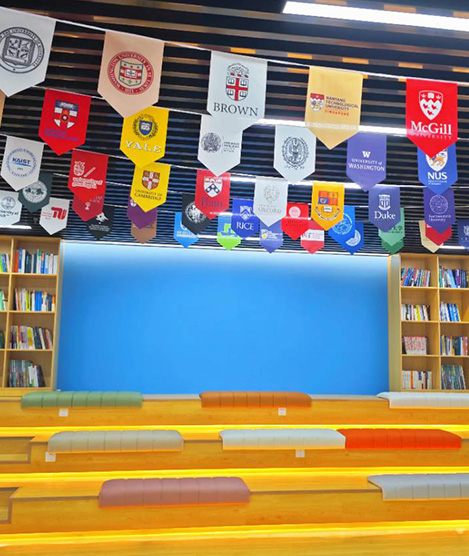
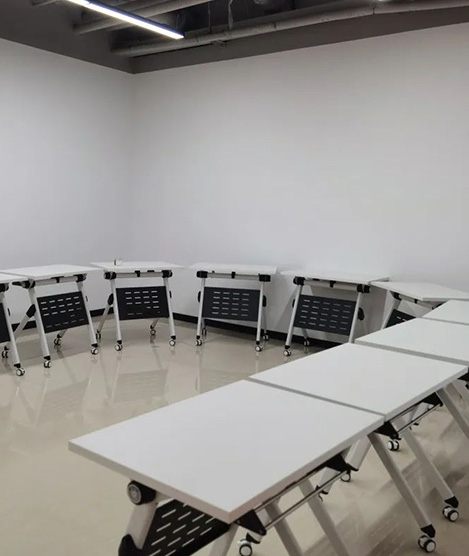
Teaching runs from Hanlin's own centres in Shanghai, Shenzhen, Chengdu and Hangzhou, and online for students elsewhere.





Talk to an advisor
Everything Hanlin does for IGB, in one conversation.
Entry, planning, coaching and the past papers. An advisor will tell you which of these a student actually needs, including when the answer is none of them.
Competition entry and planning
Which competitions suit this student, in what order, and by when - then we handle the registration, including the ones that can only be entered through a school or a centre.
Competition coaching
Taught by full-time subject tutors, on a course tier chosen by placement paper rather than by year group.
International curriculum tutoring
IB, AP, A-Level, IGCSE and the US high school curriculum, taught alongside school and timed around the exam calendar.
Competition past papers, free
A large library of past papers, mark schemes and syllabus breakdowns across every competition on this site. No charge and no enrolment.
Scan to add an advisor
Say which competition or course you are asking about. Replies in Chinese or English.
Or call +86 21 6352 6630FAQ
IGB, briefly answered.
What students and families ask before entering.
Can I sit the qualifier in Chinese?
Only in the Elementary and Middle School divisions. Junior Varsity and Varsity are English only. Note that Chinese-session entrants continue to the Chinese national round and cannot advance to the global round.
Can I change language later?
No. The choice is confirmed at registration and is final.
Who can enter?
Any interested primary or secondary student. Each student may sit only one qualifier per year.
How are divisions decided?
By date of birth - Elementary for those born on or after 1 September 2013, Middle School for 1 September 2011 to 31 August 2013, Junior Varsity for 1 September 2009 to 31 August 2011, and Varsity for 31 August 2009 or earlier.
What is the qualifier?
An individual written paper of 50 single-answer questions in 30 minutes, sat online or at a host school. Two marks for a correct answer, one deducted for a wrong one, nothing for a blank.
Should I guess?
Answer if you think you have better than a one-in-three chance. The scheme gives an expected value of 3p − 1, so it turns positive at one third - meaning ruling out even one option on a four-choice question brings you to break-even.
How many people advance?
Those scoring above a minimum set by the committee - roughly 60% of entrants, referenced to the global threshold.
What happens at the national round?
Four days at the start of May in Shanghai or nearby, with six events: the Quiz Bee and Blitz and Geography Task Force individually, and the World Geography Fair, GeoGuesser and Scavenger Hunt in teams.
How do I reach the global round?
By taking a merit award or better in the English-session Quiz Bee - the top 60% of that session. The global round is held in Phuket, with an Asia station each June and a full global round every two years in July.
What is covered?
Physical and human geography - hydrology, the atmosphere, rocks, soil, population, cities, transport, mountains, rivers, islands and landmarks.
Related
Other knowledge competitions.
What students enter alongside IGB.
IGB enquiries
Choose the language carefully. It decides how far you can go.
A Chinese-session qualifier ends at the national round; only English-session entrants reach the global round in Phuket. Tell us the student’s date of birth and how comfortable their English is, and an advisor will help make that call.