
Competitions · Business and economics · IEO
IEO, the International Economics Olympiad.
The only economics olympiad in the international science olympiad system - the one that sits alongside mathematics, physics and chemistry. Founded by a Nobel laureate, and its national round gives you twenty-four hours to solve a real business case.
What it is
Economics, admitted to the olympiad system.
This is the fact that distinguishes IEO from every other business competition here, and it is worth understanding precisely.
One of thirteen international science olympiads
IEO is the economics member of the same system that contains the mathematics, physics and chemistry olympiads. No other economics competition holds that position.
Founded by a Nobel laureate
Established in 2017 by Eric Maskin, the 2007 Nobel laureate in economics and a Harvard professor, who chairs its board. The first olympiad was held in 2018.
Headquartered in Switzerland
Co-organised by the Higher School of Economics with universities and international organisations across several countries, among them the European Central Bank and Forbes.
And genuinely international
Students from more than sixty-five countries and regions across five continents reach the international stage through national selection.
The three divisions
Year group, language and route all change together.
The divisions differ in more than difficulty. The language you compete in and the international events open to you both follow from the choice.
| Division | Year group | Language | What the preliminary covers | Where it leads |
|---|---|---|---|---|
| Junior SL | Grades 6 to 9 | Chinese and English | Basic microeconomics and basic personal finance | The Hong Kong international invitational |
| Junior HL | Grades 9 to 12 | Chinese and English | Basic macroeconomics and microeconomics, and basic personal finance | The Singapore and Hong Kong international invitationals |
| Senior | Grades 9 to 12 | English only | Advanced macroeconomics and microeconomics, and international economics | Selection for the national team, and the Singapore invitational |
Only the Senior division leads to the national team, and only the Senior division is English-only. A grade 9 student can enter either Junior HL or Senior, and that decision determines how far the route goes.
At a glance
How the year runs.
IEO-China runs a three-stage route from an online test through a national round to an international showcase. NexGen Education Hub is the international committee’s official partner in China.
- Who can enter
- Students in grades 6 to 12, depending on division
- Team
- Three to five students. The team rules separately describe preliminary entry as individual or in fours, so confirm the current size
- Teams may cross schools
- Yes - cross-school and cross-year-group teams are accepted, though same-school teams are encouraged
- Individual entry
- Permitted at the preliminary stage. Every student must be in a team for the national round
- If a team does not form
- A student who registered for team entry but has no team by the deadline competes individually
- Changing members
- Permitted until registration closes. After that the roster is fixed
- Preliminary
- An online assessment in December, preceded by a practice test the day before. Registration closes at the end of November
- National round
- In person in China, in spring
- Global showcase
- In person, internationally, in summer. Past hosts include Hong Kong, Singapore, Australia, Azerbaijan and Greece
The national round
Five components, and only one is a test.
This is where IEO stops resembling an economics exam. The national round selects the students who represent China.
Economics and finance assessment
Financial knowledge and thinking with data, set in real situations to test analysis and judgement rather than recall.
A business case in twenty-four hours
Teams analyse a business case and present it within a day. Logic, collaboration and expression all tested at once, and there is no time to be precious about any of them.
A timed public roadshow, for Senior only
Champion-round teams complete a public presentation and live defence under a hard time limit. It is the closest thing here to pitching for real.
Workshops, and an evening off
Future-skills workshops run alongside the competition, and IEO Night gives competitors a break, a cultural exchange and the chance to meet the people they have been competing against.
The business cases
What teams have actually been asked to solve.
The past case topics are the best guide to what IEO expects, and they are unusually concrete for a school competition.
| Year | Host | The case |
|---|---|---|
| 2021 | Latvia | Set a product strategy for a car manufacturer - identify the market opportunity and build a sales strategy around it |
| 2023 | Greece | As a team of young consultants, help Greek universities use their land effectively and meet environmental sustainability goals |
| 2024 | Hong Kong | Propose innovative and workable policy responses to Hong Kong’s housing crisis |
| 2025 | Azerbaijan | Assess the economic feasibility of a bridge project connecting Azerbaijan and Kazakhstan |
Note what these have in common: each is a real decision facing a real place, with no clean answer. Preparing for IEO means practising on problems of that shape, not on textbook questions.
Preparation
How Hanlin prepares an IEO team.
The written stage and the national round demand almost unrelated things, and most teams prepare only the first.
Building the economics properly
Micro, macro and - at Senior level - international economics. The Senior paper assumes advanced coverage, so the division choice has to match what has actually been studied.
Adding personal finance
Both Junior divisions examine personal finance, which no school economics course covers. It is the most commonly neglected part of the preliminary.
Rehearsing the twenty-four-hour case
A day to analyse, decide, build a presentation and deliver it. Teams that have never done it lose most of the first six hours deciding how to divide the work.
And practising the defence
Senior teams face a timed public roadshow with live questioning. Being challenged on your reasoning in front of an audience is a distinct skill.
Why Hanlin
Hanlin has been entering students for IEO for years, and publishes what they got. The record is further down this page.
Programme formats
Five ways this is taught.
Group size is the whole difference between these. It decides how much of the tutor's attention a student gets and how far the course can bend to them, so it is worth choosing rather than accepting.
| Format | Group size | What it suits |
|---|---|---|
| One-to-one | One student | Content, pace and emphasis set by what this student actually needs rather than by a syllabus. The only format that can be rebuilt mid-course. |
| Small group | Three to eight | Opens at three. Frequent discussion, and the tutor can slow down or move on according to what the group has absorbed. Most students chasing a higher award are taught in this one. |
| Class | Eight to twelve | Taught by the subject lead or a medal coach. Less back-and-forth, so it suits a student who will say when something is unclear. |
| Large class | Ten to twenty | For students in the middle of the placement range, and a way to try a competition before committing. Students often move to a small group or to one-to-one afterwards. |
| Past-paper class | No cap | Past papers worked through in sequence in the weeks before the sitting. Free to students already enrolled. |
Course length for IEO is set after a placement paper. The gap between where a student is and what the paper asks for is what the course has to close, and that gap is not the same for two students in the same year group.
How it runs
Six steps, four people on your side.
The same process for every student, so that nothing depends on one tutor remembering to do it.
 Step 1
Pre-course assessment
A placement paper before anything is booked, so the course tier is chosen on evidence rather than on a year group.
 Step 2
Tutor matching
A subject tutor is matched to the result, and their full background is provided before you agree to it.
 Step 3
Plan and group
A study group opens with four people on one student: the tutor, a planner, a supervisor and an academic manager.
 Step 4
Scheduled teaching
The teaching office sets the timetable around the competition date and school term, and teaching begins.
 Step 5
After-class reports
What was covered, and how the student handled it, reported after every lesson.
 Step 6
Homework follow-up
The teaching assistant and the form teacher both check that homework is done, which is where most preparation quietly fails.
Free resource pack
IEO past papers and preparation pack
The same material our own IEO students work from. Scan the code, say what you need, and an advisor sends it.
Tell an advisor which competition and year group, and the material comes back the same day. Free, and you do not have to enrol in anything. If we do not already hold what you need, we will go and find it.
- PDFPast papers across the economics, business and financial-literacy rounds
- PDFHow the team case round is scored
- PDFThe syllabus, and what it assumes you already know
- PDFSelection route and the dates for the current cycle
Teaching team
Who would teach it.
Three of the twenty-two tutors on the published Hanlin roster - the ones whose subject this is.

Bai
Master's in social entrepreneurship from Hult International Business School in San Francisco and a business administration degree from the Universitat Autonoma de Barcelona, with an exchange at Texas A&M's Mays Business School. Accredited by the College Board, Cambridge International and the IBO, a certified intermediate economist, and a judge at the 2020 Diamond Challenge global final and the 2021 NEC China final.

Zhang
Master's in engineering management from NYU and a double degree in finance and supply-chain management from Syracuse. Nearly nine years overseas and in finance, including at a well-known venture firm - experience that feeds scenario-based teaching. College Board-accredited.
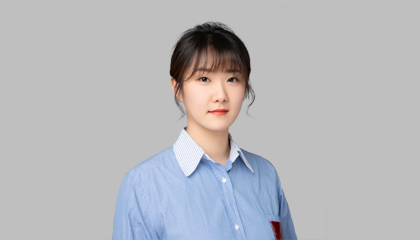
Jiang
Master's in business analytics from the Schulich School of Business, a finance and business economics degree from York University and a software engineering degree from the Harbin Institute of Technology. Years in North America, university teaching before returning, and long experience across the whole economics curriculum.
Student results
What Hanlin students got.
Taken from Hanlin's published record of student honours and rewritten in English. Figures are as the organisers reported them.
Team total in the world, 2022
One line from Hanlin's published IEO record. The rest of it is below.
IEO
- 2025Fifth in the world individually at the global round, with a Gold for best in economics. 14 students advanced from the national round and one joined the Hong Kong team; 26 advanced from the junior round, a 93% rate, with a top score of 430
- 2024A global individual Silver
- 2023Second in team total score at the national team selection camp
Earlier years
- 2022All 5 members of IEO Team China were Hanlin students. They took one Gold, 3 Silver and one Bronze, and fifth in the world on team total score - the best Chinese result in three years
- 2019National champions
The full record, across every subject and year, is on the student honours page.
Where it is taught
Hanlin learning centres.
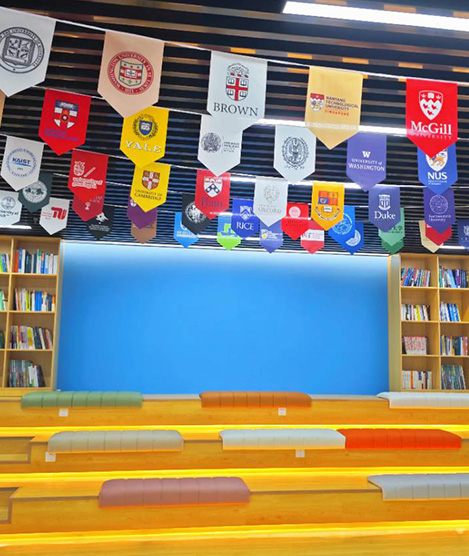
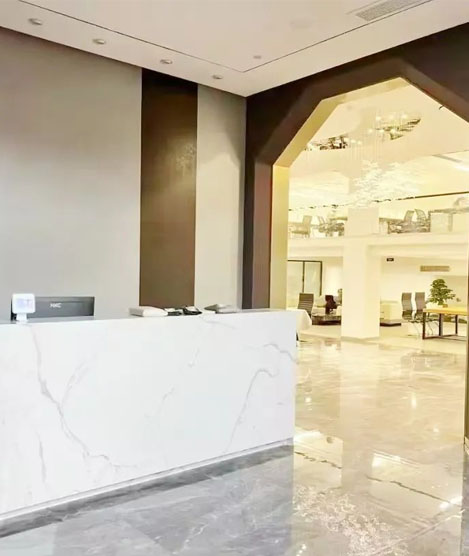
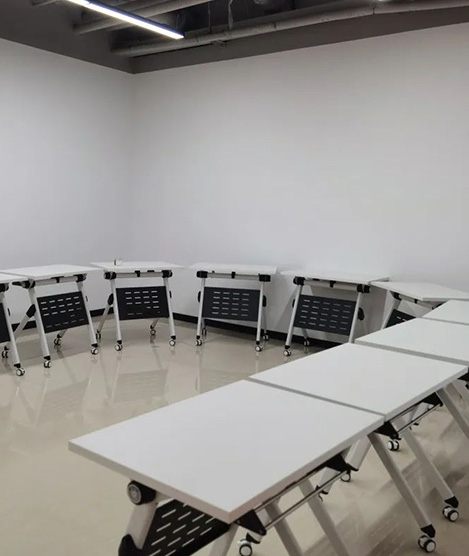
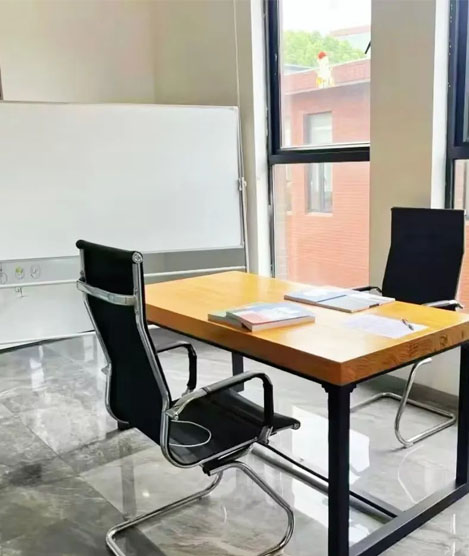
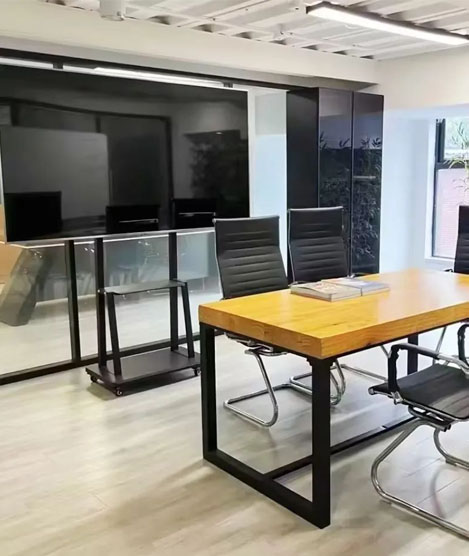
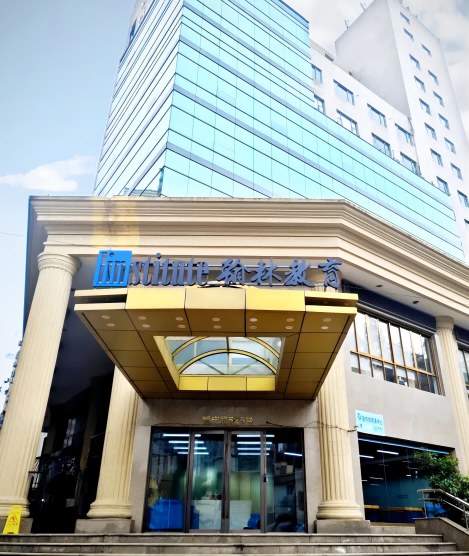
Teaching runs from Hanlin's own centres in Shanghai, Shenzhen, Chengdu and Hangzhou, and online for students elsewhere.

Talk to an advisor
Everything Hanlin does for IEO, in one conversation.
Entry, planning, coaching and the past papers. An advisor will tell you which of these a student actually needs, including when the answer is none of them.
Competition entry and planning
Which competitions suit this student, in what order, and by when - then we handle the registration, including the ones that can only be entered through a school or a centre.
Competition coaching
Taught by full-time subject tutors, on a course tier chosen by placement paper rather than by year group.
International curriculum tutoring
IB, AP, A-Level, IGCSE and the US high school curriculum, taught alongside school and timed around the exam calendar.
Competition past papers, free
A large library of past papers, mark schemes and syllabus breakdowns across every competition on this site. No charge and no enrolment.
Scan to add an advisor
Say which competition or course you are asking about. Replies in Chinese or English.
Or call +86 21 6352 6630FAQ
IEO, briefly answered.
What students and families ask before entering.
What makes IEO different from other economics competitions?
It is the only economics competition within the international science olympiad system - one of thirteen, alongside mathematics, physics and chemistry. It was founded in 2017 by Eric Maskin, the 2007 Nobel laureate in economics, who chairs its board.
Who can enter?
Students in grades 6 to 9 in Junior SL, and grades 9 to 12 in Junior HL and Senior.
Which division should I choose?
Junior SL covers basic microeconomics and personal finance and is bilingual. Junior HL adds macroeconomics and is also bilingual. Senior covers advanced macro and micro plus international economics, is English only, and is the only division that leads to national team selection.
How big is a team?
Three to five students, who may come from different schools and year groups. The team rules separately describe preliminary entry as individual or in fours, so confirm the current requirement.
Can I enter alone?
At the preliminary stage, yes. Every student must be part of a team for the national round. A student who registers for team entry but has no team by the deadline competes individually.
What happens at the national round?
An economics and finance assessment, a business case analysed and presented within twenty-four hours, a timed public roadshow for Senior champion-round teams, future-skills workshops, and an IEO Night. The national team is selected from it.
What kind of business cases come up?
Real decisions facing real places - a car manufacturer’s product strategy, land use and sustainability for Greek universities, policy responses to Hong Kong’s housing crisis, and the economic feasibility of a bridge between Azerbaijan and Kazakhstan.
Where is the global stage held?
Internationally, in summer. Past hosts include Hong Kong, Singapore, Australia, Azerbaijan and Greece.
When do I register?
Registration closes at the end of November, with a practice test and then the official online preliminary in December.
Related
Other business and economics competitions.
What students enter alongside IEO.
IEO enquiries
The economics olympiad, in the proper sense of the word.
IEO sits in the same system as the mathematics and physics olympiads, and its national round asks a team to solve a real problem in a day. Tell us what economics the student has studied and an advisor will place them in the right division.