
Competitions · Research and innovation · IENA
IENA, the Nuremberg International Invention Fair.
The oldest of the world’s three great invention fairs - and the 2026 edition is paused. If you are planning an entry, that is the first thing to know, because this is a trade fair in Germany rather than a competition you post something to.
Read this first
The 2026 fair is paused.
The organisers have suspended the 2026 edition. Anything you read giving 2026 dates should be checked before you commit to anything.
No 2026 edition
The pause is stated by the organisers. The last published cycle ran over three days at the start of November 2025, with submissions closing that September.
Which matters more here than elsewhere
IENA is a physical trade fair in Nuremberg. An entry involves a booth, flights, a hotel, a visa and insurance - commitments made months in advance and not easily unwound.
And entry runs through a national review
Entries must be approved by the China innovation delegation expert committee or a regional service centre before they can represent the country. That approval process runs on its own schedule.
Confirm before planning
If you are considering IENA for a future cycle, the sensible step is to confirm with the organiser whether the fair has resumed before beginning the approval process.
At a glance
What the fair is.
IENA is the oldest of the world’s three major invention fairs and is regarded as the most authoritative in the exhibition world, on the strength of its impartial judging, its scale and the level of participation. It is where new products are shown publicly for the first time.
- What it is
- A trade fair rather than a written competition - inventors exhibit to an audience of international specialists
- Scale
- More than 350 patented inventions from around the world, across medicine, aviation, environmental protection, machinery, construction and power
- Who exhibits
- Inventors using the fair as a marketing platform, showing ideas, prototypes and finished products and services, and making contact with potential licensees
- What a student submits
- An innovative work - a physical object, a model or a proposal - along with a display board, a 200-word project description in Chinese and English, and a three-minute explanatory video
- Approval required
- All entries must pass review by the China innovation delegation expert committee or a regional service centre before representing the country
- Travel documents
- Participants arrange their own passport, private or official
- Awards
- iENA gold, silver and bronze, and ICI gold, silver and bronze
- When it last ran
- Three days at the start of November, with submissions closing that September
- Status
- The 2026 edition is paused
What may be exhibited
Five rules on the project itself.
The requirements describe a specific kind of invention, and reading them before choosing a project saves a year.
Any field except clothing
New inventions, new products, patented products and proprietary technology in any field are eligible. Clothing projects are the one stated exclusion.
It has to solve something real
Projects should be ingeniously conceived and well designed, innovative and practical, closely connected to everyday life, and broadly applicable. The organisers ask that they solve an actual problem and meet environmental and energy-saving requirements.
A patent application helps
Projects that have already applied for an international patent are given priority consideration.
And the intellectual property must be clean
Projects subject to any intellectual property dispute, or that infringe someone else’s rights, may not be exhibited.
The cost
A dozen separate items, not one entry fee.
The organisers publish the cost as a list of components rather than a figure. That list is worth reading in full, because most of it is travel rather than competition.
The exhibition itself
A booth deposit and the booth fee, an invitation letter for the exhibition, and electricity for the stand during the fair.
Getting there
A flight deposit and the airfare, passport processing, overseas medical insurance, and excess baggage on international flights - which matters if the invention is a physical object.
Being there
Hotel deposit and accommodation, meals for the duration, and local transport including metro and taxis.
And what may be added on
A European study tour is listed among the components, along with an open "other costs" line. Ask what is included before committing.
Before you plan
Two things on the published material to check.
Both are the kind of detail that changes what an entry actually involves.
A pandemic-era arrangement is still published
The material states that under national epidemic arrangements nobody attends in person and patent projects are exhibited by proxy. Whether that still applies changes the entire cost structure above, so confirm it.
Physical attendance is the point, if it is available
IENA exists so that inventors meet an expert audience and potential licensees. An entry exhibited by proxy is a different proposition from one presented in person, and the difference is worth establishing before budgeting.
The national review comes first
No entry goes forward without approval from the expert committee or a regional service centre. That is the real first deadline.
And the deliverables are specific
A display board, a 200-word bilingual description and a three-minute video. All three take longer to produce well than teams expect.
Why Hanlin
Preparation for IENA at Hanlin is taught by full-time subject tutors, on a course tier chosen by placement paper rather than by year group.
Programme formats
Five ways this is taught.
Group size is the whole difference between these. It decides how much of the tutor's attention a student gets and how far the course can bend to them, so it is worth choosing rather than accepting.
| Format | Group size | What it suits |
|---|---|---|
| One-to-one | One student | Content, pace and emphasis set by what this student actually needs rather than by a syllabus. The only format that can be rebuilt mid-course. |
| Small group | Three to eight | Opens at three. Frequent discussion, and the tutor can slow down or move on according to what the group has absorbed. Most students chasing a higher award are taught in this one. |
| Class | Eight to twelve | Taught by the subject lead or a medal coach. Less back-and-forth, so it suits a student who will say when something is unclear. |
| Large class | Ten to twenty | For students in the middle of the placement range, and a way to try a competition before committing. Students often move to a small group or to one-to-one afterwards. |
| Past-paper class | No cap | Past papers worked through in sequence in the weeks before the sitting. Free to students already enrolled. |
Course length for IENA is set after a placement paper. The gap between where a student is and what the paper asks for is what the course has to close, and that gap is not the same for two students in the same year group.
How it runs
Six steps, four people on your side.
The same process for every student, so that nothing depends on one tutor remembering to do it.
 Step 1
Pre-course assessment
A placement paper before anything is booked, so the course tier is chosen on evidence rather than on a year group.
 Step 2
Tutor matching
A subject tutor is matched to the result, and their full background is provided before you agree to it.
 Step 3
Plan and group
A study group opens with four people on one student: the tutor, a planner, a supervisor and an academic manager.
 Step 4
Scheduled teaching
The teaching office sets the timetable around the competition date and school term, and teaching begins.
 Step 5
After-class reports
What was covered, and how the student handled it, reported after every lesson.
 Step 6
Homework follow-up
The teaching assistant and the form teacher both check that homework is done, which is where most preparation quietly fails.
Free resource pack
Project and submission pack
The same material our own IENA students work from. Scan the code, say what you need, and an advisor sends it.
Tell an advisor which competition and year group, and the material comes back the same day. Free, and you do not have to enrol in anything. If we do not already hold what you need, we will go and find it.
- PDFPast finalist project titles and abstracts
- PDFCategory definitions and the judging criteria, broken down
- DOCXA project timeline working back from the submission date
- PDFEntry checklist and the dates for the current cycle
Teaching team
Who would teach it.
Three of the twenty-two tutors on the published Hanlin roster - the ones whose subject this is.
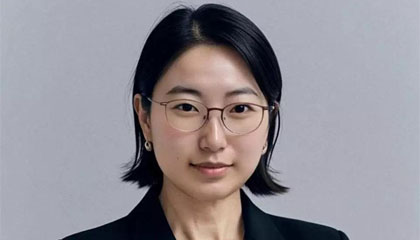
Dr An
Mathematics at Illinois Urbana-Champaign with highest honours and the Elizabeth R. Bennett scholarship, then a PhD in mathematics at Johns Hopkins on full funding with the Owen fellowship and the Joel Dean award for excellent teaching. Years of US university teaching, translating high-level mathematics into language students can use.

Yu
Master's in bioinformatics and computational biology from UT Dallas and a nutritional sciences degree from Wisconsin-Madison. Second author on an SCI-indexed paper from the Tanumihardjo vitamin-A laboratory, and formerly at ABS Global.

Tan
Master's in data science from the University of Sydney after a statistics degree at Simon Fraser University, graduating in the top 5% with repeated chancellor's honours; A-Levels at a Cambridge international school, and formerly a data analyst at Tencent. An AMC-accredited coach, a College Board-accredited AP teacher, and holder of a Math League excellent-teacher award.
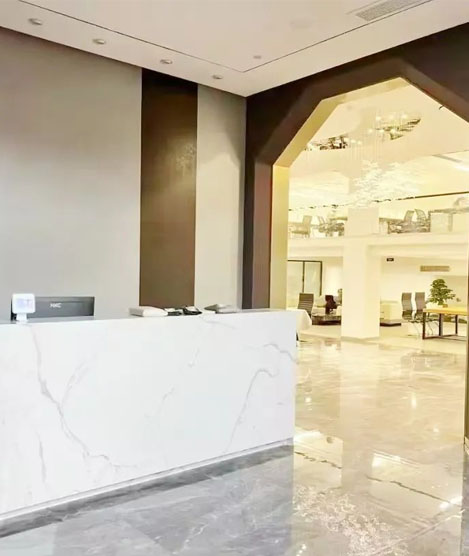
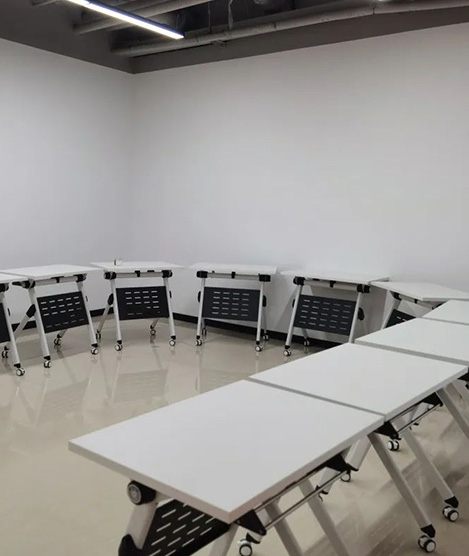
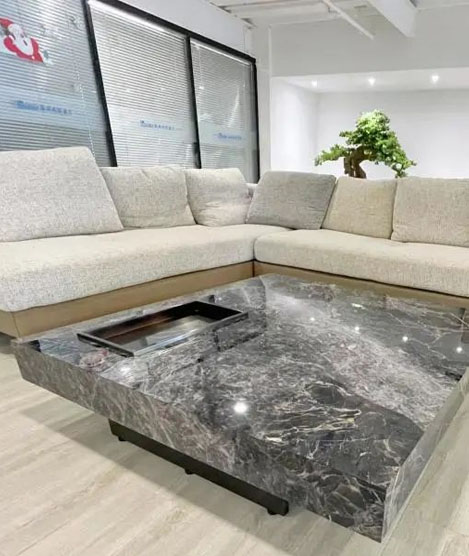
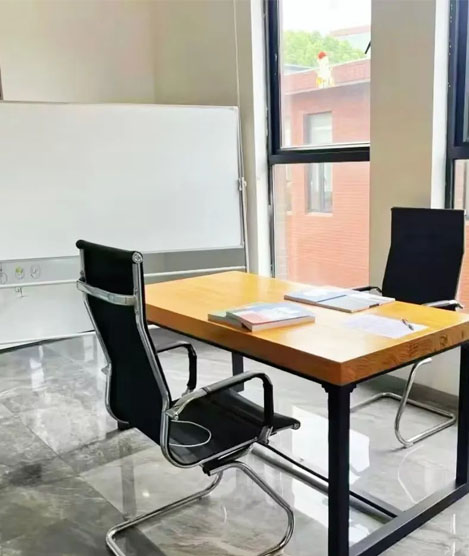
Where it is taught
Hanlin learning centres.
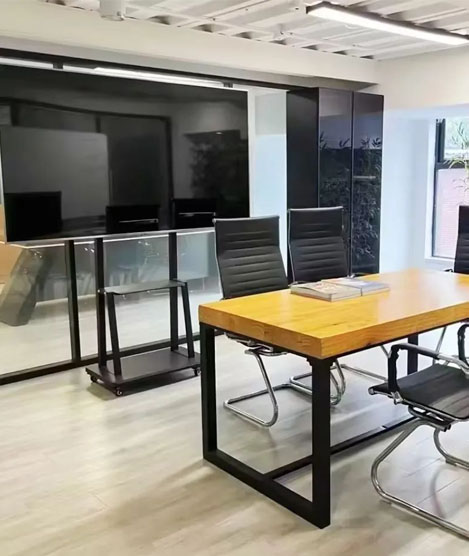
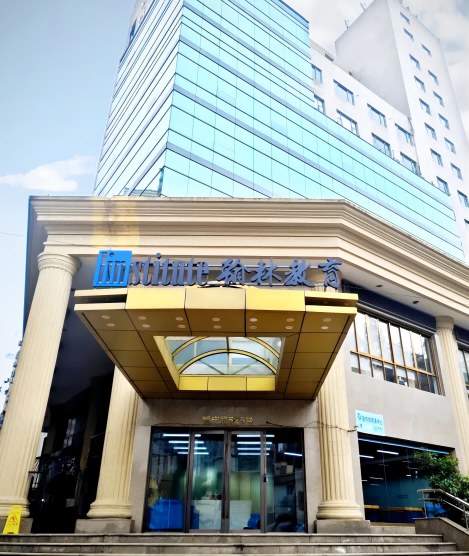
Teaching runs from Hanlin's own centres in Shanghai, Shenzhen, Chengdu and Hangzhou, and online for students elsewhere.
Talk to an advisor
Everything Hanlin does for IENA, in one conversation.
Entry, planning, coaching and the past papers. An advisor will tell you which of these a student actually needs, including when the answer is none of them.
Competition entry and planning
Which competitions suit this student, in what order, and by when - then we handle the registration, including the ones that can only be entered through a school or a centre.
Competition coaching
Taught by full-time subject tutors, on a course tier chosen by placement paper rather than by year group.
International curriculum tutoring
IB, AP, A-Level, IGCSE and the US high school curriculum, taught alongside school and timed around the exam calendar.
Competition past papers, free
A large library of past papers, mark schemes and syllabus breakdowns across every competition on this site. No charge and no enrolment.
Scan to add an advisor
Say which competition or course you are asking about. Replies in Chinese or English.
Or call +86 21 6352 6630FAQ
IENA, briefly answered.
What students, teachers and families ask.
Is IENA running in 2026?
No. The 2026 edition is paused. The last published cycle ran over three days at the start of November 2025.
What is IENA?
The Nuremberg International Invention Fair - the oldest of the world’s three great invention fairs, and a stage on which new products are shown publicly for the first time. More than 350 patented inventions are exhibited across medicine, aviation, environmental protection, machinery, construction and power.
Is it a competition or an exhibition?
Both, but the exhibition comes first. Inventors show ideas, prototypes and products to an audience of international specialists and make contact with potential licensees. Awards - iENA and ICI gold, silver and bronze - are given alongside.
What does a student submit?
An innovative work, which may be a physical object, a model or a proposal, together with a display board, a 200-word project description in Chinese and English, and a three-minute explanatory video.
Can I enter directly?
No. Entries must be approved by the China innovation delegation expert committee or a regional service centre before they can represent the country.
What may not be exhibited?
Clothing projects, and anything subject to an intellectual property dispute or infringing someone else’s rights. Projects that have already applied for an international patent are given priority.
What does it cost?
The organisers publish a list of components rather than a figure: booth deposit and fee, flights, hotel, invitation letter, overseas medical insurance, meals, a European study tour, passport processing, excess baggage, stand electricity, local transport and other costs. Ask for a full quotation before committing.
Do participants attend in person?
The published material still carries a pandemic-era arrangement under which nobody attends and patent projects are exhibited by proxy. Confirm whether that still applies - it changes both the cost and the value of an entry.
Related
Other innovation competitions.
What students enter alongside or instead of IENA.
IENA enquiries
Confirm the fair is running before you build the budget.
The 2026 edition is paused, entry runs through a national expert review, and the cost is a dozen separate travel and exhibition items rather than one fee. Tell us what the invention is and an advisor will confirm the current status and what an entry would actually involve.