
Competitions · Research and innovation · ICW
ICW, the Invention Convention Worldwide.
The invention is worth a quarter of the marks. How you invented it is worth more than forty per cent. That single fact should change how a team spends its year.

Read this first
The process is worth more than the invention.
ICW publishes its judging weights, and they are unlike any other competition in this group. A team that reads them changes what it does for a year.
Over 40% for how you invented it
The invention process carries more than forty per cent of the assessment. Not the idea, and not the finished object - the route from noticing a problem to solving it.
25 to 30% for the invention itself
The work is worth less than the process that produced it. A polished prototype with no record of how it came about scores badly here.
And judges ask about the process on the day
At the live judging, questions concentrate on how the invention was arrived at rather than on what it does. Teams that cannot narrate their own development lose marks they have already earned.
So keep the record as you go
Sketches, dead ends, revisions, tests that failed. On most competitions those are private working papers. Here they are the largest single component of the score.
At a glance
What the convention is.
ICW is run by The Henry Ford in Michigan and was first held in Connecticut in 1983. Over forty years it has grown to state events in 22 American states and national events in ten countries including Singapore and the United Kingdom, drawing more than 120,000 K-12 students a year. The China region, ICC, has run since 2019.
- Organiser
- The Henry Ford, the American innovation museum
- Since
- 1983
- The China region
- ICC, running since 2019, and one of the 44 competitions on the Ministry of Education whitelist
- Who can enter
- Students from kindergarten to grade 12, at primary, junior, senior, vocational and technical schools
- Team
- Individually or in teams of up to four. A student may join only one team
- Age groups
- Four - G for grades 1 to 2, P for grades 3 to 5 or 6, J for grades 7 to 9, and S for grades 10 to 12. A team is placed by its oldest member
- Restrictions
- No cross-province teams, and a team may not enter both the provincial competition and the theme competition. Each team registers for exactly one theme
- Judging weights
- The invention process, more than 40%. The invention itself, 25 to 30%
- The philosophy
- STEMIE - science, technology, engineering and mathematics, plus invention and entrepreneurship
- The season
- Registration and compliance review from March to May, provincial and theme competitions from May to July, the global final in the summer, and an exhibition period from September to December
What it rewards
Creativity, and a problem worth solving.
ICW states its priorities plainly, and they are not the priorities of most science competitions.
Creativity above technical content
The organisers say innovation is the most important criterion and technical sophistication is not. A simple invention that nobody has thought of beats a complex one that has.
A real problem, with social value
Unlike a general science competition, ICW asks that entries connect to society. The student has to find a genuine pain point and build something that solves an actual problem in life.
And entrepreneurship as part of it
The E in STEMIE is deliberate. Entries are considered for their social value and practical significance, not only for whether they work.
Work may enter the museum collection
The Henry Ford holds more than 26 million innovation artefacts, including entries from past conventions. A strong entry can join that collection.
The themes
Ten themes, and each has its own judging focus.
A team registers for exactly one, so this is the decision that shapes everything after it. The judging focus tells you what that panel actually weighs.
| Theme | Scope | What the panel weighs |
|---|---|---|
| Low-carbon future | Energy capture, industrial emissions reduction, personal carbon management | Technical feasibility, measured emissions benefit, commercial potential |
| Sustainable communities | Urban resource recycling and quality of community life - waste handling, water management, resource sharing | Practicality, fit with a community, sustainability of the operating model |
| Biodiversity protection | Technology addressing ecological protection, including biological monitoring and invasive species control | Technical originality, conservation effect, scope for wider application |
| A barrier-free world | Assistive technology for disabled people - mobility, communication, access to information | Human concern, functional usefulness, ease of operation |
| Healthy ageing | Remote medicine, safety at home, cognitive health | Technical safety, accuracy of data, friendliness of the user experience |
| AI and daily life | Artificial intelligence in household services, public safety and disaster warning | Algorithmic originality, fit to the situation, social benefit |
| Responding to climate change | Disaster warning, emergency rescue, environmental adaptation technology | Speed of disaster response, technical reliability, breadth of application |
| Food security | Agricultural production, storage and transport, resource use | Technical advance, effect on yield and quality, efficiency of resource use |
| Future transport | Low-altitude logistics, shared mobility, new-energy vehicles | Originality, safety, prospects for application |
| Intelligent manufacturing | The theme competition: robotics, aerospace, the internet of things and their automation | Accuracy of the underlying science, originality, practical value |
Note how many of these panels weigh commercial or operational viability alongside the engineering. That is the entrepreneurship half of STEMIE showing up in the mark scheme.
Who it suits
A competition designed to be entered repeatedly.
ICW describes itself as an innovation education programme rather than a contest, and its structure follows from that.
From kindergarten upward
The K-12 range is deliberate. Many students enter year after year from a very young age, improving through repeated practice at inventing.
Four age groups, placed by the eldest
A mixed-age team competes in the group of its oldest member, which is worth considering before recruiting an older student into a younger team.
And the stated mission is modest
The organisers put it as giving every child one chance to be an inventor - and if possible, two. The target is ten million children in five years.
Backed by a real alliance
The convention runs through alliance members - schools, training organisations, non-profits and companies - including MIT’s Lemelson centre, Georgia Tech and the University of Iowa.
Preparation
How Hanlin supports an ICW entry.
Because the process outweighs the product, the support looks different from ordinary project coaching.
Keeping an invention log from day one
The largest component of the score is the process, and the evidence for it is the record. Starting the log when the prototype is finished is starting it too late.
Finding a real problem first
Entries are judged on social value and on solving something that actually happens. The observation comes before the invention, and it is the part most teams skip.
Choosing the theme deliberately
Each panel weighs different things - one wants measured emissions benefit, another wants ease of operation for a disabled user. The same invention can be framed for more than one.
And rehearsing the process narrative
Live judging concentrates on how you got there. Being able to tell that story - including the parts that failed - is a rehearsable skill and it is where the marks are.
Why Hanlin
Preparation for ICW at Hanlin is taught by full-time subject tutors, on a course tier chosen by placement paper rather than by year group.
Programme formats
Five ways this is taught.
Group size is the whole difference between these. It decides how much of the tutor's attention a student gets and how far the course can bend to them, so it is worth choosing rather than accepting.
| Format | Group size | What it suits |
|---|---|---|
| One-to-one | One student | Content, pace and emphasis set by what this student actually needs rather than by a syllabus. The only format that can be rebuilt mid-course. |
| Small group | Three to eight | Opens at three. Frequent discussion, and the tutor can slow down or move on according to what the group has absorbed. Most students chasing a higher award are taught in this one. |
| Class | Eight to twelve | Taught by the subject lead or a medal coach. Less back-and-forth, so it suits a student who will say when something is unclear. |
| Large class | Ten to twenty | For students in the middle of the placement range, and a way to try a competition before committing. Students often move to a small group or to one-to-one afterwards. |
| Past-paper class | No cap | Past papers worked through in sequence in the weeks before the sitting. Free to students already enrolled. |
Course length for ICW is set after a placement paper. The gap between where a student is and what the paper asks for is what the course has to close, and that gap is not the same for two students in the same year group.
How it runs
Six steps, four people on your side.
The same process for every student, so that nothing depends on one tutor remembering to do it.
 Step 1
Pre-course assessment
A placement paper before anything is booked, so the course tier is chosen on evidence rather than on a year group.
 Step 2
Tutor matching
A subject tutor is matched to the result, and their full background is provided before you agree to it.
 Step 3
Plan and group
A study group opens with four people on one student: the tutor, a planner, a supervisor and an academic manager.
 Step 4
Scheduled teaching
The teaching office sets the timetable around the competition date and school term, and teaching begins.
 Step 5
After-class reports
What was covered, and how the student handled it, reported after every lesson.
 Step 6
Homework follow-up
The teaching assistant and the form teacher both check that homework is done, which is where most preparation quietly fails.
Free resource pack
Project and submission pack
The same material our own ICW students work from. Scan the code, say what you need, and an advisor sends it.
Tell an advisor which competition and year group, and the material comes back the same day. Free, and you do not have to enrol in anything. If we do not already hold what you need, we will go and find it.
- PDFPast finalist project titles and abstracts
- PDFCategory definitions and the judging criteria, broken down
- DOCXA project timeline working back from the submission date
- PDFEntry checklist and the dates for the current cycle
Teaching team
Who would teach it.
Three of the twenty-two tutors on the published Hanlin roster - the ones whose subject this is.

Dr An
Mathematics at Illinois Urbana-Champaign with highest honours and the Elizabeth R. Bennett scholarship, then a PhD in mathematics at Johns Hopkins on full funding with the Owen fellowship and the Joel Dean award for excellent teaching. Years of US university teaching, translating high-level mathematics into language students can use.

Yu
Master's in bioinformatics and computational biology from UT Dallas and a nutritional sciences degree from Wisconsin-Madison. Second author on an SCI-indexed paper from the Tanumihardjo vitamin-A laboratory, and formerly at ABS Global.

Tan
Master's in data science from the University of Sydney after a statistics degree at Simon Fraser University, graduating in the top 5% with repeated chancellor's honours; A-Levels at a Cambridge international school, and formerly a data analyst at Tencent. An AMC-accredited coach, a College Board-accredited AP teacher, and holder of a Math League excellent-teacher award.
Where it is taught
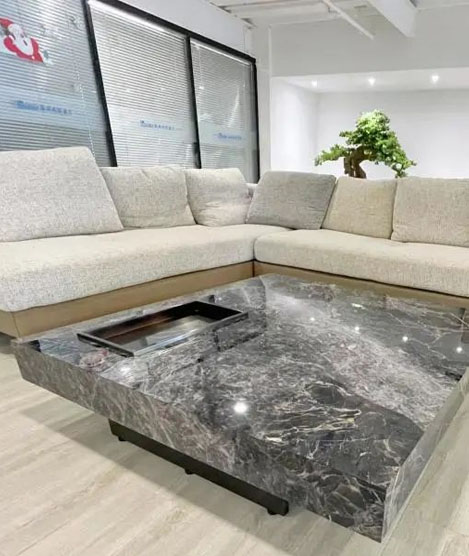
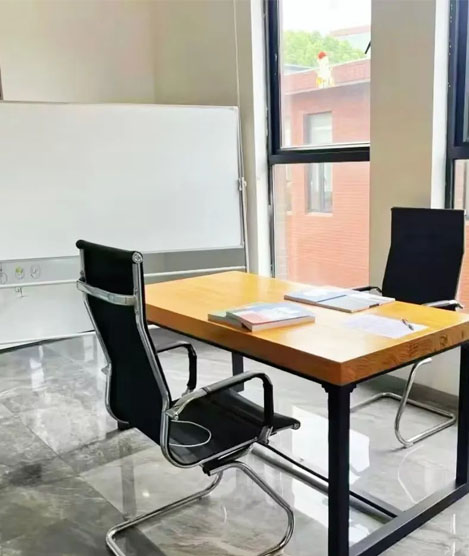
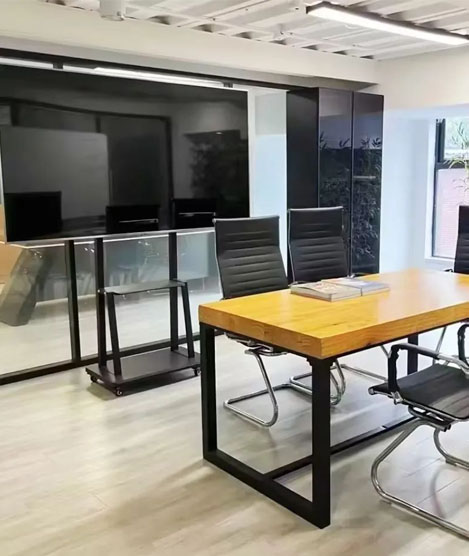
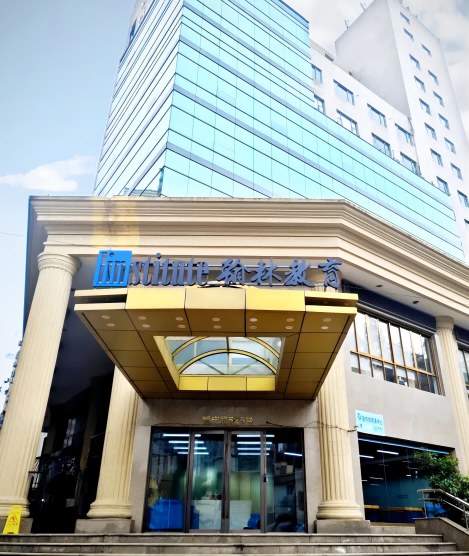
Hanlin learning centres.
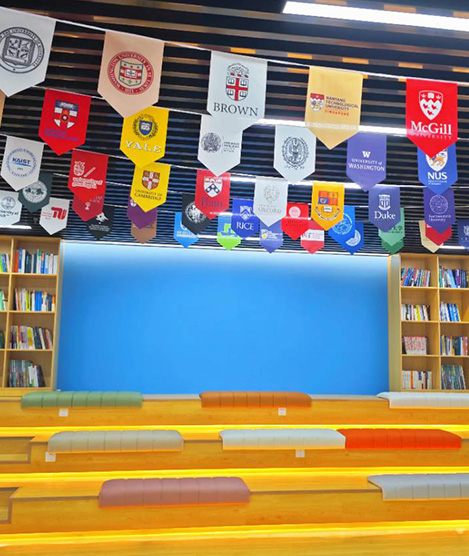
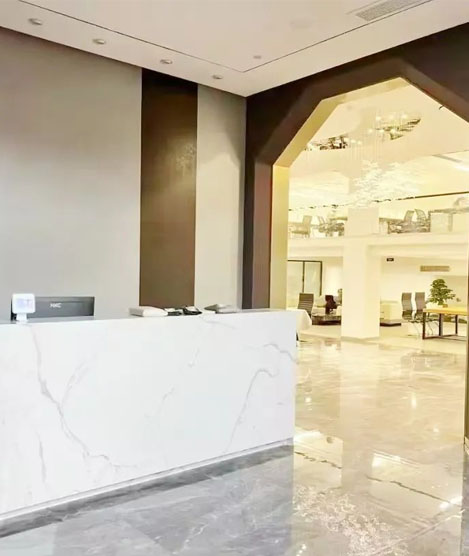
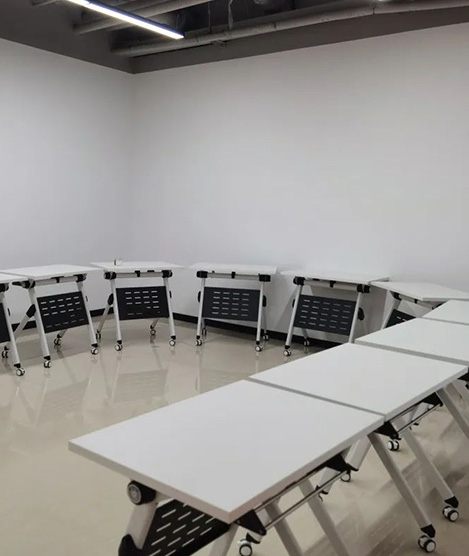
Teaching runs from Hanlin's own centres in Shanghai, Shenzhen, Chengdu and Hangzhou, and online for students elsewhere.
Talk to an advisor
Everything Hanlin does for ICW, in one conversation.
Entry, planning, coaching and the past papers. An advisor will tell you which of these a student actually needs, including when the answer is none of them.
Competition entry and planning
Which competitions suit this student, in what order, and by when - then we handle the registration, including the ones that can only be entered through a school or a centre.
Competition coaching
Taught by full-time subject tutors, on a course tier chosen by placement paper rather than by year group.
International curriculum tutoring
IB, AP, A-Level, IGCSE and the US high school curriculum, taught alongside school and timed around the exam calendar.
Competition past papers, free
A large library of past papers, mark schemes and syllabus breakdowns across every competition on this site. No charge and no enrolment.
Scan to add an advisor
Say which competition or course you are asking about. Replies in Chinese or English.
Or call +86 21 6352 6630FAQ
ICW, briefly answered.
What students, teachers and families ask before entering.
How is an entry judged?
The invention process carries more than 40% of the assessment and the invention itself 25 to 30%. At the live judging, questions concentrate on how the invention was developed rather than on what it does.
Does my invention need to be technically advanced?
No. The organisers state that innovation is the most important criterion and technical sophistication is not. What matters is that the idea is original and solves a real problem with social value.
Who can enter?
Students from kindergarten to grade 12, individually or in teams of up to four, in four age groups - grades 1 to 2, grades 3 to 5 or 6, grades 7 to 9, and grades 10 to 12. A team competes in the group of its oldest member.
Can I be on more than one team?
No. A student may join only one team, teams may not cross provincial boundaries, and a team may not enter both the provincial competition and the theme competition.
How many themes can we enter?
One. Each team registers for exactly one of the ten themes, and each theme has its own judging focus.
What are the themes?
Nine provincial themes - low-carbon future, sustainable communities, biodiversity protection, a barrier-free world, healthy ageing, AI and daily life, responding to climate change, food security and future transport - plus intelligent manufacturing as the theme competition.
When does the season run?
Registration and compliance review from March to May, provincial and theme competitions from May to July, the global final in the summer, and an exhibition period from September to December.
What is STEMIE?
The organisers’ extension of STEM to include invention and entrepreneurship. It is why entries are assessed for social value and practical significance as well as for whether they work.
What happens to a winning invention?
The Henry Ford holds more than 26 million innovation artefacts including entries from past conventions, and strong work can join that collection.
Is it recognised in China?
The China region competition is one of the 44 events on the Ministry of Education whitelist.
Related
Other innovation competitions.
What students enter alongside ICW.
ICW enquiries
Start the notebook before you start building.
More than forty per cent of the marks go to how the invention was developed, and the evidence for that is the record a team keeps as it works. Tell us the year group and what problem the student has noticed, and an advisor will map the theme and the season.