
Competitions · Biology · IBO
The Intermediate Biology Olympiad.
Sixty minutes of multiple choice, sat online, for students in their first year past GCSE. It is the step below BBO - same committee, same award mechanism, less depth - and it comes with a year of Royal Society of Biology membership.
First, the acronym
Three different things are called IBO.
This page is about the first of them. If you arrived looking for one of the others, here is where to go.
Intermediate Biology Olympiad
This page. A 60-minute multiple-choice paper for students in the first year past GCSE, run by UK Biology Competitions as the entry point below BBO.
International Biology Olympiad
The world championship, entered by national teams. Britain selects its team through BBO, so that is the page to read if this is what you meant.
International Baccalaureate Organization
The body that runs the IB Diploma. Nothing to do with either competition - see the IB curriculum page instead.
At a glance
What the olympiad is, and who sits it.
The Intermediate Biology Olympiad is organised by the British biology olympiad committee and managed by the Royal Society of Biology. ASDAN China has been its authorised China-region host since 2020.
- Organiser
- UK Biology Competitions, a registered charity, under the Royal Society of Biology
- Who can enter
- Students in their first year of post-16 study - Year 12 in England and Wales, Year 13 in Northern Ireland, S5 in Scotland, and the equivalent year elsewhere. In China this is senior years one and two, grades 10 and 11, covering GCSE and AS
- Open to
- Students from schools of any type, anywhere in the world
- Format
- Individual written paper, multiple choice throughout
- Duration
- 60 minutes
- Language
- English and Chinese
- How it is sat
- Online through the exam portal. Each student needs an internet-connected computer, laptop or tablet, and a teacher invigilates under normal exam conditions
- Where
- Paper sittings at partner schools across China
- Equipment
- A non-programmable calculator is permitted
- When
- A Saturday in early November, with registration closing about ten days earlier
- Entry fee
- Free for students in the UK. £30 for students elsewhere, paid to the organiser
- Extra time
- A proportionate extension may be arranged where appropriate. The portal records how long each student took
- What every entrant receives
- A year of free Royal Society of Biology BioNet membership
What it asks
It rewards biological instinct, not extra content.
The organisers are unusually direct about this, and it changes how a student should prepare.
Nothing beyond the A-Level syllabus is expected
The organisers say students are not expected to know anything outside normal A-Level teaching, and that teachers need not prepare specially. Content coverage is not the point of the paper.
But unfamiliar topics do appear
The paper occasionally introduces subjects no student will have met. The task is to apply familiar principles to unfamiliar ground - which is the skill being assessed.
Instinct, logic and imagination
The organisers name those three. Most questions ask a student to reason from what they know rather than retrieve what they have learned.
With some quick recall questions too
The paper includes fast questions on the basics, which the organisers include simply because students enjoy them. They also expose the material to frontier topics along the way.
The syllabus
IGCSE plus the first year of AS.
The content sits squarely on what a student in this year group has just covered.
Molecules and cells
Biological molecules and cell structure - the foundation the rest of the paper reasons from.
Systems
The immune system, exchange surfaces, and circulatory systems.
Plants and diversity
Plant transport and biodiversity, the two areas school courses often cover lightest.
Molecular genetics
The area with the most room for a question to move past the syllabus while still resting on principles a student already holds.
How awards are decided
Thresholds set in Britain, applied everywhere.
The same mechanism BBO uses, and it works the same way in the entrant’s favour.
Five bands, set on British students
Gold, Silver, Bronze, Highly Commended and Commended are drawn at roughly the top 5%, 15%, 30%, 45% and 60% of British nationals’ scores.
Everyone else is measured against the mark
Students from other countries are compared directly against those thresholds rather than ranked into a proportion, so a strong overseas cohort is not competing against itself.
Certificates are issued digitally
Gold through Commended, plus a participation certificate. All are electronic.
And everyone gets BioNet
A year of free Royal Society of Biology BioNet membership goes to every entrant, award or not.
Where it sits
IBO and BBO share a syllabus. They differ in depth.
For a student deciding between them, or planning both across two years, this is the distinction that matters.
The same ground, less deeply
The two share their syllabus; the difference is how far each pushes. IBO is the junior version rather than a different subject.
Sixty minutes against ninety
IBO is a one-hour multiple-choice paper. BBO runs to ninety minutes and includes specimen identification from photographs, which IBO does not.
November, then January
IBO sits in early November and BBO in mid-January. A student can sit both in one academic year, with the first as a genuine rehearsal for the second.
And it is the right first step
For a student who finds USABO and BBO too hard to start with, this is the paper the organisers designed for exactly that position.
Preparation
How Hanlin prepares students for IBO.
A paper that explicitly does not reward extra content needs a different kind of preparation from most competitions here.
Practising transfer, not coverage
Since the organisers rule out content beyond A-Level, practice works on applying known principles to unfamiliar biology rather than on learning more biology.
Multiple choice at pace
Sixty minutes of multiple choice rewards quick, confident elimination. Timed sets build that faster than untimed study does.
Securing the eight topic areas
Biological molecules, cell structure, immunity, exchange surfaces, circulation, plant transport, molecular genetics and biodiversity. Gaps here are the only content-shaped weakness the paper can find.
Planning the January follow-on
For students who do well, BBO in January is the natural next paper and the preparation carries directly across.
Why Hanlin
Preparation for IBO at Hanlin is taught by full-time subject tutors, on a course tier chosen by placement paper rather than by year group.
Programme formats
Five ways this is taught.
Group size is the whole difference between these. It decides how much of the tutor's attention a student gets and how far the course can bend to them, so it is worth choosing rather than accepting.
| Format | Group size | What it suits |
|---|---|---|
| One-to-one | One student | Content, pace and emphasis set by what this student actually needs rather than by a syllabus. The only format that can be rebuilt mid-course. |
| Small group | Three to eight | Opens at three. Frequent discussion, and the tutor can slow down or move on according to what the group has absorbed. Most students chasing a higher award are taught in this one. |
| Class | Eight to twelve | Taught by the subject lead or a medal coach. Less back-and-forth, so it suits a student who will say when something is unclear. |
| Large class | Ten to twenty | For students in the middle of the placement range, and a way to try a competition before committing. Students often move to a small group or to one-to-one afterwards. |
| Past-paper class | No cap | Past papers worked through in sequence in the weeks before the sitting. Free to students already enrolled. |
Course length for IBO is set after a placement paper. The gap between where a student is and what the paper asks for is what the course has to close, and that gap is not the same for two students in the same year group.
How it runs
Six steps, four people on your side.
The same process for every student, so that nothing depends on one tutor remembering to do it.
 Step 1
Pre-course assessment
A placement paper before anything is booked, so the course tier is chosen on evidence rather than on a year group.
 Step 2
Tutor matching
A subject tutor is matched to the result, and their full background is provided before you agree to it.
 Step 3
Plan and group
A study group opens with four people on one student: the tutor, a planner, a supervisor and an academic manager.
 Step 4
Scheduled teaching
The teaching office sets the timetable around the competition date and school term, and teaching begins.
 Step 5
After-class reports
What was covered, and how the student handled it, reported after every lesson.
 Step 6
Homework follow-up
The teaching assistant and the form teacher both check that homework is done, which is where most preparation quietly fails.
Free resource pack
Past papers and preparation pack
The same material our own IBO students work from. Scan the code, say what you need, and an advisor sends it.

Tell an advisor which competition and year group, and the material comes back the same day. Free, and you do not have to enrol in anything. If we do not already hold what you need, we will go and find it.
- PDFPast papers, every year the organiser has released
- PDFWorked solutions, where the organiser publishes them
- PDFThe syllabus on one page - every topic, and how heavily it is examined
- PDFEntry checklist and the dates for the current cycle
Teaching team
Who would teach it.
Three of the twenty-two tutors on the published Hanlin roster - the ones whose subject this is.

Yu
Master's in bioinformatics and computational biology from UT Dallas and a nutritional sciences degree from Wisconsin-Madison. Second author on an SCI-indexed paper from the Tanumihardjo vitamin-A laboratory, and formerly at ABS Global.

Zhang
Master's in cognitive science at UC San Diego on full scholarship, after double honours in neurobiology and behaviour and in cognitive science at UC Davis. Ten years overseas, a perfect TOEFL speaking score, and named an outstanding education scholar at UCSD.

Li
Biology at Emory, biomedical engineering at Georgia Tech, and a bioengineering master's at the University of Pennsylvania. College Board-accredited, teaching from a cross-disciplinary research base and folding research practice into the classroom.
Where it is taught
Hanlin learning centres.
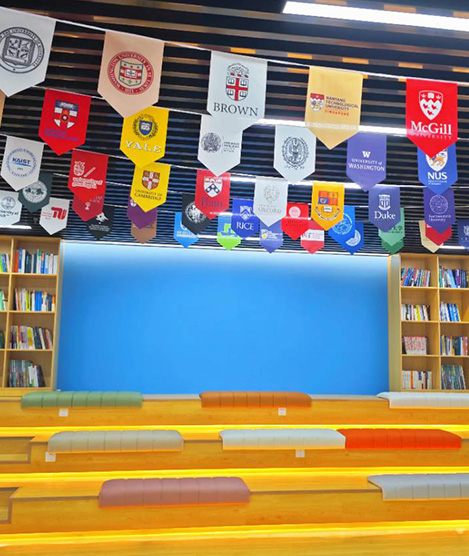
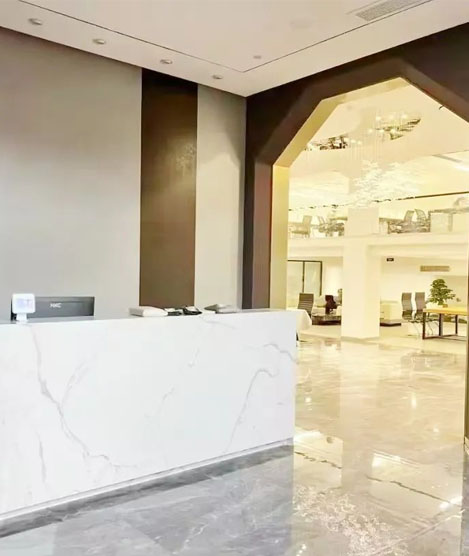
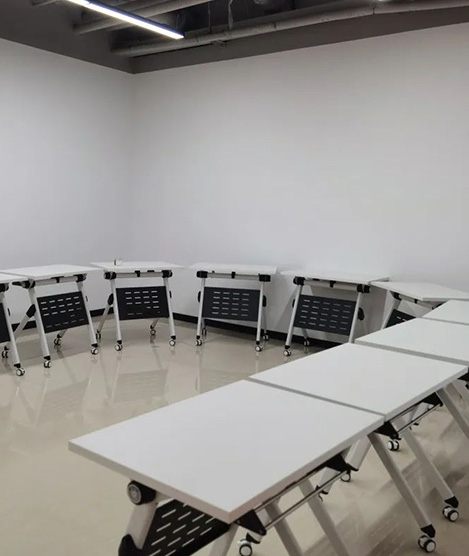
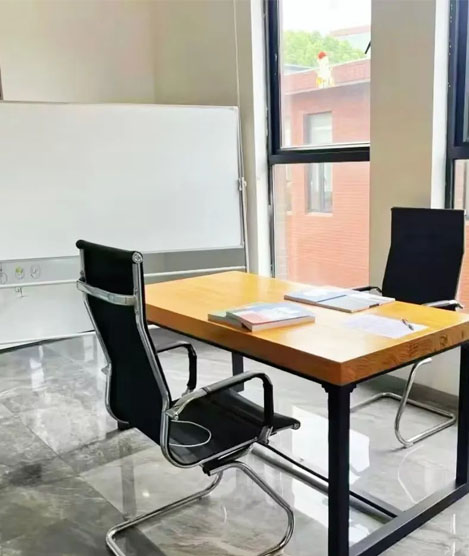
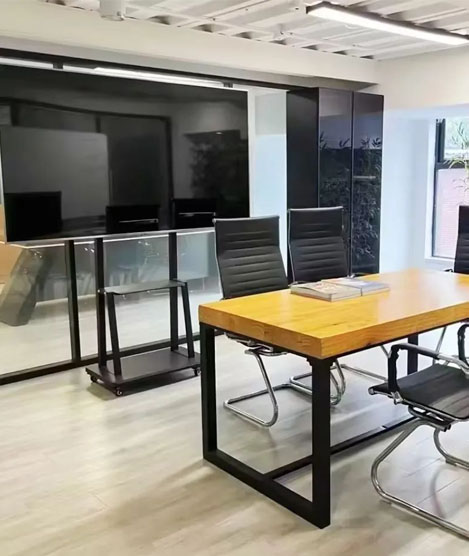
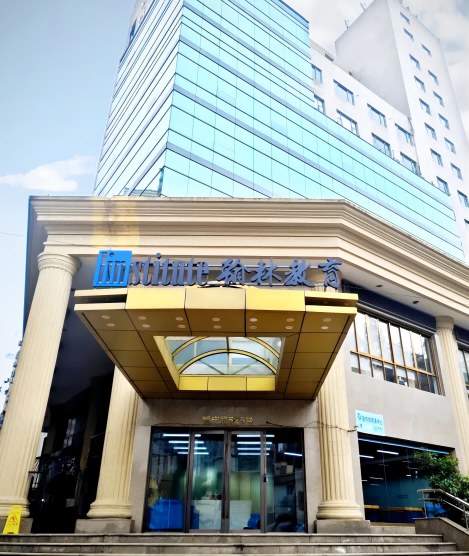
Teaching runs from Hanlin's own centres in Shanghai, Shenzhen, Chengdu and Hangzhou, and online for students elsewhere.

Talk to an advisor
Everything Hanlin does for IBO, in one conversation.
Entry, planning, coaching and the past papers. An advisor will tell you which of these a student actually needs, including when the answer is none of them.
Competition entry and planning
Which competitions suit this student, in what order, and by when - then we handle the registration, including the ones that can only be entered through a school or a centre.
Competition coaching
Taught by full-time subject tutors, on a course tier chosen by placement paper rather than by year group.
International curriculum tutoring
IB, AP, A-Level, IGCSE and the US high school curriculum, taught alongside school and timed around the exam calendar.
Competition past papers, free
A large library of past papers, mark schemes and syllabus breakdowns across every competition on this site. No charge and no enrolment.
Scan to add an advisor
Say which competition or course you are asking about. Replies in Chinese or English.
Or call +86 21 6352 6630FAQ
The Intermediate Biology Olympiad, briefly answered.
What students, teachers and families ask before entering.
Is this the International Biology Olympiad?
No. This is the Intermediate Biology Olympiad, a British paper for students in their first year past GCSE. The International Biology Olympiad is the world championship contested by national teams, and Britain selects its team through BBO. Both are abbreviated IBO, which is why this page says so first.
Who can enter?
Students in their first post-16 year - Year 12 in England and Wales, Year 13 in Northern Ireland, S5 in Scotland, and the equivalent elsewhere. In China that is senior years one and two, grades 10 and 11. Students from any type of school anywhere may enter.
What is the paper?
Sixty minutes of multiple-choice questions, sat online through the exam portal and invigilated by a teacher under normal exam conditions.
What language is it in?
English and Chinese.
What do I need to sit it?
An internet-connected computer, laptop or tablet. A non-programmable calculator is permitted.
What is on the syllabus?
IGCSE and first-year AS content: biological molecules, cell structure, the immune system, exchange surfaces, circulatory systems, plant transport, molecular genetics and biodiversity.
Do I need to study beyond A-Level?
The organisers say no. Students are not expected to know material outside normal A-Level teaching. Unfamiliar topics do appear, but the task is to apply familiar principles to them.
How are awards decided?
Gold, Silver, Bronze, Highly Commended and Commended thresholds are drawn at about the top 5%, 15%, 30%, 45% and 60% of British nationals’ scores. Students elsewhere are measured against those marks rather than ranked into a proportion.
What does every entrant get?
A digital certificate and a year of free Royal Society of Biology BioNet membership.
What does it cost?
Free for students in the UK. £30 for students elsewhere, paid to the organiser.
Should I sit this or BBO?
They share a syllabus and differ in depth. IBO in November is the sensible first paper for a student in grade 10 or 11; BBO in January is the deeper one, and both can be sat in the same year.
Related
Where students go next.
The papers either side of this one.
Intermediate Biology Olympiad enquiries
The paper designed for students not ready for BBO.
One hour, multiple choice, no content beyond A-Level expected, and a year of Royal Society of Biology membership for everyone who enters. Tell us the student’s year group and an advisor will map the November entry and what follows it.