
Competitions · Mathematics · HMMT
HMMT, the Harvard-MIT Mathematics Tournament.
A team tournament run by Harvard and MIT students since 1998, held twice a year - in November at Harvard and in February at MIT. Around a thousand students compete, and the February tournament regularly draws national team members and IMO medallists, which is why its problems reach olympiad level.

At a glance
A team tournament, entered as a team.
HMMT is not an examination sat at a desk in your own school. It is a two-day event on a university campus, entered as a squad, and the individual paper is only half of what is scored.
- Organiser
- Students of the mathematics and computer science departments at Harvard and MIT, running the tournament since 1998
- Who can enter
- Secondary school students worldwide. There is no grade or nationality restriction
- How you enter
- As a team. November teams are 4 to 6 students, February teams 6 to 8. The organisers also hold places for individual entrants, who sit the individual round alone and are grouped with other individuals for the team rounds
- Two tournaments
- One each November and February. A student registers for one only - you cannot sit both in the same season
- Where
- Since 2017 the November tournament has been held at Harvard and the February tournament at MIT
- Language
- English throughout
- Calculators
- No calculating aids of any kind are permitted
- Scoring
- 1,600 points in total: 800 from the individual round, 400 from the team round and 400 from the guts round. The team total weights the individual scores at 50% and each of the two team rounds at 25%
- Scale
- Around a thousand students each year, among them national team members and international olympiad medallists
The rounds
Three rounds, scored on one combined total.
Every student sits all three. The formats differ between the two tournaments, but the structure and the weighting do not.
Individual round
Algebra, geometry and combinatorics, ten questions in each, where combinatorics takes in probability and statistics. Worth 800 of the 1,600 points, so it remains the single largest component even at a tournament sold on teamwork.
Team round
Sixty minutes, ten questions, answered collaboratively. Each question is worth what the field makes it worth: the value is computed from candidates’ answer data, so the fewer teams that solve a question, the more it pays.
Guts round
Eighty minutes and thirty-six short-answer questions issued in sets. A runner fetches each set from the question centre and trades completed answers for the next. Finishing is not expected, and scores update live on a screen.
November and February
The same tournament at two different levels.
The November tournament is the entry point; February is the harder of the two by a wide margin. Choosing between them is the first decision a team makes.
| November, at Harvard | February, at MIT | |
|---|---|---|
| Individual round | General Round and Theme Round, 50 minutes each, ten multiple-choice questions each | Algebra and Number Theory, Geometry, and Combinatorics as three separate 50-minute sections, ten fill-in questions each |
| Team round | Short answer, 60 minutes | Proof-based, 60 minutes - the only round carrying partial credit |
| Guts round | 36 questions in sets of three, 80 minutes | 36 questions in sets of four, 80 minutes |
| Team size | 4 to 6 students | 6 to 8 students |
| Difficulty | Mid-range AMC through to hard AIME | Mid-range AIME through to USAMO, with some problems at olympiad level |
| Question values, guts | Rising through 5, 6, 7, 8, 9, 10, 11, 12, 13, 15, 17 and 20 marks | Rising through 2, 3, 5, 7, 11, 13, 17, 19 and 23 marks |
The February team round is worth understanding before entering: it asks for written proofs, it is the only round where partial credit exists, and some of its problems sit at USAMO or IMO difficulty. Teams entering February need someone who can write a rigorous argument under time pressure.
Scoring
How the 1,600 points are divided.
A perfect team total requires topping all three rounds, which is why no team reaches it.
Awards
Five awards, individual and team.
Recognition runs down to tenth place in the overall categories, so a strong team can place without winning.
Individual overall, top ten
Ranked on the combined algebra, geometry and combinatorics score. This is the award that reads most directly as a personal result, since it is independent of how the rest of the squad performed on the day.
Individual subject, top ten
Awarded on the highest score in each subject separately. A student who is genuinely strong in one area can place here without an overall ranking, which makes it the realistic target for a specialist.
Team and guts rounds, top five each
The two collaborative rounds are ranked and awarded in their own right. Because guts scores update live, a team can watch itself moving up or down the board through the eighty minutes.
Overall team, top ten
Combined from the individual scores and the team scores at 50% each. The top fifty individual scorers in February are also invited to the HMMT Invitational: four hours and five olympiad-style problems.
The weekend
What happens around the mathematics.
HMMT is run by undergraduates and it shows in the programme: a substantial part of the value of going is the two events either side of the contest.
Friday Night Events
Optional social events with dinner, organised by Harvard and MIT students and the tournament sponsors: puzzle hunts, board and card games, and mathematical contests such as Integration Bees and Estimathons.
The Education initiative
Usually held on the Sunday after the tournament. Classes taught by Harvard and MIT students, specialists and alumni on advanced mathematics and its applications, alongside panel discussions and invited speakers.
Meeting the field
Around a thousand students attend, and in February a meaningful share of them are national squad members. For a student who has only ever competed within one school system, seeing that field is itself the point.
Talking to the organisers
The tournament is run by current Harvard and MIT undergraduates, which makes it a rare setting in which to ask people two or three years ahead what studying mathematics at that level is actually like.
Preparation
How Hanlin prepares an HMMT squad.
The organisers describe HMMT as suited to students who can solve six to eight AIME problems comfortably and with confidence. That is the honest entry bar, and it sets what preparation has to achieve.
Get the AIME level first
A squad that is not already solving AIME problems reliably will not convert HMMT practice into a score. Preparation therefore usually runs through the AMC and AIME season first, with HMMT as the target beyond it rather than instead of it.
Proof writing for February
The February team round asks for written proofs and is the only round giving partial credit. Teams entering it are trained specifically on setting out a rigorous argument, because a correct idea written loosely will not score.
Rehearsing the team rounds
Collaborative rounds are a skill of their own: dividing questions, deciding when to abandon one, and running the guts round exchange without wasting minutes. Teams practise the mechanics, not only the mathematics.
Choosing which tournament
November suits a squad moving up from strong AMC results; February suits one already working at AIME and above. Entering the wrong one wastes a season, since a student may register for only one.
Why Hanlin
Preparation for HMMT at Hanlin is taught by full-time subject tutors, on a course tier chosen by placement paper rather than by year group.
Programme formats
Five ways this is taught.
Group size is the whole difference between these. It decides how much of the tutor's attention a student gets and how far the course can bend to them, so it is worth choosing rather than accepting.
| Format | Group size | What it suits |
|---|---|---|
| One-to-one | One student | Content, pace and emphasis set by what this student actually needs rather than by a syllabus. The only format that can be rebuilt mid-course. |
| Small group | Three to eight | Opens at three. Frequent discussion, and the tutor can slow down or move on according to what the group has absorbed. Most students chasing a higher award are taught in this one. |
| Class | Eight to twelve | Taught by the subject lead or a medal coach. Less back-and-forth, so it suits a student who will say when something is unclear. |
| Large class | Ten to twenty | For students in the middle of the placement range, and a way to try a competition before committing. Students often move to a small group or to one-to-one afterwards. |
| Past-paper class | No cap | Past papers worked through in sequence in the weeks before the sitting. Free to students already enrolled. |
Course length for HMMT is set after a placement paper. The gap between where a student is and what the paper asks for is what the course has to close, and that gap is not the same for two students in the same year group.
How it runs
Six steps, four people on your side.
The same process for every student, so that nothing depends on one tutor remembering to do it.
 Step 1
Pre-course assessment
A placement paper before anything is booked, so the course tier is chosen on evidence rather than on a year group.
 Step 2
Tutor matching
A subject tutor is matched to the result, and their full background is provided before you agree to it.
 Step 3
Plan and group
A study group opens with four people on one student: the tutor, a planner, a supervisor and an academic manager.
 Step 4
Scheduled teaching
The teaching office sets the timetable around the competition date and school term, and teaching begins.
 Step 5
After-class reports
What was covered, and how the student handled it, reported after every lesson.
 Step 6
Homework follow-up
The teaching assistant and the form teacher both check that homework is done, which is where most preparation quietly fails.
Free resource pack
Past papers and preparation pack
The same material our own HMMT students work from. Scan the code, say what you need, and an advisor sends it.

Tell an advisor which competition and year group, and the material comes back the same day. Free, and you do not have to enrol in anything. If we do not already hold what you need, we will go and find it.
- PDFPast papers, every year the organiser has released
- PDFWorked solutions, where the organiser publishes them
- PDFThe syllabus on one page - every topic, and how heavily it is examined
- PDFEntry checklist and the dates for the current cycle
Teaching team
Who would teach it.
Three of the twenty-two tutors on the published Hanlin roster - the ones whose subject this is.

Dr Zhang
PhD in theoretical mathematics from the University of Rochester and a postdoctoral fellow at the Shanghai Center for Mathematical Sciences at Fudan. An AMC-accredited coach, ASDAN-accredited for DMM and ITCCC, and an accredited UKMT BMO2 and PUMaC coach. His students have gone on to read mathematics and physics at Harvard, MIT, Princeton, Caltech and Cambridge.
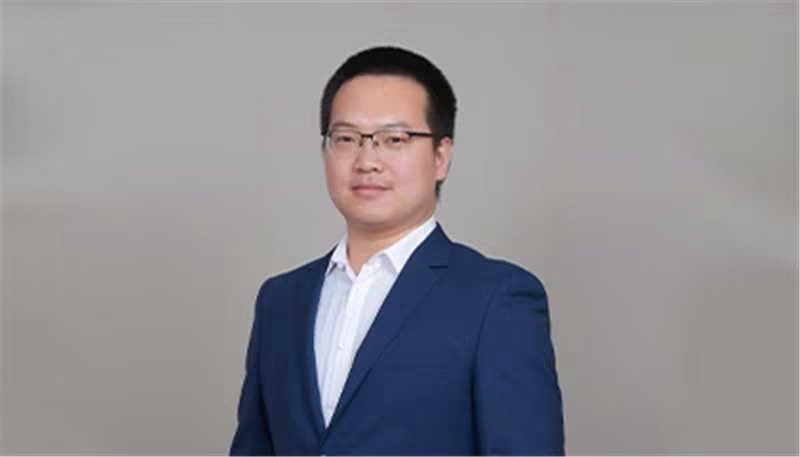
Dr Zhuang
PhD in mathematics from the University of Denver, working in mathematical logic, after a first degree in applied mathematics at Southeast University. A repeat conference speaker on his research, with three years lecturing and assisting on undergraduate mathematics at Denver.

He
A Cambridge master's after a computer science degree with a mathematics minor at the University of Nebraska-Lincoln, and a US high school GPA of 4.13. Six years overseas and teaches entirely in English, across AMC, Math League, AP Computer Science and AP Calculus.
Where it is taught
Hanlin learning centres.
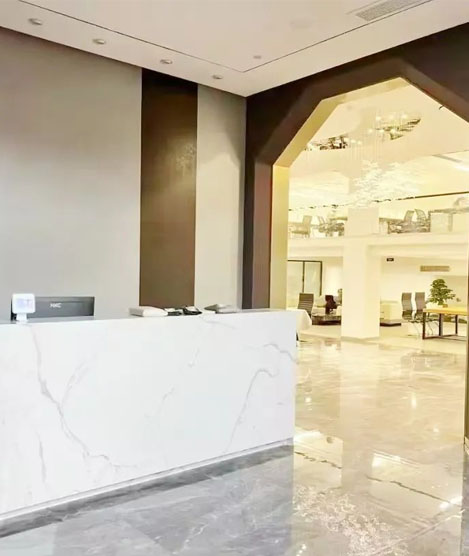
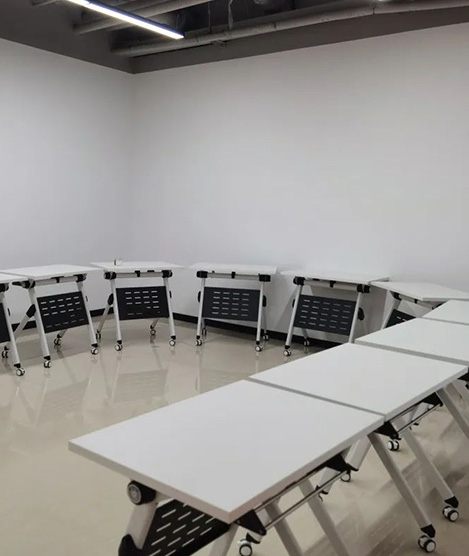
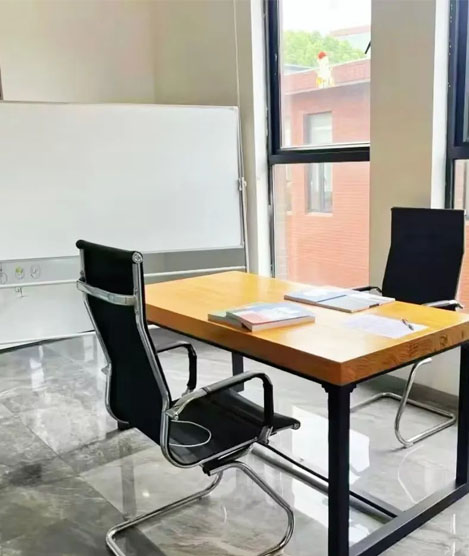
Teaching runs from Hanlin's own centres in Shanghai, Shenzhen, Chengdu and Hangzhou, and online for students elsewhere.




Talk to an advisor
Everything Hanlin does for HMMT, in one conversation.
Entry, planning, coaching and the past papers. An advisor will tell you which of these a student actually needs, including when the answer is none of them.
Competition entry and planning
Which competitions suit this student, in what order, and by when - then we handle the registration, including the ones that can only be entered through a school or a centre.
Competition coaching
Taught by full-time subject tutors, on a course tier chosen by placement paper rather than by year group.
International curriculum tutoring
IB, AP, A-Level, IGCSE and the US high school curriculum, taught alongside school and timed around the exam calendar.
Competition past papers, free
A large library of past papers, mark schemes and syllabus breakdowns across every competition on this site. No charge and no enrolment.
Scan to add an advisor
Say which competition or course you are asking about. Replies in Chinese or English.
Or call +86 21 6352 6630FAQ
HMMT, briefly answered.
What students and families ask before entering a team.
Who can compete in HMMT?
Secondary school students from any country, with no grade restriction. Entry is normally as a team - 4 to 6 students in November, 6 to 8 in February - though the organisers also keep places for individual entrants, who are grouped with other individuals for the team rounds.
What is the difference between the November and February tournaments?
Difficulty, mainly. November runs from mid-range AMC to hard AIME problems; February runs from mid-range AIME to USAMO, with some problems at olympiad level. February also replaces the short-answer team round with proofs, and uses larger teams. You may register for one tournament only.
How is HMMT scored?
1,600 points in total - 800 from the individual round, 400 from the team round and 400 from the guts round. The team total weights individual scores at 50% and each team round at 25%.
How hard is HMMT compared with AIME?
Harder. The organisers describe it as one of the most difficult mathematics competitions in the United States, aimed at students who can solve six to eight AIME problems comfortably and confidently.
Is calculus needed?
Not explicitly, in the sense that no question requires it. But some of the harder problems in individual rounds are more tractable with it, and competitive contestants generally have it available.
Why are guts round questions worth different amounts?
Difficulty is priced. In the guts round the values rise through each set as the questions get harder. In the team round the value of each question is computed from the field’s answer data, so a question few teams solve is worth more.
Can we use calculators?
No. No calculating aids of any kind are permitted in any round.
What happens besides the contest?
Two events frame it. The Friday Night Events are optional and social - dinner, puzzle hunts, games, Integration Bees and Estimathons. The Education initiative on the Sunday runs classes taught by Harvard and MIT students, specialists and alumni.
When is HMMT held?
Twice a year, in November at Harvard and in February at MIT. The most recent published cycle ran on 8 November 2025 and 14 February 2026. Confirm the current season’s dates with the organiser before planning a squad around them.
Related
Other team and invitational mathematics.
Competitions students usually run in the same season as HMMT.
HMMT enquiries
Build the squad before you choose the tournament.
Tell us how many students you have and roughly where they sit on AIME, and an advisor will say plainly whether November or February is the right entry this season - and what the gap is if the answer is neither yet.