
Competitions · Humanities and writing · HIR Academic Writing Competition
The Harvard International Review writing competition.
Three deadlines a year instead of one, and every essay submitted comes back with a letter grade from the Review. Finalists defend their work live to the panel.

What makes it different
Everyone gets a grade, and finalists get questioned.
Most essay competitions on this site return nothing to entrants who do not place. This one returns something to everybody.
A letter grade on every submission
Every essay submitted receives a letter grade from the Harvard International Review. Not a placing - a grade, which most entrants would otherwise never get.
And nothing beyond it
The organisers state that apart from the grade given by the Harvard grader, the competition cannot provide additional detail. All grades and award decisions are final.
Finalists defend their essay
Entrants whose work reaches the final are invited to an online academic defence, where they receive feedback from the panel. That is a genuine viva rather than a ceremony.
Three chances a year
Submission windows close at the end of May, in late August and at the start of January. A student can enter in whichever fits their year.
At a glance
The essentials.
The competition is run by the Harvard International Review for secondary students worldwide. Entrants write an academic article on a local or international issue bearing on humanity’s shared future, judged by a panel of Review editors and Harvard scholars.
- Who can enter
- Students in grades 7 to 12, worldwide
- Two divisions
- Junior for grades 7 to 8, and Senior for grades 9 to 12
- The Junior division
- Added recently, with its own separate theme
- Length
- 800 to 1,200 words
- Language
- English
- Subject
- A local or international issue bearing on the shared future of humanity. The Senior division asks for depth on a question in international affairs
- Judges
- Editors of the Harvard International Review, together with Harvard scholars
- Registration
- Entrants must register and pay before they are eligible to submit
- Three deadlines
- End of May, late August, and the start of January
- What every entrant receives
- A letter grade from the Review
- Finalists
- An invitation to an online academic defence, with panel feedback
The two divisions
Different year groups, different questions.
The Junior division is not a scaled-down version of the Senior one. The themes differ, and so does what is being asked.
Junior, grades 7 to 8
A separate theme aimed at younger writers - a recent one asked about inventions that changed human life. Concrete, and open to a student without a background in international affairs.
Senior, grades 9 to 12
The traditional competition. A substantive piece on a question in international affairs, treated with depth.
Both want an academic article
Not an opinion piece and not a school essay. The register is that of the Review itself, and reading a few of its pieces is the fastest way to understand what that means.
And both are short
800 to 1,200 words. That is enough for one argument developed properly and nothing more.
Using the three windows
A structural advantage worth planning around.
Three deadlines a year is unusual, and it changes how a student can use the competition.
Enter when the essay is ready
A student who misses May has August; one who misses August has January. The work can be finished when it is finished rather than rushed to a single date.
Or enter more than once
Confirm with the organiser whether multiple entries across windows are permitted, and what the fee is each time - registration and payment precede every submission.
And use the grade
An entry in May that comes back with a grade tells a student something before they write again in January. Very few competitions offer that feedback loop.
The defence is the real prize
Being questioned on your argument by Review editors and Harvard scholars is worth more than most certificates, and it is what reaching the final actually gets you.
Preparation
How Hanlin prepares an HIR entry.
Academic writing about international affairs, in twelve hundred words, judged by people who publish it professionally.
Reading the Review itself
It is published and freely readable. Twenty minutes with three of its articles teaches more about the expected register than any guidance can.
Choosing a question, not a region
"China and Africa" is a subject. A specific claim about a specific policy is a question. Twelve hundred words only holds the second kind.
Grounding the argument in evidence
The Review is an academic publication. Assertion without support reads immediately, and the graders are editors.
And preparing for the defence
Finalists are questioned live. Rehearsing the hardest objection to your own argument is the single most useful preparation for that.
Why Hanlin
Preparation for HIR Academic Writing Competition at Hanlin is taught by full-time subject tutors, on a course tier chosen by placement paper rather than by year group.
Programme formats
Five ways this is taught.
Group size is the whole difference between these. It decides how much of the tutor's attention a student gets and how far the course can bend to them, so it is worth choosing rather than accepting.
| Format | Group size | What it suits |
|---|---|---|
| One-to-one | One student | Content, pace and emphasis set by what this student actually needs rather than by a syllabus. The only format that can be rebuilt mid-course. |
| Small group | Three to eight | Opens at three. Frequent discussion, and the tutor can slow down or move on according to what the group has absorbed. Most students chasing a higher award are taught in this one. |
| Class | Eight to twelve | Taught by the subject lead or a medal coach. Less back-and-forth, so it suits a student who will say when something is unclear. |
| Large class | Ten to twenty | For students in the middle of the placement range, and a way to try a competition before committing. Students often move to a small group or to one-to-one afterwards. |
| Past-paper class | No cap | Past papers worked through in sequence in the weeks before the sitting. Free to students already enrolled. |
Course length for HIR Academic Writing Competition is set after a placement paper. The gap between where a student is and what the paper asks for is what the course has to close, and that gap is not the same for two students in the same year group.
How it runs
Six steps, four people on your side.
The same process for every student, so that nothing depends on one tutor remembering to do it.
 Step 1
Pre-course assessment
A placement paper before anything is booked, so the course tier is chosen on evidence rather than on a year group.
 Step 2
Tutor matching
A subject tutor is matched to the result, and their full background is provided before you agree to it.
 Step 3
Plan and group
A study group opens with four people on one student: the tutor, a planner, a supervisor and an academic manager.
 Step 4
Scheduled teaching
The teaching office sets the timetable around the competition date and school term, and teaching begins.
 Step 5
After-class reports
What was covered, and how the student handled it, reported after every lesson.
 Step 6
Homework follow-up
The teaching assistant and the form teacher both check that homework is done, which is where most preparation quietly fails.
Free resource pack
Past questions and writing pack
The same material our own HIR Academic Writing Competition students work from. Scan the code, say what you need, and an advisor sends it.

Tell an advisor which competition and year group, and the material comes back the same day. Free, and you do not have to enrol in anything. If we do not already hold what you need, we will go and find it.
- PDFEvery past question the competition has set
- PDFShortlisted and published essays, to calibrate the standard
- PDFStructure, referencing and word-count guide
- PDFEntry checklist and the dates for the current cycle
Teaching team
Who would teach it.
Three of the twenty-two tutors on the published Hanlin roster - the ones whose subject this is.

Lu
Master's in education from the University of Pennsylvania and a double major in psychology and philosophy at Mount Holyoke. Cross-cultural teaching experience across China and the US, with research work in child and adolescent development, cognition, and international students' identity.

Yang
Educated at American Heritage School, then English literature and philosophy at the University of British Columbia and a master's in language education at Toronto. Eleven years in North America, with a close working knowledge of the international curricula and overseas admissions.

Zhang
Master's in cognitive science at UC San Diego on full scholarship, after double honours in neurobiology and behaviour and in cognitive science at UC Davis. Ten years overseas, a perfect TOEFL speaking score, and named an outstanding education scholar at UCSD.
Where it is taught
Hanlin learning centres.
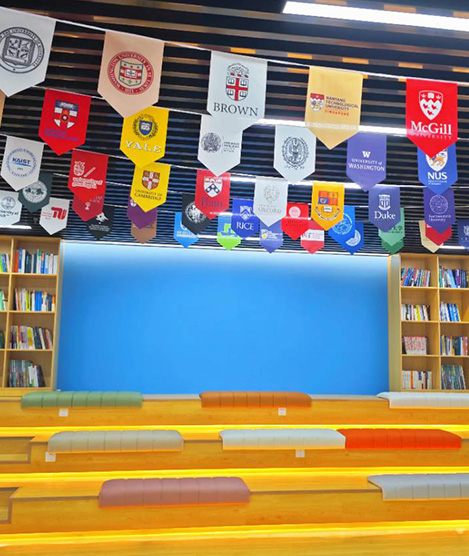
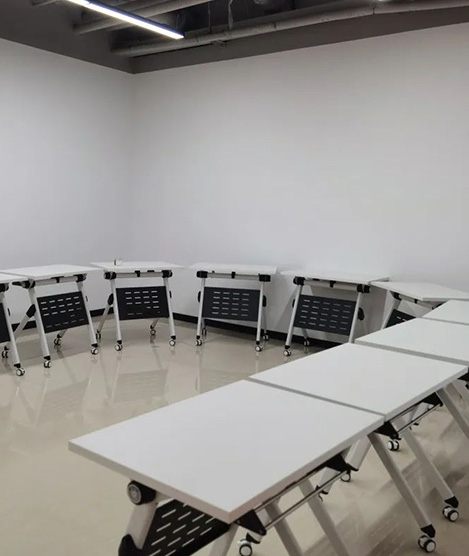
Teaching runs from Hanlin's own centres in Shanghai, Shenzhen, Chengdu and Hangzhou, and online for students elsewhere.





Talk to an advisor
Everything Hanlin does for HIR Academic Writing Competition, in one conversation.
Entry, planning, coaching and the past papers. An advisor will tell you which of these a student actually needs, including when the answer is none of them.
Competition entry and planning
Which competitions suit this student, in what order, and by when - then we handle the registration, including the ones that can only be entered through a school or a centre.
Competition coaching
Taught by full-time subject tutors, on a course tier chosen by placement paper rather than by year group.
International curriculum tutoring
IB, AP, A-Level, IGCSE and the US high school curriculum, taught alongside school and timed around the exam calendar.
Competition past papers, free
A large library of past papers, mark schemes and syllabus breakdowns across every competition on this site. No charge and no enrolment.
Scan to add an advisor
Say which competition or course you are asking about. Replies in Chinese or English.
Or call +86 21 6352 6630FAQ
The HIR competition, briefly answered.
What students and families ask before entering.
Who can enter?
Students in grades 7 to 12 worldwide. There are two divisions - Junior for grades 7 to 8, and Senior for grades 9 to 12 - with different themes.
How long should the essay be?
800 to 1,200 words, in English.
What should I write about?
A local or international issue bearing on the shared future of humanity. The Senior division asks for a substantive treatment of a question in international affairs; the Junior division sets its own theme.
When are the deadlines?
There are three submission windows a year, closing at the end of May, in late August and at the start of January.
Do I have to register first?
Yes. Entrants must register and pay before they are eligible to submit their essay before the deadline.
Who judges it?
A panel of Harvard International Review editors and Harvard scholars.
Do I get feedback?
Every submitted essay receives a letter grade from the Review. Beyond that grade the competition does not provide additional detail, and all grades and award decisions are final. Finalists are invited to an online academic defence where they do receive feedback from the panel.
What happens if I reach the final?
You are invited to an online academic defence, presenting and answering for your work in front of the judging panel.
Can I enter more than one window?
Confirm with the organiser, along with the fee for each entry - registration and payment precede every submission.
Related
Other essay competitions.
What students enter alongside HIR.
HIR enquiries
Three windows, and a grade either way.
Every entrant gets a letter grade from the Review, and three deadlines a year means the essay can be entered when it is genuinely ready. Tell us what the student is interested in and an advisor will help find the question.