
Competitions · Mathematics and sciences · HiMCM
HiMCM, the High School Mathematical Contest in Modeling.
You do not submit answers. You submit a paper - a model, the derivation behind it, code that computes something, and prose that makes all of it readable. It is the maths competition for students who were never going to enjoy an olympiad.

What it is
A paper, not a problem set.
HiMCM asks for something closer to an academic paper than to an exam script, and that changes who it suits. It does not reward technique or a flash of insight.
The submission is a written report
It sets out the mathematical model and the derivations behind it, in enough detail to be checked. Academic rigour is the standard being applied.
With computation inside it
Data processing or numerical work done in code is expected as part of the argument, not appended to it.
And it has to be readable
Clear language linking the model, the computation and the conclusion - plus proper typesetting. Presentation is part of the assessment, which almost no other maths competition can say.
Which makes it a team sport
Modelling, programming and writing are different skills and one student rarely has all three. HiMCM is a genuinely collaborative competition rather than a set of individuals in a room.
At a glance
The essentials.
HiMCM has run since 1999, organised by COMAP - the Consortium for Mathematics and Its Applications - with support from the National Science Foundation, INFORMS, the Mathematical Association of America and the National Council of Teachers of Mathematics.
- Who can enter
- High school students, in teams
- Team size
- Up to four students. Four is generally the strongest configuration
- Same school?
- Confirm with COMAP before building a cross-school team - the related IMMC explicitly requires all members to come from one school with a teacher from that school as advisor
- What you submit
- A solution report - model, derivation, computation and written argument
- Language
- English
- Registration opens
- September
- Registration closes
- 2:00pm US Eastern time on the first day of the contest window
- The window opens
- 3:01pm US Eastern time, in early November
- The window closes
- 8:00pm US Eastern time, about two weeks later
- Report deadline
- 9:00pm US Eastern time on the day the window closes - one hour after it
- Results
- By the end of February
- MidMCM
- A middle school version runs in the same window
Who it suits
Especially the student who avoids olympiads.
This is the honest case for HiMCM, and it is a strong one. It rewards a different kind of mathematical ability from the one competition maths usually selects for.
It does not reward trick-spotting
The organisers are explicit that HiMCM is not looking for problem-solving technique or a moment of inspiration. A student who has always found olympiad problems alienating is not disadvantaged here.
It rewards applying maths to something real
Flexible use of mathematical thinking on a messy problem with no clean answer. That is a different aptitude, and school rarely tests it.
And it draws on everything else too
Mathematics, English, computing, natural science and social and economic reasoning all come into a good paper.
Which is why it travels well
Students heading for mathematics, engineering, computer science, financial modelling or economics all find something here that maps onto what they will actually do.
Building the team
Four students, four jobs.
Modelling is systematic work and it splits naturally. These are the capabilities a team needs between them - not four separate people, necessarily, but all four covered.
| What the team needs | Why |
|---|---|
| At least three with a science or mathematics background | The modelling itself, and enough shared vocabulary that the team can argue about the model rather than explain it to each other |
| At least two who read and write English well | Reading foreign-language literature during the contest, and writing the paper. Both matter, and they are different skills |
| At least one who can program | Or who can learn quickly. The computation has to actually run |
| Someone who can typeset | Mathematical writing software, equation editors and layout. It sounds trivial and it is the difference between a paper that reads professionally and one that does not |
Useful skills to have before the window opens: the standard classical models and algorithms; computational tools such as Matlab or SPSS; literature and data searching; mathematical typesetting; and academic writing.
The problems
What HiMCM actually asks.
The problems are released when the window opens. We do not reproduce them, but the recent titles show the shape of the thing.
Emergency evacuation sweep operations
Model how responders should sweep a multi-storey building during an evacuation - the order rooms are checked, how many responders and where they start, and the shortest time to clear the building.
The environmental impact of major sporting events
The second problem in the same season, and a good illustration of how far the subject matter ranges.
Note what they have in common
Each has no clean answer, several defensible framings, and requires the team to decide what to measure before it can model anything. Choosing what the problem actually is takes up a real share of the two weeks.
And the tasks are staged
Understand the problem, build the model on a simple base case, then apply it to harder configurations you design yourself. Teams that rush the first stage lose the third.
The awards
One percent, and a journal.
HiMCM is graded on the paper, and the top band is genuinely narrow.
Outstanding is about 1%
Roughly one team in a hundred reaches the top award each year. That is a narrower band than most competitions here.
And winning papers can be published
Outstanding papers may be published in COMAP’s journal, which is an unusual outcome for a school competition - a citable piece of work rather than a certificate.
The field is heavily Chinese
From the 2022 results, teams from China made up 77% of the winning teams. That is worth knowing when judging how a result will read.
Results take three months
The window closes in November and results are published by the end of February.
Preparation
How Hanlin prepares a HiMCM team.
Two weeks is long enough to do good work and short enough that a team without a process wastes half of it deciding who does what.
Assigning roles before the window opens
Who models, who codes, who writes, who assembles. Teams that settle this in advance start work on day one instead of day four.
Building a model library
Knowing the standard models and when each applies is what turns two weeks into enough time. Starting from nothing is what makes it not enough.
Practising the writing separately
Academic writing under time pressure is its own skill, and the paper is the only thing the judges see. Drafting a full practice paper on an old problem is the single highest-value rehearsal.
And learning to fix the problem statement early
Deciding what you are actually modelling, and writing that decision down clearly, is what separates papers that go anywhere from papers that sprawl.
Why Hanlin
Hanlin has been entering students for HiMCM for years, and publishes what they got. The record is further down this page.
Programme formats
Five ways this is taught.
Group size is the whole difference between these. It decides how much of the tutor's attention a student gets and how far the course can bend to them, so it is worth choosing rather than accepting.
| Format | Group size | What it suits |
|---|---|---|
| One-to-one | One student | Content, pace and emphasis set by what this student actually needs rather than by a syllabus. The only format that can be rebuilt mid-course. |
| Small group | Three to eight | Opens at three. Frequent discussion, and the tutor can slow down or move on according to what the group has absorbed. Most students chasing a higher award are taught in this one. |
| Class | Eight to twelve | Taught by the subject lead or a medal coach. Less back-and-forth, so it suits a student who will say when something is unclear. |
| Large class | Ten to twenty | For students in the middle of the placement range, and a way to try a competition before committing. Students often move to a small group or to one-to-one afterwards. |
| Past-paper class | No cap | Past papers worked through in sequence in the weeks before the sitting. Free to students already enrolled. |
Course length for HiMCM is set after a placement paper. The gap between where a student is and what the paper asks for is what the course has to close, and that gap is not the same for two students in the same year group.
How it runs
Six steps, four people on your side.
The same process for every student, so that nothing depends on one tutor remembering to do it.
 Step 1
Pre-course assessment
A placement paper before anything is booked, so the course tier is chosen on evidence rather than on a year group.
 Step 2
Tutor matching
A subject tutor is matched to the result, and their full background is provided before you agree to it.
 Step 3
Plan and group
A study group opens with four people on one student: the tutor, a planner, a supervisor and an academic manager.
 Step 4
Scheduled teaching
The teaching office sets the timetable around the competition date and school term, and teaching begins.
 Step 5
After-class reports
What was covered, and how the student handled it, reported after every lesson.
 Step 6
Homework follow-up
The teaching assistant and the form teacher both check that homework is done, which is where most preparation quietly fails.
Free resource pack
HiMCM past problems and modelling pack
The same material our own HiMCM students work from. Scan the code, say what you need, and an advisor sends it.

Tell an advisor which competition and year group, and the material comes back the same day. Free, and you do not have to enrol in anything. If we do not already hold what you need, we will go and find it.
- PDFEvery past HiMCM problem
- PDFOutstanding papers with the structure annotated section by section
- PDFA modelling toolkit - the methods that recur, and when each applies
- PDFTeam registration checklist and the contest window
Teaching team
Who would teach it.
Three of the twenty-two tutors on the published Hanlin roster - the ones whose subject this is.
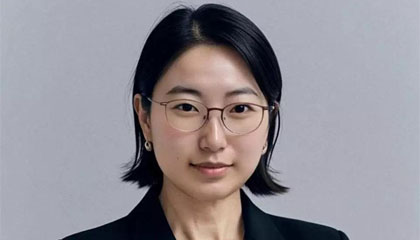
Dr An
Mathematics at Illinois Urbana-Champaign with highest honours and the Elizabeth R. Bennett scholarship, then a PhD in mathematics at Johns Hopkins on full funding with the Owen fellowship and the Joel Dean award for excellent teaching. Years of US university teaching, translating high-level mathematics into language students can use.

Dr Zhang
PhD in theoretical mathematics from the University of Rochester and a postdoctoral fellow at the Shanghai Center for Mathematical Sciences at Fudan. An AMC-accredited coach, ASDAN-accredited for DMM and ITCCC, and an accredited UKMT BMO2 and PUMaC coach. His students have gone on to read mathematics and physics at Harvard, MIT, Princeton, Caltech and Cambridge.

Tan
Master's in data science from the University of Sydney after a statistics degree at Simon Fraser University, graduating in the top 5% with repeated chancellor's honours; A-Levels at a Cambridge international school, and formerly a data analyst at Tencent. An AMC-accredited coach, a College Board-accredited AP teacher, and holder of a Math League excellent-teacher award.
Student results
What Hanlin students got.
Taken from Hanlin's published record of student honours and rewritten in English. Figures are as the organisers reported them.
Outstanding plus NCTM Winner, 2022
One line from Hanlin's published HiMCM record. The rest of it is below.
HiMCM
- 20243 Finalist, 6 Meritorious and 10 Honourable Mention
- 20235 Finalist, 6 Meritorious and 12 Honourable Mention
- 2022One Outstanding paper, which also took the NCTM Winner award - given to only two teams a year - plus 6 Finalist, 5 Meritorious and 11 Honourable Mention
Earlier years
- 20211 Outstanding, 3 Finalist, 5 Meritorious and 11 Honourable Mention
- 20201 Outstanding, 3 Finalist, 6 Meritorious and 13 Honourable Mention
The full record, across every subject and year, is on the student honours page.
Where it is taught
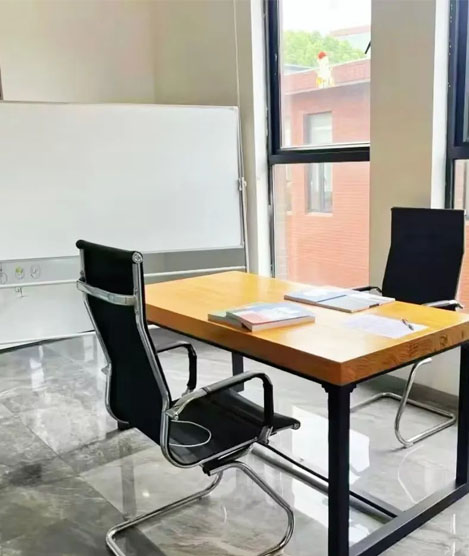
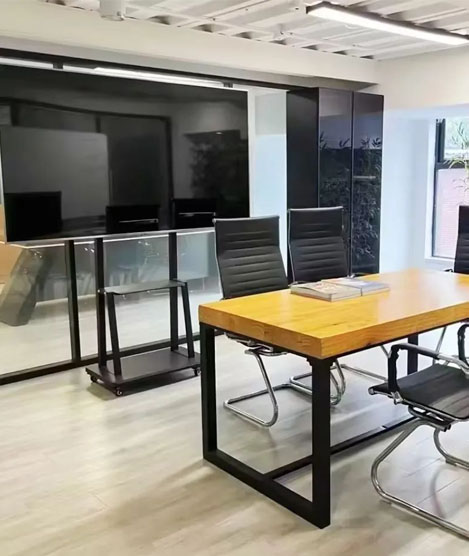
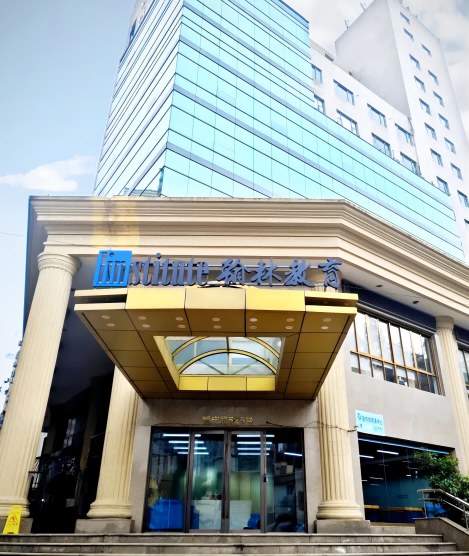
Hanlin learning centres.
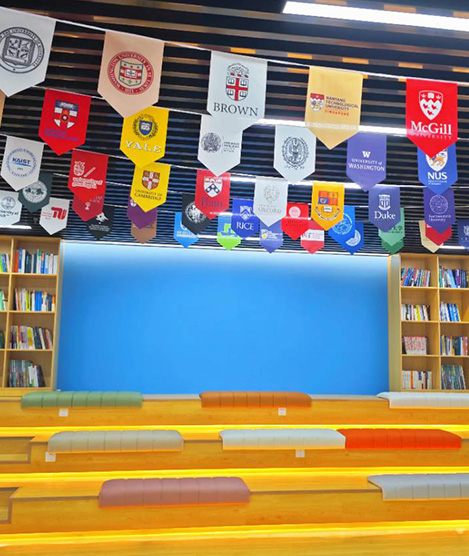
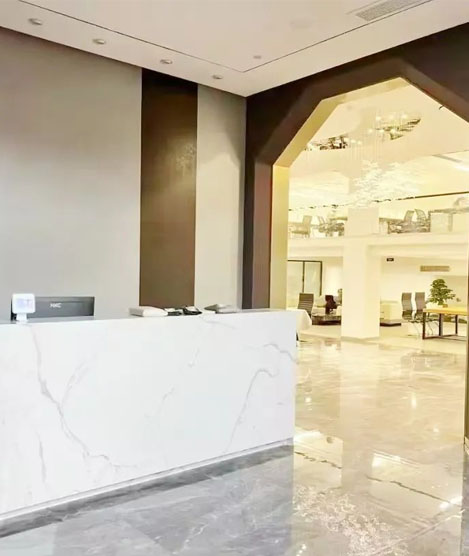
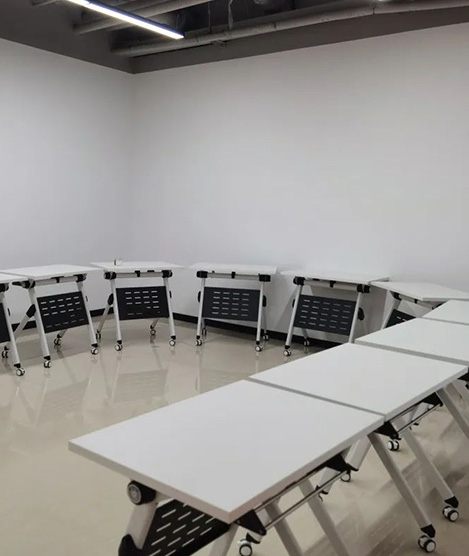
Teaching runs from Hanlin's own centres in Shanghai, Shenzhen, Chengdu and Hangzhou, and online for students elsewhere.

Talk to an advisor
Everything Hanlin does for HiMCM, in one conversation.
Entry, planning, coaching and the past papers. An advisor will tell you which of these a student actually needs, including when the answer is none of them.
Competition entry and planning
Which competitions suit this student, in what order, and by when - then we handle the registration, including the ones that can only be entered through a school or a centre.
Competition coaching
Taught by full-time subject tutors, on a course tier chosen by placement paper rather than by year group.
International curriculum tutoring
IB, AP, A-Level, IGCSE and the US high school curriculum, taught alongside school and timed around the exam calendar.
Competition past papers, free
A large library of past papers, mark schemes and syllabus breakdowns across every competition on this site. No charge and no enrolment.
Scan to add an advisor
Say which competition or course you are asking about. Replies in Chinese or English.
Or call +86 21 6352 6630FAQ
HiMCM, briefly answered.
What students and families ask before entering.
What is different about HiMCM?
You submit a written paper rather than answers - a mathematical model with its derivation, computational work, and prose linking them, properly typeset. It is closer to an academic paper than to an exam.
Who runs it?
COMAP, the Consortium for Mathematics and Its Applications, since 1999, with support from the National Science Foundation, INFORMS, the Mathematical Association of America and the National Council of Teachers of Mathematics.
How big is a team?
Up to four students. Four is generally strongest, because modelling, programming and writing are separate jobs.
Do all team members have to be at the same school?
Confirm this with COMAP directly before building a cross-school team. The related IMMC explicitly requires all members to come from one school with a teacher from that school as advisor.
When does it run?
Registration opens in September and closes at 2pm US Eastern on the first day of the window. The window opens at 3:01pm Eastern in early November and closes about two weeks later at 8pm, with the report due an hour after that. Results are published by the end of February.
What skills does the team need?
At least three members with a mathematics or science background, at least two who read and write English well, at least one who can program, and someone who can typeset mathematics properly.
What software is useful?
Computational tools such as Matlab or SPSS, along with mathematical writing software and equation editors for the paper itself.
What kind of problems come up?
Open-ended real-world problems with no clean answer - modelling how responders should sweep a building during an emergency evacuation, or the environmental impact of major sporting events. The tasks are staged: understand the problem, model a base case, then apply the model to harder configurations you design.
How hard is the top award?
Around 1% of teams reach Outstanding. Outstanding papers may be published in COMAP’s journal.
Is there a version for younger students?
Yes - MidMCM, for middle school students, runs in the same window.
Related
Other modelling and mathematics competitions.
What students enter alongside HiMCM.
HiMCM enquiries
The maths competition that is mostly writing.
HiMCM suits a student who likes applying mathematics to something real and has never warmed to olympiad problems. Tell us who is in the team and what each of them can do, and an advisor will work out what is missing before November.