
Competitions · Research and innovation · Hi World!
Hi World!, the youth creativity exhibition.
Ask a question about anything - the history of a coin, how caterpillars breed, your own family. Then investigate it properly, and turn what you found into a film, a website or a display board and defend it in front of judges.
The idea
Research first, then make something out of it.
Hi World! is a research programme that ends in a creative work rather than a paper, and both halves are assessed.
Any question you actually care about
The organisers set the range deliberately wide - from the humanities, history, media, technology and the environment down to a family story, how caterpillars breed, or how a coin came to be made.
Investigated to an academic standard
A student settles the research method, plans the investigation, carries it out, gathers material and analyses it - producing what the organisers describe as their first piece of academic work.
Then turned into something
The findings are expressed through a created work: a display board, a documentary, a website - any form the student chooses.
And defended in public
The work is brought to the annual exhibition, presented, and questioned by scholars and judges from across the country.
At a glance
What the programme is.
Hi World! is a personalised learning programme built by SKT with an international media partner, based on research into real problems and creative presentation of the results. Students work around an annual theme, propose a question drawn from real life, and design an investigation around it.
- Who can enter
- Students in grades 6 to 9. No subject restriction and no restriction on the topic
- Three academic outputs
- A research plan, a research report, and the presentation of a created work
- Stages
- A preliminary stage, a China stage, the offline annual exhibition, and an international stage
- Preliminary stage
- September to January. What is assessed is the research plan
- China stage
- February to May. What is assessed is the research report and the work
- The annual exhibition
- Late May, in person - the created works are exhibited, presented and questioned
- International stage
- July and August
- Registration
- January to the start of April
- Advancement
- 70% from the preliminary stage, then 50% from the China stage
- Materials
- Official learning materials are issued through the programme platform once a student registers
The scoring
The plan you wrote in autumn still counts in spring.
The formula is published, and this is the part worth understanding: stage one does not disappear once you have passed it.
| Stage | How the score is calculated |
|---|---|
| Preliminary | 100% of the research plan score, plus bonus items |
| China stage | 20% research plan, plus 50% for the research report and bonus items together, plus 30% for the presentation of the work |
A research plan written carelessly in autumn costs marks twice - once at the preliminary stage and again as a fifth of the China stage score. It is the cheapest place in the programme to gain or lose ground.
The bonus items
Two optional documents, and both are records of process.
The bonus items are worth knowing about because they reward doing the work properly rather than producing anything extra.
A problem self-check sheet
Submitted at the preliminary stage alongside the research plan. It asks the student to interrogate their own question before investing a year in it.
A research log
Submitted at the China stage with the report. A record of the investigation as it happened, rather than a reconstruction afterwards.
And a work creation manual
Documenting how the created work was made and why it takes the form it does.
Which means keeping records from the start
None of the three can be produced retrospectively with any honesty. Starting them in week one is the practical consequence.
The three journeys
Define, investigate, create.
Each stage teaches a distinct skill, and the programme names what it is teaching at each point.
Define the question
The preliminary stage teaches how to pose a question and how to plan an investigation. The assessed output is the research plan.
Investigate it
The China stage teaches how to write a research report - settling the method, running the enquiry, collecting material and analysing it.
Then create
The exhibition stage teaches how to make a work. The academic result is expressed in a chosen form, exhibited, presented and defended.
Who it suits
Grades 6 to 9, and no subject requirement.
This is a research programme aimed at an age group that most research competitions do not reach.
Younger than most research programmes
CTB and the Yau Award start at grade 9. Hi World! runs from grade 6, which makes it a genuine first research experience rather than a scaled-down version of a senior one.
And it does not require a science
No subject restriction and no restriction on the topic. A student interested in history, media or their own family has the same standing as one interested in technology.
The creative half opens it further
Thirty per cent of the China stage score is the created work. A student who films, builds or designs well has a real advantage, not a decorative one.
With generous advancement
Seventy per cent advance from the preliminary stage and fifty per cent from the China stage - the programme is built to keep students in rather than to filter them out.
Preparation
How Hanlin supports a Hi World! entry.
The programme teaches the research skills itself, so support is most useful in choosing the question and making the work.
Choosing a question worth a year
The range is deliberately wide, which makes choosing harder rather than easier. A question the student genuinely wants answered survives the winter; an impressive one usually does not.
Writing the plan properly first time
The research plan carries 100% of the preliminary score and 20% of the China stage. It is the highest-leverage document in the programme.
Keeping the log as you go
The research log and the creation manual are bonus items that cannot honestly be written afterwards. Starting them early is free marks.
And rehearsing the defence
The work is questioned by scholars and judges at the exhibition. For a grade 6 or 7 student that is usually the first time, and it is entirely rehearsable.
Why Hanlin
Preparation for Hi World! at Hanlin is taught by full-time subject tutors, on a course tier chosen by placement paper rather than by year group.
Programme formats
Five ways this is taught.
Group size is the whole difference between these. It decides how much of the tutor's attention a student gets and how far the course can bend to them, so it is worth choosing rather than accepting.
| Format | Group size | What it suits |
|---|---|---|
| One-to-one | One student | Content, pace and emphasis set by what this student actually needs rather than by a syllabus. The only format that can be rebuilt mid-course. |
| Small group | Three to eight | Opens at three. Frequent discussion, and the tutor can slow down or move on according to what the group has absorbed. Most students chasing a higher award are taught in this one. |
| Class | Eight to twelve | Taught by the subject lead or a medal coach. Less back-and-forth, so it suits a student who will say when something is unclear. |
| Large class | Ten to twenty | For students in the middle of the placement range, and a way to try a competition before committing. Students often move to a small group or to one-to-one afterwards. |
| Past-paper class | No cap | Past papers worked through in sequence in the weeks before the sitting. Free to students already enrolled. |
Course length for Hi World! is set after a placement paper. The gap between where a student is and what the paper asks for is what the course has to close, and that gap is not the same for two students in the same year group.
How it runs
Six steps, four people on your side.
The same process for every student, so that nothing depends on one tutor remembering to do it.
 Step 1
Pre-course assessment
A placement paper before anything is booked, so the course tier is chosen on evidence rather than on a year group.
 Step 2
Tutor matching
A subject tutor is matched to the result, and their full background is provided before you agree to it.
 Step 3
Plan and group
A study group opens with four people on one student: the tutor, a planner, a supervisor and an academic manager.
 Step 4
Scheduled teaching
The teaching office sets the timetable around the competition date and school term, and teaching begins.
 Step 5
After-class reports
What was covered, and how the student handled it, reported after every lesson.
 Step 6
Homework follow-up
The teaching assistant and the form teacher both check that homework is done, which is where most preparation quietly fails.
Free resource pack
Project and submission pack
The same material our own Hi World! students work from. Scan the code, say what you need, and an advisor sends it.
Tell an advisor which competition and year group, and the material comes back the same day. Free, and you do not have to enrol in anything. If we do not already hold what you need, we will go and find it.
- PDFPast finalist project titles and abstracts
- PDFCategory definitions and the judging criteria, broken down
- DOCXA project timeline working back from the submission date
- PDFEntry checklist and the dates for the current cycle
Teaching team
Who would teach it.
Three of the twenty-two tutors on the published Hanlin roster - the ones whose subject this is.

Dr An
Mathematics at Illinois Urbana-Champaign with highest honours and the Elizabeth R. Bennett scholarship, then a PhD in mathematics at Johns Hopkins on full funding with the Owen fellowship and the Joel Dean award for excellent teaching. Years of US university teaching, translating high-level mathematics into language students can use.

Yu
Master's in bioinformatics and computational biology from UT Dallas and a nutritional sciences degree from Wisconsin-Madison. Second author on an SCI-indexed paper from the Tanumihardjo vitamin-A laboratory, and formerly at ABS Global.

Tan
Master's in data science from the University of Sydney after a statistics degree at Simon Fraser University, graduating in the top 5% with repeated chancellor's honours; A-Levels at a Cambridge international school, and formerly a data analyst at Tencent. An AMC-accredited coach, a College Board-accredited AP teacher, and holder of a Math League excellent-teacher award.
Where it is taught
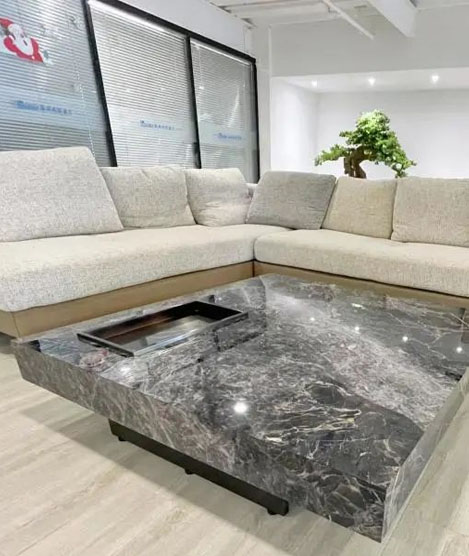
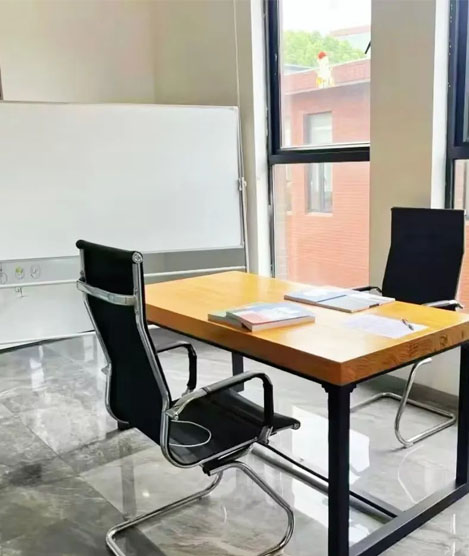
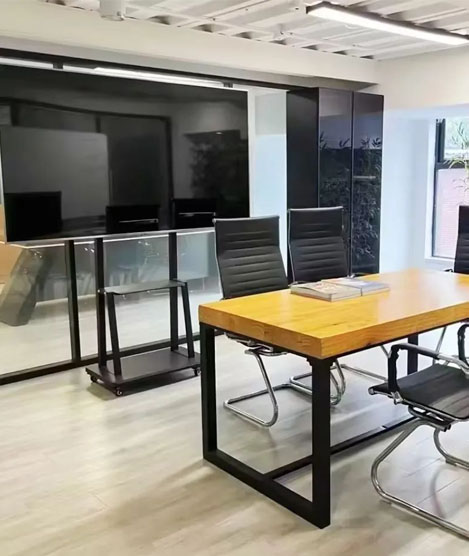
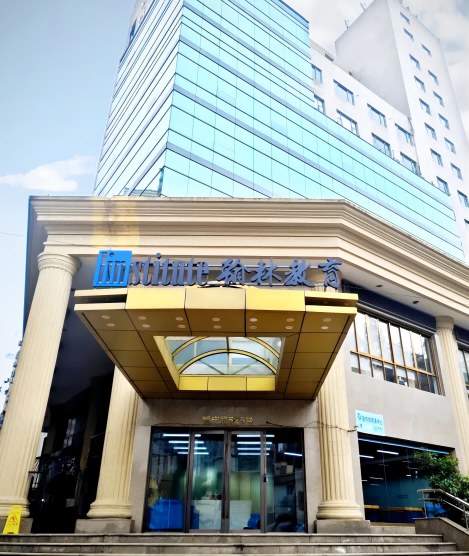
Hanlin learning centres.
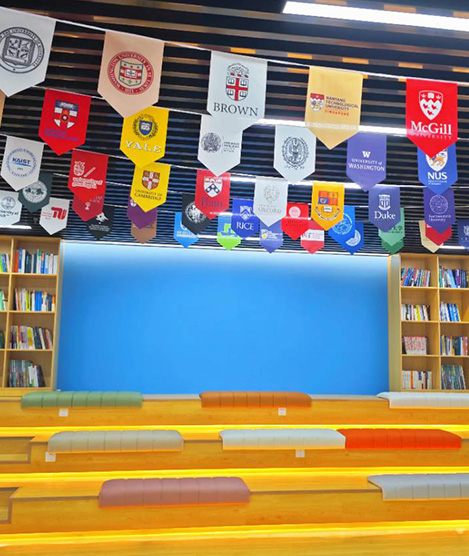
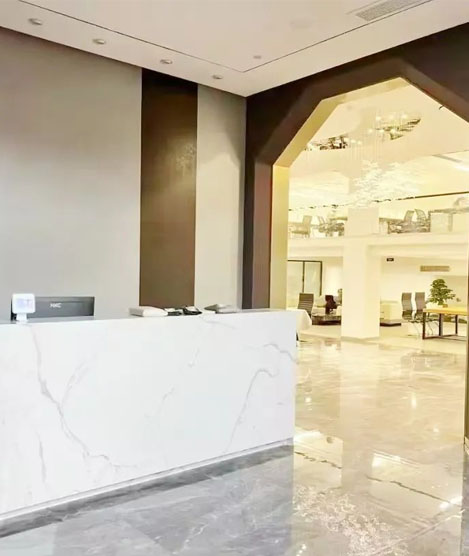
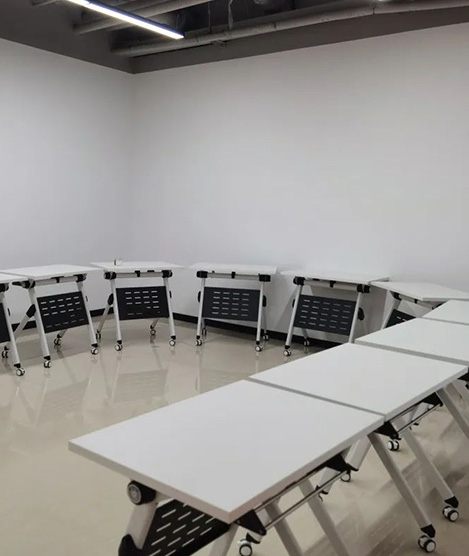
Teaching runs from Hanlin's own centres in Shanghai, Shenzhen, Chengdu and Hangzhou, and online for students elsewhere.
Talk to an advisor
Everything Hanlin does for Hi World!, in one conversation.
Entry, planning, coaching and the past papers. An advisor will tell you which of these a student actually needs, including when the answer is none of them.
Competition entry and planning
Which competitions suit this student, in what order, and by when - then we handle the registration, including the ones that can only be entered through a school or a centre.
Competition coaching
Taught by full-time subject tutors, on a course tier chosen by placement paper rather than by year group.
International curriculum tutoring
IB, AP, A-Level, IGCSE and the US high school curriculum, taught alongside school and timed around the exam calendar.
Competition past papers, free
A large library of past papers, mark schemes and syllabus breakdowns across every competition on this site. No charge and no enrolment.
Scan to add an advisor
Say which competition or course you are asking about. Replies in Chinese or English.
Or call +86 21 6352 6630FAQ
Hi World!, briefly answered.
What students and families ask before entering.
Who can enter?
Students in grades 6 to 9. There is no subject restriction and no restriction on what the research question may be about.
What do I have to produce?
Three things: a research plan, a research report, and a created work presented at the annual exhibition. The work may take any form - a display board, a documentary, a website.
What kind of question can I research?
Anything genuinely interesting. The organisers give examples ranging from the humanities, history, media, technology and the environment down to a family story, how caterpillars breed, or how a coin came to be made.
How is it scored?
The preliminary stage is 100% the research plan plus bonus items. The China stage is 20% research plan, 50% research report and bonus items, and 30% presentation of the work.
What are the bonus items?
A problem self-check sheet at the preliminary stage, and a research log and a work creation manual at the China stage. All three record how the work was done.
How many students advance?
Seventy per cent from the preliminary stage and fifty per cent from the China stage.
When does it run?
Registration from January to early April. The preliminary stage runs from September to January, the China stage from February to May, the offline annual exhibition in late May, and the international stage in July and August.
What happens at the exhibition?
Created works are brought to the venue, exhibited and presented, and students take questions from scholars and judges from across the country.
What does the programme teach?
The preliminary stage teaches how to pose a question and plan an investigation. The China stage teaches how to write a research report and how to create a work.
How does it compare with CTB or the Yau Award?
Both of those start at grade 9. Hi World! runs from grade 6, which makes it a first research experience rather than a junior version of a senior competition.
Related
Where students go next.
Research programmes for older students.
Hi World! enquiries
A first research project, and then you make something from it.
Grades 6 to 9, any question at all, and thirty per cent of the score for turning what you found into a film, a website or a board you defend in person. Tell us what the student is curious about and an advisor will help shape it into a question.