
Competitions · Research and innovation · GENIUS Olympiad
The GENIUS Olympiad.
An environmental competition where a short film, a piece of music or a business plan competes on the same footing as a research paper. Seven categories, one subject, and you choose exactly one.

The idea
One subject, seven ways in.
Every category addresses the same thing - environmental problems and global sustainability. What changes is the medium, and the categories are judged separately.
The environment is the whole brief
Science, art, business, writing, robotics, music and film all address environmental issues. There is no general category and no route in that avoids the subject.
Which means a non-scientist has a real entry
A student who cares about the environment but does not run experiments can compete properly here - not in a token side category, but in one of seven judged on its own terms.
You pick one category
Entries choose a single category and submit their project or report to it, then present. A project cannot be entered twice in different forms.
And the list is still growing
The organisers plan further categories - drones and installation art are named - and invite participants to propose their own.
The seven categories
What each one asks of you.
The organisers describe each category by what it is meant to achieve, not by what it accepts. That framing is the best guide to which one fits a student.
| Category | What it is for |
|---|---|
| Science | Using scientific knowledge and skill to solve environmental problems. The most demanding category in terms of what must be submitted |
| Art | Raising public attention to environmental problems and their solutions through artistic expression |
| Business | Advancing environmental value and social responsibility inside the commercial world. Teams of up to two students |
| Writing | Using creative writing to move the public into environmental action |
| Robotics | For students interested in engineering and automation, applied to the same environmental questions |
| Music | Moving an audience through performance, and prompting society toward positive change |
| Short film | Using the camera to change behaviour around environmental issues |
Note that art, music, writing and film are not decorative additions. Each is a full category with its own medals, judged on how effectively it does the thing the environment needs done.
At a glance
What the olympiad is.
GENIUS is run jointly by the State University of New York at Oswego and the Terra Science and Education Foundation. Since 2011 it has drawn more than 1,600 students and 800 projects a year from over seventy countries, making it the largest international youth environmental competition.
- Organisers
- SUNY Oswego and the Terra Science and Education Foundation
- Since
- 2011
- Who can enter
- Students in grades 8 to 12 worldwide, aged 13 and over. Participants under 18 must be accompanied by a parent
- Team size
- Individual or team. Science projects and business projects take a maximum of two students
- Categories
- Seven, and an entry chooses one
- Two routes in
- Direct submission on the organiser’s site, or selection through a national host organisation on the ISEF model
- The final
- June, in Rochester, New York
- The season
- Applications from November to March, finalists announced in April, registration and visa applications through April and May
- What every entrant receives
- A GENIUS participation certificate
The science paper rules
Every project needs a full research paper. No exceptions.
The submission rules for the science category are specific, and one of them disqualifies more entries than the rest combined.
No results, no entry
The paper must include the project’s results and its experimental setup - pictures, charts, data. Projects without results are not accepted. This is stated plainly and it is not negotiable.
Even affiliated-fair winners submit one
All projects, including those arriving as winners of an affiliated fair, must submit a complete project description document. Winning elsewhere does not exempt you.
A prescribed structure
Title page with names, school, city and country; abstract; contents; the problem; the hypothesis; the variables; background research; a materials list; the experimental procedure; results and discussion; conclusion; ideas for future research; acknowledgements; bibliography.
And exact formatting
A PDF under 5MB, suggested maximum 15 pages excluding title and biography pages, font size 11 or 12, margins of an inch or more. Filenames must use English characters.
The awards
Five levels, and a university attached.
Medals are given within each category, so a musician competes against musicians. The university link is the part worth knowing about in advance.
Top Gold, then four bands
The first-placed project in each category takes Top Gold, with a certificate, a gold medal and an award. Gold goes to the top 10%, with silver, bronze and honourable mention on descending bands below. The source states those lower bands ambiguously, so confirm them with the organiser.
An RIT scholarship certificate
Eligible gold, silver and bronze winners can receive a Rochester Institute of Technology scholarship certificate under the published criteria.
And conditional admission for some
Among students who interview, RIT offers conditional admission letters. That is a concrete outcome rather than a general claim about applications.
Plus awards for schools
The Most Applications School Award for the school submitting the most projects, and the Most Successful School Award for the school whose projects win most.
Getting there from China
Two routes, and one of them runs through Shanghai.
Like ISEF, GENIUS operates partly through national host organisations that select entries for the global final.
Direct submission
Multiple teams from the same school can submit environmental science projects directly on the organiser’s site.
Or through the regional selection
The Shanghai youth science popularisation association and the Shanghai youth science society have run the affiliated regional selection since 2016, recommending strong secondary-school environmental projects for the American final.
A two-stage regional review
Eligibility screening, then an online review examining the originality and feasibility of the work, with a recommended list published in February.
Then a long administrative run-in
Selected students complete the global application, pay the entry fee, submit the work formally, confirm identity, register online, and apply for a visa - a sequence that runs from February through May.
Preparation
How Hanlin supports a GENIUS entry.
The choice of category shapes everything, and the science rules are the strictest part of the whole competition.
Choosing the category honestly
A strong film about an environmental problem beats a weak experiment about one. The seven categories are judged separately, so the question is which medium the student is actually good in.
Getting results before writing
The science category rejects projects without results. That means the experimental work has to finish with time left to write it up properly, not the other way round.
Writing to the prescribed structure
Fourteen named sections in fifteen pages. Most first drafts miss two or three sections entirely - usually variables, future research and the materials list.
And preparing the presentation
Every category presents its work as well as submitting it. For the creative categories, being able to explain what the piece is doing about the environment is as important as the piece.
Why Hanlin
Preparation for GENIUS Olympiad at Hanlin is taught by full-time subject tutors, on a course tier chosen by placement paper rather than by year group.
Programme formats
Five ways this is taught.
Group size is the whole difference between these. It decides how much of the tutor's attention a student gets and how far the course can bend to them, so it is worth choosing rather than accepting.
| Format | Group size | What it suits |
|---|---|---|
| One-to-one | One student | Content, pace and emphasis set by what this student actually needs rather than by a syllabus. The only format that can be rebuilt mid-course. |
| Small group | Three to eight | Opens at three. Frequent discussion, and the tutor can slow down or move on according to what the group has absorbed. Most students chasing a higher award are taught in this one. |
| Class | Eight to twelve | Taught by the subject lead or a medal coach. Less back-and-forth, so it suits a student who will say when something is unclear. |
| Large class | Ten to twenty | For students in the middle of the placement range, and a way to try a competition before committing. Students often move to a small group or to one-to-one afterwards. |
| Past-paper class | No cap | Past papers worked through in sequence in the weeks before the sitting. Free to students already enrolled. |
Course length for GENIUS Olympiad is set after a placement paper. The gap between where a student is and what the paper asks for is what the course has to close, and that gap is not the same for two students in the same year group.
How it runs
Six steps, four people on your side.
The same process for every student, so that nothing depends on one tutor remembering to do it.
 Step 1
Pre-course assessment
A placement paper before anything is booked, so the course tier is chosen on evidence rather than on a year group.
 Step 2
Tutor matching
A subject tutor is matched to the result, and their full background is provided before you agree to it.
 Step 3
Plan and group
A study group opens with four people on one student: the tutor, a planner, a supervisor and an academic manager.
 Step 4
Scheduled teaching
The teaching office sets the timetable around the competition date and school term, and teaching begins.
 Step 5
After-class reports
What was covered, and how the student handled it, reported after every lesson.
 Step 6
Homework follow-up
The teaching assistant and the form teacher both check that homework is done, which is where most preparation quietly fails.
Free resource pack
Project and submission pack
The same material our own GENIUS Olympiad students work from. Scan the code, say what you need, and an advisor sends it.

Tell an advisor which competition and year group, and the material comes back the same day. Free, and you do not have to enrol in anything. If we do not already hold what you need, we will go and find it.
- PDFPast finalist project titles and abstracts
- PDFCategory definitions and the judging criteria, broken down
- DOCXA project timeline working back from the submission date
- PDFEntry checklist and the dates for the current cycle
Teaching team
Who would teach it.
Three of the twenty-two tutors on the published Hanlin roster - the ones whose subject this is.

Dr An
Mathematics at Illinois Urbana-Champaign with highest honours and the Elizabeth R. Bennett scholarship, then a PhD in mathematics at Johns Hopkins on full funding with the Owen fellowship and the Joel Dean award for excellent teaching. Years of US university teaching, translating high-level mathematics into language students can use.

Yu
Master's in bioinformatics and computational biology from UT Dallas and a nutritional sciences degree from Wisconsin-Madison. Second author on an SCI-indexed paper from the Tanumihardjo vitamin-A laboratory, and formerly at ABS Global.

Tan
Master's in data science from the University of Sydney after a statistics degree at Simon Fraser University, graduating in the top 5% with repeated chancellor's honours; A-Levels at a Cambridge international school, and formerly a data analyst at Tencent. An AMC-accredited coach, a College Board-accredited AP teacher, and holder of a Math League excellent-teacher award.
Where it is taught
Hanlin learning centres.
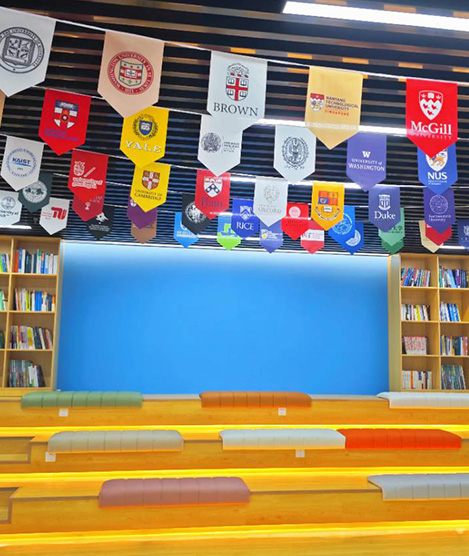
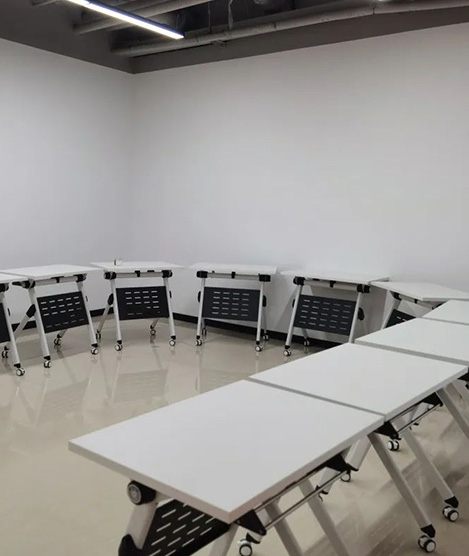
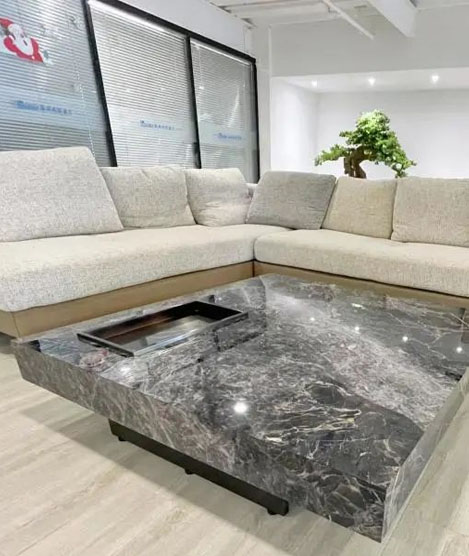
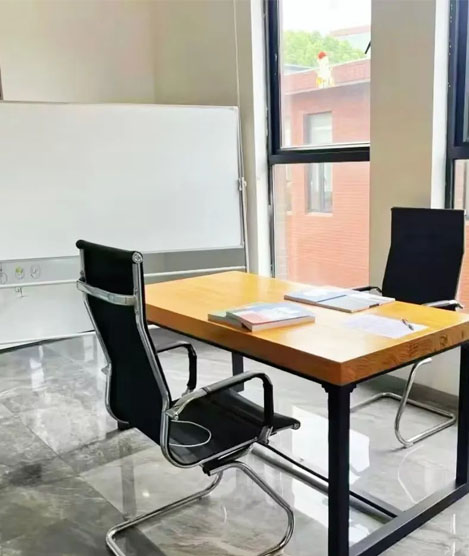
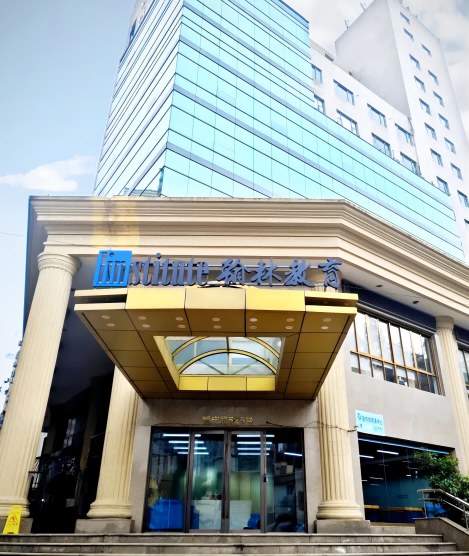
Teaching runs from Hanlin's own centres in Shanghai, Shenzhen, Chengdu and Hangzhou, and online for students elsewhere.

Talk to an advisor
Everything Hanlin does for GENIUS Olympiad, in one conversation.
Entry, planning, coaching and the past papers. An advisor will tell you which of these a student actually needs, including when the answer is none of them.
Competition entry and planning
Which competitions suit this student, in what order, and by when - then we handle the registration, including the ones that can only be entered through a school or a centre.
Competition coaching
Taught by full-time subject tutors, on a course tier chosen by placement paper rather than by year group.
International curriculum tutoring
IB, AP, A-Level, IGCSE and the US high school curriculum, taught alongside school and timed around the exam calendar.
Competition past papers, free
A large library of past papers, mark schemes and syllabus breakdowns across every competition on this site. No charge and no enrolment.
Scan to add an advisor
Say which competition or course you are asking about. Replies in Chinese or English.
Or call +86 21 6352 6630FAQ
GENIUS Olympiad, briefly answered.
What students and families ask before entering.
Do I have to be a science student?
No. Seven categories - science, art, business, writing, robotics, music and short film - are judged separately and on equal terms. All of them address environmental problems and sustainability.
Who can enter?
Students in grades 8 to 12 worldwide, aged 13 and over. Participants under 18 must be accompanied by a parent at the final.
Can I enter more than one category?
No. An entry chooses a single category and submits to it.
How large can a team be?
Science and business projects take a maximum of two students. Entries may also be individual.
What does a science entry have to submit?
A complete research paper as a PDF under 5MB, suggested maximum fifteen pages, with a title page, abstract, contents, the problem, hypothesis, variables, background research, materials list, experimental procedure, results and discussion, conclusion, ideas for future research, acknowledgements and bibliography.
What if my project has no results yet?
It will not be accepted. The organisers require results and experimental setup information - pictures, charts and data - and state that projects without results are rejected.
Do affiliated-fair winners still submit a paper?
Yes. All projects must submit a complete project description document, including those that arrive as winners of an affiliated fair.
What awards are there?
Top Gold for first place in each category, gold for the top 10%, then silver, bronze and honourable mention on descending bands. Every entrant receives a participation certificate.
Is there a university connection?
Yes. Eligible gold, silver and bronze winners can receive a Rochester Institute of Technology scholarship certificate, and among students who interview, RIT offers conditional admission letters.
How do students in China enter?
Either directly on the organiser’s site, or through the affiliated regional selection, which in Shanghai has been run since 2016 by the youth science popularisation association and the youth science society.
Where and when is the final?
June, in Rochester, New York, after applications running from November to March and finalists announced in April.
Related
Other research and innovation competitions.
What students enter alongside GENIUS.
GENIUS Olympiad enquiries
Seven categories, and only one of them is a laboratory.
If a student cares about the environment but writes, films or composes rather than experimenting, this is the competition where that counts equally. Tell us what they do and an advisor will pick the category and map the season.