
Competitions · Computer science · FTC
FTC, the FIRST Tech Challenge.
Two minutes thirty against another alliance, of which the first thirty seconds the robot drives itself. But most of the awards are not won on the field at all - they are won in front of judges.
At a glance
What the challenge is, and what a team needs.
FTC is run by FIRST, an American non-profit, and is its core robotics programme for secondary students - sitting between FLL for younger children and FRC for senior students. In the 2024-25 season it drew more than 109,000 students across 81 countries.
- Organiser
- FIRST - For Inspiration and Recognition of Science and Technology, a 501(c)(3) non-profit
- Who can enter
- Students in grades 7 to 12, aged 12 to 18
- Team size
- 8 to 12 students is recommended. There is no official minimum or maximum
- Adults required
- At least two Lead Coaches per team. Parents, teachers, engineers and FIRST alumni may join as Mentors
- What else a team needs
- Somewhere to meet and build a robot about the size of a microwave, a realistic budget, and online registration
- The robot
- Built from a reusable platform, powered by Android technology, and programmed in Java at a range of levels
- Match format
- Alliance play - two teams form the red alliance against two forming the blue
- Match length
- About 2 minutes 30 seconds
- China season
- Four regional events from November to February, the China final in March or April, then post-season events from May to August
- World championship
- Late April, in Houston
- In China since
- 2012, now across roughly seven regions including Beijing, North China, East China, South China, the Southwest, Shanghai and Shenzhen
A match
Three phases in two and a half minutes.
The phase structure is what makes FTC a programming contest as much as an engineering one. Phase lengths and scoring change each season - the year’s Game Manual governs.
| Phase | Length | What happens |
|---|---|---|
| Autonomous | 30 seconds | The robot runs a pre-written program with no human input at all. Controllers are prohibited. This is where the programming shows |
| TeleOp | 2 minutes | Drivers control the robot with handsets to complete scoring actions |
| Endgame | The last 30 seconds of TeleOp | Additional scoring actions become available - typically climbing or hanging |
Thirty of the one hundred and fifty seconds are decided entirely by code written weeks earlier. A team that treats programming as secondary gives away a fifth of every match.
The awards
Most of them are judged, not won on the field.
This is the thing families most often misunderstand about FTC. Winning matches is two of the awards. There are nine others.
Field awards - two of them
Winning Alliance and Finalist Alliance. These are the ones decided by the robot on the day.
Judged awards - nine
Inspire Award as the highest overall, then Think, Connect, Innovate, Design, Control and Motivate, plus the Judges’ Choice and Compass awards chosen at the judges’ discretion.
And an individual award
The Dean’s List Award. Each team may nominate two students in grades 10 or 11, decided after interviews at the China final. It is not awarded at regionals.
Which means the engineering notebook matters
Judged awards assess the team’s design process, outreach, innovation and control system - documented and presented. A strong robot with no documentation wins two awards at most.
What a team actually does
Design, build, code - and raise the money.
FTC asks for something no other competition on this site does, and it is worth knowing before committing a season.
The full engineering cycle
Designing, building, programming and driving a robot, under the guidance of adult coaches, using a robot kit and real engineering principles.
Plus commercial awareness
Teams are expected to raise funds and to build and promote their own brand. That is part of the competition rather than a practical inconvenience.
Under the FIRST core values
Gracious Professionalism and Coopertition - and the six named values of discovery, innovation, impact, inclusion, teamwork and fun. Judges assess against these.
And it is a long season
From a September kickoff to a world championship in April, with post-season events to August. This is a school-year commitment, not an event.
Advancing
How a team reaches the China final, and Houston.
The advancement rules have several details that decide whether a season is well spent.
Slots are calculated in advance
The committee works out the total number of teams the China final venue and schedule can hold, then decides how many advance from each regional, filled in priority order.
Enter more than one regional - but only three
Teams may enter several regionals to improve their chances. From the fourth onward, however, a team can compete only for the field awards and is no longer eligible for judged awards.
One host slot per regional
Each regional reserves exactly one advancement place for the host partner’s own team, which must be officially registered that season. It cannot be transferred to an unrelated team.
And places pass down the list
If a qualifying team has already advanced or declines, the next team in priority order takes the place.
FTC and FRC
Which of the two suits your team.
FRC is the senior version, and the differences are practical rather than philosophical.
FTC lets you keep improving the robot
FRC requires teams to ship their robot to the regional by a deadline. FTC teams keep working on theirs throughout the season, which changes how a season is planned.
A smaller field, and lower costs
The FTC playing field is considerably smaller than FRC’s, and both the entry barrier and the equipment cost are lower.
Different age bands
FTC covers grades 7 to 12; FRC is aimed at senior secondary students. A team can run FTC for several years and move up.
And FRC has the scholarship programme
FRC is recognised by over a hundred universities, and its competitors can apply each year for a scholarship pool of around USD 20 million.
Preparation
How Hanlin supports an FTC team.
A season has four separate workstreams, and teams that treat it as one lose most of the available awards.
Autonomous first
Thirty seconds of every match are decided by code alone, and it is the part most teams under-prepare. It is also the most improvable with limited resources.
Documenting as you go
Nine of the eleven awards are judged on process, not performance. The engineering notebook is written through the season, not assembled the week before.
Building the team around the roles
Design, build, programming, driving, outreach and fundraising are genuinely different jobs. Eight to twelve students is the recommended size because the work divides that way.
And planning three regionals, not four
Because judged awards close off after the third regional, a team’s regional schedule is a strategic decision made at the start of the season.
Why Hanlin
Preparation for FTC at Hanlin is taught by full-time subject tutors, on a course tier chosen by placement paper rather than by year group.
Programme formats
Five ways this is taught.
Group size is the whole difference between these. It decides how much of the tutor's attention a student gets and how far the course can bend to them, so it is worth choosing rather than accepting.
| Format | Group size | What it suits |
|---|---|---|
| One-to-one | One student | Content, pace and emphasis set by what this student actually needs rather than by a syllabus. The only format that can be rebuilt mid-course. |
| Small group | Three to eight | Opens at three. Frequent discussion, and the tutor can slow down or move on according to what the group has absorbed. Most students chasing a higher award are taught in this one. |
| Class | Eight to twelve | Taught by the subject lead or a medal coach. Less back-and-forth, so it suits a student who will say when something is unclear. |
| Large class | Ten to twenty | For students in the middle of the placement range, and a way to try a competition before committing. Students often move to a small group or to one-to-one afterwards. |
| Past-paper class | No cap | Past papers worked through in sequence in the weeks before the sitting. Free to students already enrolled. |
Course length for FTC is set after a placement paper. The gap between where a student is and what the paper asks for is what the course has to close, and that gap is not the same for two students in the same year group.
How it runs
Six steps, four people on your side.
The same process for every student, so that nothing depends on one tutor remembering to do it.
 Step 1
Pre-course assessment
A placement paper before anything is booked, so the course tier is chosen on evidence rather than on a year group.
 Step 2
Tutor matching
A subject tutor is matched to the result, and their full background is provided before you agree to it.
 Step 3
Plan and group
A study group opens with four people on one student: the tutor, a planner, a supervisor and an academic manager.
 Step 4
Scheduled teaching
The teaching office sets the timetable around the competition date and school term, and teaching begins.
 Step 5
After-class reports
What was covered, and how the student handled it, reported after every lesson.
 Step 6
Homework follow-up
The teaching assistant and the form teacher both check that homework is done, which is where most preparation quietly fails.
Free resource pack
Season and build pack
The same material our own FTC students work from. Scan the code, say what you need, and an advisor sends it.

Tell an advisor which competition and year group, and the material comes back the same day. Free, and you do not have to enrol in anything. If we do not already hold what you need, we will go and find it.
- PDFPast season materials and game manuals
- PDFThe judging rubric, broken down by what earns each point
- DOCXBuild log and documentation checklist
- PDFEntry checklist and the dates for the current cycle
Teaching team
Who would teach it.
Three of the twenty-two tutors on the published Hanlin roster - the ones whose subject this is.
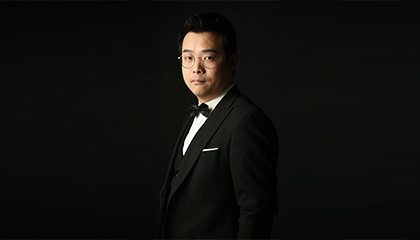
Luo
Bachelor's and master's in computer science from the University of California and ten years in the United States. Works close to the hardware, and teaches for independent problem solving rather than pattern recall.

Tan
Master's in data science from the University of Sydney after a statistics degree at Simon Fraser University, graduating in the top 5% with repeated chancellor's honours; A-Levels at a Cambridge international school, and formerly a data analyst at Tencent. An AMC-accredited coach, a College Board-accredited AP teacher, and holder of a Math League excellent-teacher award.

He
A Cambridge master's after a computer science degree with a mathematics minor at the University of Nebraska-Lincoln, and a US high school GPA of 4.13. Six years overseas and teaches entirely in English, across AMC, Math League, AP Computer Science and AP Calculus.
Where it is taught
Hanlin learning centres.
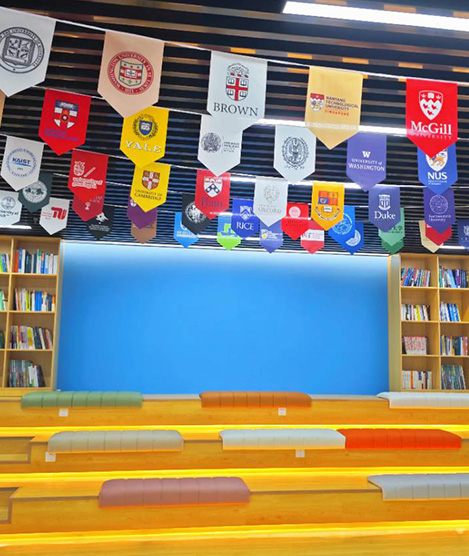
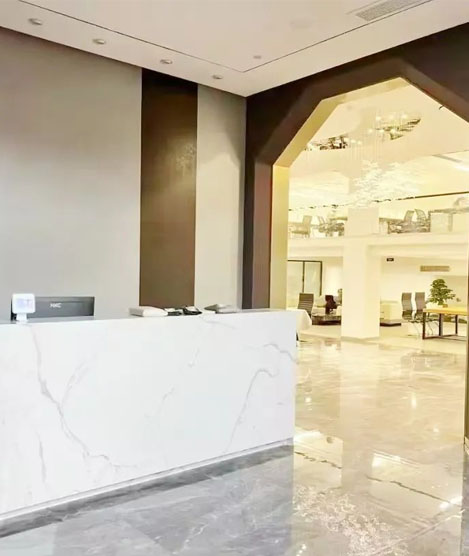
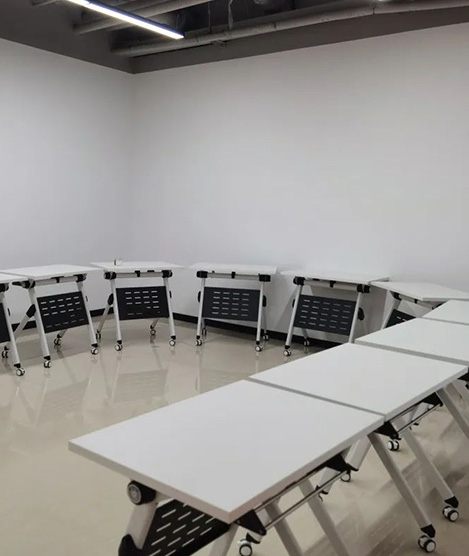
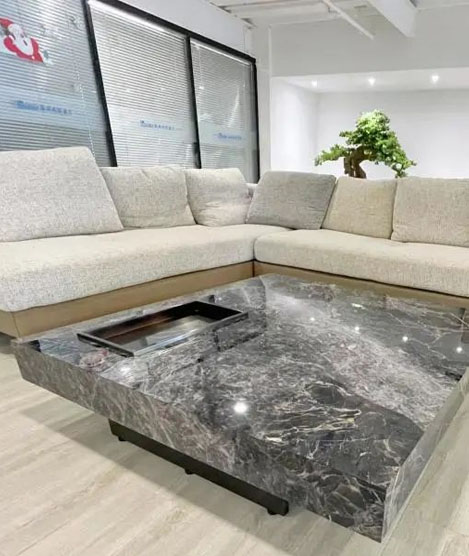
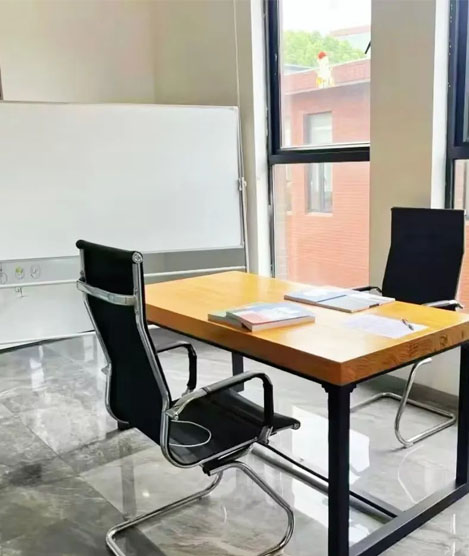
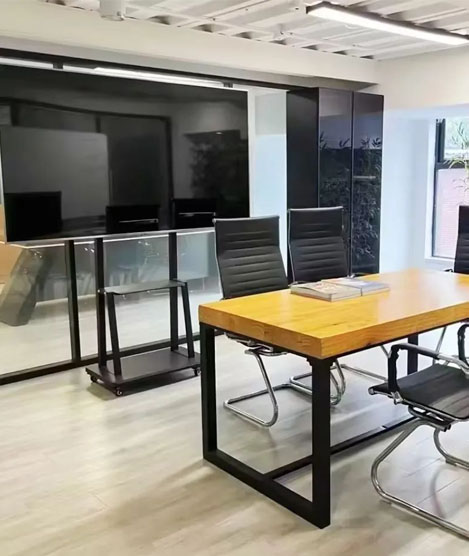
Teaching runs from Hanlin's own centres in Shanghai, Shenzhen, Chengdu and Hangzhou, and online for students elsewhere.
Talk to an advisor
Everything Hanlin does for FTC, in one conversation.
Entry, planning, coaching and the past papers. An advisor will tell you which of these a student actually needs, including when the answer is none of them.
Competition entry and planning
Which competitions suit this student, in what order, and by when - then we handle the registration, including the ones that can only be entered through a school or a centre.
Competition coaching
Taught by full-time subject tutors, on a course tier chosen by placement paper rather than by year group.
International curriculum tutoring
IB, AP, A-Level, IGCSE and the US high school curriculum, taught alongside school and timed around the exam calendar.
Competition past papers, free
A large library of past papers, mark schemes and syllabus breakdowns across every competition on this site. No charge and no enrolment.
Scan to add an advisor
Say which competition or course you are asking about. Replies in Chinese or English.
Or call +86 21 6352 6630FAQ
FTC, briefly answered.
What students, teachers and families ask before starting a team.
Who can enter FTC?
Students in grades 7 to 12, aged 12 to 18, competing as a team. Eight to twelve students is recommended, though there is no official minimum or maximum.
What does a team need to get started?
At least two adult Lead Coaches, somewhere to meet and build a robot about the size of a microwave, a realistic budget, and online registration.
How does a match work?
Two teams form the red alliance against two forming the blue. A match lasts about two and a half minutes: thirty seconds of autonomous operation with no human input, then two minutes of driver control, with extra scoring actions available in the final thirty seconds.
What language is the robot programmed in?
Java, at a range of levels. The robot is built from a reusable platform powered by Android technology.
What awards are there?
Two field awards - Winning Alliance and Finalist Alliance - and nine judged awards led by the Inspire Award, plus the Dean’s List Award for individual students nominated by their team.
Do we have to raise money ourselves?
Yes. Fundraising and building the team’s own brand are part of the competition, and judged awards assess that work alongside the engineering.
Can we enter more than one regional?
Yes, and teams often do to improve their chances of advancing. But from the fourth regional onward a team competes only for the field awards and can no longer be considered for judged awards.
How do we reach the world championship?
Through a regional to the China final, and from there according to the number of places FIRST allocates to China, in priority order.
How is FTC different from FRC?
FRC is the senior version with a larger field, higher costs and a shipping deadline for the robot. FTC teams keep improving their robot through the season, and both the entry barrier and the equipment cost are lower.
How long is a season?
From a kickoff in September through regionals from November to February, the China final in March or April, and the world championship in late April, with post-season events running to August.
Related
Robotics and computing.
What runs alongside or after FTC.
FTC enquiries
Nine of the eleven awards are won off the field.
Teams that build a good robot and document nothing come away with very little. Tell us how many students you have and where you are starting from, and an advisor will map the season - including which regionals to enter and when.