
Competitions · Mathematics · Fryer, Galois and Hypatia
Fryer, Galois and Hypatia.
Three Waterloo contests, one for each of grades 9, 10 and 11, and only four questions in seventy-five minutes. Where Waterloo’s February papers are entirely multiple choice, these ask students to write out the solution - and mark them on how completely and clearly it is set out.

At a glance
Three contests, one entry a year.
Fryer, Galois and Hypatia are the written-solution counterparts to Waterloo’s Pascal, Cayley and Fermat papers. Same organiser, same year groups, entirely different demand.
- Organiser
- The Centre for Education in Mathematics and Computing (CEMC) at the University of Waterloo
- Three contests
- Fryer for grade 9 and below, Galois for grade 10 and below, Hypatia for grade 11 and below
- Choosing a level
- Students normally enter the contest for their own year, but may enter a higher one if they judge themselves ready. Only one of the three may be sat in a year
- Format
- Four questions in 75 minutes. Some parts ask only for a final answer; others require the complete solution to be written out
- Marks
- 40 in total, ten a question
- Marking
- Written solutions are marked on completeness, clarity and presentation. A correct solution set out poorly will not receive full marks. On the answer-only parts, a wrong or missing answer scores nothing
- Where
- In person, on paper, at the candidate’s school under supervision. All materials are returned to CEMC in a single package for marking
- Calculators
- Permitted for numerical work, but the written solution must still show the mathematical steps - and those steps may carry marks of their own. Models with internet access, device communication, stored notes, a computer algebra system or dynamic geometry software are excluded
- Entry fee
- CEMC publishes a registration fee of $12 per entrant
- Results
- Published on the supervisor portal six to eight weeks after the contest
The three papers
One for each year group.
The three run on the same day in the same format. What differs is the year group each is written for, and therefore the ceiling of what it can assume.
Fryer, grade 9 and below
The entry point of the three, and for most students the first Waterloo paper that asks for written mathematics rather than a chosen option. That change of demand matters more here than the difficulty of the questions themselves.
Galois, grade 10 and below
The middle paper, sitting between the other two in what it assumes has been taught. A capable grade 9 student may enter it instead of Fryer, and a grade 10 student may move up to Hypatia.
Hypatia, grade 11 and below
The senior contest of the three, and the natural preparation for Euclid the following year - both reward a complete written argument, and both are marked on how the reasoning is presented.
Marking
How marks are actually awarded.
This is the part that catches out students arriving from multiple-choice contests. On these papers, being right is necessary but not sufficient.
Presentation is marked
CEMC awards marks according to the completeness, clarity and presentation of the solution. A correct answer reached through working a marker cannot follow will not receive full credit, which is a different standard from any multiple-choice paper.
Answer-only parts are all or nothing
Where a question asks only for the final answer, a wrong or blank response scores nothing - there is no partial credit to be had. The two kinds of question on the same paper therefore reward opposite habits.
Calculator results need their working
A calculator may do the arithmetic, but the algebra behind it has to be written down and may be marked separately. Finding an intercept on a graphing calculator and copying the number across is not a solution.
Nineteen minutes a question
Four questions in seventy-five minutes is generous by the standards of a multiple-choice paper and tight by the standards of a written one. Speed of working is explicitly one of the things that affects the final mark.
Awards
Individual certificates, and an optional team standing.
Unlike Gauss, the senior Waterloo contests allow schools to enter a team result alongside the individual one.
Certificate of Distinction
Awarded to the top 25% of entrants globally - the same threshold CEMC applies across its contests, which makes a result here directly comparable with a Euclid or Gauss result.
Contest Medal and honour rolls
CEMC awards a Contest Medal to the champion at each participating school. High scorers are also named on honour rolls, listed separately for official Canadian regions, unofficial Canadian regions and international regions.
Team standings, if the school opts in
A school may enter a team result, scored as the total of its five highest qualifying individual scores. Entering is optional, so a school has to choose to be ranked this way.
Zone, provincial and national
Within Canada, team awards run at zone, provincial and national level, with a Canadian Championship plaque and Zone Championship certificates. Schools outside Canada appear on their own corresponding honour rolls and rankings.
Why it matters
What a Waterloo result is worth.
Waterloo runs these contests partly as a recruitment instrument, and is unusually direct about the fact.
Read in a Waterloo application
Waterloo encourages applicants to sit its mathematics contests. A strong result improves a candidate’s standing for admission to the Faculty of Mathematics and to Software Engineering, which are among the most competitive programmes it runs.
Entrance scholarships
Strong performers may be considered for Waterloo entrance scholarships, published in a range of roughly CAD 1,000 to 8,000. Few competitions attach a monetary consequence to a school-age result this directly.
Recognised across North America
Because of Waterloo’s standing in mathematics, a top-quarter result on its contests is read widely by North American universities as evidence of both mathematical and English-language competence.
Practice at writing mathematics
Whatever a student decides about studying abroad, preparing for a contest that is read and taught in English and marked on written reasoning is a transferable exercise in its own right.
Season
How the year runs.
The three contests sit in early April, a couple of months after Waterloo’s multiple-choice papers in February.
Registration closes
Schools register candidates and confirm which of the three contests each will sit. For the 2027 cycle the deadline was 11 March.
Contest day
North and South America sit on the Wednesday, other regions on the Thursday - 7 and 8 April for the 2027 cycle.
Materials returned to CEMC
The supervising school packages all scripts and returns them to CEMC for central marking.
Results published
Results appear on the contest supervisor portal, from where the school distributes them.
Preparation
How Hanlin prepares students for FGH.
Almost all of the preparation gap is writing rather than solving. Students reaching these papers can usually do the mathematics.
Writing a solution a marker can follow
Because marks follow completeness, clarity and presentation, students practise writing up problems they have already solved. Solving and writing are treated as two separate skills, and only one of them is new.
Past papers back to 2003
CEMC has published these contests for over two decades, with full solutions. Reading official solutions is the most direct way to learn what a full-credit write-up actually looks like.
Waterloo’s own materials
Beyond past papers, CEMC publishes teaching material and Waterloo runs weekly Math Circles sessions. Both are free, both are in English, and both are pitched at exactly this level.
A route toward Euclid
Hypatia in grade 11 and Euclid in grade 12 reward the same things. Students planning on Euclid are generally better served entering Hypatia first than arriving at Euclid having only ever answered multiple choice.
Why Hanlin
Preparation for Fryer, Galois and Hypatia at Hanlin is taught by full-time subject tutors, on a course tier chosen by placement paper rather than by year group.
Programme formats
Five ways this is taught.
Group size is the whole difference between these. It decides how much of the tutor's attention a student gets and how far the course can bend to them, so it is worth choosing rather than accepting.
| Format | Group size | What it suits |
|---|---|---|
| One-to-one | One student | Content, pace and emphasis set by what this student actually needs rather than by a syllabus. The only format that can be rebuilt mid-course. |
| Small group | Three to eight | Opens at three. Frequent discussion, and the tutor can slow down or move on according to what the group has absorbed. Most students chasing a higher award are taught in this one. |
| Class | Eight to twelve | Taught by the subject lead or a medal coach. Less back-and-forth, so it suits a student who will say when something is unclear. |
| Large class | Ten to twenty | For students in the middle of the placement range, and a way to try a competition before committing. Students often move to a small group or to one-to-one afterwards. |
| Past-paper class | No cap | Past papers worked through in sequence in the weeks before the sitting. Free to students already enrolled. |
Course length for Fryer, Galois and Hypatia is set after a placement paper. The gap between where a student is and what the paper asks for is what the course has to close, and that gap is not the same for two students in the same year group.
How it runs
Six steps, four people on your side.
The same process for every student, so that nothing depends on one tutor remembering to do it.
 Step 1
Pre-course assessment
A placement paper before anything is booked, so the course tier is chosen on evidence rather than on a year group.
 Step 2
Tutor matching
A subject tutor is matched to the result, and their full background is provided before you agree to it.
 Step 3
Plan and group
A study group opens with four people on one student: the tutor, a planner, a supervisor and an academic manager.
 Step 4
Scheduled teaching
The teaching office sets the timetable around the competition date and school term, and teaching begins.
 Step 5
After-class reports
What was covered, and how the student handled it, reported after every lesson.
 Step 6
Homework follow-up
The teaching assistant and the form teacher both check that homework is done, which is where most preparation quietly fails.
Free resource pack
Past papers and preparation pack
The same material our own Fryer, Galois and Hypatia students work from. Scan the code, say what you need, and an advisor sends it.

Tell an advisor which competition and year group, and the material comes back the same day. Free, and you do not have to enrol in anything. If we do not already hold what you need, we will go and find it.
- PDFPast papers, every year the organiser has released
- PDFWorked solutions, where the organiser publishes them
- PDFThe syllabus on one page - every topic, and how heavily it is examined
- PDFEntry checklist and the dates for the current cycle
Teaching team
Who would teach it.
Three of the twenty-two tutors on the published Hanlin roster - the ones whose subject this is.

Dr Zhang
PhD in theoretical mathematics from the University of Rochester and a postdoctoral fellow at the Shanghai Center for Mathematical Sciences at Fudan. An AMC-accredited coach, ASDAN-accredited for DMM and ITCCC, and an accredited UKMT BMO2 and PUMaC coach. His students have gone on to read mathematics and physics at Harvard, MIT, Princeton, Caltech and Cambridge.

Dr Zhuang
PhD in mathematics from the University of Denver, working in mathematical logic, after a first degree in applied mathematics at Southeast University. A repeat conference speaker on his research, with three years lecturing and assisting on undergraduate mathematics at Denver.

He
A Cambridge master's after a computer science degree with a mathematics minor at the University of Nebraska-Lincoln, and a US high school GPA of 4.13. Six years overseas and teaches entirely in English, across AMC, Math League, AP Computer Science and AP Calculus.
Where it is taught
Hanlin learning centres.
Teaching runs from Hanlin's own centres in Shanghai, Shenzhen, Chengdu and Hangzhou, and online for students elsewhere.

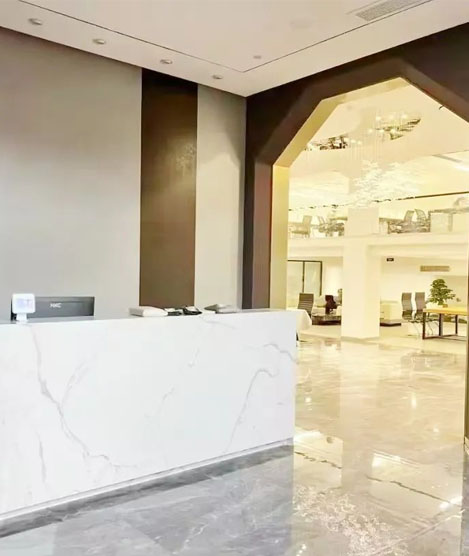
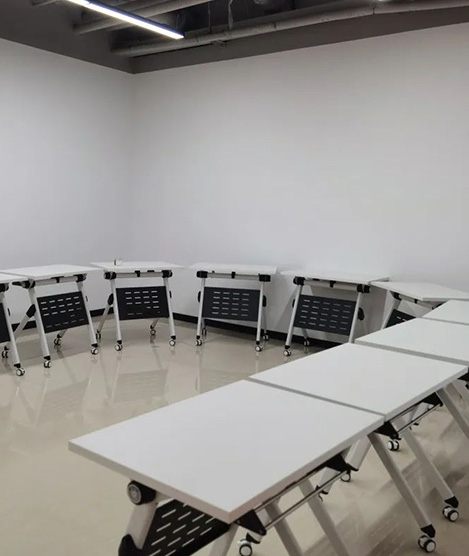
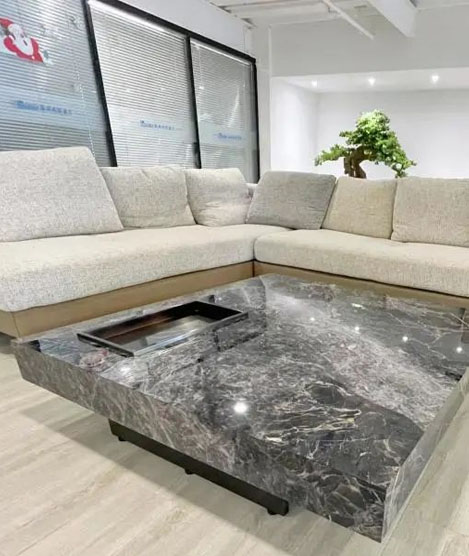
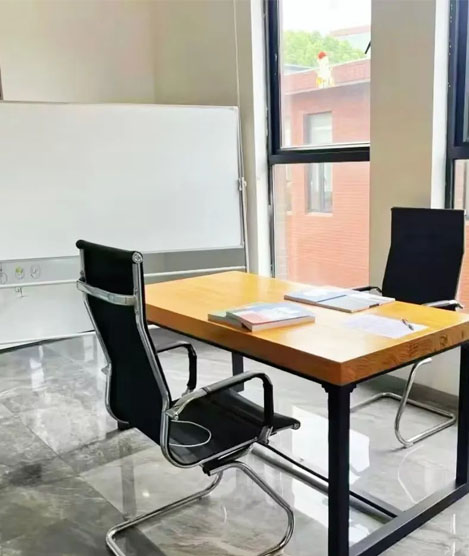

Talk to an advisor
Everything Hanlin does for Fryer, Galois and Hypatia, in one conversation.
Entry, planning, coaching and the past papers. An advisor will tell you which of these a student actually needs, including when the answer is none of them.
Competition entry and planning
Which competitions suit this student, in what order, and by when - then we handle the registration, including the ones that can only be entered through a school or a centre.
Competition coaching
Taught by full-time subject tutors, on a course tier chosen by placement paper rather than by year group.
International curriculum tutoring
IB, AP, A-Level, IGCSE and the US high school curriculum, taught alongside school and timed around the exam calendar.
Competition past papers, free
A large library of past papers, mark schemes and syllabus breakdowns across every competition on this site. No charge and no enrolment.
Scan to add an advisor
Say which competition or course you are asking about. Replies in Chinese or English.
Or call +86 21 6352 6630FAQ
Fryer, Galois and Hypatia, briefly answered.
What students and families ask before entering.
Which of the three should I enter?
Fryer is for grade 9 and below, Galois for grade 10 and below, and Hypatia for grade 11 and below. Students normally sit the contest for their own year but may enter a higher one. Only one of the three may be sat in a given year.
How is it different from Pascal, Cayley and Fermat?
Those are entirely multiple choice and sit in February. Fryer, Galois and Hypatia ask for written solutions and are marked on the reasoning, so they test the steps of solving a problem rather than recognition of an answer.
How is the paper marked?
Four questions, ten marks each, out of forty. Written solutions are marked on completeness, clarity and presentation - a correct solution presented poorly will not score full marks. On answer-only parts, a wrong or missing answer scores nothing.
Can I use a calculator?
Yes, for numerical work, but the written solution must still show the mathematical steps and those may be marked separately. Calculators with internet access, device communication, stored notes, a computer algebra system or dynamic geometry software are excluded.
Where is the contest sat?
In person on paper at the candidate’s school, under supervision arranged by a contest supervisor. All scripts are returned to CEMC in a single package for central marking.
When do results come out?
Six to eight weeks after the contest date, published on the contest supervisor portal for the school to distribute.
Is there a team competition?
Optionally. A school may enter a team standing, scored as the total of its five highest qualifying individual scores. Canadian schools compete at zone, provincial and national level; schools elsewhere appear on international honour rolls.
Does it help with a Waterloo application?
Waterloo encourages applicants to sit its mathematics contests, and strong results improve standing for admission to the Faculty of Mathematics and to Software Engineering. Strong performers may also be considered for entrance scholarships in a published range of roughly CAD 1,000 to 8,000.
Related
The rest of the Waterloo family.
Where these three sit among CEMC’s contests.
FGH enquiries
The step up is writing, not difficulty.
Students who have only sat multiple-choice contests usually lose marks here on presentation rather than on mathematics. Tell us the student’s year group, and an advisor will confirm which of the three fits and what the write-up gap looks like.