
Competitions · Mathematics · DMM
DMM, the Duke Math Meet.
A team meet funded by Duke’s mathematics department and run by its student mathematics union, held each November on the Duke campus for around forty-five invited teams. Since 2024 there has also been a China route, held at Duke Kunshan University, from which three teams travel to the American event.
At a glance
What the meet is, and how China enters it.
DMM has run for more than fifteen years and joined the United States Math Competition Association in 2018. Its format is closest to ARML: individual ability tested alongside genuine team collaboration.
- Organiser
- The Duke University Mathematics Union, funded by the Duke Mathematics Department
- The American meet
- Held each November on the Duke campus. Around 45 teams - some 300 students and teachers - from leading American and Chinese schools and educational organisations are invited
- The China route
- DMM China, first held in 2024 at Duke Kunshan University, which sponsors it. Organised by the Duke mathematics union with an exclusive operating partner and academic support in China
- Who can enter
- Students in grades 9 to 12, under 19, with enough English to read and write mathematics - the papers are in English
- Team size
- Six to eight students at DMM China
- Places available
- Thirty team places at DMM China, and each qualifying school may send at most one team
- How schools qualify
- Through an in-school selection round in March. The top thirty schools nationally advance
- What the top teams win
- The three highest-placed teams at DMM China are invited to the global meet at Duke as China’s official delegation
- Equipment
- Electronic devices are prohibited throughout. Candidates solve independently and answers must be simplified
- Comparable to
- PUMaC at Princeton, BMT at Berkeley, and the Caltech and Harvey Mudd meet - the same tier of university-run tournament
Qualifying
How a school reaches DMM China.
The selection is unusual in that it ranks schools rather than students. An individual cannot qualify alone - the school qualifies, and then picks its team.
| Stage | What happens | When |
|---|---|---|
| In-school selection | Invited schools run a selection paper on a day of their choosing. It carries ten questions at one mark each. | March |
| School score | Each school is scored on the average of its six highest-scoring students. That average is the sole ranking basis; ties are broken on the highest individual score, then the second highest. | After selection |
| DMM China | The thirty highest-ranked schools advance. Each sends one team of six to eight students, and must certify that its selection met academic integrity standards. | Late May, at Duke Kunshan University |
| The global meet | The three highest-placed teams at DMM China are invited to Duke as China’s official delegation. | November, at Duke University |
Because a school is ranked on its top six, a school with one exceptional mathematician and no depth will not qualify. Building a group of six is the actual requirement.
The scored rounds
Four rounds that count.
The time limits are the defining feature. DMM is more compressed than most American tournaments, and that is deliberate.
Individual Round
Ten questions issued as five pairs, with ten minutes for each pair and one mark a question. The answers to each pair are announced before the next is handed out. Every student’s score contributes equally to the team.
Power Round
A multi-part proof problem on a single theme, worth 25 marks over an hour, worked by the whole team. It is the hardest round, and it deliberately requires learning something new during the round itself.
Team Round
Ten questions with numerical answers in twenty minutes, at 2.5 marks each for 25 in total. The team works together and submits a single answer sheet - two minutes a question across six to eight people.
Relay Round
Teams split into threes and pass a number down the chain, each solver needing the previous answer. Only numbers may be passed, double-underlined; passing backwards or passing anything else is prohibited.
The rounds that do not count
Three events built for something other than ranking.
DMM devotes real time to events that carry no marks, which is unusual and is much of what distinguishes it from a straight contest.
The Devil Round
Twelve questions in about forty minutes whose exact answers are usually impossible to determine. Teams answer with an interval of the form A to 2A, and the interval counts as correct if the true answer falls inside it.
Why an interval is the point
Answering in a range turns each question into a judgement about magnitude rather than a calculation - a genuinely different mathematical skill. The round affects neither individual nor team standings, and exists to be enjoyed.
Poster Presentation
Teams choose a topic from a published list, research it and produce a poster before the event, then present it on the final day. Every member must take part in preparing it, and it is judged independently of the other rounds.
Math Topic Seminar
Mathematicians from Duke Kunshan University present recent research and take questions. It is a lecture rather than a contest, and it is where most students meet current mathematical work for the first time.
Awards
What DMM China gives out.
The award list is long by design, recognising individuals, teams, specific rounds, presentations, schools and coaches separately.
Individual awards
Best Individual Performance, Outstanding Individual Performance and a Distinguished Individual Award, recognising three tiers of problem-solving across the scored rounds.
Team awards
Best Team, and Outstanding Collaborative Team for two further teams. Separate awards go to the best team in each of the Power, Team and Relay rounds, so a team strong in one area can place without an overall finish.
Presentation awards
Best Presentation, and a Most Engaging Presentation Topic award for the team that brought the most insight or the most interesting angle to its subject. Both come from the poster round.
School and coach awards
A Best Organisation award for the school team showing the strongest organisation, a Distinguished Coach award, and an official coach certificate for the mentors and teachers of every participating group.
Preparation
How Hanlin prepares a DMM team.
The compression is what catches teams out. Ten minutes for two questions and three to six minutes in a relay leaves no room to settle into a problem.
Working against short clocks
Five minutes a question in the individual round and two in the team round means reading and starting have to be almost simultaneous. That is trained under the real clock rather than approximated.
Learning inside the Power Round
The Power Round asks students to pick up an unfamiliar idea and use it in the same hour. Preparation is therefore in self-teaching from a written introduction, not in covering more syllabus in advance.
Relay discipline
Passing only a number, double-underlined, never backwards, and waiting patiently when an unusable answer arrives. These are procedural rules that cost marks when they are met for the first time on the day.
Six students, not one
A school is ranked on the average of its top six in selection, and every student’s individual score counts equally toward the team. Depth is worth more here than a single outstanding candidate.
Why Hanlin
Hanlin has been entering students for DMM for years, and publishes what they got. The record is further down this page.
Programme formats
Five ways this is taught.
Group size is the whole difference between these. It decides how much of the tutor's attention a student gets and how far the course can bend to them, so it is worth choosing rather than accepting.
| Format | Group size | What it suits |
|---|---|---|
| One-to-one | One student | Content, pace and emphasis set by what this student actually needs rather than by a syllabus. The only format that can be rebuilt mid-course. |
| Small group | Three to eight | Opens at three. Frequent discussion, and the tutor can slow down or move on according to what the group has absorbed. Most students chasing a higher award are taught in this one. |
| Class | Eight to twelve | Taught by the subject lead or a medal coach. Less back-and-forth, so it suits a student who will say when something is unclear. |
| Large class | Ten to twenty | For students in the middle of the placement range, and a way to try a competition before committing. Students often move to a small group or to one-to-one afterwards. |
| Past-paper class | No cap | Past papers worked through in sequence in the weeks before the sitting. Free to students already enrolled. |
Course length for DMM is set after a placement paper. The gap between where a student is and what the paper asks for is what the course has to close, and that gap is not the same for two students in the same year group.
How it runs
Six steps, four people on your side.
The same process for every student, so that nothing depends on one tutor remembering to do it.
 Step 1
Pre-course assessment
A placement paper before anything is booked, so the course tier is chosen on evidence rather than on a year group.
 Step 2
Tutor matching
A subject tutor is matched to the result, and their full background is provided before you agree to it.
 Step 3
Plan and group
A study group opens with four people on one student: the tutor, a planner, a supervisor and an academic manager.
 Step 4
Scheduled teaching
The teaching office sets the timetable around the competition date and school term, and teaching begins.
 Step 5
After-class reports
What was covered, and how the student handled it, reported after every lesson.
 Step 6
Homework follow-up
The teaching assistant and the form teacher both check that homework is done, which is where most preparation quietly fails.
Free resource pack
Past papers and preparation pack
The same material our own DMM students work from. Scan the code, say what you need, and an advisor sends it.

Tell an advisor which competition and year group, and the material comes back the same day. Free, and you do not have to enrol in anything. If we do not already hold what you need, we will go and find it.
- PDFPast papers, every year the organiser has released
- PDFWorked solutions, where the organiser publishes them
- PDFThe syllabus on one page - every topic, and how heavily it is examined
- PDFEntry checklist and the dates for the current cycle
Teaching team
Who would teach it.
Three of the twenty-two tutors on the published Hanlin roster - the ones whose subject this is.

Dr Zhang
PhD in theoretical mathematics from the University of Rochester and a postdoctoral fellow at the Shanghai Center for Mathematical Sciences at Fudan. An AMC-accredited coach, ASDAN-accredited for DMM and ITCCC, and an accredited UKMT BMO2 and PUMaC coach. His students have gone on to read mathematics and physics at Harvard, MIT, Princeton, Caltech and Cambridge.
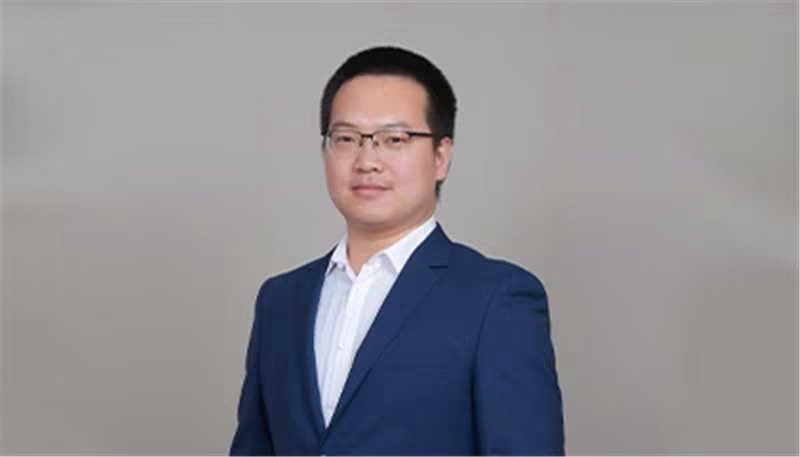
Dr Zhuang
PhD in mathematics from the University of Denver, working in mathematical logic, after a first degree in applied mathematics at Southeast University. A repeat conference speaker on his research, with three years lecturing and assisting on undergraduate mathematics at Denver.

He
A Cambridge master's after a computer science degree with a mathematics minor at the University of Nebraska-Lincoln, and a US high school GPA of 4.13. Six years overseas and teaches entirely in English, across AMC, Math League, AP Computer Science and AP Calculus.
Student results
What Hanlin students got.
Taken from Hanlin's published record of student honours and rewritten in English. Figures are as the organisers reported them.
To the global round in 2021
One line from Hanlin's published DMM record. The rest of it is below.
DMM
- 20257 students advanced to the China round and one to the global round
- 2022Students placed in the top 10% on the individual test
Earlier years
- 20219 students advanced to the global round, taking 4 individual Golds and 5 Silvers, a team Gold and 3 team Bronzes, and the Best Power Round award. Teams placed 13th, 19th and 21st globally
The full record, across every subject and year, is on the student honours page.
Where it is taught
Hanlin learning centres.
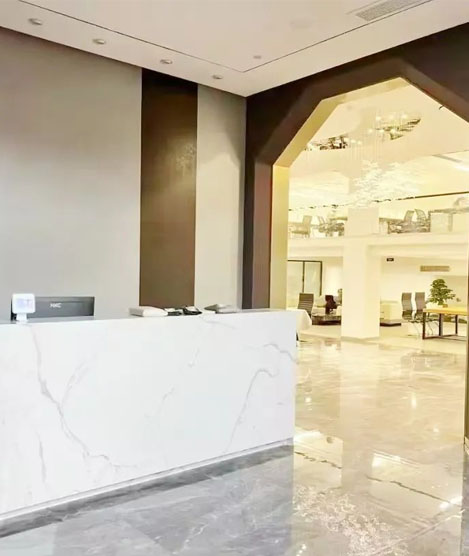
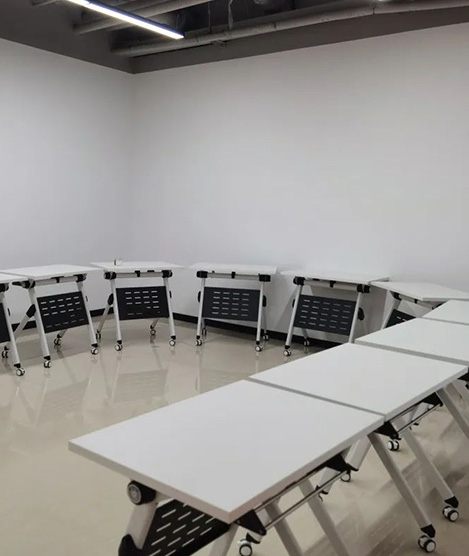
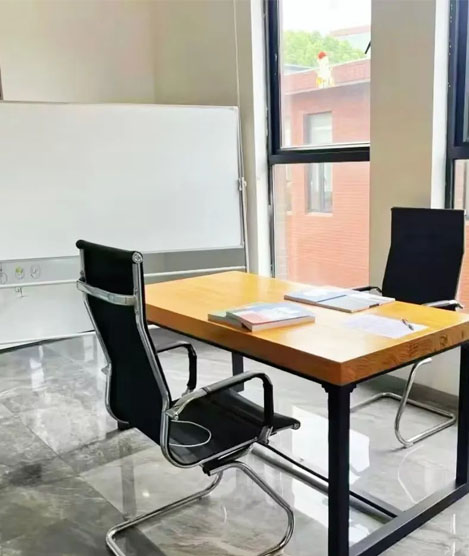
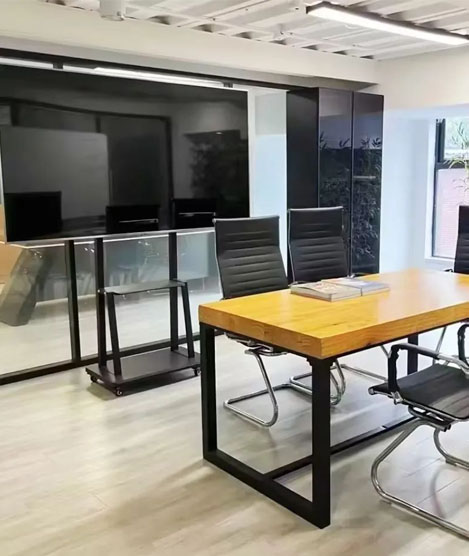
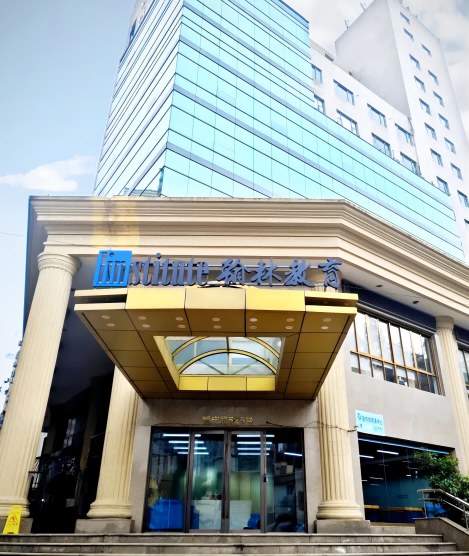
Teaching runs from Hanlin's own centres in Shanghai, Shenzhen, Chengdu and Hangzhou, and online for students elsewhere.


Talk to an advisor
Everything Hanlin does for DMM, in one conversation.
Entry, planning, coaching and the past papers. An advisor will tell you which of these a student actually needs, including when the answer is none of them.
Competition entry and planning
Which competitions suit this student, in what order, and by when - then we handle the registration, including the ones that can only be entered through a school or a centre.
Competition coaching
Taught by full-time subject tutors, on a course tier chosen by placement paper rather than by year group.
International curriculum tutoring
IB, AP, A-Level, IGCSE and the US high school curriculum, taught alongside school and timed around the exam calendar.
Competition past papers, free
A large library of past papers, mark schemes and syllabus breakdowns across every competition on this site. No charge and no enrolment.
Scan to add an advisor
Say which competition or course you are asking about. Replies in Chinese or English.
Or call +86 21 6352 6630FAQ
DMM, briefly answered.
What students and families ask before entering.
Who can take part in DMM?
High-school students in grades 9 to 12 who are under 19, with enough English to read and write mathematics, since the papers are in English. It suits students intending to study mathematics, business, finance or a STEM subject at university.
How does a student in China enter?
Through their school. Invited schools run an in-school selection paper in March, schools are ranked on the average of their six highest scorers, and the top thirty advance to DMM China. Each qualifying school sends one team of six to eight.
What if my school does not take part?
Two routes are usual: assemble a group within your school and approach a subject or competition teacher for support, or work with an organisation that can help form a team. Hanlin can assist with putting a team together.
How is DMM different from other mathematics competitions?
Time pressure and teamwork. The individual round allows ten minutes for two questions and the relay three to six minutes for three. The Power Round is the hardest event and requires learning an unfamiliar idea and applying it during the round.
What is the Devil Round?
A twelve-question round of about forty minutes whose questions cannot realistically be answered exactly. Teams give an interval from A to 2A and are correct if the true value falls inside it. It affects neither individual nor team scores.
Is there anything besides the papers?
Yes. Teams prepare a research poster before the event and present it on the final day, judged separately from the scored rounds, and mathematicians from Duke Kunshan University give a seminar on current research.
How long does the whole thing take?
The China route runs from the March selection through the May summit, and the global meet is in early November. Students can plan their own preparation across that window.
What do the top teams get?
The three highest-placed teams at DMM China are invited to the global meet at Duke as China’s official delegation. Participating schools are also invited into the DMM China mathematics development alliance.
Related
Other university-run team meets.
Tournaments at the same tier, which teams often enter in the same year.
DMM enquiries
The school qualifies, not the student.
Selection ranks schools on their top six, and only thirty schools reach DMM China. Tell us where the student studies and whether the school is entering, and an advisor will set out the March route or help build a team.