
Competitions · Business and economics · Conrad Challenge
The Conrad Challenge.
Named for the third man to walk on the Moon, who spent the rest of his life starting companies. It asks for both halves of that: a genuine STEM innovation, and a business that could carry it.
What it is
STEM and business, in the same submission.
Most science competitions stop at the prototype and most business competitions stop at the plan. Conrad wants an innovation that works and a commercial case for it, judged together.
A real innovation
Teams design a product or service that addresses a challenging scientific or social problem in one of the published categories - not a research paper about it.
And a business around it
The submission includes a lean canvas, so the commercial model is part of the work from the start rather than added at the end.
Built by a team with a coach
Two to five students plus a team coach, who may be a school teacher, a parent or a guardian. Teammates can be classmates, siblings, camp friends - anyone eligible, anywhere in the world.
Over a whole academic year
Registration in the summer, scoping in the autumn, the innovation submission over the winter, and the finals in the spring. It is a season, not a weekend.
At a glance
The essentials.
The Conrad Foundation was founded by Nancy Conrad, a former high school teacher, in memory of her husband Charles "Pete" Conrad - a US Navy test pilot and NASA astronaut for twenty years who became the third person to walk on the Moon in November 1969, and who went on to found four companies working on the commercialisation of space travel before his death in 1999.
- Who can enter
- Students aged 13 to 18, anywhere in the world
- Team
- Two to five students, plus a team coach
- Who can coach
- A school teacher, a parent, a guardian or another responsible adult
- Language
- English
- Cost
- Registration requires a fee. The amount is not published in the material we have - ask the organiser
- China divisions
- Junior for grades 7 to 9 and senior for grades 10 to 12. The age floor of 13 still applies whatever the grade
- Repeat entry
- Permitted in later years, provided the student still meets the age and other requirements
- China registration
- Mid-July to mid-December
- China preliminary
- Online, by document review only - there is no online defence. Materials due 31 December, reviewed through January, results in late January
- China final
- In person in Shanghai in mid-March, with materials due at the start of March and the awards ceremony on the last day
- Global final
- In person, late April
The categories
Four worldwide, and two that exist only in China.
Choose the category first - it determines the whole shape of the project. The examples below are the organiser’s own.
| Category | What sits inside it |
|---|---|
| Aerospace & Aviation | Avionics, engines, air traffic control, aircraft, aerodynamics, human factors and cockpit design, propulsion, spacecraft, upgrades to the International Space Station, long-duration space travel, tracking and removing space debris, spacesuit design, and habitats |
| Cyber-Technology & Security | Artificial intelligence applications, cyber defence systems, data-driven energy management, smart security technology, and database models for tracking, predicting and classifying natural disasters |
| Energy & Environment | Energy storage and efficiency, renewables, sustainable land use, recycling, environmental sanitation, water, biodiversity, climate change, waste management and clean technology |
| Health & Nutrition | Prosthetics, nutrition science, sports science, medical technology, solutions to hunger, mental health, assistive technology, healthcare delivery, medical safety, biomedical engineering and food safety |
| Ocean Issues & Threats | A China-region category only |
| Education & Technology | A China-region category only |
The two China-only categories are worth thinking about before you choose one. The global final competes by category, and these two have no global equivalent - so confirm with the organiser what happens to a winner in one of them. The China material also says the top team in each category direction receives a global pass, and separately that five China teams advance, which does not reconcile with six categories.
The China season
Nine months, four deadlines.
The dates below are for the China chapter. The global chapter runs on a slightly different calendar - see the section after this one.
Registration
Build a team of two to five, register and pay. One email address serves the whole team, so use the leader’s or a shared account that every member can reach.
Preliminary materials due
Four items: the innovation canvas, the innovation brief, an innovation demonstration video, and a product web page. Plus team and product photographs.
Document review
Reviewed through the first three weeks of January, with the shortlist published in the last week. There is no online defence at this stage.
Final materials due
Finalist teams submit their final-round materials at the start of March.
The China final, in Shanghai
Three days in person, with the awards ceremony on the last of them.
The global final
China’s winning teams compete against teams from other countries within their own category for the global awards.
The global calendar
Four stages, named by what you produce.
The global chapter organises the year around outputs rather than dates, which is a useful way to plan the work.
Registration, August to November
Form a team of two to five with a coach, and complete registration.
Scoping, closing in early November
Brainstorm, settle the category and the direction, and write the project plan.
Innovation, closing in January
Write the innovation brief, record the video and build the website. This is the bulk of the work.
Finals, in April
Selected teams are invited to the Conrad Innovation Summit.
Registering
Five things people get wrong at registration.
The entry form has a few traps that are easier to avoid than to fix afterwards.
One email for the whole team
Each team registers a single email address. Use the leader’s account or a shared one, so that every member can actually sign in.
Select China as your chapter
The chapter field sits at the bottom of the form. Choose it there, along with the division and the team name.
The leader goes first
Team information is entered in order and the leader must be listed first.
Do not skip the consent forms
The acknowledgment and legal guardian consent are easy to miss and the entry is not complete without them. For the lean canvas, follow the China chapter’s instructions - the global chapter version is reference material only.
The awards
What teams actually receive.
Awards are given at each stage, and the ones that matter most are not medals.
Certificates at every stage
A certificate of participation for every team that submits preliminary materials on time, and a finalist certificate for every team reaching the China final.
Medals by category
A champion, runner-up and third-place team in each category direction, receiving the Conrad China Innovator medal.
A global pass
China’s winning teams receive a Global Challenge Pass to the global final, where they compete within their own category.
And, at the global final, practical support
Judges’ recommendation letters, university scholarships and help with patent applications. Sponsors including Dell Technologies, the Kennedy Space Center and the Bezos Family Foundation fund investment opportunities, patent support, internships and scholarships.
Preparation
How Hanlin prepares a Conrad team.
The preliminary is decided on four documents with no chance to explain them in person. They have to work unaided.
Writing an innovation brief that stands alone
The China preliminary is a document review with no defence, so nothing can be clarified afterwards. Every question a reviewer might have needs answering on the page.
Getting the lean canvas right
The canvas is where the STEM idea becomes a business. Teams that treat it as paperwork lose the half of the competition that distinguishes Conrad from a science fair.
Building something demonstrable
The submission includes a demonstration video and a product web page. An idea that cannot be shown working is much harder to carry through both of those.
And choosing the category deliberately
Six categories in China, four of them global. The choice shapes the project, the judging panel and - for the two China-only categories - what happens if you win.
Why Hanlin
Preparation for Conrad Challenge at Hanlin is taught by full-time subject tutors, on a course tier chosen by placement paper rather than by year group.
Programme formats
Five ways this is taught.
Group size is the whole difference between these. It decides how much of the tutor's attention a student gets and how far the course can bend to them, so it is worth choosing rather than accepting.
| Format | Group size | What it suits |
|---|---|---|
| One-to-one | One student | Content, pace and emphasis set by what this student actually needs rather than by a syllabus. The only format that can be rebuilt mid-course. |
| Small group | Three to eight | Opens at three. Frequent discussion, and the tutor can slow down or move on according to what the group has absorbed. Most students chasing a higher award are taught in this one. |
| Class | Eight to twelve | Taught by the subject lead or a medal coach. Less back-and-forth, so it suits a student who will say when something is unclear. |
| Large class | Ten to twenty | For students in the middle of the placement range, and a way to try a competition before committing. Students often move to a small group or to one-to-one afterwards. |
| Past-paper class | No cap | Past papers worked through in sequence in the weeks before the sitting. Free to students already enrolled. |
Course length for Conrad Challenge is set after a placement paper. The gap between where a student is and what the paper asks for is what the course has to close, and that gap is not the same for two students in the same year group.
How it runs
Six steps, four people on your side.
The same process for every student, so that nothing depends on one tutor remembering to do it.
 Step 1
Pre-course assessment
A placement paper before anything is booked, so the course tier is chosen on evidence rather than on a year group.
 Step 2
Tutor matching
A subject tutor is matched to the result, and their full background is provided before you agree to it.
 Step 3
Plan and group
A study group opens with four people on one student: the tutor, a planner, a supervisor and an academic manager.
 Step 4
Scheduled teaching
The teaching office sets the timetable around the competition date and school term, and teaching begins.
 Step 5
After-class reports
What was covered, and how the student handled it, reported after every lesson.
 Step 6
Homework follow-up
The teaching assistant and the form teacher both check that homework is done, which is where most preparation quietly fails.
Free resource pack
Case and submission pack
The same material our own Conrad Challenge students work from. Scan the code, say what you need, and an advisor sends it.
Tell an advisor which competition and year group, and the material comes back the same day. Free, and you do not have to enrol in anything. If we do not already hold what you need, we will go and find it.
- PDFPast cases and question sets
- PDFA worked example of a full submission
- PDFEvent categories and the judging criteria, broken down
- PDFEntry checklist and the dates for the current cycle
Teaching team
Who would teach it.
Three of the twenty-two tutors on the published Hanlin roster - the ones whose subject this is.

Bai
Master's in social entrepreneurship from Hult International Business School in San Francisco and a business administration degree from the Universitat Autonoma de Barcelona, with an exchange at Texas A&M's Mays Business School. Accredited by the College Board, Cambridge International and the IBO, a certified intermediate economist, and a judge at the 2020 Diamond Challenge global final and the 2021 NEC China final.

Zhang
Master's in engineering management from NYU and a double degree in finance and supply-chain management from Syracuse. Nearly nine years overseas and in finance, including at a well-known venture firm - experience that feeds scenario-based teaching. College Board-accredited.
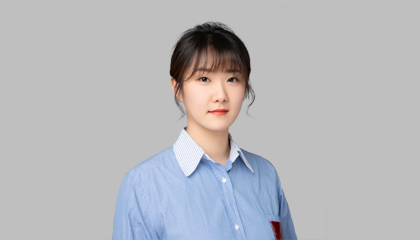
Jiang
Master's in business analytics from the Schulich School of Business, a finance and business economics degree from York University and a software engineering degree from the Harbin Institute of Technology. Years in North America, university teaching before returning, and long experience across the whole economics curriculum.
Student results
What Hanlin students got.
Taken from Hanlin's published record of student honours and rewritten in English. Figures are as the organisers reported them.
Conrad Challenge
- 2024-255 teams, 18 students, reached the China final, taking the best innovation award in health and nutrition and the best teamwork award in energy and environment
- 2022-235 teams advanced, with Silver and Bronze at the China round
Earlier years
- 2021-22Third nationally
The full record, across every subject and year, is on the student honours page.
Where it is taught
Hanlin learning centres.
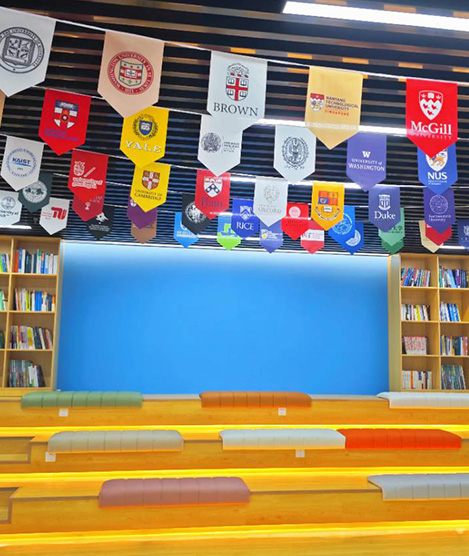
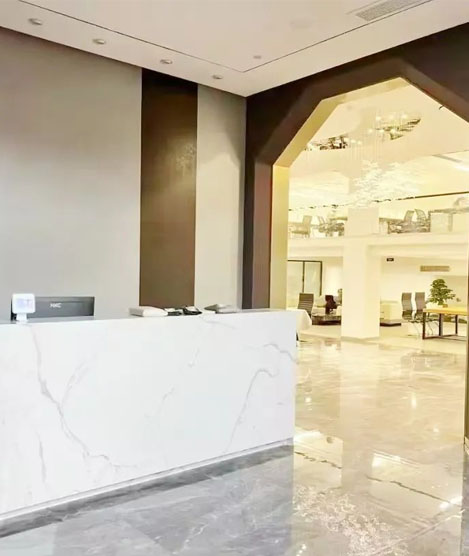
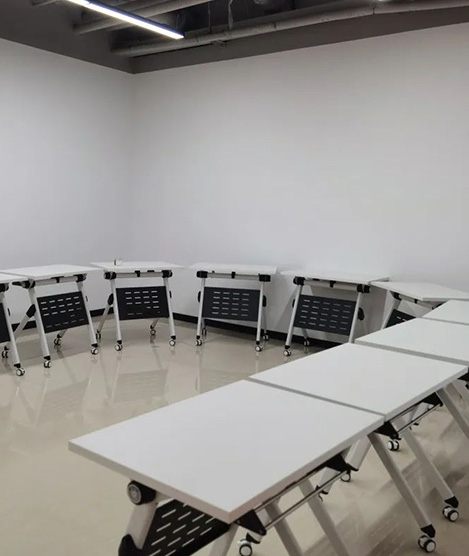
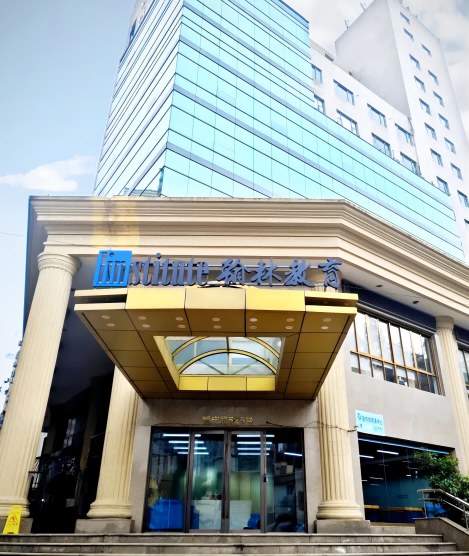
Teaching runs from Hanlin's own centres in Shanghai, Shenzhen, Chengdu and Hangzhou, and online for students elsewhere.



Talk to an advisor
Everything Hanlin does for Conrad Challenge, in one conversation.
Entry, planning, coaching and the past papers. An advisor will tell you which of these a student actually needs, including when the answer is none of them.
Competition entry and planning
Which competitions suit this student, in what order, and by when - then we handle the registration, including the ones that can only be entered through a school or a centre.
Competition coaching
Taught by full-time subject tutors, on a course tier chosen by placement paper rather than by year group.
International curriculum tutoring
IB, AP, A-Level, IGCSE and the US high school curriculum, taught alongside school and timed around the exam calendar.
Competition past papers, free
A large library of past papers, mark schemes and syllabus breakdowns across every competition on this site. No charge and no enrolment.
Scan to add an advisor
Say which competition or course you are asking about. Replies in Chinese or English.
Or call +86 21 6352 6630FAQ
The Conrad Challenge, briefly answered.
What students and families ask before entering.
Who can enter?
Students aged 13 to 18 anywhere in the world, in teams of two to five with an adult coach. The China region additionally divides entrants into a junior division for grades 7 to 9 and a senior division for grades 10 to 12.
Who can be the coach?
A school teacher, a parent, a guardian or another responsible adult. The coach is registered as part of the team.
Can my team come from different schools or countries?
Yes. Teammates can be classmates, siblings, friends from camp - anyone who meets the requirements, anywhere in the world.
What are the categories?
Four worldwide: Aerospace and Aviation; Cyber-Technology and Security; Energy and Environment; and Health and Nutrition. The China region adds Ocean Issues and Threats, and Education and Technology.
What do I submit for the preliminary?
Four items - an innovation canvas, an innovation brief, an innovation demonstration video and a product web page - plus team and product photographs. The China preliminary is a document review with no online defence.
When are the deadlines?
China: registration from mid-July to mid-December, preliminary materials by 31 December, results in late January, final materials by 1 March, and the final in Shanghai in mid-March. The global final is in late April.
How do teams reach the global final?
China’s winning teams receive a Global Challenge Pass. Note that the published rules say the top team in each category advances and also that five teams advance, while six categories run in China - confirm with the organiser, particularly for the two China-only categories, which have no global equivalent.
What can you win?
Certificates of participation and finalist certificates, Conrad China Innovator medals for the top three in each category, and a global pass for the winners. At the global final, judges’ recommendation letters, university scholarships and patent application assistance, funded by sponsors including Dell Technologies, the Kennedy Space Center and the Bezos Family Foundation.
Can I enter more than once?
Yes, in a later year, provided you still meet the age criterion and the other requirements.
Who was Conrad?
Charles "Pete" Conrad, a US Navy test pilot and NASA astronaut for twenty years, was the third person to walk on the Moon in November 1969. He later founded four companies working on commercial space travel, and died in 1999. The foundation was started by his wife Nancy Conrad, a former high school teacher.
Related
Other innovation and business competitions.
What students enter alongside Conrad.
Conrad enquiries
A working innovation and a business case for it.
Conrad is decided on four documents that have to stand up without anyone there to explain them, and it wants the engineering and the commercial model together. Tell us what the students want to build and an advisor will help pick the category and plan the season.