
Competitions · Biology · CBO
CBO, the Canadian Biology Olympiad.
The only biology competition here that makes you film yourself doing the experiments. Two rounds - a laboratory portfolio marked by the committee, and a theory paper - and four places on the Canadian international team.

Read this first
CBO is closed unless you are at school in Canada.
This decides whether the rest of the page is relevant, so it comes before anything else.
Canadian residence and status
Entrants must be resident in Canada and either Canadian citizens or landed immigrants. There is no international entry route.
And at a Canadian secondary school
The student must be in ordinary Canadian secondary education. First-year CEGEP students in Quebec are also eligible.
A student at school in China cannot enter
Neither round is open to them. Any page inviting them to register is describing a competition they cannot join.
But the theory round is separately open
Round two is sat through the University of Toronto National Biology Competition, which does accept entries from schools outside Canada. That paper has its own page here and is the part a student in China can actually take.
At a glance
What the olympiad is.
CBO selects the four students who represent Canada at the International Biology Olympiad. It is described by its organisers as the highest level of biology competition available to Canadian students.
- Purpose
- Selecting and training the Canadian team for the International Biology Olympiad
- Who can enter
- Canadian residents who are citizens or landed immigrants, in ordinary Canadian secondary education. First-year CEGEP students in Quebec are eligible
- Age limit
- Under 20 at the time of the competition
- Other conditions
- No university-level diploma, and not yet started study at a university or equivalent institution, full or part time
- Once only
- Entrants must not already have competed at the International Biology Olympiad - a student may go once
- Rounds
- Two - a Laboratory Skills Portfolio and a Theoretical Skills test
- When
- Registration from mid-January to April; the theory round in early April
- Where
- Online
- Content basis
- The topics covered by Canadian secondary biology textbooks, applied in unfamiliar settings
- Camp and IBO cost
- CAD 3,300 for the National Skills Training Camp and the international olympiad, paid to the organiser. Bursaries of up to CAD 2,500 may be available where there is financial need
Round one
The laboratory portfolio - filmed, signed and posted.
No other competition on this site assesses practical work this way, and the logistics are as much a part of it as the biology.
Three experiments, at school
Students complete a set of laboratory activities - usually three - at their own school under a teacher’s supervision.
On video, as evidence
Each activity must be filmed. The recordings are the evidence the committee marks from, so the filming is part of the work rather than a formality.
Published in January, submitted by April
The detailed portfolio requirements are published in early January each year and the completed portfolio is due before April. That is a three-month window for three experiments.
Posted on a flash drive
Materials go to the committee digitally on a drive, in a document wallet: a personal information form, a teacher’s letter of recommendation, and the completed activity materials. Documents as PDF, videos as MP4, with contents named in the filenames.
Round two
The theory round is a different competition.
CBO does not set its own theory paper. It uses somebody else’s, which has consequences worth understanding.
Sat through U of T NBC
The theoretical round is the University of Toronto National Biology Competition - fifty multiple-choice questions written and reviewed by faculty in Toronto’s ecology and evolutionary biology and cell and systems biology departments.
Which is open more widely than CBO is
That paper accepts entries from schools outside Canada. A student who cannot enter CBO can still sit the paper CBO uses.
And carries its own rewards
Strong performers can be considered for University of Toronto scholarships and come to the attention of faculty in the relevant departments.
Note the question types
The CBO page describes true/false, multiple-choice, fill-in and calculation questions, while the paper it names is multiple choice throughout. Confirm the current format with the organiser.
The final four
What happens after both rounds.
Placing is decided on the two rounds combined, and the top of the table leads somewhere specific.
Four students are selected
The four highest overall are required to attend a five-day training camp before the international olympiad, focused on developing laboratory skills.
And twenty more may attend
Students not selected for the international team can register for twenty additional camp places, to build the laboratory skills they will need for the following year’s olympiad.
Which makes it a two-year plan
The camp exists partly so that this year’s near-misses arrive better prepared next year. That is worth knowing before treating a first attempt as the only one.
It is the harder route
The organisers’ own comparison puts CBO above BBO and USABO in complexity - not because the biology is harder, but because there are more stages to get through.
Preparation
How Hanlin prepares students for CBO.
For an eligible student, the portfolio is where the preparation differs most from every other biology competition here.
Rehearsing the experiments
The organisers advise attempting the activities more than once to improve. Since the video is the evidence, practice runs before the recorded attempt are the obvious use of the window.
Treating the submission as part of the work
File formats, naming, signatures and the teacher’s letter are all specified. Marks are lost to logistics here in a way they are not on a written paper.
Building theory on Campbell
The organisers name Campbell’s Biology as the text that covers what the theory round needs, from molecular biology to ecology.
Practising application, not recall
The stated demand is broad biological knowledge applied in unfamiliar settings. Practice uses problems set in contexts a student has not seen before.
Why Hanlin
Preparation for CBO at Hanlin is taught by full-time subject tutors, on a course tier chosen by placement paper rather than by year group.
Programme formats
Five ways this is taught.
Group size is the whole difference between these. It decides how much of the tutor's attention a student gets and how far the course can bend to them, so it is worth choosing rather than accepting.
| Format | Group size | What it suits |
|---|---|---|
| One-to-one | One student | Content, pace and emphasis set by what this student actually needs rather than by a syllabus. The only format that can be rebuilt mid-course. |
| Small group | Three to eight | Opens at three. Frequent discussion, and the tutor can slow down or move on according to what the group has absorbed. Most students chasing a higher award are taught in this one. |
| Class | Eight to twelve | Taught by the subject lead or a medal coach. Less back-and-forth, so it suits a student who will say when something is unclear. |
| Large class | Ten to twenty | For students in the middle of the placement range, and a way to try a competition before committing. Students often move to a small group or to one-to-one afterwards. |
| Past-paper class | No cap | Past papers worked through in sequence in the weeks before the sitting. Free to students already enrolled. |
Course length for CBO is set after a placement paper. The gap between where a student is and what the paper asks for is what the course has to close, and that gap is not the same for two students in the same year group.
How it runs
Six steps, four people on your side.
The same process for every student, so that nothing depends on one tutor remembering to do it.
 Step 1
Pre-course assessment
A placement paper before anything is booked, so the course tier is chosen on evidence rather than on a year group.
 Step 2
Tutor matching
A subject tutor is matched to the result, and their full background is provided before you agree to it.
 Step 3
Plan and group
A study group opens with four people on one student: the tutor, a planner, a supervisor and an academic manager.
 Step 4
Scheduled teaching
The teaching office sets the timetable around the competition date and school term, and teaching begins.
 Step 5
After-class reports
What was covered, and how the student handled it, reported after every lesson.
 Step 6
Homework follow-up
The teaching assistant and the form teacher both check that homework is done, which is where most preparation quietly fails.
Free resource pack
Past papers and preparation pack
The same material our own CBO students work from. Scan the code, say what you need, and an advisor sends it.

Tell an advisor which competition and year group, and the material comes back the same day. Free, and you do not have to enrol in anything. If we do not already hold what you need, we will go and find it.
- PDFPast papers, every year the organiser has released
- PDFWorked solutions, where the organiser publishes them
- PDFThe syllabus on one page - every topic, and how heavily it is examined
- PDFEntry checklist and the dates for the current cycle
Teaching team
Who would teach it.
Three of the twenty-two tutors on the published Hanlin roster - the ones whose subject this is.

Yu
Master's in bioinformatics and computational biology from UT Dallas and a nutritional sciences degree from Wisconsin-Madison. Second author on an SCI-indexed paper from the Tanumihardjo vitamin-A laboratory, and formerly at ABS Global.
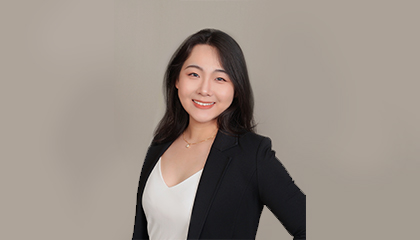
Zhang
Master's in cognitive science at UC San Diego on full scholarship, after double honours in neurobiology and behaviour and in cognitive science at UC Davis. Ten years overseas, a perfect TOEFL speaking score, and named an outstanding education scholar at UCSD.

Li
Biology at Emory, biomedical engineering at Georgia Tech, and a bioengineering master's at the University of Pennsylvania. College Board-accredited, teaching from a cross-disciplinary research base and folding research practice into the classroom.
Where it is taught
Hanlin learning centres.
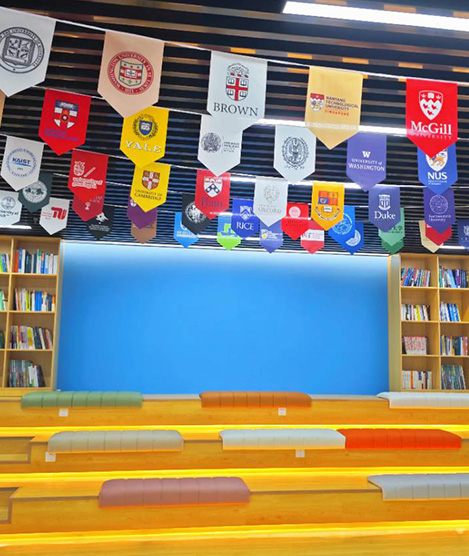
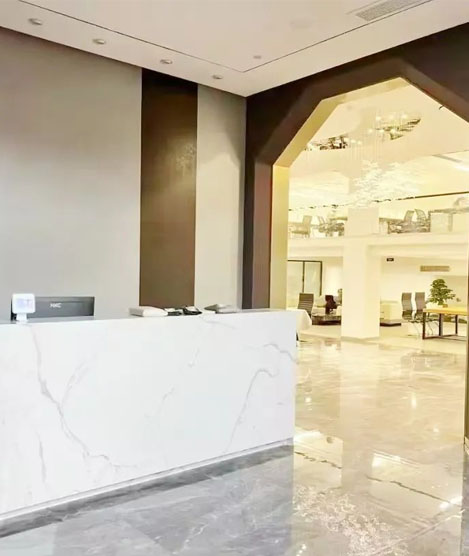
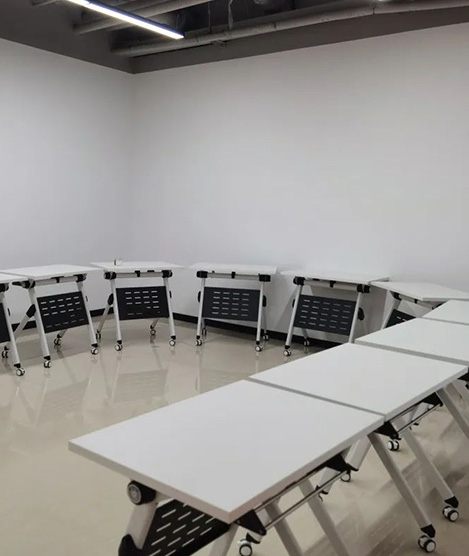
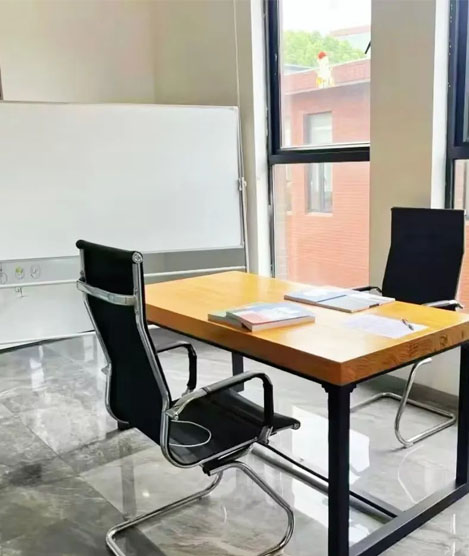
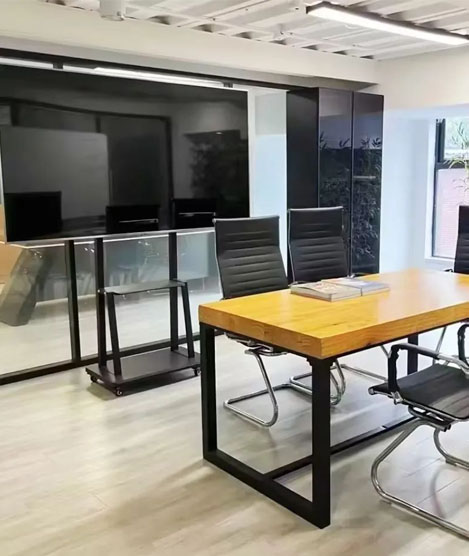
Teaching runs from Hanlin's own centres in Shanghai, Shenzhen, Chengdu and Hangzhou, and online for students elsewhere.


Talk to an advisor
Everything Hanlin does for CBO, in one conversation.
Entry, planning, coaching and the past papers. An advisor will tell you which of these a student actually needs, including when the answer is none of them.
Competition entry and planning
Which competitions suit this student, in what order, and by when - then we handle the registration, including the ones that can only be entered through a school or a centre.
Competition coaching
Taught by full-time subject tutors, on a course tier chosen by placement paper rather than by year group.
International curriculum tutoring
IB, AP, A-Level, IGCSE and the US high school curriculum, taught alongside school and timed around the exam calendar.
Competition past papers, free
A large library of past papers, mark schemes and syllabus breakdowns across every competition on this site. No charge and no enrolment.
Scan to add an advisor
Say which competition or course you are asking about. Replies in Chinese or English.
Or call +86 21 6352 6630FAQ
CBO, briefly answered.
What students and families ask before entering.
Can a student in China enter CBO?
No. Entrants must be resident in Canada, be Canadian citizens or landed immigrants, and be in ordinary Canadian secondary education. A student at a school in China cannot enter either round.
Is there anything here open to a student in China?
Yes. The theory round is sat through the University of Toronto National Biology Competition, which accepts entries from schools outside Canada. It has its own page on this site.
Who can enter?
Canadian residents who are citizens or landed immigrants, at a Canadian secondary school or in the first year of CEGEP in Quebec, under 20 at the time, without a university diploma and not yet studying at university.
Can I enter more than once?
You can enter CBO more than once, but a student may compete at the International Biology Olympiad only once.
What are the two rounds?
A Laboratory Skills Portfolio - three experiments done at school under a teacher’s supervision and submitted on video - and a Theoretical Skills test sat through the University of Toronto National Biology Competition.
How is the portfolio submitted?
Digitally on a flash drive, posted to the committee in a document wallet with a personal information form and a teacher’s letter of recommendation. Documents as PDF, videos as MP4, contents named in the filenames, signed by the supervising teacher.
What happens if I finish in the top four?
You attend a five-day National Skills Training Camp before the international olympiad, focused on laboratory skills, and represent Canada.
Can I attend the camp without being selected?
Yes. Twenty additional places are offered to other students so they can build the laboratory skills needed for the following year.
What does the camp cost?
CAD 3,300 for the camp and the international olympiad, paid to the organiser. Bursaries of up to CAD 2,500 may be available where there is financial need.
How hard is it compared with BBO and USABO?
The organisers describe BBO as the most moderate, with a high award rate after proper preparation; USABO as extremely demanding on speed and language, though a partly correct paper still scores well; and CBO as the most complex, because it has more stages rather than harder biology.
Related
The paper CBO uses, and the alternatives.
Where to go if CBO itself is closed to you.
CBO enquiries
Check whether it is open before you plan around it.
CBO is closed to students who are not resident in Canada and at a Canadian school, but the paper it uses for its theory round is not. Tell us where the student is at school and an advisor will confirm which of the two is available.