
Competitions · Humanities and writing · Cal Debate
Cal Debate, the Berkeley speech and debate tournament.
Four debate formats and seven individual events, and most entrants may compete in two of them. Three thousand students a year, at Berkeley.

The events
Four debate formats, each with its own clock.
The time rules are published as sequences of speech lengths, and they tell you more about each format than its name does.
| Format | Structure | Timing |
|---|---|---|
| Policy debate | Six preliminary rounds, then teams are re-seeded for the elimination rounds | 8-3-5, with eight minutes of preparation time per team |
| Lincoln-Douglas | Six preliminary rounds, then re-seeded | 6-3-7-3-4-6-3, with four minutes of preparation time |
| Public Forum | Six preliminary rounds, then re-seeded | Run under National Speech and Debate Association rules |
| Congressional debate | Three preliminary rounds, then re-seeded. No more than 25 competitors per chamber | Three minutes maximum per speech, and one minute maximum for questioning |
| Individual events | Begins with three elimination rounds | Seven separate events |
Note the difference in preparation time: eight minutes in Policy against four in Lincoln-Douglas. Policy is a research-heavy team format; Lincoln-Douglas is a one-on-one value debate. The clock reflects that.
Entering two events
Most competitors can do a second event.
The combination rules are published and they are generous. Planning around them gets far more out of the weekend.
Policy entrants add Lincoln-Douglas or Public Forum
A Policy debater may take one of those two as a second event.
Lincoln-Douglas and Public Forum entrants add Policy or an individual event
Either may take one further event from Policy debate or the individual events.
Individual event entrants add almost anything
A competitor in the individual events may add any other event except Congressional debate.
Congressional debate is the exception
It sits outside the combination rules, so it is worth confirming with the tournament whether a Congressional entrant may add anything.
At a glance
The essentials.
Cal Debate is hosted at the University of California, Berkeley, and draws more than three thousand competitors a year.
- Who can enter
- Students in grades 7 to 12
- Scale
- More than 3,000 competitors annually
- Debate formats
- Policy, Lincoln-Douglas, Public Forum and Congressional
- Individual events
- Seven, beginning with three elimination rounds
- How to register
- Register on the official website, then post the tabroom receipt and the registration fee to the invitational office
- School fee
- $50, mandatory for every school
- Congressional debate
- $65
- Individual events
- $65, except Duo
- Duo
- $70
- Varsity Policy
- $160
- Three-day parking pass
- $36
- Late registration
- Permitted, with an additional fee of $25 to $50
Registering
It is not a single online form.
The process has a physical step, which international entrants in particular should plan for.
Register online first
Registration is made through the official tournament website.
Then post the receipt and the fee
The tabroom receipt and the registration fee are mailed to the invitational office. That takes time from outside the United States.
The school fee is separate and mandatory
Fifty dollars per school, on top of every individual event entry.
And late entry costs more
Registering after the deadline is possible but carries an additional charge of between $25 and $50.
Preparation
How Hanlin prepares a Cal Debate entrant.
Four formats with different clocks means the preparation is format-specific before it is subject-specific.
Choosing the primary format first
Policy rewards deep research and a partner. Lincoln-Douglas rewards philosophical argument alone. Public Forum rewards clarity for a lay judge. Congressional rewards presence in a room of twenty-five. They are genuinely different competitions.
Rehearsing against the published clock
8-3-5 for Policy, 6-3-7-3-4-6-3 for Lincoln-Douglas. Practising to those exact lengths is what makes a case fit on the day.
Planning the second event
Most competitors can enter two. Deciding which pairing suits the student - and which preparation overlaps - turns one weekend into two results.
And starting the registration early
A posted receipt and fee from outside the United States is the part of this that cannot be rushed.
Why Hanlin
Preparation for Cal Debate at Hanlin is taught by full-time subject tutors, on a course tier chosen by placement paper rather than by year group.
Programme formats
Five ways this is taught.
Group size is the whole difference between these. It decides how much of the tutor's attention a student gets and how far the course can bend to them, so it is worth choosing rather than accepting.
| Format | Group size | What it suits |
|---|---|---|
| One-to-one | One student | Content, pace and emphasis set by what this student actually needs rather than by a syllabus. The only format that can be rebuilt mid-course. |
| Small group | Three to eight | Opens at three. Frequent discussion, and the tutor can slow down or move on according to what the group has absorbed. Most students chasing a higher award are taught in this one. |
| Class | Eight to twelve | Taught by the subject lead or a medal coach. Less back-and-forth, so it suits a student who will say when something is unclear. |
| Large class | Ten to twenty | For students in the middle of the placement range, and a way to try a competition before committing. Students often move to a small group or to one-to-one afterwards. |
| Past-paper class | No cap | Past papers worked through in sequence in the weeks before the sitting. Free to students already enrolled. |
Course length for Cal Debate is set after a placement paper. The gap between where a student is and what the paper asks for is what the course has to close, and that gap is not the same for two students in the same year group.
How it runs
Six steps, four people on your side.
The same process for every student, so that nothing depends on one tutor remembering to do it.
 Step 1
Pre-course assessment
A placement paper before anything is booked, so the course tier is chosen on evidence rather than on a year group.
 Step 2
Tutor matching
A subject tutor is matched to the result, and their full background is provided before you agree to it.
 Step 3
Plan and group
A study group opens with four people on one student: the tutor, a planner, a supervisor and an academic manager.
 Step 4
Scheduled teaching
The teaching office sets the timetable around the competition date and school term, and teaching begins.
 Step 5
After-class reports
What was covered, and how the student handled it, reported after every lesson.
 Step 6
Homework follow-up
The teaching assistant and the form teacher both check that homework is done, which is where most preparation quietly fails.
Free resource pack
Motions and case-file pack
The same material our own Cal Debate students work from. Scan the code, say what you need, and an advisor sends it.

Tell an advisor which competition and year group, and the material comes back the same day. Free, and you do not have to enrol in anything. If we do not already hold what you need, we will go and find it.
- PDFPast motions and topic areas
- DOCXA case-file template, ready to fill in
- PDFFormat, speaking times and the judging criteria
- PDFEntry checklist and the dates for the current cycle
Teaching team
Who would teach it.
Three of the twenty-two tutors on the published Hanlin roster - the ones whose subject this is.

Lu
Master's in education from the University of Pennsylvania and a double major in psychology and philosophy at Mount Holyoke. Cross-cultural teaching experience across China and the US, with research work in child and adolescent development, cognition, and international students' identity.

Yang
Educated at American Heritage School, then English literature and philosophy at the University of British Columbia and a master's in language education at Toronto. Eleven years in North America, with a close working knowledge of the international curricula and overseas admissions.
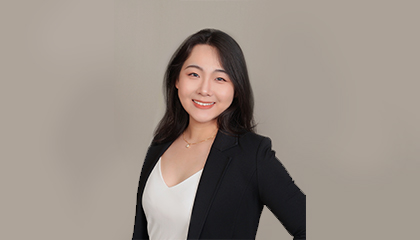
Zhang
Master's in cognitive science at UC San Diego on full scholarship, after double honours in neurobiology and behaviour and in cognitive science at UC Davis. Ten years overseas, a perfect TOEFL speaking score, and named an outstanding education scholar at UCSD.
Where it is taught
Hanlin learning centres.
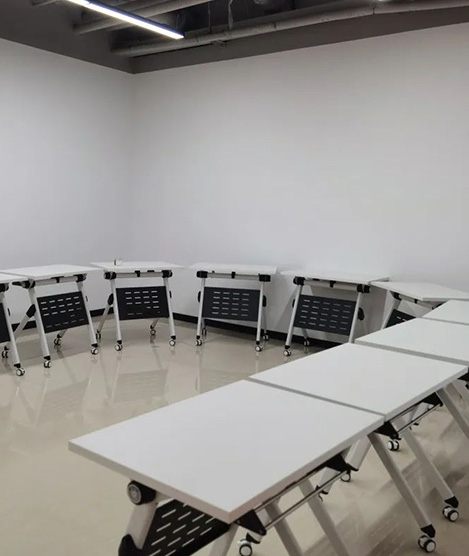
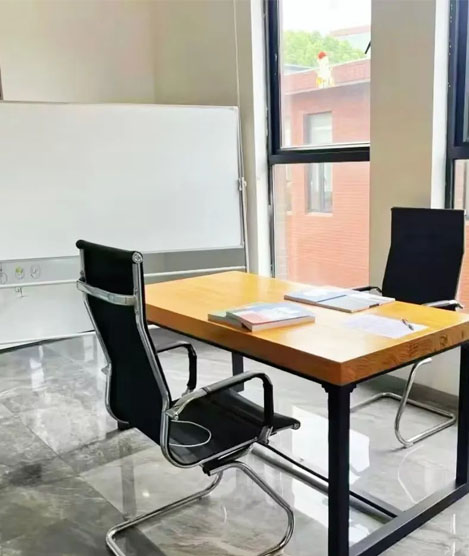
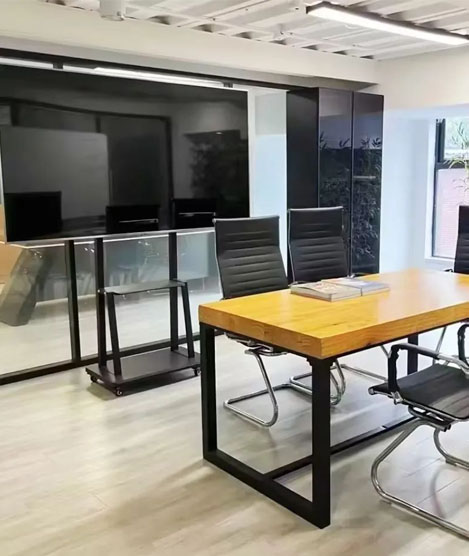
Teaching runs from Hanlin's own centres in Shanghai, Shenzhen, Chengdu and Hangzhou, and online for students elsewhere.




Talk to an advisor
Everything Hanlin does for Cal Debate, in one conversation.
Entry, planning, coaching and the past papers. An advisor will tell you which of these a student actually needs, including when the answer is none of them.
Competition entry and planning
Which competitions suit this student, in what order, and by when - then we handle the registration, including the ones that can only be entered through a school or a centre.
Competition coaching
Taught by full-time subject tutors, on a course tier chosen by placement paper rather than by year group.
International curriculum tutoring
IB, AP, A-Level, IGCSE and the US high school curriculum, taught alongside school and timed around the exam calendar.
Competition past papers, free
A large library of past papers, mark schemes and syllabus breakdowns across every competition on this site. No charge and no enrolment.
Scan to add an advisor
Say which competition or course you are asking about. Replies in Chinese or English.
Or call +86 21 6352 6630FAQ
Cal Debate, briefly answered.
What students and families ask before entering.
Who can enter?
Students in grades 7 to 12. The tournament draws more than three thousand competitors a year.
What formats are offered?
Policy debate, Lincoln-Douglas, Public Forum and Congressional debate, plus seven individual events.
How many rounds are there?
Six preliminary rounds in Policy, Lincoln-Douglas and Public Forum, after which competitors are re-seeded for elimination rounds. Three preliminary rounds in Congressional debate. Individual events begin with three elimination rounds.
Can I enter more than one event?
Usually yes. A Policy entrant may add Lincoln-Douglas or Public Forum. A Lincoln-Douglas or Public Forum entrant may add Policy or an individual event. An individual events competitor may add any event except Congressional debate.
What are the time rules?
Policy runs 8-3-5 with eight minutes of preparation time per team. Lincoln-Douglas runs 6-3-7-3-4-6-3 with four minutes. Public Forum follows National Speech and Debate Association rules. Congressional debate allows three minutes per speech and one minute for questioning.
How big is a Congressional chamber?
No more than twenty-five competitors.
How do I register?
Register on the official website, then post the tabroom receipt together with the registration fee to the invitational office.
What does it cost?
A mandatory school fee of $50, plus $65 for Congressional debate or an individual event, $70 for Duo, and $160 for Varsity Policy. A three-day parking pass is $36.
Can I register late?
Yes, with an additional fee of $25 to $50.
Where is it held?
At the University of California, Berkeley.
Related
Other debate and speaking competitions.
What students enter alongside Cal Debate.
Cal Debate enquiries
Four formats, and most people can enter two.
The formats are genuinely different competitions and the combination rules let a student do two in one weekend. Tell us what the student has debated before and an advisor will pick the pairing.